


Georgian Fire Pokers
Georgian fire pokers are essential hearth accessories crafted in steel, brass, and iron that bring period character to any fireplace.
Georgian Fire Pokers
Georgian fire pokers appear within sets of fire irons, fireplace tools, and companion sets alongside tongs and shovels. These hearth implements span the 18th century, Georgian, Regency, and George III periods, though later Victorian and 19th-century examples also emerge.
Buyers encounter individual pokers or complete sets featuring materials such as steel, polished steel, burnished steel, iron, and brass. Many pieces originate from the Georgian era or the early 19th century.
The form functions practically beside the grate while serving as a visible decorative accessory in period rooms.
How they were made
Blacksmiths and metalworkers shaped iron and steel through forging, while brass components were cast or turned. Polished and burnished steel surfaces required careful grinding and smoothing to achieve a bright finish.
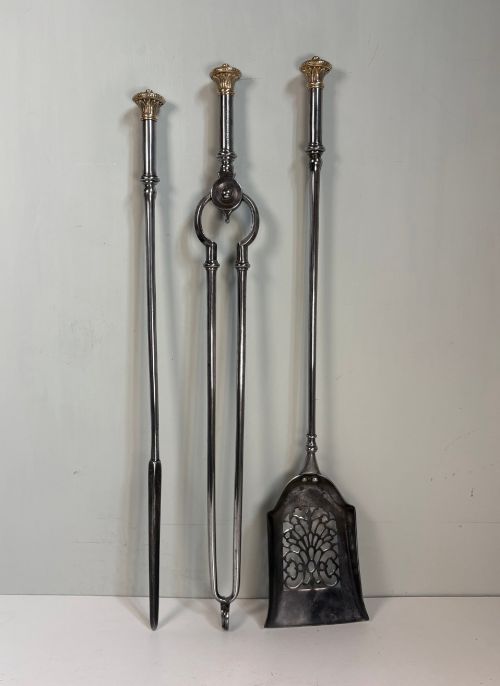
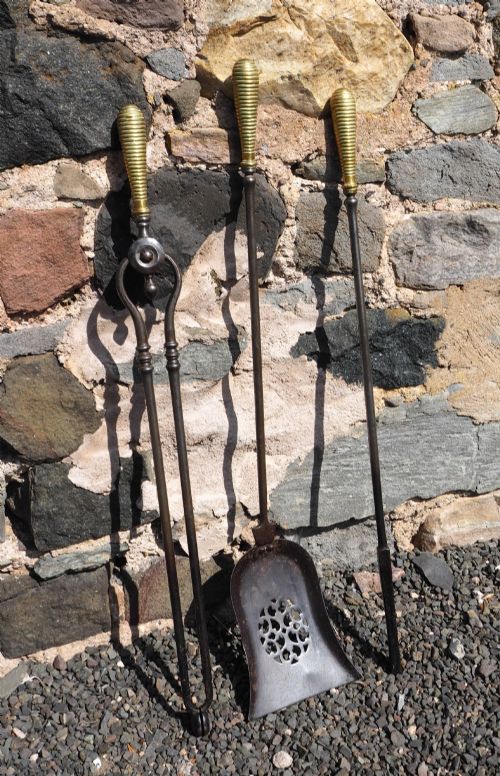
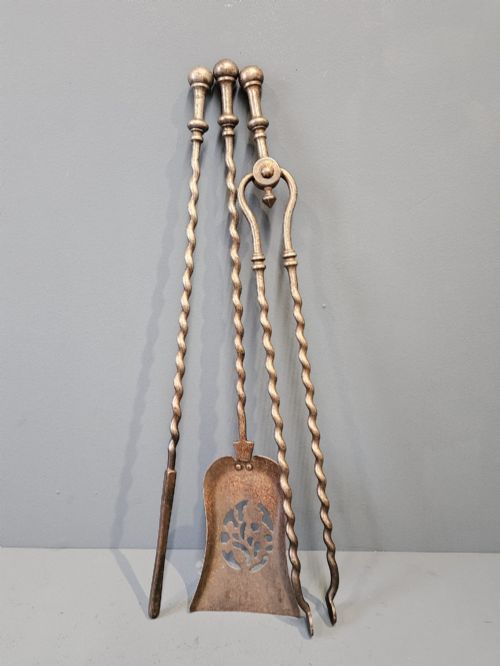
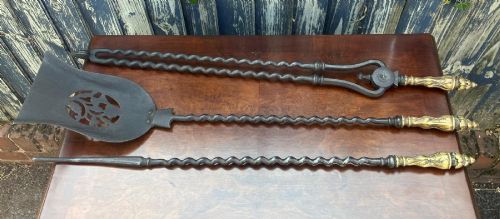
Makers integrated decorative elements like gilt brass and rosewood or other wood handles into the metal shafts. Certain examples incorporate detailed designs such as ring handles or claw and ball motifs.
Listings feature items from the Georgian, Regency, and Victorian periods, with materials spanning steel, polished steel, brass, iron, and rosewood.
What varies in quality
The grade of metalwork and the finish of the steel set higher-tier examples apart from simpler utility tools. Polished and burnished steel surfaces show greater refinement than standard iron or basic brass.
Proportion and the quality of handle detailing, including gilt brass mounts and turned wood grips, dictate the distinction of individual fire irons.
The Georgian Fire Pokers Glossary
- Georgian
- A design period spanning the reigns of the first four Georges, known for classical proportions and quality metalwork. This era forms the core of many fireplace accessory collections.
- Regency
- An early 19th-century stylistic period favouring refined classical motifs and polished steel surfaces. Fire irons from this time often exhibit bright finishes and elegant handles.
- Burnished steel
- A metal surface treated through friction to create a smooth, reflective finish. This technique highlights the skill of the 18th and 19th-century metalworker.
- Gilt brass
- Brass coated with a thin layer of gold or a gold-coloured alloy for enhanced decoration. It appears on handles and mounts of finer hearth tools.
- Companion set
- A matched group of fireplace tools, including pokers, tongs, and shovels, designed to be displayed together on a stand or fender.
Georgian Fire Pokers: Frequently Asked Questions
What are Georgian fire pokers?
Georgian fire pokers are hearth tools made from steel, brass, or iron during the 18th and early 19th centuries.
They were used to tend coal or wood fires and typically survive as part of larger sets of fire irons.
How do I identify Regency fire irons?
Regency fire irons often feature polished or burnished steel and elegant brass details that reflect early 19th-century taste.
They usually display finer metal finishing compared to heavier utility iron pieces.
Were these pokers used daily?
Yes, these pokers served a practical function in managing household coal or wood fires.
Their survival in polished steel and brass suggests they were also valued as decorative items in the principal rooms.
What materials were used?
The listings show a primary use of steel, polished steel, burnished steel, iron, and brass.
Some examples also incorporate wood elements such as rosewood for handles.