
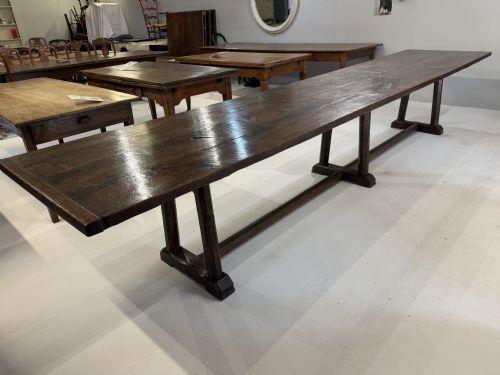
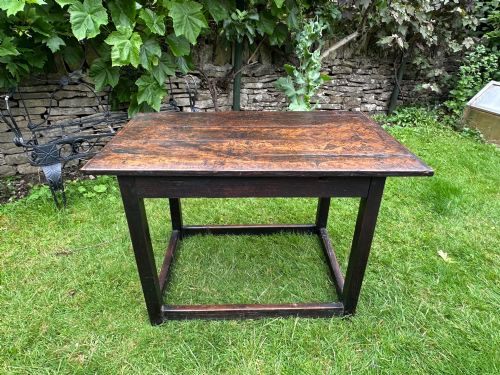
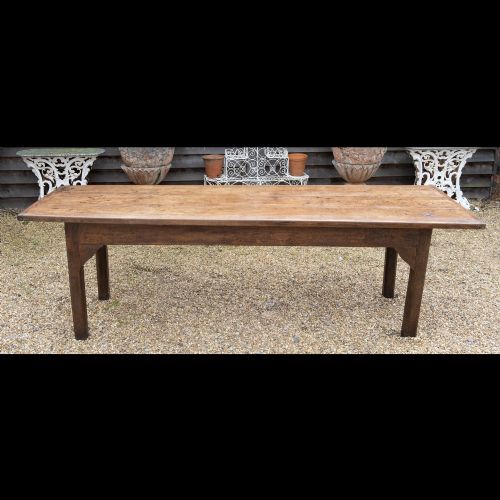


Georgian Farmhouse Dining Table
A georgian farmhouse dining table brings honest proportions and hard-wearing utility straight into a modern kitchen.
Georgian Farmhouse Dining Table
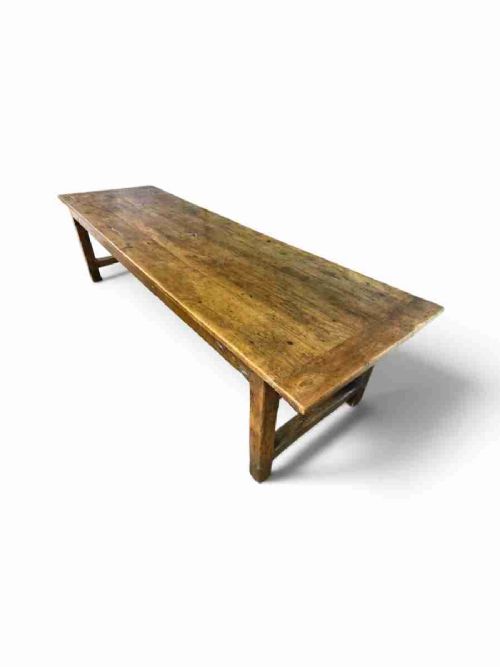
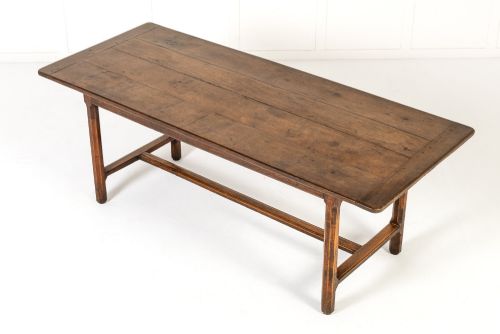
A georgian farmhouse dining table represents the sturdy heart of rural domestic life during the eighteenth and early nineteenth centuries. When searching for a georgian farmhouse dining table, you will predominantly encounter examples fashioned from solid oak, alongside variations in elm, pine, beech, and walnut.
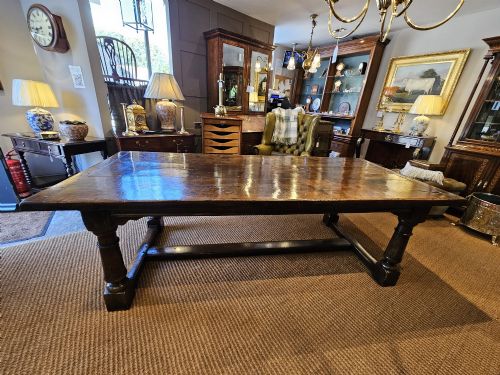
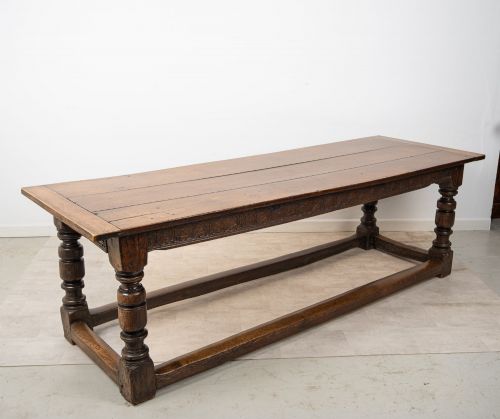
These pieces generally take the form of refectory, plank top, or gate leg tables designed to seat anywhere from four to eight people or more. Styles range from rustic country and english country to formal George III interpretations originating from English and Welsh workshops.
Surviving examples span the eighteenth century and the early nineteenth century, including specific dates around seventeen-seventy and seventeen-ninety. They served originally in kitchens, taverns, and dairies, meaning their construction prioritised strength and daily utility over delicate ornamentation.
Materials and construction
Makers relied on native timbers, predominantly oak for its durability, supplemented by elm, beech, and pine for secondary parts or specific tabletops. Planks were selected for width and thickness, then joined to withstand heavy daily use in busy households.
Joinery methods involved traditional pegged mortise and tenon frames that provided stability without relying on metal fixings. Surfaces were hand-planed and finished simply, allowing the natural grain of the wood to take polish from decades of domestic service.
Geographic origins represented in the material include English and Welsh country workshops, encompassing tavern and dairy tables alongside domestic dining furniture.
Judging quality and proportion
Quality rests in the integrity of the timber and the retention of original surface patination. Tables displaying deep, rich colour and thick, unwarped plank tops stand apart from heavily restored or later composite pieces.
Proportion and structural honesty dictate value. Examples retaining their original height, unclipped stretchers, and honest timber joints without excessive modern intervention demonstrate the highest standard of country craftsmanship.
The Georgian Farmhouse Dining Table Glossary
- Plank top
- A tabletop constructed from wide, solid boards joined edge to edge. This method allows the timber to move naturally with changes in humidity.
- Refectory table
- A long, narrow dining table traditionally used for communal dining. They feature sturdy legs connected by low stretchers for extra stability.
- Gate leg table
- A drop-leaf table with hinged legs that swing out to support the extended leaves. This design offered flexible dining space in compact rooms.
- Patina
- The surface sheen and colour developed by wood over centuries of handling, cleaning, and exposure to light. It serves as an indicator of genuine age.
Georgian Farmhouse Dining Table: Frequently Asked Questions
How many people do these tables seat?
Capacity varies from smaller four to six-seat gate leg formats up to substantial eight-seat refectory tables. Dimensions depend entirely on the original intended use in a farmhouse kitchen or tavern.
Buyers should measure their available floor space carefully, accounting for the width of the timber top and the placement of structural stretchers underneath.
Can I use one in a modern kitchen?
These tables adapt easily to contemporary dining spaces because their honest timber construction complements both modern and traditional interiors. Daily use helps maintain the historic finish rather than harming it.
Routine care requires simple wiping with a damp cloth and avoiding excessive heat or direct sunlight to protect the aged wood surfaces.
How do I tell an 18th-century table from a later one?
Dating relies on observing tool marks, timber shrinkage, and the method of joint construction. Eighteenth-century examples display hand-sawn boards and pegged joinery characteristic of period rural workshops.
Later interpretations often incorporate mixed woods or machine-cut elements that reveal a different manufacturing era upon close inspection.
What woods were used for these tables?
Oak is the predominant timber found across these listings, valued for its strength and abundance in English and Welsh countryside workshops. Elm, pine, beech, and walnut appear frequently in tabletops and structural frames.
Selected pieces also combine elm and oak, or feature painted wood finishes originating from regional vernacular traditions.