
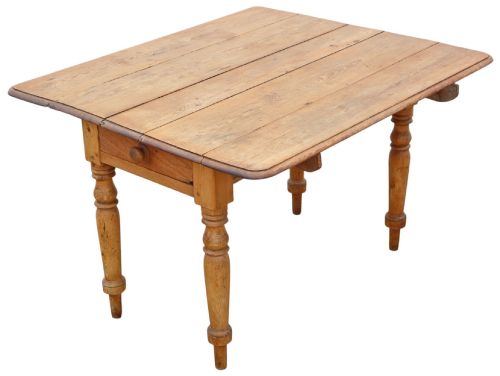
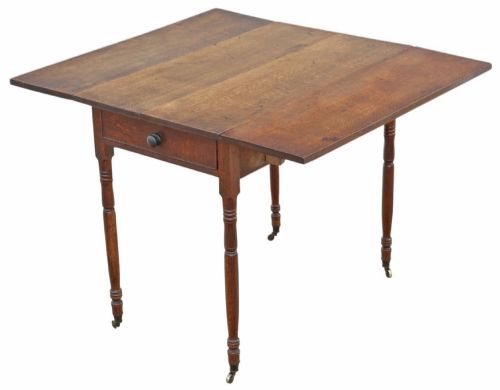
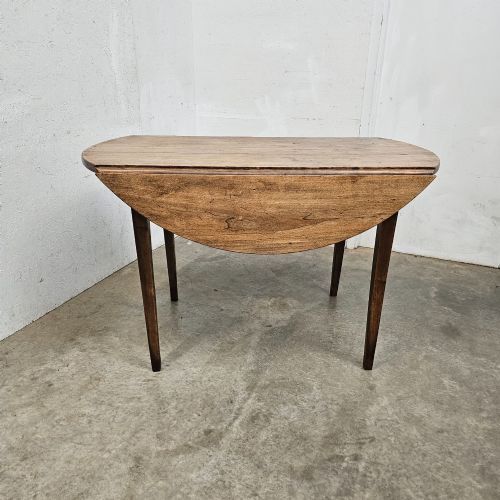
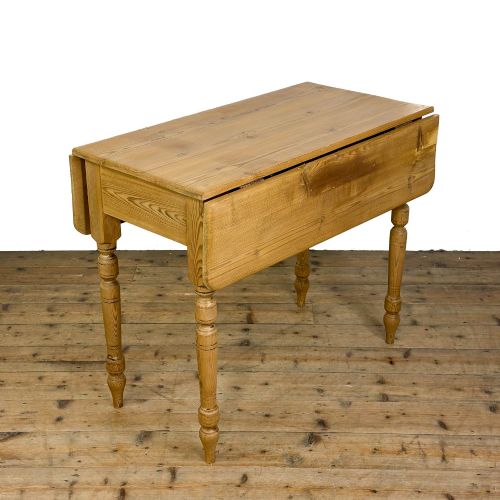
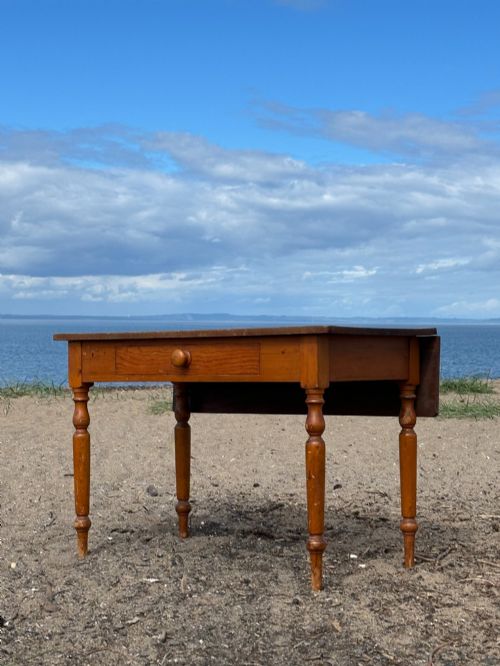


Drop Leaf Kitchen Table
A drop leaf kitchen table provides a practical surface that folds away neatly when floor space matters.
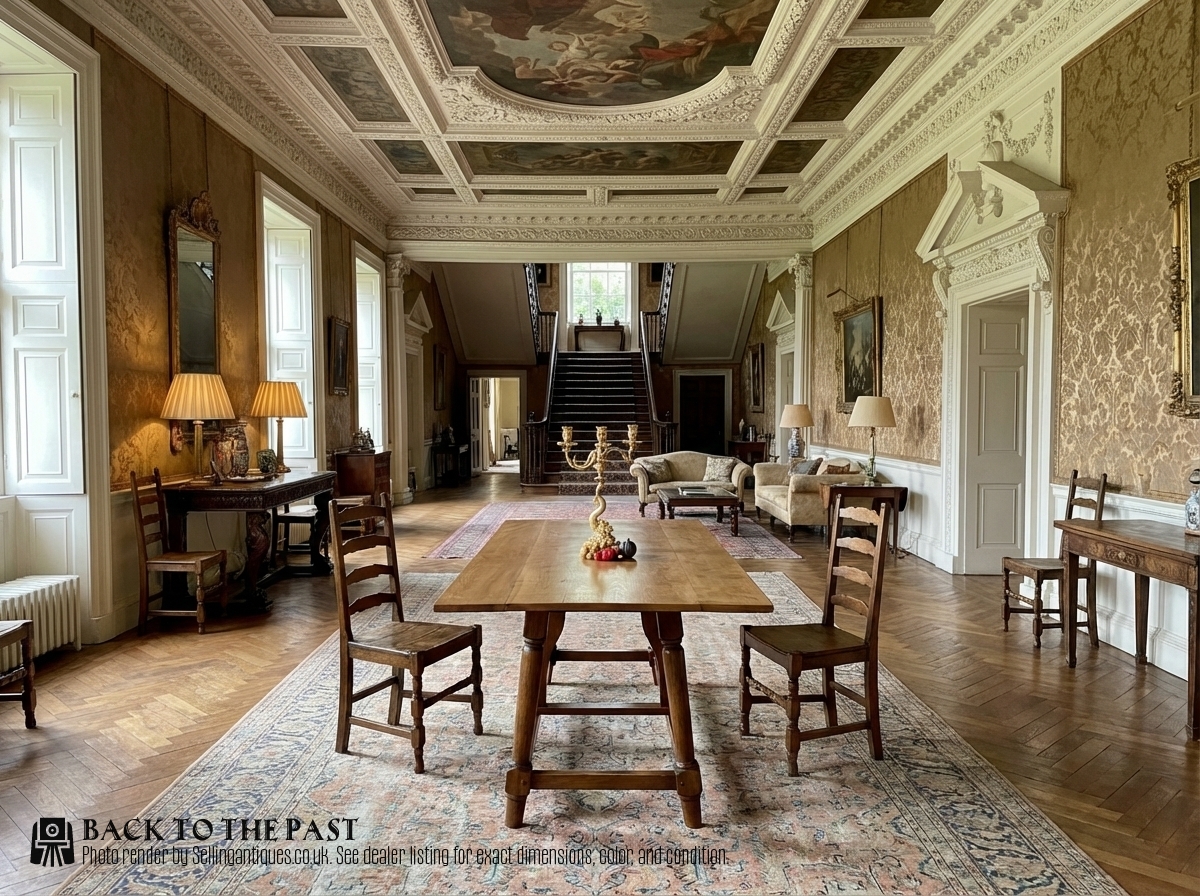
Drop Leaf Kitchen Table
A drop leaf kitchen table serves as a functional workspace and dining surface that adapts to changing room layouts. When searching this phrase, buyers encounter versatile folding tables designed for everyday food preparation and family meals.
The pieces on this page span several centuries, with 19th-century pine and oak examples appearing most frequently alongside Victorian and Georgian farmhouse designs. These tables combine hinged flaps with sturdy legs to maximise utility in smaller rooms.
Makers utilised native timbers like pine, oak, fruitwood and elm to build these robust domestic furnishings. Regional variations include French, Swedish and English country aesthetics, ranging from scrub-topped utility pieces to polished dining tables.
How they were made
Cabinet makers constructed these tables predominantly from solid oak, pine, fruitwood and elm, often incorporating brass and iron hardware for hinges and drawer pulls. These materials provided the structural strength required for daily kitchen tasks.
Construction techniques relied on sturdy gateleg supports, folding brackets and drop-leaf mechanisms to allow the side flaps to lower securely. Drawers integrated into the aprons utilised traditional joinery to store kitchen implements.
Some tables hide tiny drawers built specifically for storing paring knives and linen out of sight.
What varies in quality
Quality rests in the selection of timber and the precision of the folding mechanism, distinguishing utilitarian workshop builds from finer dining pieces. Solid oak and dense fruitwoods retain structural integrity better over centuries of daily use than softer pines.
The thickness of the table top and the cleverness of the leg placement determine stability when the leaves are raised. Superior examples balance heavy timber flaps without sagging or straining the primary hinge joints.
Heals of London
The Drop Leaf Kitchen Table Glossary
- Drop leaf
- A table featuring a fixed central section and one or two hinged flaps that fold down to save space.
- Gateleg table
- A table with hinged legs that swing out like a gate to support the raised leaves.
- Pembroke table
- A small rectangular table fitted with two hinged leaves on opposite sides and often a single drawer.
- Scrub top
- A plain wooden table surface designed to be scrubbed clean with water and sand after food preparation.
- Refectory
- A long narrow dining table traditionally used in communal dining halls.
Drop Leaf Kitchen Table: Frequently Asked Questions
How do drop leaf tables work?
These tables rely on hinged leaves supported by swing-out legs, brackets or wooden pivots. Lifting the flap extends the surface area for dining or preparation.
Lowering the leaves allows the table to sit flat against a wall or tuck into a narrow space. This mechanism made them essential space-saving furniture in historic kitchens.
What woods were used?
Carpenters built these tables using native timbers suited to domestic utility and heavy wear. Oak, pine, fruitwood, elm and mahogany appear frequently across different periods.
Softer woods like pine often received scrubbed finishes or paint. Hardwoods like oak and mahogany were left natural or polished for more formal dining spaces.
Are these tables sturdy?
Solid timber construction and robust gateleg or folding frames provide considerable weight-bearing strength. The stability depends on the tightness of the hinges and the joinery connecting the legs to the apron.
Well-maintained examples handle daily kitchen preparation and family dining securely. Properly aligned supports prevent the leaves from dipping under heavy loads.
How to date these tables?
Stylistic clues, wood species and construction methods indicate the era of manufacture. Georgian and 18th-century pieces often feature heavier oak frames and hand-cut joinery.
Victorian and later 19th-century examples frequently utilise pine, sometimes combined with fruitwood or turned legs. Machine-sawn timber and brass hinges point towards the later Victorian and Edwardian periods.