

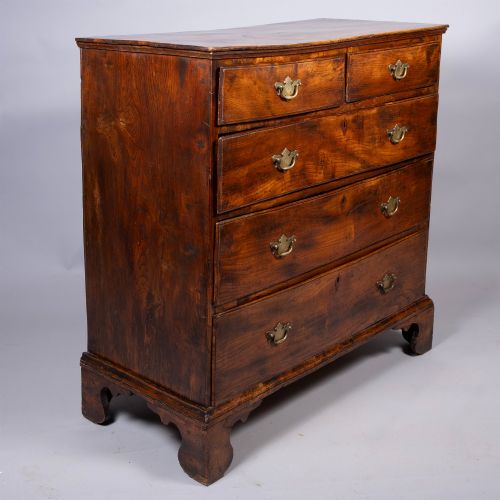
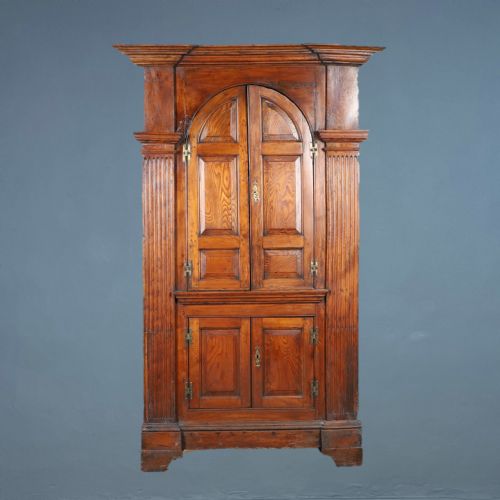


Georgian Elm Dresser
A Georgian elm dresser brings honest country character and rich native timber grain to any interior.
Georgian Elm Dresser
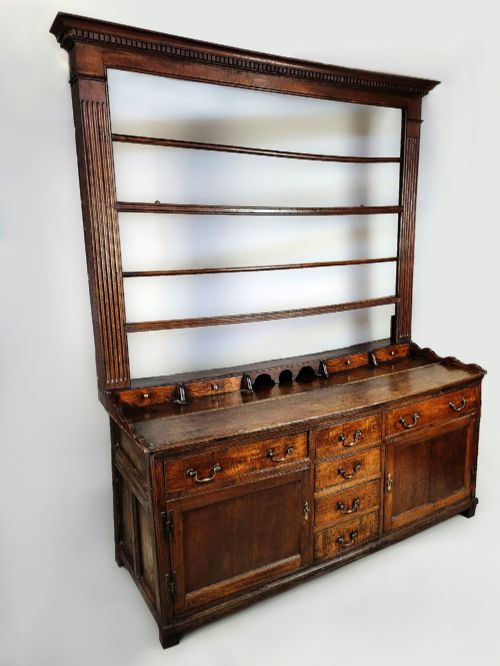
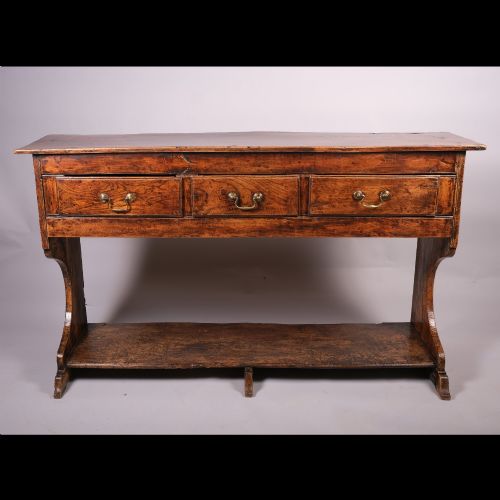
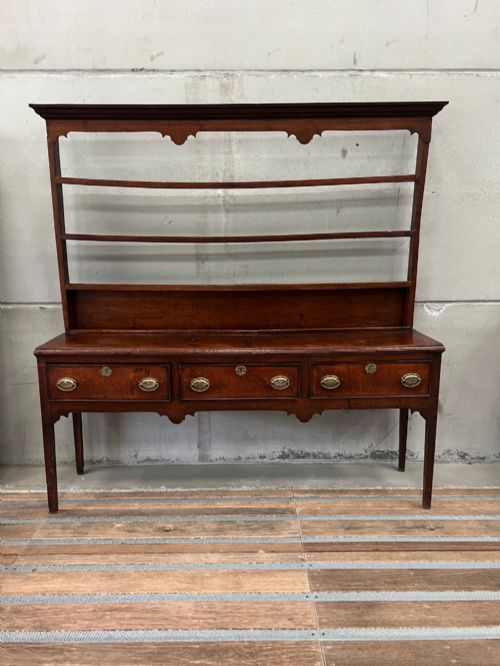
A georgian elm dresser combines utilitarian storage with the striking, dense grain of native British hardwood. Buyers encounter these pieces primarily as sturdy dresser bases with drawer configurations, occasionally accompanied by upper plate racks or hutches.
The surviving examples range from plain eighteenth-century vernacular work to pieces incorporating oak secondary timbers and marquetry detail. Most pieces seen here reflect English provincial cabinetmaking traditions spanning the eighteenth and nineteenth centuries.
Materials and construction
Makers utilised elm for its toughness and resistance to splitting, frequently pairing it with oak for structural frames and drawer linings. Burr elm and burr walnut veneers appear on select surfaces to provide rich visual movement.
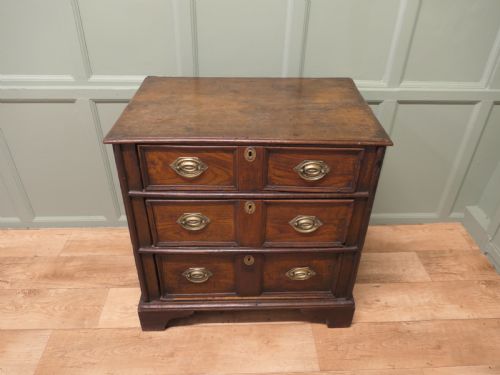
Hardware typically consists of brass handles and escutcheons secured to hand-cut drawer assemblies. Joinery methods reflect regional provincial techniques rather than urban sophistication.
Georgian Elm Dresser Retail Price Guide 2026
Typical asking prices for georgian elm dresser among the pieces listed under this phrase on Sellingantiques today, from the lower quarter to the upper quarter. They describe what is for sale here now, not the wider market.
Early country makers embraced elm's stubborn willingness to twist, building furniture so tough it outlasted the farmhouses it served.
Assessing quality
Quality rests in the depth of timber figure and the integrity of the original construction surfaces. Pieces displaying unblemished burr figuring or rich natural timber patination stand apart from plainer examples.
Proportion and the retention of original brass hardware heavily influence the standing of an individual piece. Structural honesty and minimal timber replacement separate superior provincial items from heavily restored equivalents.
The Georgian Elm Dresser Glossary
- Dresser base
- A low sideboard form equipped with drawers and sometimes cupboards, historically used for food preparation and storage in the kitchen or dining hall.
- Burr elm
- A growth deformity in the elm tree that produces highly swirled, knotted timber patterns prized for decorative cabinet fronts.
- Vernacular
- Objects built by local provincial makers following regional traditions rather than formal architectural pattern books.
- Marquetry
- The art of applying decorative pieces of veneer to a structural structure to form geometric or floral patterns.
- Court cupboard
- An enclosed antique storage cupboard standing on lower supports, predating or overlapping with later open-shelf dresser forms.
Georgian Elm Dresser: Frequently Asked Questions
What is a Georgian elm dresser base used for today?
These low storage units function exceptionally well as sideboards in dining rooms or as console surfaces in larger hallways. Their deep drawers provide practical storage capacity for modern household items.
They also serve as television or media stands, offering sturdy timber surfaces and enclosed organisation beneath.
How do I care for antique elm timber?
Keep the wood away from direct heat sources and sudden humidity shifts to prevent the timber from splitting or warping. Natural beeswax applied sparingly helps maintain the lustre of the grain.
Avoid modern silicone polishes that build up residue and dull the historic patination over time.
How do I tell an 18th century dresser from a 19th century one?
Eighteenth-century examples often display hand-sawn timber components and irregular board widths resulting from early conversion methods. Drawer construction frequently employs hand-cut dovetails with irregular spacing.
Nineteenth-century pieces tend toward more uniform machine-sawn components and standardised hardware fixings, reflecting changing industrial workshop practices.
Why is elm often paired with oak in these pieces?
Elm has a notoriously twisting grain that makes it difficult to use for straight structural framing members. Makers solved this by using stable oak for internal framing and drawer supports.
Elm was then utilised for drawer fronts and tabletops where its decorative grain could be displayed to best effect.