

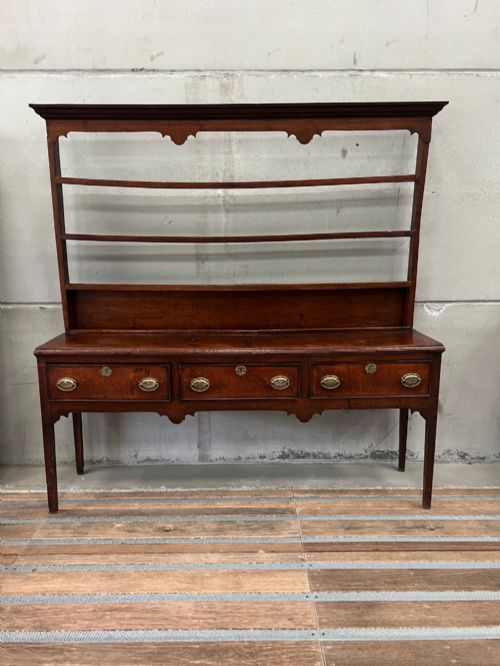
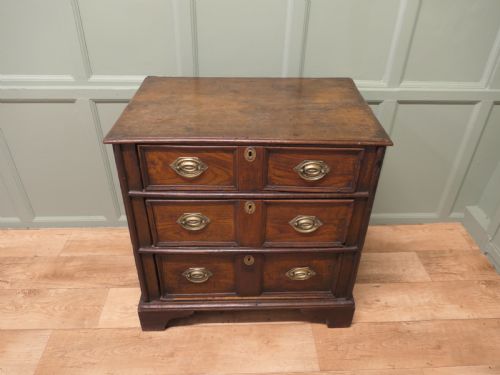
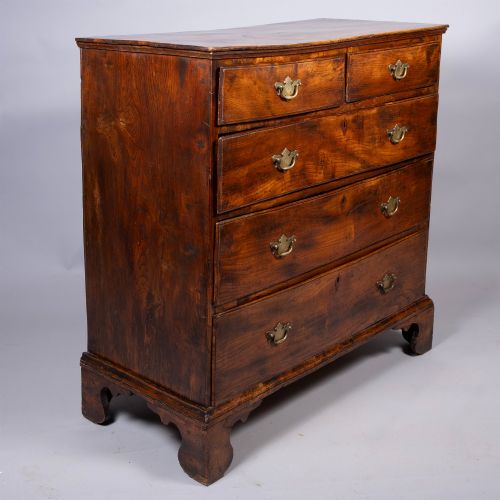


Elm and Oak Dresser
An elm and oak dresser brings robust country character to a room, offering practical storage with distinct timber grain.
Elm and Oak Dresser
An elm and oak dresser combines sturdy hardwoods into a functional storage piece built for heavy domestic use. Buyers searching for an elm and oak dresser encounter regional vernacular pieces dating from the eighteenth and nineteenth centuries.
The selections here range from Georgian country dresser bases to seventeenth and eighteenth century court cupboards and chests of drawers. Most examples unite structural oak framing with prominent elm timber surfaces.
Makers in provincial workshops utilised local timber availability to construct these resilient domestic furnishings. The resulting forms include open dressers with hutches, low dresser bases, and sideboards.
Construction and materials
Cabinetmakers built these pieces using solid oak for structural integrity and framing. Elm provided durable panels and drawer fronts with prominent grain patterns.
Specialist touches include burr elm and burr walnut veneers applied to select surfaces for decorative contrast. Traditional joinery methods and iron or brass hardware completed each cabinet.
Elm and Oak Dresser Retail Price Guide 2026
Typical asking prices for elm and oak dresser among the pieces listed under this phrase on Sellingantiques today, from the lower quarter to the upper quarter. They describe what is for sale here now, not the wider market.
Elm timber famously resists splitting in wet conditions, which is why rural carpenters used it to make water pipes and durable chair seats.
Assessing quality
Quality depends on the integration of the timbers and the restraint shown in decorative marquetry or figuring. Burr elm and burr walnut additions elevate the visual interest of provincial examples.
Proportion and structural honesty separate superior provincial pieces from utilitarian items. The preservation of original brass and iron hardware influences the integrity of the piece.
The Elm and Oak Dresser Glossary
- Dresser base
- The lower section of a kitchen or dining room storage unit featuring drawers and cupboards, without the upper plate rack. These served as primary work surfaces in older country kitchens.
- Court cupboard
- An enclosed antique cabinet featuring recessed upper levels supported by pillars. These sturdy storage units date back to earlier domestic interiors.
- Burr elm
- A prized timber harvested from growths on elm trees, displaying complex swirling grain patterns. Cabinetmakers used burr sections for decorative drawer fronts and panel inserts.
- Vernacular
- Furniture designed by regional craftsmen for practical local use rather than mengikuti metropolitan high-style fashions. These pieces rely on regional timber traditions and honest construction.
Elm and Oak Dresser: Frequently Asked Questions
What is an elm and oak dresser?
An elm and oak dresser is a traditional storage unit constructed primarily from British hardwoods. These items combine the structural strength of oak with the distinctive grain of elm.
Craftsmen built these furnishings in provincial workshops during the eighteenth and nineteenth centuries for domestic service.
How do I date an antique dresser?
Dating relies on examining construction methods, timber selection, and hardware styles. Eighteenth-century pieces typically show hand-cut joinery and simpler provincial framing.
Nineteenth-century examples may incorporate more decorative marquetry work or burr veneers alongside traditional elm and oak construction.
Where were these dressers made?
Provincial workshops across England produced these utilitarian items for local households. Regional cabinetmakers utilised locally sourced timber stocks rather than imported woods.
This reliance on nearby materials created distinct regional variations in style and construction.
How do I care for antique timber?
Maintain stable humidity levels in the room to prevent the solid elm and oak panels from splitting. Avoid placing antique cabinets near direct heat sources or strong sunlight.
Apply traditional beeswax occasionally to nourish the historic timber surfaces without damaging the grain.