

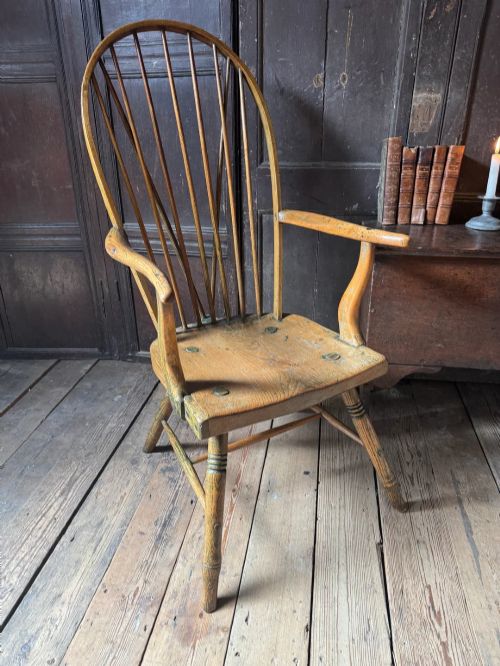
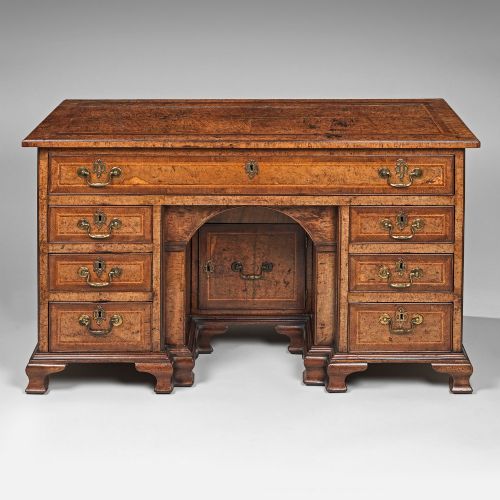
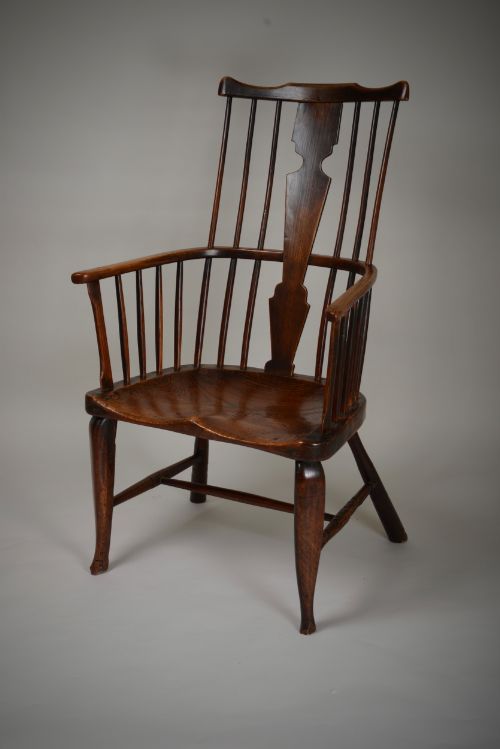
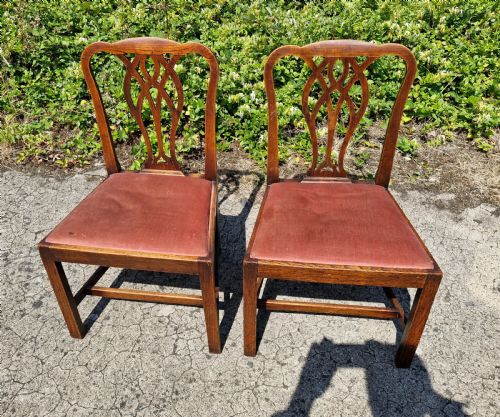
Georgian Elm Desk
A georgian elm desk brings honest character and rich, figured timber into a room, offering a durable workspace rooted in centuries of English country craftsmanship.
Georgian Elm Desk
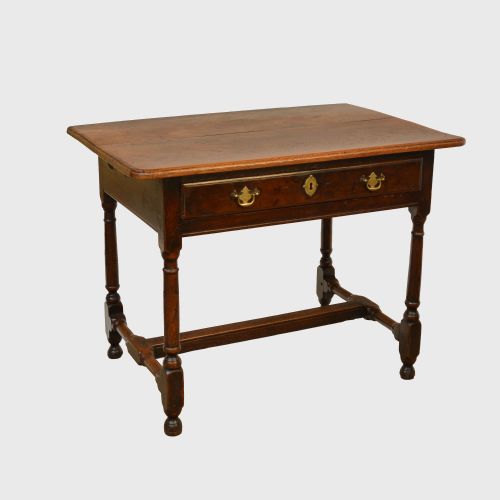
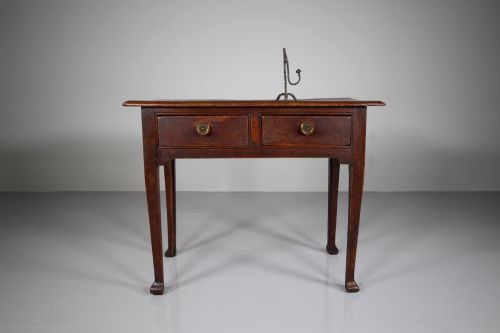
A georgian elm desk encompasses writing furniture produced during the eighteenth and early nineteenth centuries, often taking the form of kneehole desks, bureaux, or secretaire chests. These pieces emerge from English country house and vernacular traditions rather than urban workshops.
The version most commonly encountered in this selection combines solid elm with secondary timbers like ash or oak, reflecting regional cabinet-making practices across the Georgian period and into the Regency era.
How they were made
Cabinet-makers utilised solid elm for its dense, interlocking grain and resistance to splitting, frequently pairing it with ash, fruitwood, or oak for internal framing and structural stability.
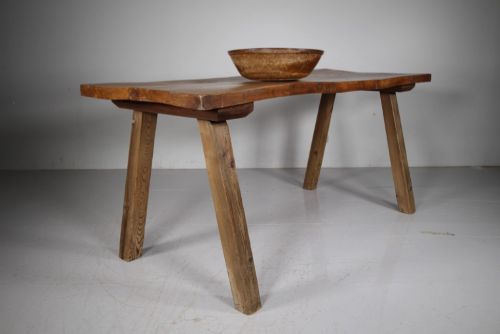
Surfaces were worked by hand using traditional planes and drawknives, highlighting the natural figure of burr elm or plain timber without heavy veneers, and joined with pegged mortise and tenon construction.
The listings show materials spanning solid elm, burr elm, ash, yew, oak, beech, and fruitwood across Georgian and Regency periods.
What varies in quality
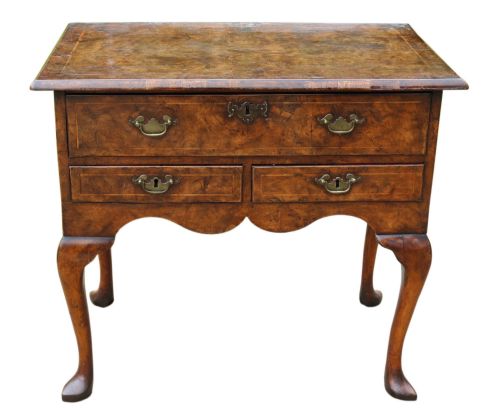
Quality rests in the selection of the timber, where heavily figured burr elm or well-matched planks create superior visual depth compared to plain, utility boards.
Construction integrity distinguishes finer examples, evident in the tightness of the drawer dovetails, the retention of original brass hardware, and the harmony of proportion across the writing surface and base.
The Georgian Elm Desk Glossary
- Elm
- A tough, durable hardwood native to Britain, known for its twisted grain and warm reddish-brown colour. This timber resists splitting, making it ideal for robust country furniture.
- Bureaus
- A sloping desk fitted with a hinged writing flap that opens to reveal small drawers and pigeonholes. These chests combine enclosed storage with a functional writing surface.
- Kneehole desk
- A flat-topped writing table featuring a central recessed space for the legs, flanked by pedestals of small drawers. They represent more formal Georgian cabinet-making.
- Vernacular
- Furniture produced by local country artisans following regional traditions rather than metropolitan pattern books. These pieces prioritise practical utility and local materials.
- Secretaire
- A cabinet or chest of drawers containing a fitted pull-down writing drawer with compartments for stationery. This form conceals writing equipment within a standard case piece.
Georgian Elm Desk: Frequently Asked Questions
How do I care for a georgian elm desk?
Keep the timber away from direct heat sources and sudden humidity shifts to prevent the wood from shrinking or cracking. Feed the grain occasionally with a traditional beeswax polish to maintain a soft lustre.
Avoid synthetic sprays or silicone-based cleaners that build up on the historic surface over time. Dust gently with a dry, soft cloth to protect the patina.
Can I use a georgian elm desk daily?
These desks were built for hard domestic and administrative use, making them sturdy enough for modern laptops and daily writing tasks. The tough nature of elm handles regular contact well.
Take care to protect the writing surface with a blotter or leather pad if you are writing heavily with fountain pens. Otherwise, normal daily use suits these robust country pieces perfectly.
How do I date a georgian elm desk?
Examine the construction methods inside the drawers, looking for hand-cut dovetails and timber linings rather than machine-sawn boards. Drawer bottoms planed from a single plank often indicate an eighteenth-century origin.
Compare the overall form and secondary woods against known period styles like George II or Regency. Hardware fixings and nail types also provide clues to the approximate decade of manufacture.
What is burr elm?
Burr elm forms from a growth deformity on the tree trunk that creates a dense cluster of swirling, turbulent grain patterns. Cabinet-makers prized this timber for its rich, speckled appearance on desk fronts.
Because burr timber is scarce and difficult to work, desks featuring this material usually indicate higher-status commissions. It provides a striking contrast to the plain elm used on the structural carcase.