



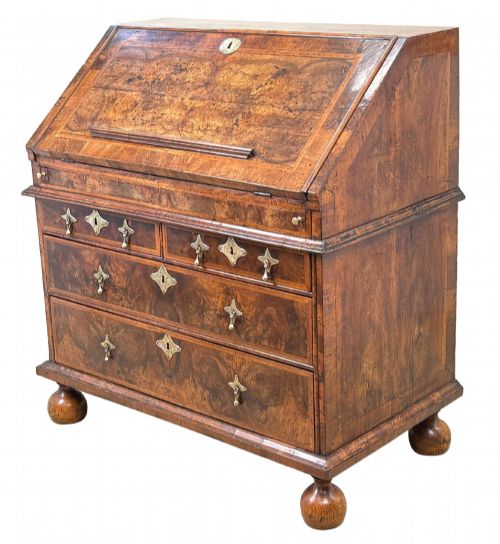


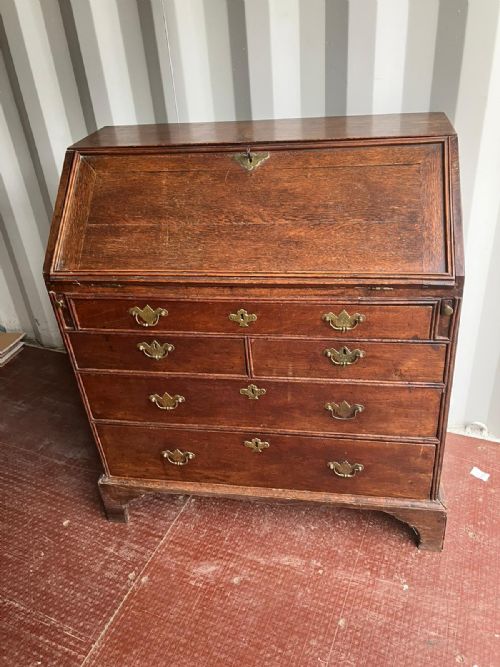

Georgian Period Slant Desk
A georgian period slant desk brings functional 18th-century writing fitted interiors and rich timber grain directly into a room.
Georgian Period Slant Desk
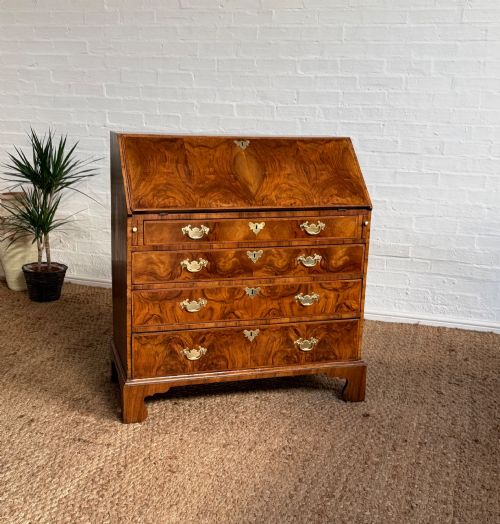
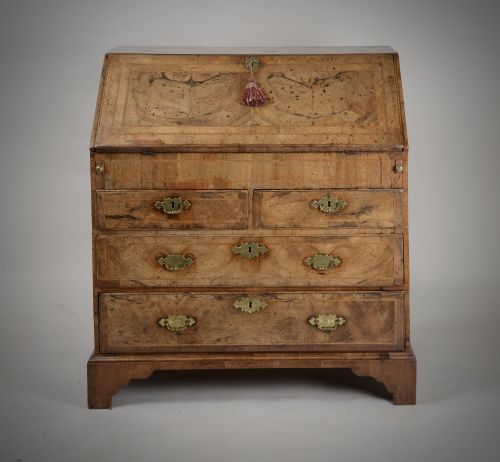
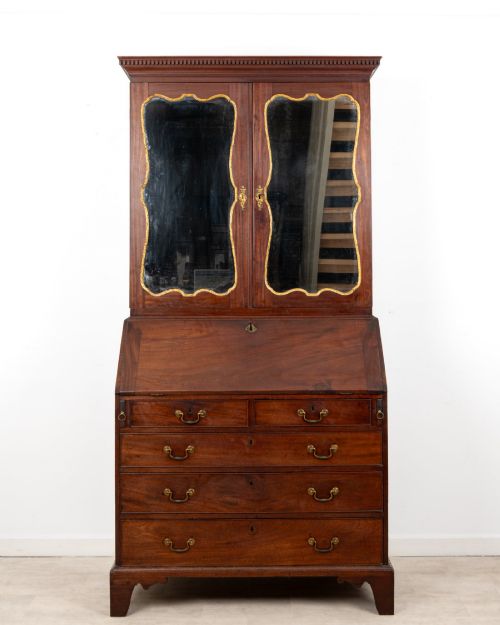
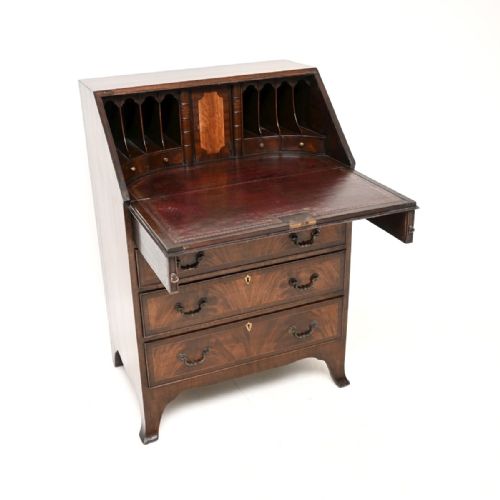
A georgian period slant desk encompasses walnut and mahogany bureaux, bureau bookcases, and tally desks originating across the 18th century and into the 1850s. The standard form provides a sloping fall-front that opens to reveal internal drawers and pigeonholes above larger lower drawers.
Buyers frequently encounter mahogany and walnut versions spanning the reigns from Queen Anne and George I through to George III. Smaller specialised pieces like oak stationery boxes and late Georgian davenports also appear within this group.
Markers of Quality
Superior examples display figured timber grains and burr walnut veneers carefully matched across the fall-front and drawer facades. Interior layouts featuring fitted pigeonholes, secret compartments, and Chippendale details distinguish finer workshop output.
The preservation of original surface finishes, patination, and fitted drawer configurations separates untouched period pieces from heavily restored or later altered examples.
Georgian Period Slant Desk Retail Price Guide 2026
Typical asking prices for georgian period slant desk among the pieces listed under this phrase on Sellingantiques today, from the lower quarter to the upper quarter. They describe what is for sale here now, not the wider market.
Listings span the 18th century, Georgian era, and extend to 1850, utilising walnut, mahogany, oak, elm, brass, and glass.
Giles Grendey
The Georgian Period Slant Desk Glossary
- Slant desk
- An antique writing desk featuring an angled hinged lid that drops forward to form a writing surface. This design conceals internal compartments for papers and ink.
- Bureau bookcase
- A tall cabinet combining a sloping writing desk base with upper shelving enclosed by doors. These units often feature glazed or mirrored panels.
- Burr walnut veneer
- Thin slices of decorative wood cut from walnut tree growths with distorted grain patterns. Cabinetmakers applied these decorative veneers to primary display surfaces.
- Fall-front
- The hinged sloping panel on a bureau that drops down for writing. It provides structural closure for the internal stationery nest.
- Patina
- The surface sheen and mellow colour developed by aged wood through handling, polishing, and oxidation over centuries. It indicates prolonged survival without harsh stripping.
Georgian Period Slant Desk: Frequently Asked Questions
What is a slant desk?
A slant desk is an antique writing cabinet featuring an angled fall-front lid that opens downward. This slope creates a flat writing surface and grants access to internal pigeonholes and small drawers.
These pieces served domestic and administrative needs throughout the 18th century, keeping correspondence and writing materials organised.
How do I identify a Georgian bureau?
You identify a Georgian bureau by examining the timber species, construction methods, and hardware styles associated with the 18th century. Look for cabinet proportions, dovetailed drawer construction, and period brasses.
Early pieces often utilise walnut or burr walnut veneer, while later examples frequently employ solid mahogany or oak with fitted bracket feet.
Where were these desks used?
These desks were used in private studies, libraries, and withdrawing rooms for managing personal accounts and correspondence. The lockable fall-front kept private documents secure.
Their compact footprint allowed them to sit comfortably against walls in domestic living spaces rather than dedicated offices.
How do I care for walnut veneer?
You care for walnut veneer by keeping the timber away from direct sunlight and maintaining stable indoor humidity levels. Sudden environmental shifts cause wood movement and veneer lifting.
Apply traditional wax polishes sparingly and buff gently with a soft cloth to preserve the natural grain and historic patination.