
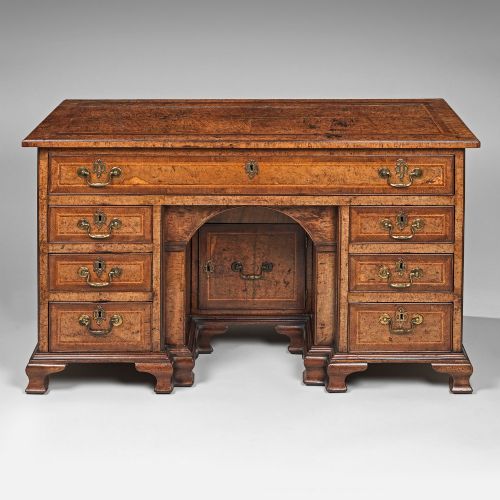


Georgian Elm Bureau
A georgian elm bureau brings a rich grain and honest utility to any room, offering a fitted writing surface and discreet drawers.
Georgian Elm Bureau
When you search for a georgian elm bureau, you are looking at practical writing furniture created during the eighteenth and nineteenth centuries, often taking the form of a fall-front desk that conceals a fitted interior of small drawers and pigeonholes. These pieces range from substantial desks to small tabletop versions, alongside related forms such as kneehole desks and chests of drawers.
The versions you are most likely to meet on this page hail from the eighteenth century and the Georgian period, occasionally reaching into nineteenth-century revivals or Edwardian interpretations dated around nineteen ten. Woods such as burr elm dominate the better examples, frequently accompanied by secondary timbers like oak, yew, or burr walnut.
Stylistic influences vary from plain regional Georgian work to George II, Queen Anne, and eighteenth-century Dutch aesthetic traditions. Some pieces incorporate rococo flourishes, while others rely entirely on the striking figure of the timber rather than carved ornamentation.
How they were made
Cabinetmakers utilised solid elm and burr elm for these desks, exploiting the timber's twisting grain and warm honey tones to create durable writing surfaces and drawer fronts. Secondary woods such as oak appear in the internal construction of drawers and carcases.
Metalwork played a functional and decorative role, with brass hardware utilised for handles and escutcheons on the fall fronts and drawer banks. Construction methods relied on traditional joinery to accommodate the robust nature of elm.
Listings feature pieces spanning from the early eighteenth century through to nineteen ten, constructed primarily in elm, burr elm, oak, and yew.
What varies in quality
The distinction between ordinary and exceptional examples rests upon the choice of timber, particularly the selection of burr elm veneers that display lively figure and deep patterning. Better pieces exhibit finer internal joinery within the fitted compartments behind the fall front.
Proportion also dictates the standing of a desk, with smaller formats commanding greater attention for their compact domestic scale. The preservation of original brass hardware and the untouched warmth of the surface patina further elevate the standing of an individual bureau.
The Georgian Elm Bureau Glossary
- Bureau
- A writing cabinet featuring a sloping fall front that opens to reveal a fitted interior of small drawers and pigeonholes. This form served as a portable office for correspondence and record-keeping in domestic interiors.
- Burr Elm
- A knotty, highly figured growth on the elm tree that produces swirling patterns when sliced into veneer. Cabinetmakers prized this timber for decorative drawer fronts and fall-front panels.
- Kneehole Desk
- A compact desk featuring a central recessed space for the sitter's legs, flanked by pedestals of small drawers. This form provides substantial storage while maintaining a manageable footprint.
- Fall Front
- The hinged writing flap of a bureau that pulls down to create a horizontal desk surface. It conceals the internal compartments when closed and secured.
- Escutcheon
- A protective brass plate surrounding a keyhole on a drawer or fall front. It prevents the surrounding timber from splitting or wearing away through repeated use of the key.
Georgian Elm Bureau: Frequently Asked Questions
What is a georgian elm bureau?
A georgian elm bureau is a traditional writing desk from the eighteenth century featuring a sloping lid that folds down for writing. Inside, it contains small drawers and pigeonholes for letters and papers.
Beneath the writing flap, these desks typically offer several long drawers for storage. They combine sturdy construction with the distinct figured grain of elm timber.
How were these desks used?
These pieces served as private writing spaces and storage cabinets for household accounts, correspondence, and valuable documents. The sloping lid provided a firm surface for quill and ink.
When closed, the fall front secured the contents away from view and dust. The interior compartments kept stationery and ledgers organised.
How do I care for elm furniture?
Keep elm furniture away from direct sources of heat and strong sunlight to prevent the timber from drying out or splitting. Maintain a stable room temperature to protect the antique wood.
Apply a traditional beeswax polish occasionally to nourish the grain and preserve the surface shine. Avoid using modern chemical sprays or abrasive cloths.
How do I tell different periods apart?
Eighteenth-century pieces often display hand-cut dovetails and simpler regional construction methods. Later nineteenth-century examples may incorporate machine-sawn elements or different internal secondary woods.
Stylistic cues such as Queen Anne curves or George II proportions also help assign a piece to its specific era. Examining the drawer construction and brass hardware reveals much about the date of manufacture.