




Georgian Ebonised Furniture
Georgian ebonised furniture brings dark, striking surfaces and classic proportions into a room, offering both dramatic contrast and understated refinement.
Georgian Ebonised Furniture
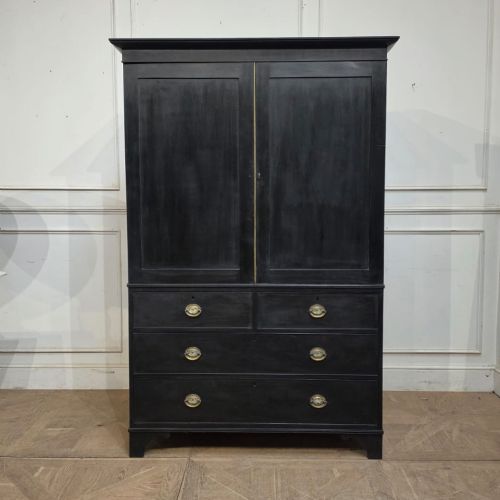
Georgian ebonised furniture encompasses practical household items finished with dark, blackened surfaces that mimic solid ebony. Pieces span distinct forms including games tables, console tables, chests of drawers, and linen presses.
Makers of this era employed ebonised finishes across several periods, most notably the Regency era and the wider eighteenth and nineteenth centuries. Buyers frequently encounter occasional tables and games tables featuring these dark finishes alongside contrasting woods.
The aesthetic merges classical proportions with sombre, elegant tones, providing functional storage and display surfaces. Surviving examples demonstrate the versatility of dark finishes in both formal parlours and country houses.
How they were made
Craftsmen utilised various native and exotic timbers, applying dark paint, ink, or specialised ebonising techniques to achieve a uniform black finish. This dark ground often served to highlight intricate penwork decoration or contrasting inlay.
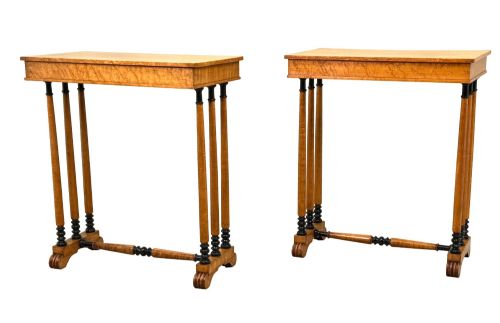
Workshops frequently combined ebonised wood with lighter secondary timbers such as satinwood, birdseye maple, or kingwood. Additional materials like brass and marble appeared on console tables and games tables to provide textural contrast.
Listings feature diverse forms including games tables, console tables, linen presses, and folio cabinets spanning Georgian and Regency periods.
What varies in quality
The standard of execution in the ebonised finish and the crispness of secondary decorative elements dictate the overall quality of a piece. Finer examples display meticulous penwork and precise application of contrasting veneers like satinwood or maple.
Proportion and structural integrity separate standard utility pieces from high-design commissions intended for prominent rooms. The integration of quality secondary materials, such as marble tops or brass mounts, elevates the standing of specific tables and cabinets.
George Merrifield·Gillows
The Georgian Ebonised Furniture Glossary
- Ebonised wood
- Timber treated with stain, paint, or ink to resemble costly solid ebony. This technique allowed cabinetmakers to achieve a dense black surface on more accessible woods.
- Penwork
- Decorative surface ornamentation executed with ink using a fine pen. It frequently appears on Regency tables in geometric or pictorial motifs.
- Whatnot
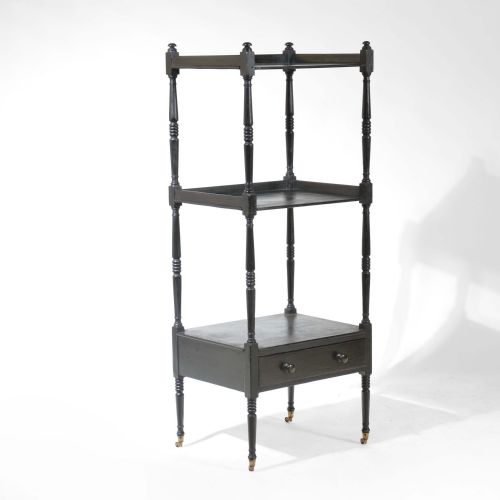
- A set of open shelves used for displaying ornaments or holding books. These freestanding pieces appeared in various woods and finishes during the Georgian and Regency periods.
- Secretaire
- A desk or cabinet featuring a pull-down writing flap that conceals small drawers and pigeonholes. It combines storage with a dedicated writing surface.
- Console table
- A table designed to stand against a wall, often supported by brackets or legs. Grander versions frequently incorporated marble tops and decorative coats of arms.
Georgian Ebonised Furniture: Frequently Asked Questions
What is ebonised furniture?
Ebonised furniture consists of wooden pieces treated with a dark stain, paint, or ink to imitate expensive ebony. This finish gained popularity for its dramatic appearance and ability to highlight inlaid details.
Cabinetmakers applied this treatment across various forms, from games tables to large linen presses, creating a striking contrast with lighter secondary woods.
How do I date these pieces?
Dating relies on examining structural characteristics, timber choices, and stylistic markers associated with the Georgian and Regency periods. Secondary woods and construction methods offer reliable clues regarding age.
Certain decorative techniques, such as delicate penwork or specific brass mounts, point clearly to the early nineteenth century or late eighteenth century.
Where were these pieces used?
These items functioned in principal rooms such as drawing rooms, libraries, and formal parlours. Games tables provided recreation, while console tables served decorative display purposes.
Cabinets and chests fulfilled practical storage needs in bedrooms and dressing rooms, combining utility with fashionable dark finishes.
How do I care for dark wood?
Maintenance involves protecting the dark surface from direct sunlight and excessive moisture to prevent fading or lifting of the finish. Gentle dusting with a soft cloth preserves the sheen.
Avoid harsh chemical cleaners that can strip or damage the historic ebonised layers and underlying timber.