
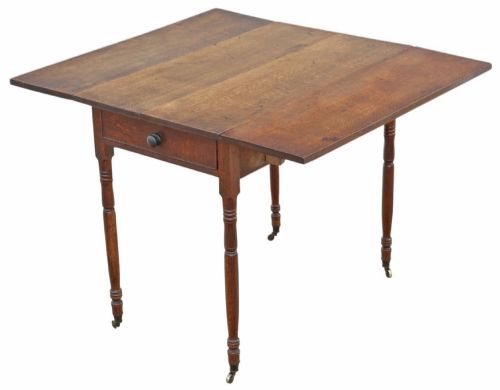
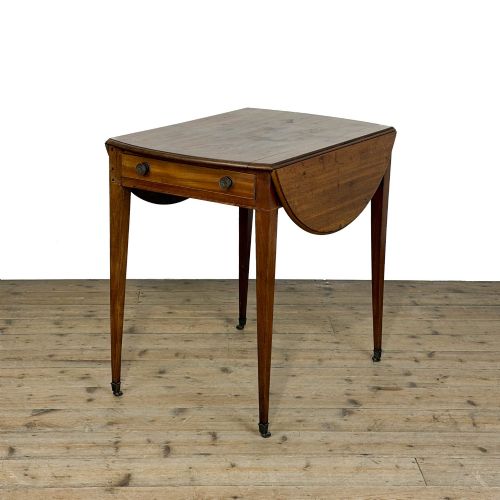

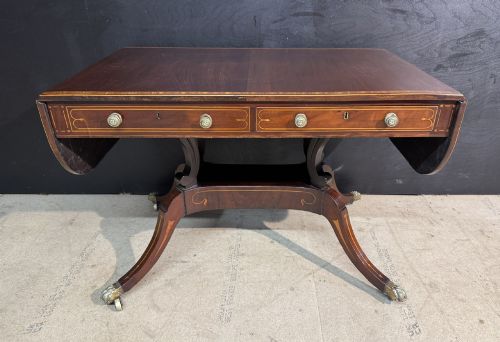
Georgian Drop Side Table
A georgian drop side table provides folding versatility through hinged leaves, offering compact proportions alongside extended surface space when dining or working.
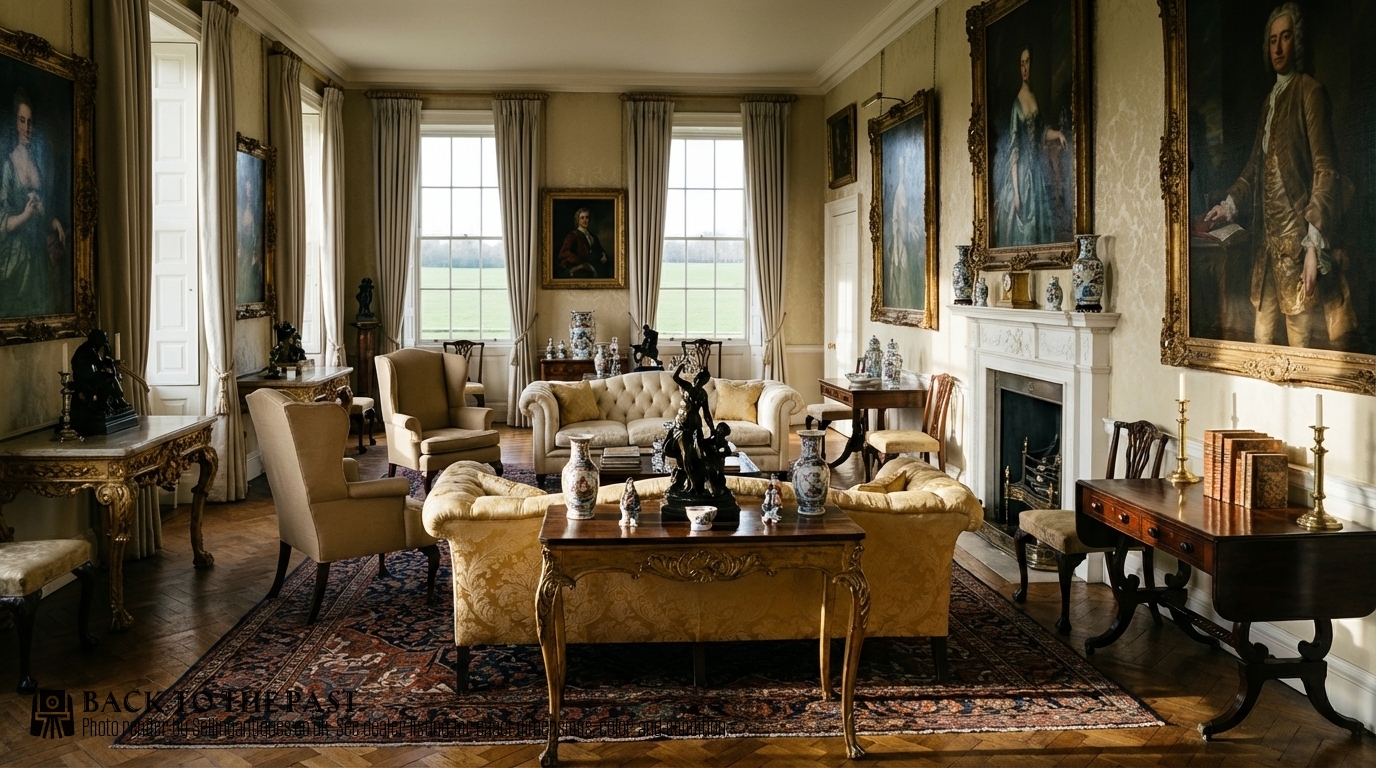
Georgian Drop Side Table
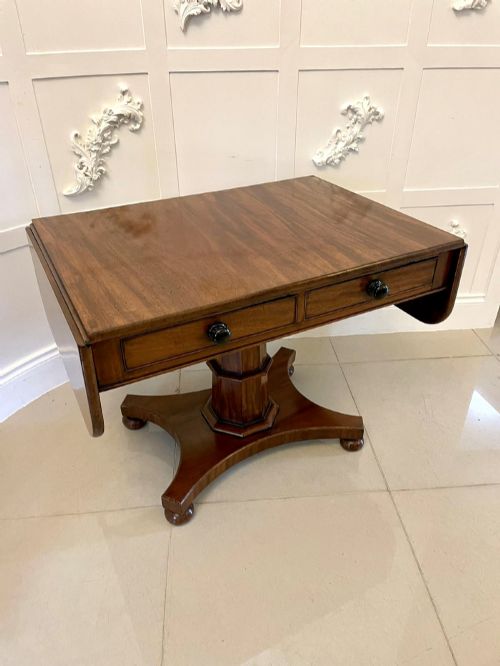
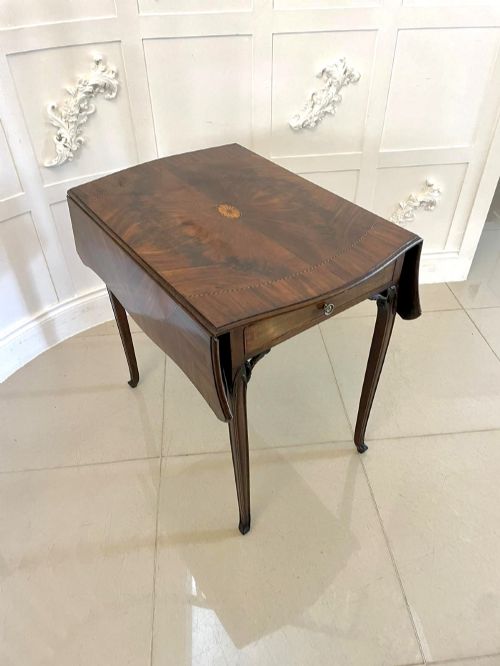
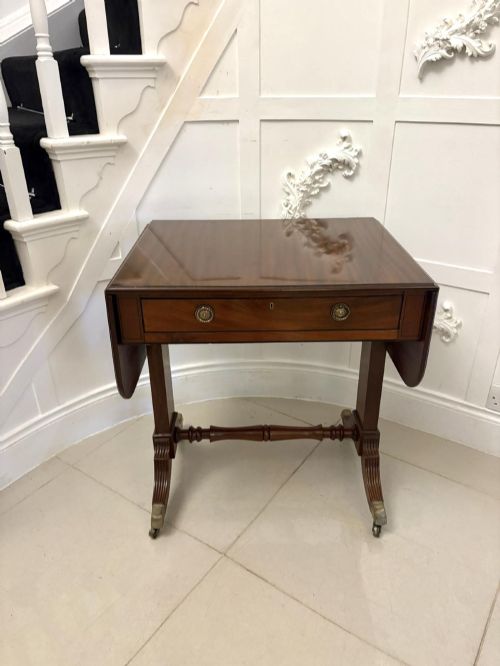
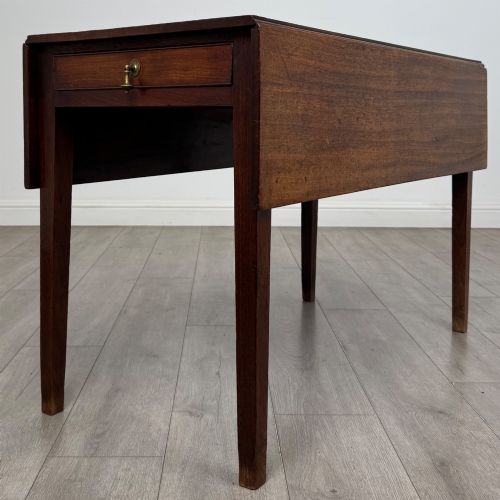
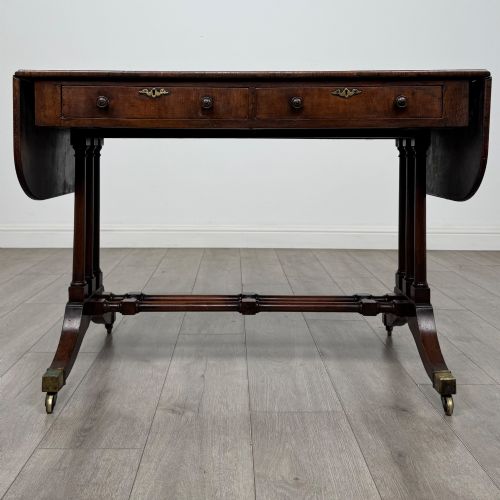
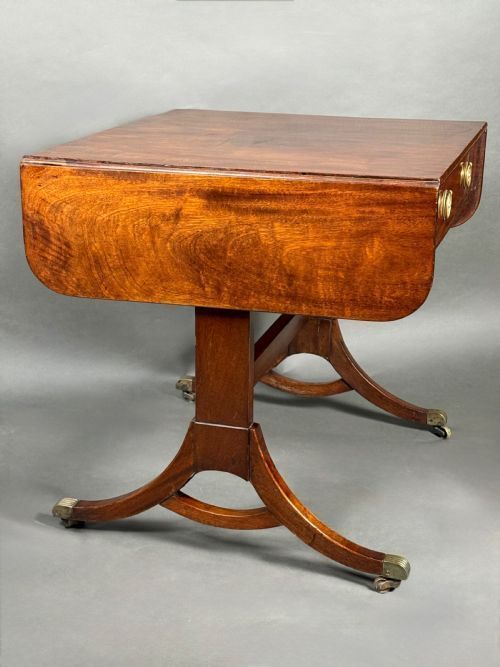
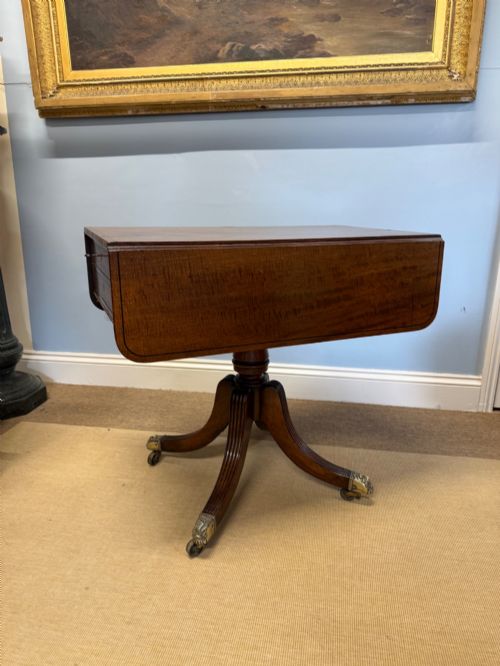
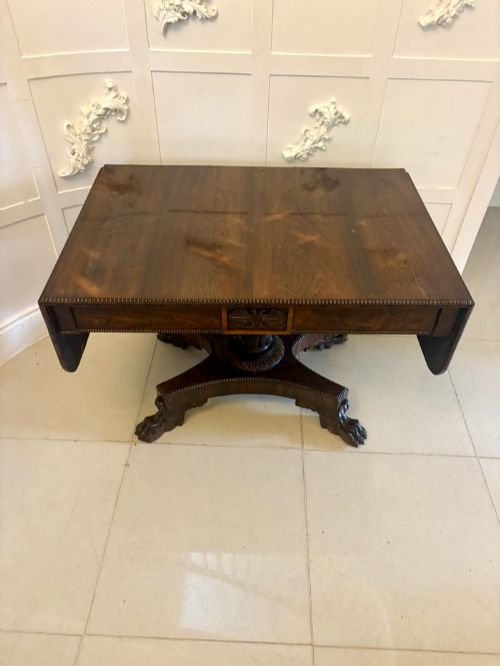
A georgian drop side table typically manifests as a Pembroke, sofa, or gateleg table designed to save interior space when leaves drop downward. These forms date primarily across the eighteenth and nineteenth centuries, spanning George III, Regency, and William IV eras.
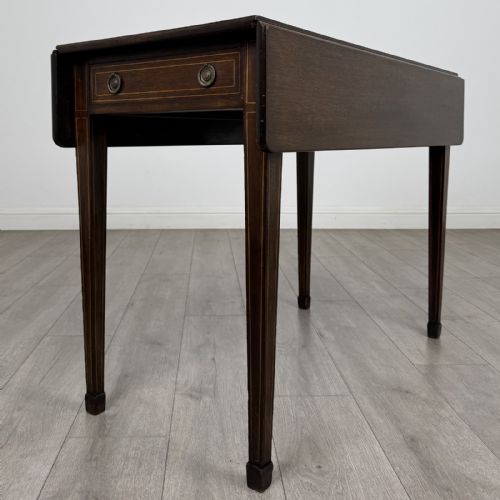
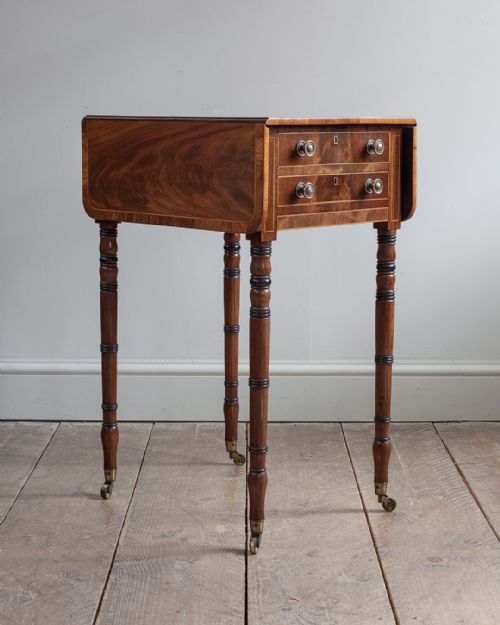
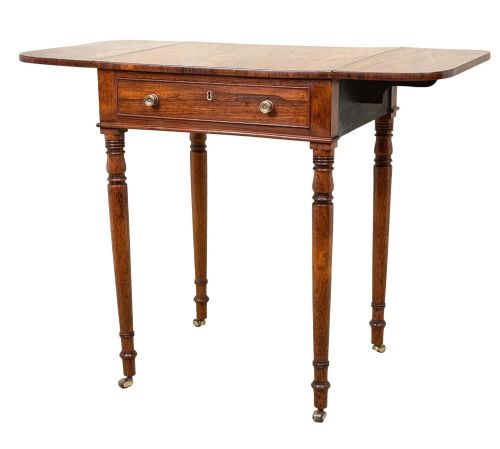
Most examples found on this page are constructed from mahogany, oak, or rosewood, taking the shape of Pembroke tables with single or twin drawers and drop flaps. Makers often produced them as occasional, writing, or sewing tables for domestic parlours.
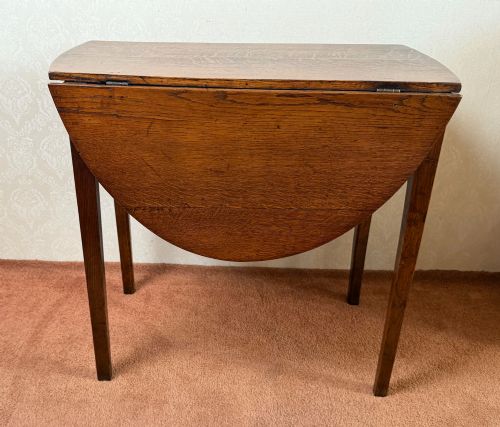
Earlier iterations lean towards solid oak gateleg designs with turned underframes, whilst later Regency and Georgian pieces employ figured mahogany, satinwood inlay, and brass castors.
Materials and Technique
Cabinetmakers constructed these tables using primary hardwoods such as mahogany, rosewood, and oak, frequently incorporating secondary timbers like boxwood for delicate stringing and inlay. Timber selection dictated whether the piece relied on structural solid oak or decorative flame mahogany veneers laid over softer bases.
Hinged drop leaves depended on swing brackets, rule joints, or gateleg pivoting gates to support the extended flaps under load. Drawer construction utilised traditional hand-cut dovetails, accompanied by turned wooden or cast brass drop handles.
Many sewing tables secretly housed tiny compartments for needles and thread, proving our ancestors loved hidden storage just as much as we do.
Judgement of Quality
Quality rests upon the choice of timber and the precision of the cabinetmaker's joinery, visible in figured flame mahogany veneers and crisp crossbanding. Superior pieces retain matching grain patterns across the leaves and top, alongside original brass hardware and structural stability in the folding action.
Lesser examples display mismatched timber selections, replacement hinges, or clumsy repairs to the rule joints supporting the drop flaps.
The Georgian Drop Side Table Glossary
- Pembroke table
- A small occasional table featuring two hinged drop leaves on opposite sides, usually equipped with one or more drawers. It gained widespread popularity during the eighteenth century for breakfast and writing use.
- Rule joint
- A moulded joint connecting a table top to its drop leaf, designed to hide the hinge mechanism and leave a neat edge when the leaf is raised. It creates a seamless visual transition across the plane.
- Gateleg table
- A table with hinged leaves supported by legs that swing outward like a gate to bear the weight. This construction allows sturdy timber frames to hold heavy loads.
- Crossbanding
- A strip of veneer applied perpendicularly to the main grain direction around the border of a table top. This decorative technique frames the central panel using contrasting timber colours.
- Flame mahogany
- A highly figured cut of mahogany veneer showing rippled, flame-like patterns caused by intersecting grain growth. Cabinetmakers reserved this material for prominent surfaces on high-status furniture.
Georgian Drop Side Table: Frequently Asked Questions
Where were these tables used?
These tables served primarily in sitting rooms, parlours, and bedrooms as versatile surfaces for writing, sewing, or serving tea.
Their folding leaves allowed them to sit compactly against a wall until needed for hospitality or domestic tasks.
How do I distinguish oak from mahogany?
Oak displays prominent medullary rays and an open, coarse grain structure typical of seventeenth and eighteenth-century country furniture.
Mahogany offers a denser, reddish-brown hue with finer grain lines that suit the refined veneers of the Regency and Georgian periods.
Can I use a drop side table for dining?
Smaller Pembroke and gateleg versions accommodate intimate meals when both leaves are raised and secured by their support brackets.
Heavier gateleg variants provide substantial dining capacity while retaining the ability to fold flat against a wall.
What is a rule joint?
A rule joint is a specialised moulded hinge connection that allows a drop leaf to move smoothly without exposing the metal hinge mechanism.
It ensures the joint remains neat and stable whether the leaf hangs down or locks into a horizontal position.