

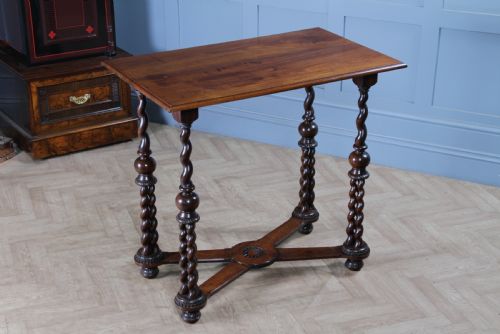


Carved Stretcher Sofa Table
A carved stretcher sofa table combines generous proportions with sturdy under-bracing, offering a functional surface rooted in nineteenth-century craftsmanship.
Carved Stretcher Sofa Table
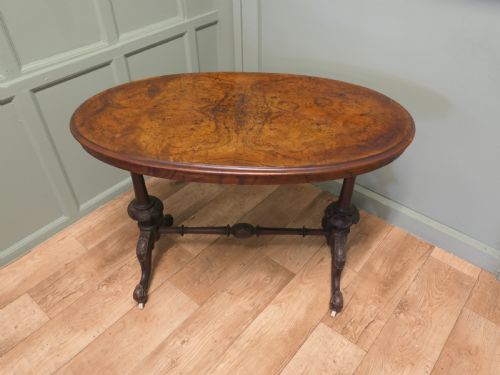
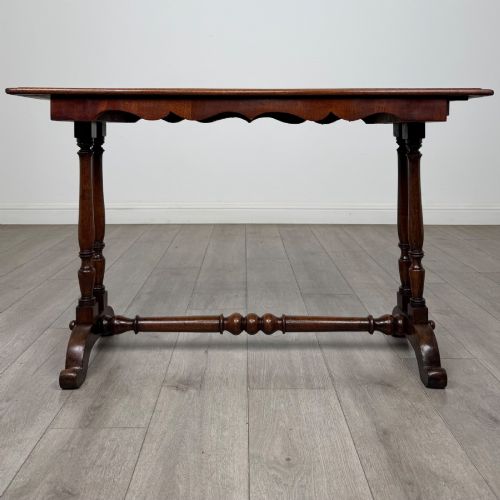
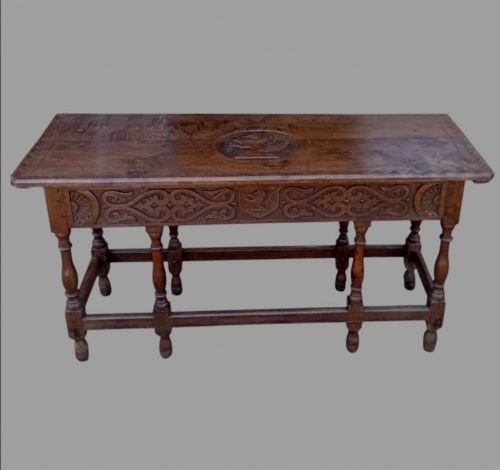
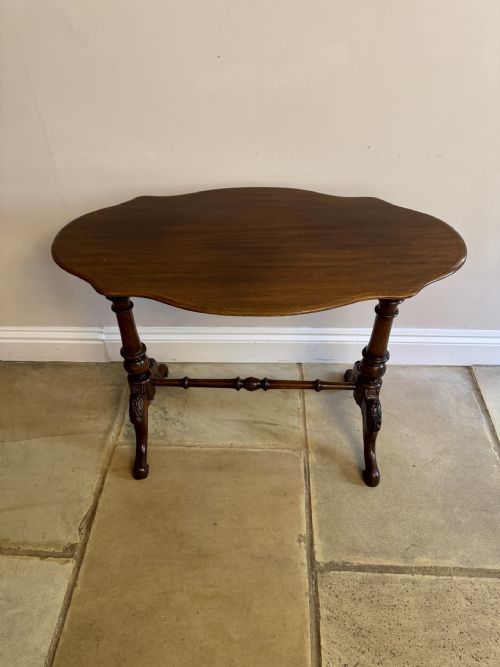
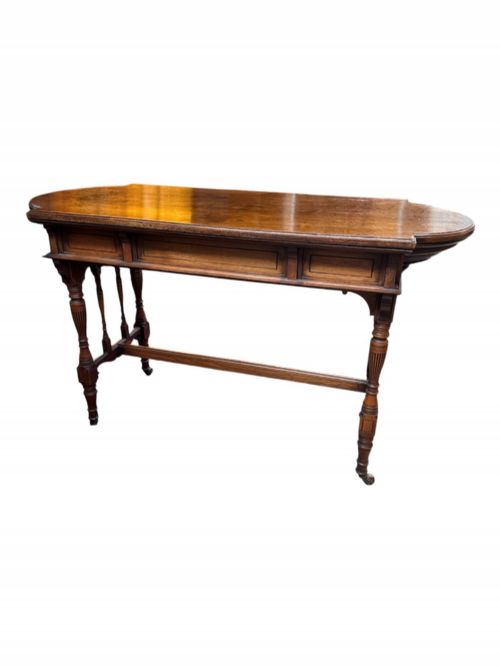
When searching for a carved stretcher sofa table, buyers encounter a variety of forms primarily spanning the nineteenth century, including Victorian and William IV examples. These pieces typically function as central display surfaces or serving tables, distinguished by their lower cross-bracing.
The materials span rich dark timbers like rosewood and mahogany alongside lighter figured grain surfaces such as burr walnut and burr oak. While specific sofa tables emerge in Georgian and later contexts, the selection includes related side, centre, and library tables sharing similar underframe construction.
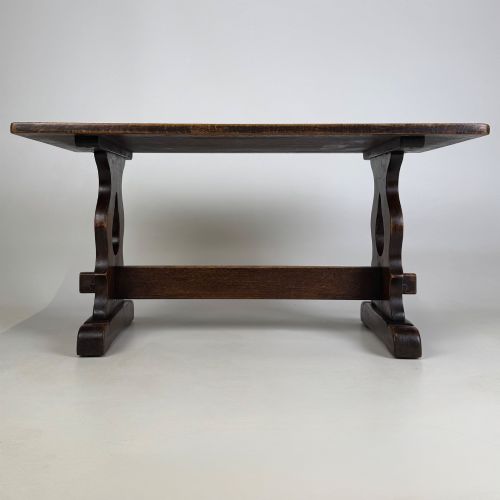
Makers and workshops utilised diverse regional styles, moving from formal Regency lines through ornate Victorian Rococo Revival to simpler Edwardian oak interpretations. Selecting a piece involves weighing the presence of structural stretchers against the decorative carving on the legs and aprons.
Materials and Construction Techniques
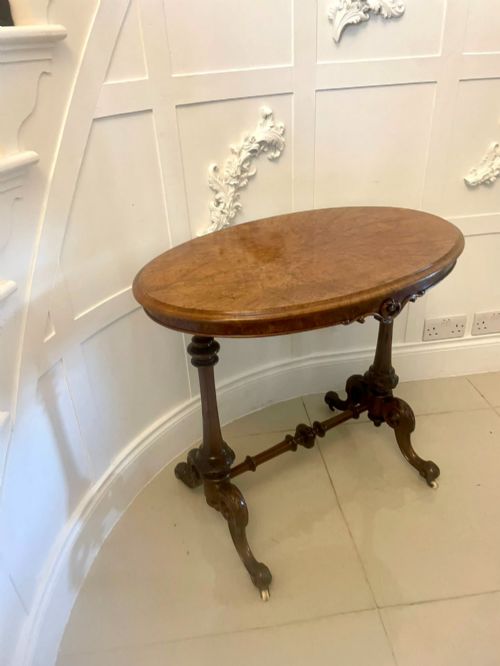
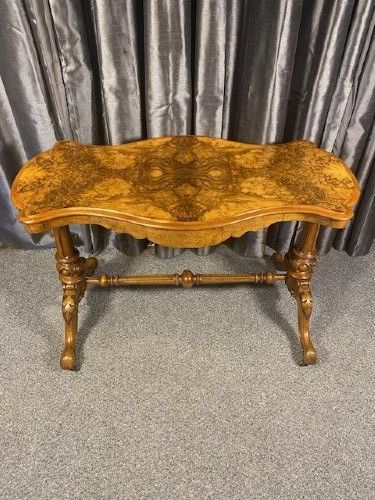
Cabinetmakers constructed these tables using dense hardwoods such as mahogany, rosewood, and oak, often applying decorative veneers of burr walnut to prominent table tops. Solid timber formed the robust stretcher bases, which provided essential lateral stability to support heavy loads without warping.
Joinery relied on traditional mortise and tenon techniques to secure the stretcher frames between the legs, ensuring long-term rigidity. Detailed hand-carving adorned the legs and central pillars, transforming functional structural supports into ornate decorative elements.
Current listings demonstrate a strong preference for Victorian burr walnut, alongside Edwardian oak and nineteenth-century rosewood.
Assessing Quality and Execution
The caliber of a piece rests heavily on the depth and crispness of the hand-carved elements, where sharp detail distinguishes superior workshop output from softer, later machine work. Selection of timber also dictates value, particularly the symmetry and rich figuring found in high-grade burr walnut veneers.
Structural integrity at the stretcher joints determines daily usability, with premier examples showing tight, flush connections that eliminate wobble without modern hardware. Original brass fittings, well-fitted drawers, and stable timber movement further separate standard production items from exceptional survivals.
The Carved Stretcher Sofa Table Glossary
- Stretcher
- A horizontal timber rail connecting the legs of a table to provide structural stability. These cross-braces often feature decorative turnings or central finials.
- Burr walnut
- A highly figured wood veneer taken from the wart-like growths on walnut trees. It yields intricate, swirling grain patterns prized for decorative table tops.
- Sofa table
- A rectangular occasional table traditionally designed to stand directly behind a sofa. These pieces frequently incorporate drop leaves and small drawers.
- Rosewood
- A heavy, dense tropical timber featuring dark brown and reddish grain. Cabinetmakers favored it during the nineteenth century for formal reception room furniture.
- Refectory
- A long, narrow table style originally used in dining halls. Examples employ low stretchers to anchor the heavy legs against lateral stress.
Carved Stretcher Sofa Table: Frequently Asked Questions
What is a stretcher table used for?
These tables provide a stable surface for display, writing, or serving in living spaces and hallways. The lower cross-bracing historically added rigidity for daily domestic use.
Today, they serve equally well as freestanding centre tables or placed against walls to hold lamps and decorative objects.
How do I identify Victorian examples?
Victorian pieces frequently display rich timber choices like burr walnut and rosewood, often paired with elaborate turning or carving. Look for distinct nineteenth-century construction methods beneath the top.
Revival styles from this era also draw heavily on earlier Georgian and William IV design vocabulary.
Are these tables suitable for everyday use?
Solid hardwood construction and robust stretcher frames make these tables remarkably durable for contemporary homes. The under-bracing distributes weight and prevents the legs from loosening over time.
Routine care involves maintaining stable indoor humidity to protect delicate wood veneers and polished finishes.