

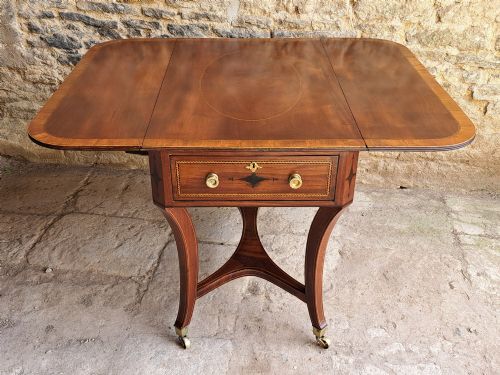
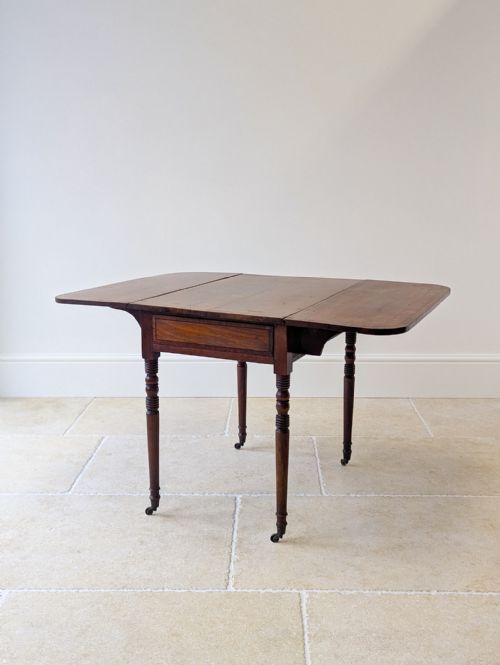
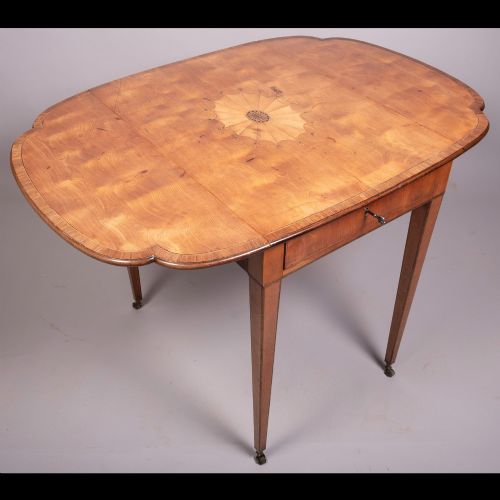
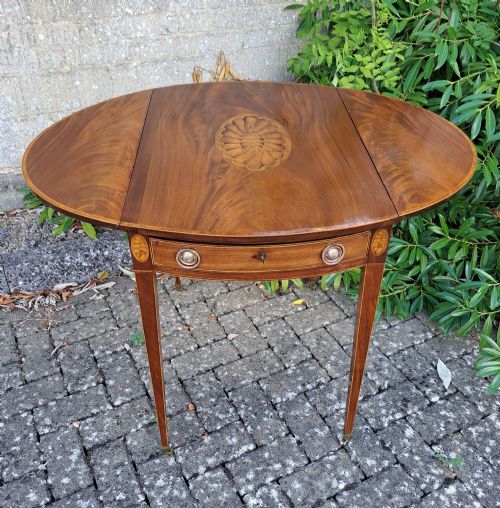
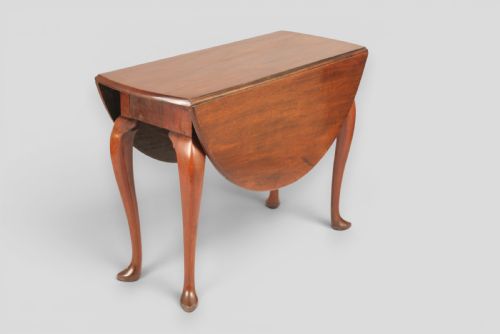

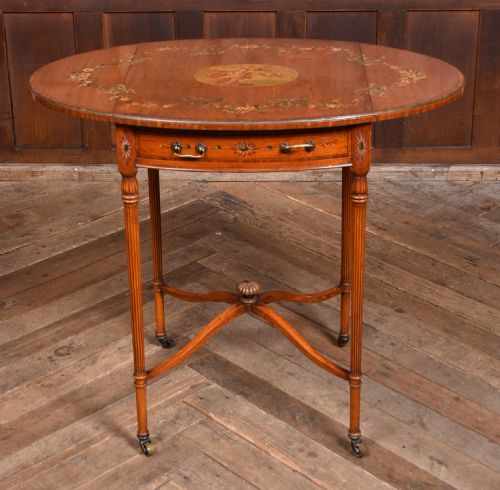
Georgian Drop Leaf Tea Table
A georgian drop leaf tea table brings fluid folding versatility to a room, offering an expandable surface built for hospitality.
Georgian Drop Leaf Tea Table
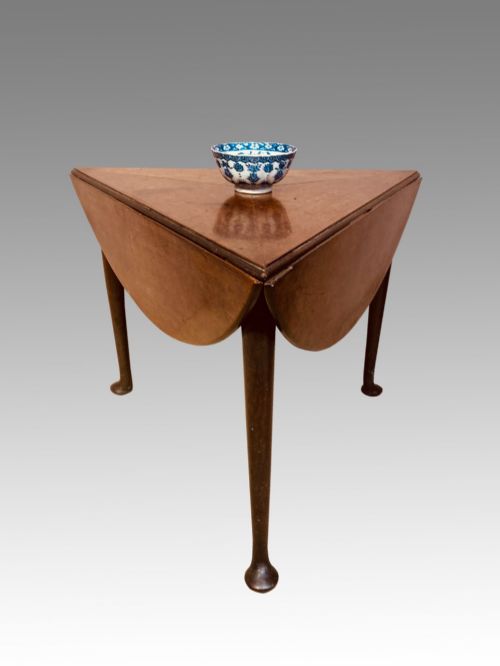
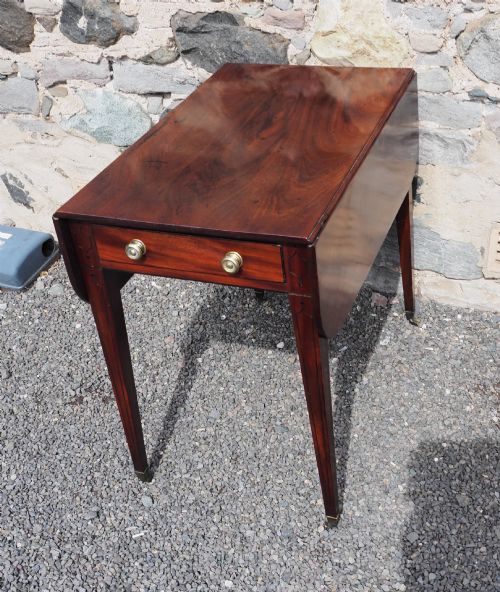
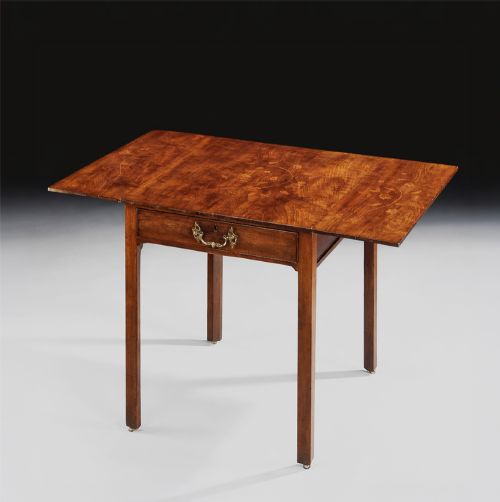
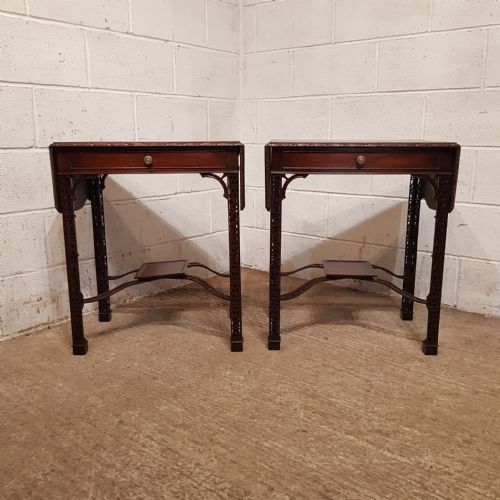
When you search for a georgian drop leaf tea table, you enter a field dominated by Pembroke tables, spider leg tables, and corner folding tables spanning the eighteenth century into the Regency period. These pieces were designed to sit compactly against a wall and open swiftly when guests arrived for tea or card games.
The materials and forms reflect the shifts of Georgian, George III, and Regency design, moving from dark native timbers to lighter exotic veneers. You will encounter red walnut, Cuban mahogany, and satinwood, often enhanced by boxwood inlay or marquetry details.
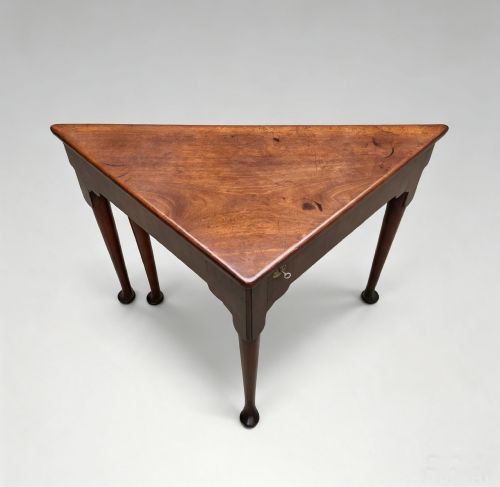
Occasional tables and side tables appear alongside specific tea and breakfast forms, demonstrating how domestic furniture evolved to suit changing social rituals. The survival of these pieces ranges from simple spider leg drop-leaf tables to refined envelope and handkerchief folding tables.
Judging quality in folding tables
The distinction between ordinary and exceptional examples lies in the selection of timber and the crispness of the cabinetwork. High-grade pieces use figured Cuban mahogany or finely matched satinwood veneers that display depth and movement under light.
Construction details dictate longevity, particularly the tightness of the knuckle joints on drop leaves and the precise alignment of drawers and folding flaps. Refined pieces maintain structural rigidity even when fully extended, whereas lesser examples show looseness in the hinged supports.
Some drop-leaf tables include clever deception tops that conceal hidden storage compartments for tea canisters.
The Georgian Drop Leaf Tea Table Glossary
- Pembroke table
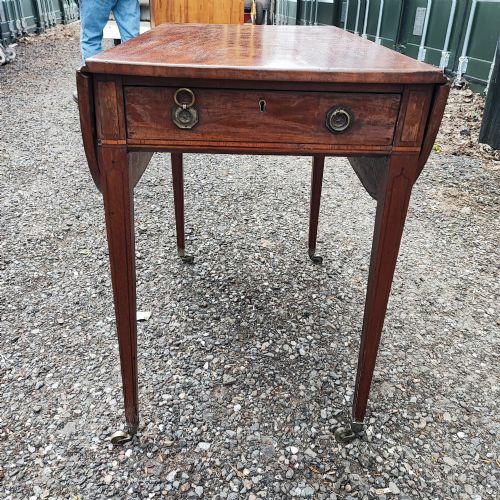
- A small rectangular table with two hinged drop leaves on opposite sides, frequently fitted with one or two small drawers. This form became a staple of late eighteenth-century domestic interiors.
- Spider leg table
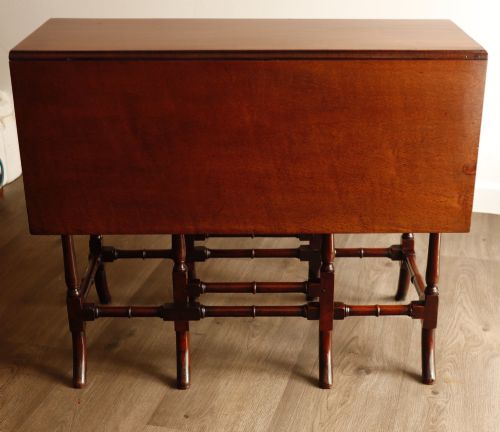
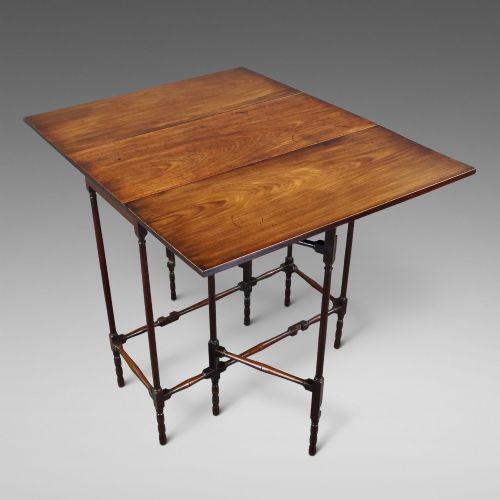
- A slender, delicate drop-leaf table supported by numerous thin turned legs connected by fine stretchers. The configuration provides a lightweight appearance while maintaining stability.
- Cross banding
- A decorative border technique where veneer strips are laid perpendicular to the grain of the central panel. This frames the top surface of a table with contrasting grain direction.
- Marquetry
- The art of creating decorative patterns by fitting together small pieces of coloured wood veneer. It appears frequently on satinwood and harewood surfaces from the Georgian period.
- Envelope table
- A square folding table whose top consists of four triangular flaps that swivel and fold open to reveal a baize-lined interior. It functions as both a small side table and a card table.
Georgian Drop Leaf Tea Table: Frequently Asked Questions
What is a pembroke table?
A Pembroke table is a versatile drop-leaf design featuring hinged flaps on two opposing sides and often a small drawer. It was used as an occasional or tea table in Georgian reception rooms.
Its compact footprint allowed it to stand out of the way against a wall until extra surface area was needed.
How do I tell a spider leg table apart?
Spider leg tables are distinguished by exceptionally slender turned uprights linked by delicate stretchers. They provide a lightweight folding surface well suited to tea service.
The thin wooden members create a distinctive open profile unique to eighteenth and nineteenth-century examples.
Where were these tables used?
These folding tables served primarily in sitting rooms and parlours for serving tea, holding books, or playing cards. Their drop leaves allowed households to adapt room layouts quickly.
They moved easily to the centre of a room when entertaining and returned to the perimeter afterward.
How do I spot mahogany variations?
Standard mahogany offers a rich, uniform reddish-brown tone, whereas Cuban mahogany displays a denser grain and deeper chatoyancy. Cabinetmakers reserved the heavier Cuban timber for high-status pieces.
Examining the underside and drawer linings often reveals the distinct weight and colour of the original wood.