





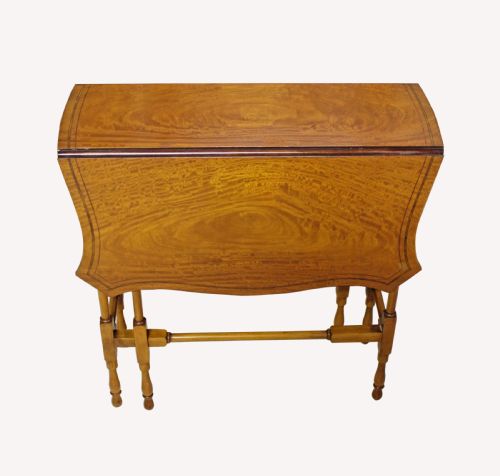


Edwardian Inlaid Pembroke Table
These edwardian inlaid pembroke tables are compact drop-leaf folding pieces of antique furniture designed for flexibility and ease of movement.
Edwardian Inlaid Pembroke Table
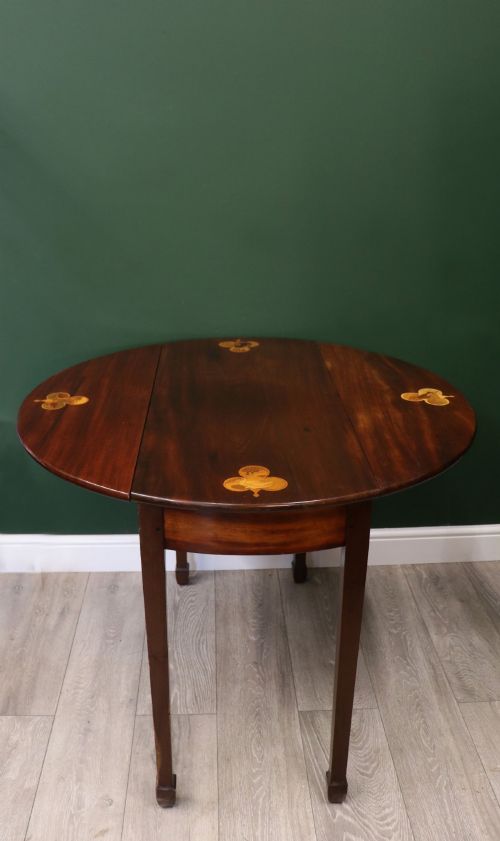
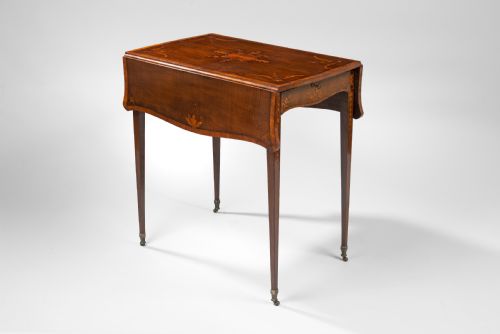
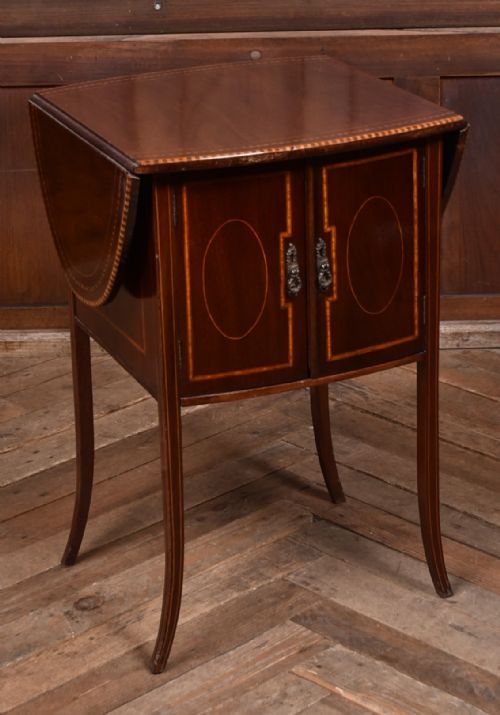
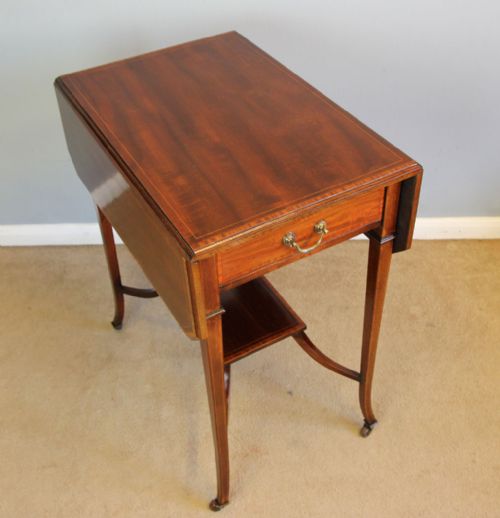
An edwardian inlaid pembroke table represents a refined evolution of a classic eighteenth-century form, frequently taking the shape of a drop-leaf occasional table. These versatile items typically feature folding flaps on either side, supported by hinged brackets or swinging legs, allowing the surface area to expand when required.
The pieces appearing on this page span several periods and styles, with Edwardian examples dominating alongside earlier Georgian and Sheraton Revival designs. Buyers encounter oval and rectangular formats functioning as side tables, lamp tables, or sewing tables within domestic spaces.
How they were made
Cabinet makers utilised select timbers such as mahogany and satinwood for the primary carcase and surfaces. Harewood and boxwood inlay frequently decorate the tops, creating contrasting geometric or floral patterns.
Additional materials like brass hardware and bone accents appear on specific components, while fabric occasionally lines compartments in related work tables.
Listings span Edwardian, Georgian, and eighteenth-century periods, showcasing forms from simple drop-leaf coffee tables to intricate marquetry work tables.
What varies in quality
Quality separates along the precision of the boxwood and satinwood inlay work and the choice of primary timber. Finer examples display meticulous attention to detail in the marquetry and crispness of the drop-leaf hinges.
The proportion and elegance of the legs, whether reeded or tapered, dictate the overall balance of the piece.
The Edwardian Inlaid Pembroke Table Glossary
- Pembroke table
- A small table with two hinged drop leaves on opposite sides, developed during the eighteenth century.
- Drop-leaf
- A table top configuration featuring hinged flaps that fold down to reduce the footprint when not in use.
- Marquetry
- Decorative veneer applied to a furniture structure to form intricate pictures or ornamental patterns.
- Reeded
- A decorative moulding consisting of parallel convex strips resembling inverted fluting, often found on table legs.
- Satinwood
- A durable, yellowish timber imported from tropical regions, valued for its lustrous finish in fine cabinet making.
Edwardian Inlaid Pembroke Table: Frequently Asked Questions
What is a pembroke table used for?
These drop-leaf tables served originally as occasional breakfast or writing surfaces in smaller drawing rooms.
Today they function flexibly as lamp tables or side tables in modern hallways and sitting rooms.
How do I identify an Edwardian piece?
Edwardian furniture dating around nineteen hundred often displays lighter timber selections and delicate boxwood stringing.
Maker methods from this period combined machine precision with traditional hand-finished cabinet work.
Are all these tables mahogany?
Mahogany forms the primary carcase material for many examples, but satinwood and harewood also appear frequently.
Inlay work incorporates contrasting light and dark woods to frame the main surface panels.
How do drop leaves operate?
Hinged flaps lift upwards from the sides of the main top to extend the usable surface area.
Swinging wooden legs or pivoted wooden brackets support the extended leaves underneath.