
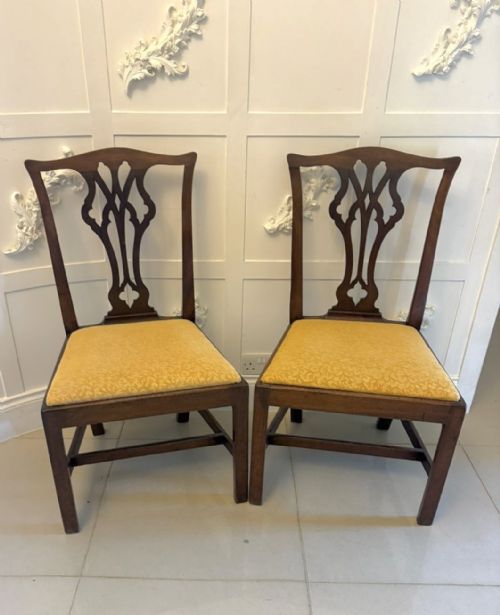
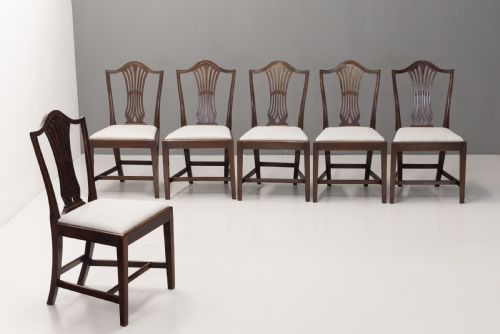


Georgian Drop in Seat
A georgian drop in seat brings distinct character to antique dining furniture, offering removable upholstered frames built for comfort.
Georgian Drop in Seat
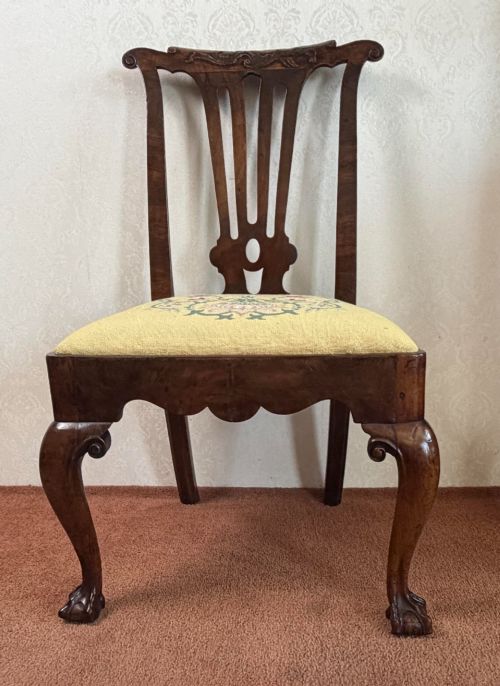
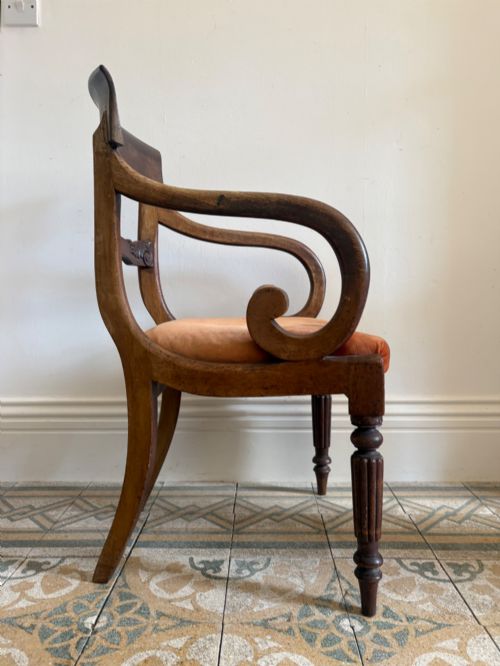
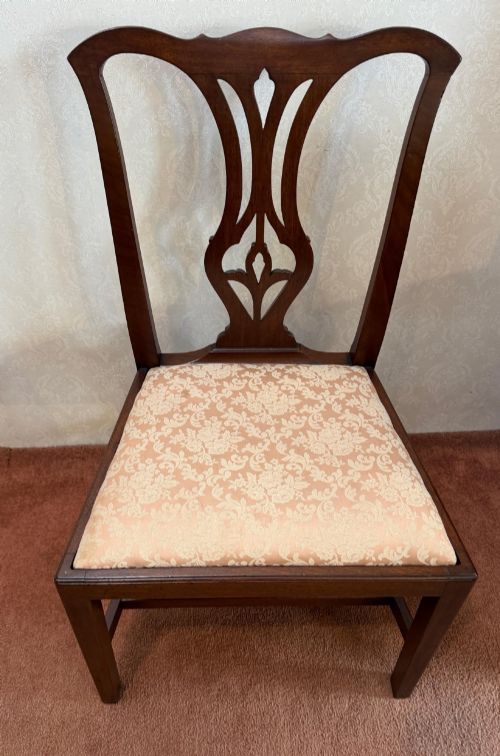
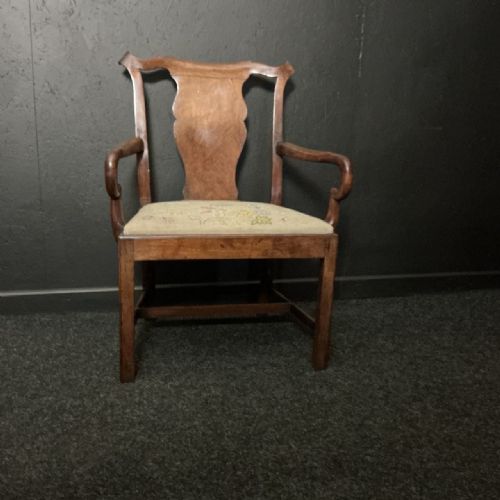
When searching for a georgian drop in seat, buyers encounter chairs and stools engineered with a removable internal wooden frame designed to receive upholstery. The pieces on this page span the 18th century, the Georgian era, and the Regency period, alongside later revivals.
Dining chairs, side chairs, armchairs, and carver armchairs dominate the selection, frequently paired with walnut or mahogany frames. Simpler country examples executed in oak or elm appear alongside formal highback and ribbon back designs.
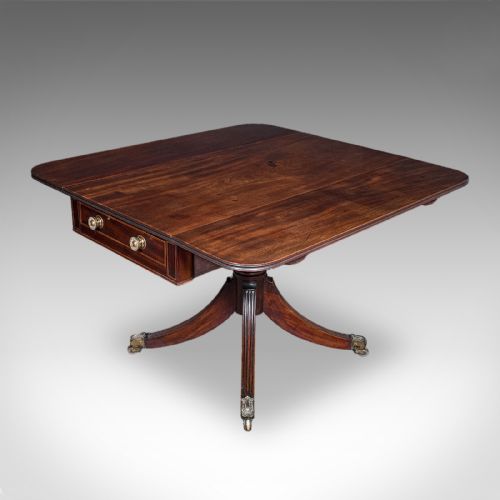
Upholstery formats utilise fabric, leather, velvet, and needlework textiles inserted directly into the seat rails. These seating forms connect closely with drop leaf dining tables found across the same periods.
How They Were Made
Cabinet makers constructed primary frames using dense hardwoods like mahogany and walnut, while regional pieces utilised native oak, elm, and red walnut. Joinery relied on precise pegging and mortise and tenon construction to support heavy daily use.
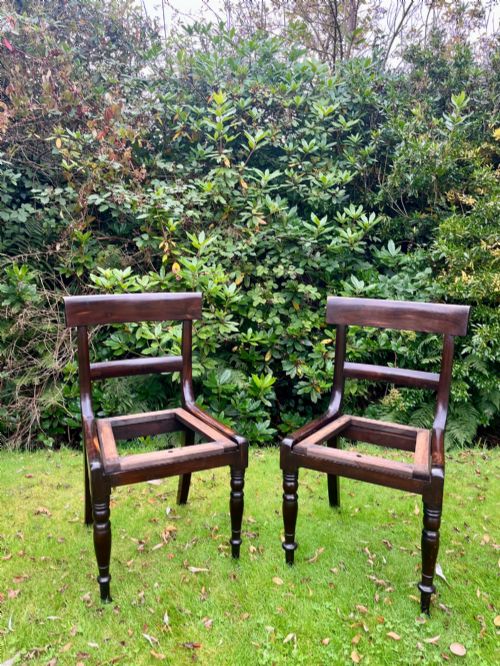
The drop in seat frame itself consists of a shaped softwood or hardwood rebate that slips precisely into the seat rails of the chair. Upholsterers stretched textiles, leather, or hand-worked needlepoint over webbing and stuffing before securing the assembly into the rebated aperture.
Some chairs hide decades of old stuffing beneath their needlework, recording past centuries of comfortable dining.
What Varies in Quality
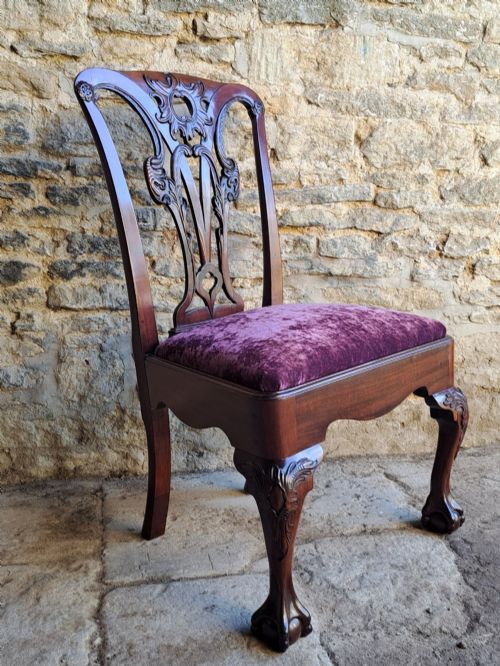
The grade of timber selected for the frame dictates initial quality, with figured mahogany and rich walnut sitting at the upper end compared to utility oak or elm. Carved elements such as cabriole legs, ribbon backs, and pierced splats demonstrate the hand of a skilled maker.
Proportion and structural integrity define the remaining differences, particularly where internal slip frames fit snugly into the chair rails without excessive movement. Original textiles and needlework increase historical value, though later upholstery often preserves underlying frame longevity.
The Georgian Drop in Seat Glossary
- Drop in seat
- A removable upholstered frame that drops into a rebated opening within the seat rails of a chair or stool. This innovation allowed upholsterers to work away from the main timber frame and made recovering straightforward.
- Cabriole leg
- A furniture leg that curves outward at the knee and tapers inward toward the foot, inspired by animal limbs. This form appeared frequently on 18th-century seating.
- Gate leg table
- A dining table with hinged leaves supported by swing-out legs that operate like a gate. These tables provide flexible surface area and pair naturally with period chairs.
- Ribbon back
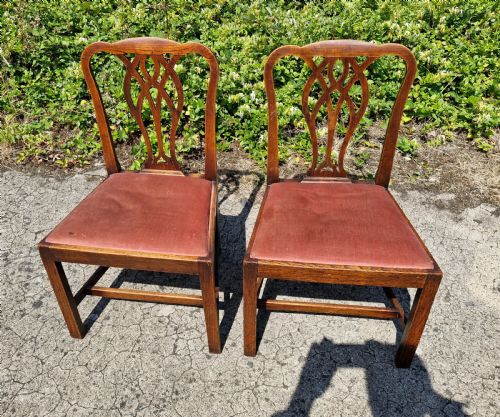
- A chair back design featuring carved splats that interweave like undulating ribbons. It represents a refined style executed by skilled 18th-century woodworkers.
- Splats
- The vertical wooden strip down the centre of a chair back. Shaped splats provide lumbar support and define the stylistic period of the seating.
Georgian Drop in Seat: Frequently Asked Questions
What is a drop in seat?
A drop in seat is a separate wooden frame fitted with upholstery that rests inside a rebated ledge on a chair. This clever construction method allowed easy re-covering of the textile without dismantling the main chair frame.
Craftsmen used this technique extensively throughout the Georgian period for dining chairs, armchairs, and stools.
How do I date a Georgian chair?
Dating relies on examining the timber species, secondary woods, construction methods, and stylistic cues. Walnut predominated in the earlier part of the 18th century, while mahogany became the primary choice later on.
Hand-cut joints, timber shrinkage, and tool marks help distinguish authentic 18th-century pieces from later revival styles.
Were these seats originally upholstered in leather?
Historic seating utilised a variety of coverings depending on status and room function. Wealthy households favoured imported textiles, silk, and velvet, while utilitarian or dining spaces often employed durable leather.
Needlework and hand-worked canvas also appear frequently on surviving Georgian examples.
Can I use antique chairs for daily dining?
Solid hardwood construction makes these period chairs robust enough for everyday use when joints remain sound. Professional conservation ensures the frame and internal webbing safely support modern weight.
Checking the slip frame fit prevents unnecessary friction and protects the antique timber rails.