


Carved Ribbon Splat Chair
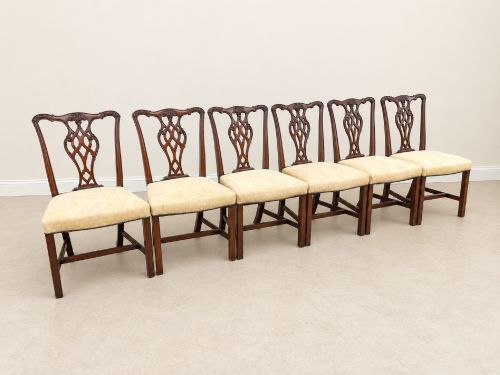
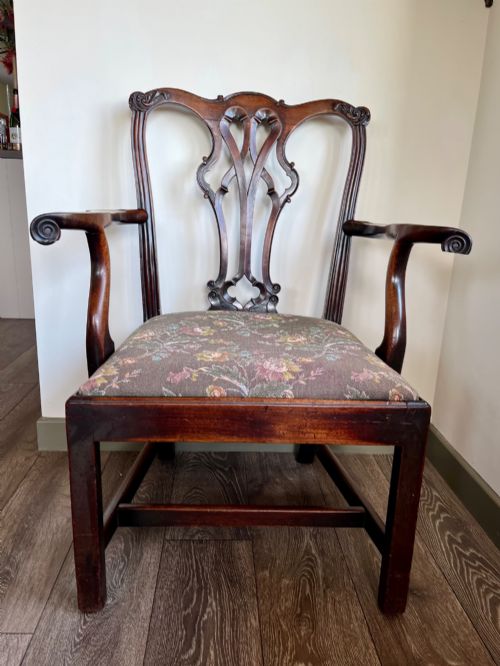
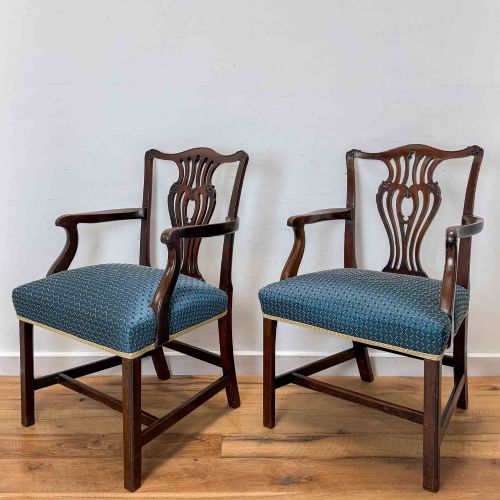
A carved ribbon splat chair brings quintessential 18th-century elegance to any room, offering graceful openwork backs defined by intricately twisted timber loops.
Carved Ribbon Splat Chair
A carved ribbon splat chair is defined by its characteristic central back panel, which is shaped and pierced to resemble looped ribbons. When searching for a carved ribbon splat chair, buyers encounter pieces originating from the 18th century alongside later revivals from the 19th and early 20th centuries.
The selections span individual armchairs, grand sets of dining chairs, and occasional seating. Mahogany and walnut serve as the primary timbers across both Georgian originals and subsequent revival periods.
Most examples adhere to the Chippendale style or Georgian design idioms. Buyers frequently find single armchairs from the 18th century or matched sets dating from around 1900.
How they were made
Cabinetmakers utilised dense hardwoods such as mahogany and walnut to achieve the slender, tension-bearing shapes of the pierced splats. These timbers allowed craftsmen to execute deep carving without compromising the structural integrity of the backrest.
Joinery techniques relied heavily on mortise and tenon construction to secure the uprights to the seat rails. Upholstered drop-in seats featuring fabric, leather, or velvet finishes were integrated into the wooden frames during final assembly.
Secretarial hands once sketched endless loops on scrap paper, accidentally inventing the blueprint for the ribbon splat.
What varies in quality
Quality rests significantly on the depth and crispness of the carved ribbon motifs within the splat. Superior examples display sharp, undercut detailing where the wooden ribbons appear to fold and intersect fluidly.
The choice and figuring of the primary timber also dictate distinction, with choice cuts of mahogany or walnut offering richer grain patterns. Furthermore, the proportion of the frame and the elegance of the cabriole or straight legs separate standard production from master craftsmanship.
The Carved Ribbon Splat Chair Glossary
- Splat
- The vertical wooden slat positioned in the centre of a chair back. It receives the profile carving that defines the design.
- Chippendale style
- A design aesthetic drawing from the 18th-century pattern books of Thomas Chippendale. It frequently incorporates Rococo and Gothic motifs.
- Cabriole leg
- A furniture leg that curves out at the knee and tapers inward to an ankle. It often terminates in a claw and ball foot.
- Drop-in seat
- A removable wooden frame upholstered in fabric or leather that rests inside the seat rails of the chair. This construction method facilitated easy reupholstery.
- Ribbon back
- A chair back design where the central splat resembles intertwined silk ribbons. This ornate form requires precise woodworking skills.
Carved Ribbon Splat Chair: Frequently Asked Questions
Are these chairs comfortable to sit on?
The curved contour of the splat offers reasonable back support during formal dining. Most examples feature padded drop-in seats covered in velvet, leather, or textile.
While designed primarily for appearance in a Georgian interior, they provide adequate seating for everyday use when maintained properly.
How do I date a Chippendale style chair?
Examining the timber characteristics and joinery methods helps distinguish an 18th-century original from a Victorian or 20th-century revival. Tool marks and timber oxidation reveal age.
Revival pieces from 1900 or the 19th century often display standardised machine cutting alongside hand finishing.
What is the difference between walnut and mahogany versions?
Walnut chairs typically point toward earlier periods of manufacture, possessing a warmer, softer grain structure. Mahogany gained preference for its superior tensile strength.
Both timbers received intricate carving, though mahogany allowed for sharper relief work on the ribbon splats.
Can I mix armchairs and side chairs?
Dining sets frequently combine armchairs for the heads of the table with matching side chairs for the sides. This traditional arrangement balances visual weight.
Matching the mahogany tone and the Chippendale style ensures a cohesive appearance across mixed seating configurations.