



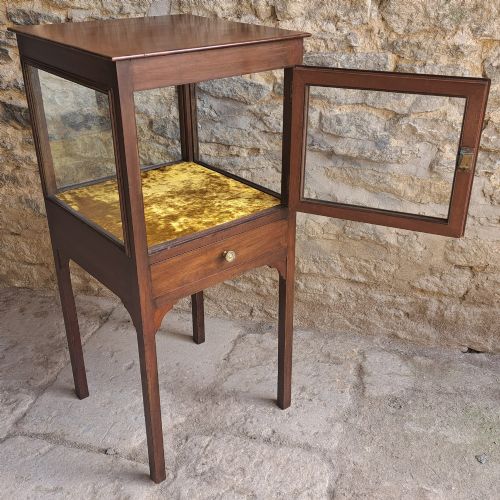

Georgian Display Case
A georgian display case offers timber frames and glazed panels designed to show precious objects while keeping them safe from dust.
Georgian Display Case
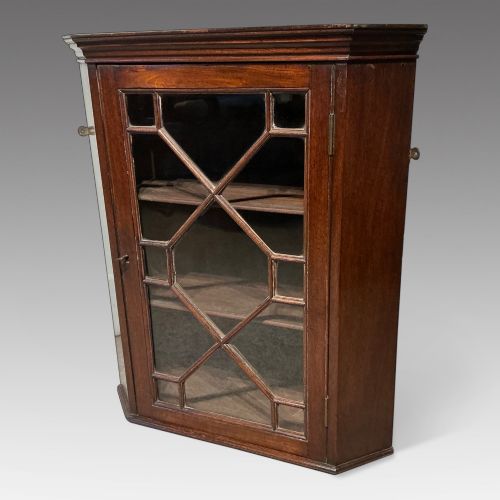
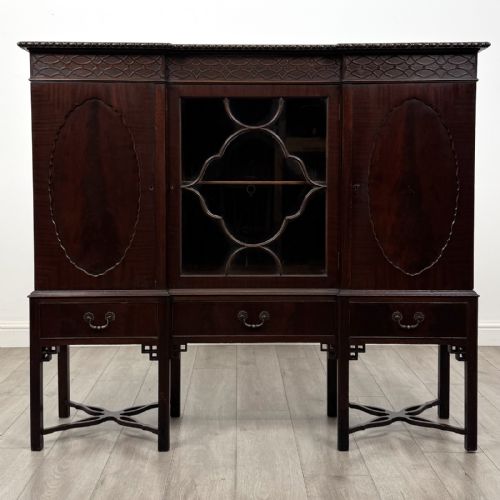
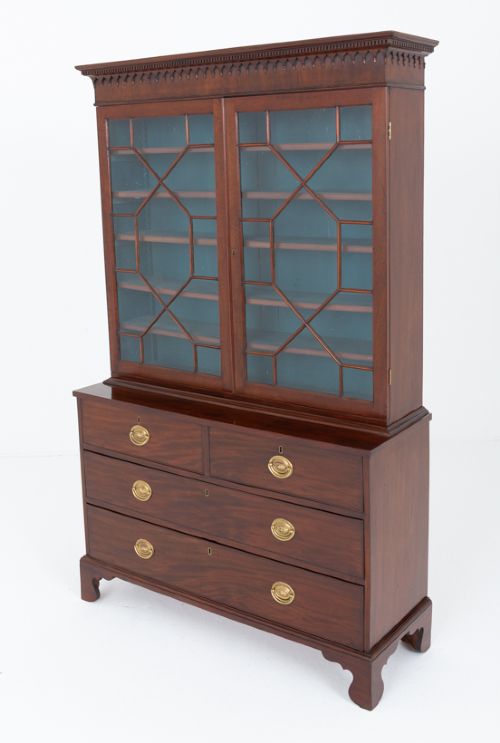
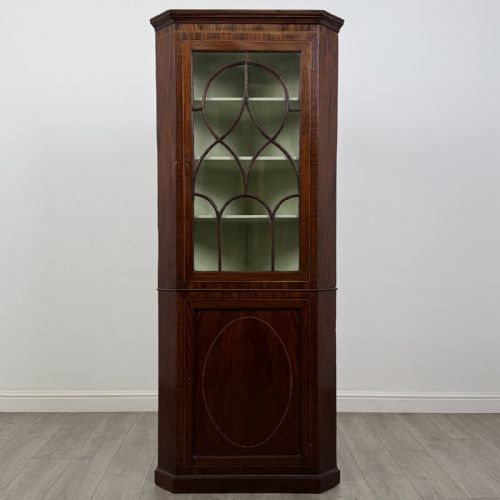
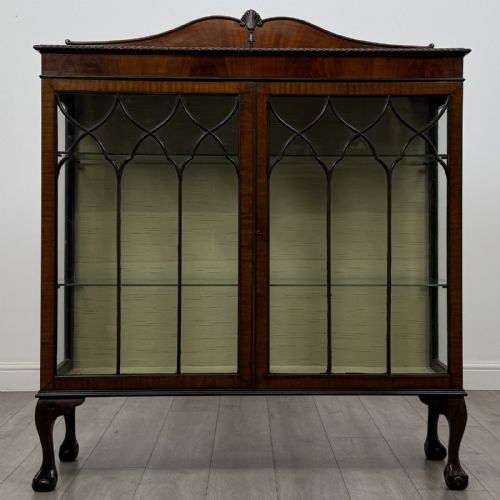
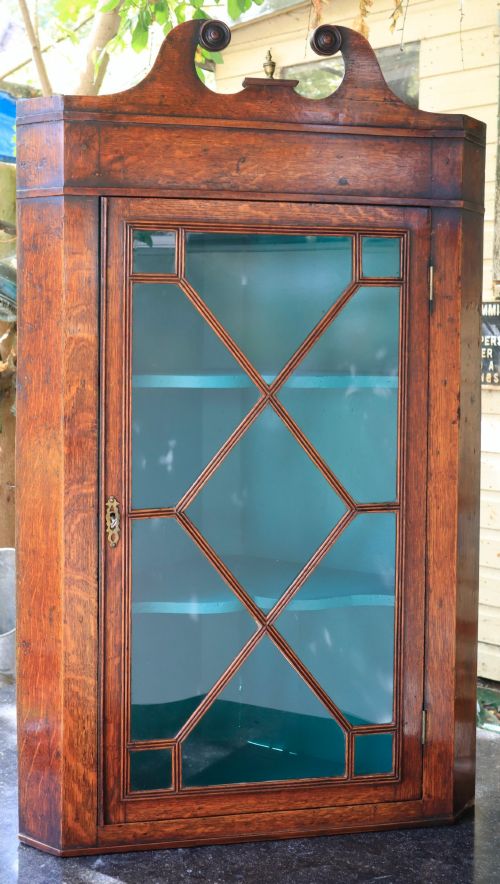
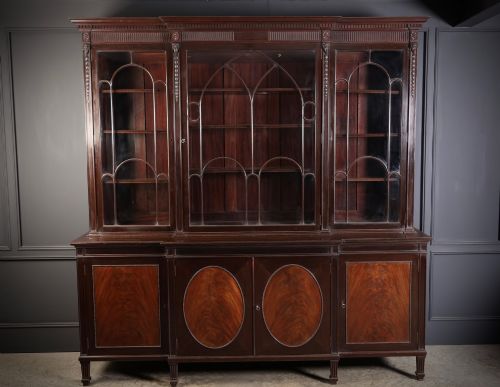
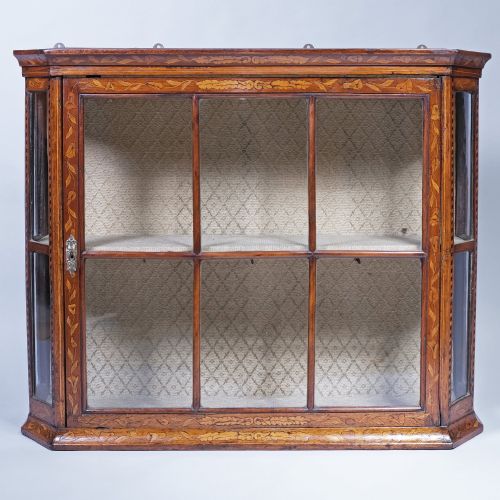
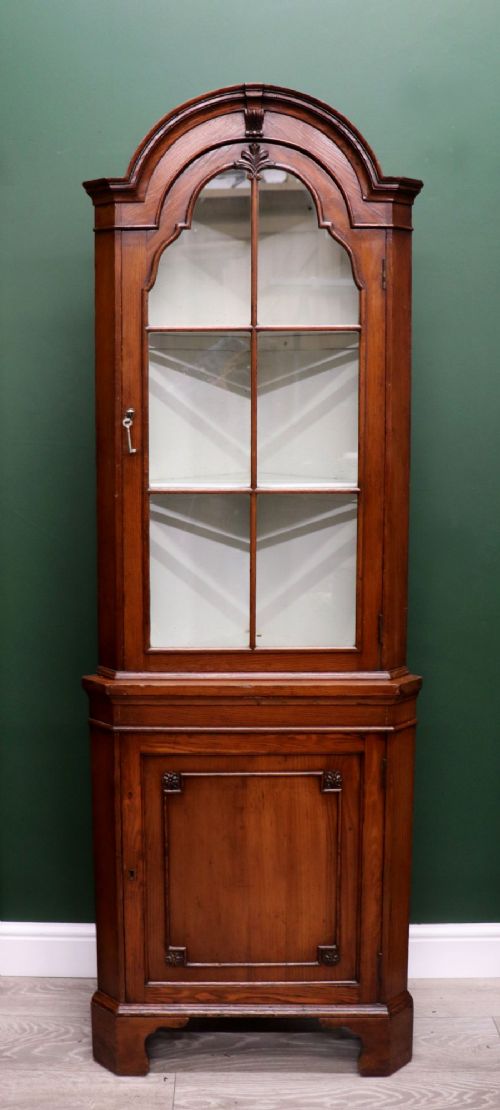
A georgian display case encompasses corner cabinets, wall hanging cupboards, and tall bookcases fitted with glass doors. These pieces serve to organise and exhibit collections within domestic interiors, ranging from compact hanging versions to large breakfront forms.
How they were made
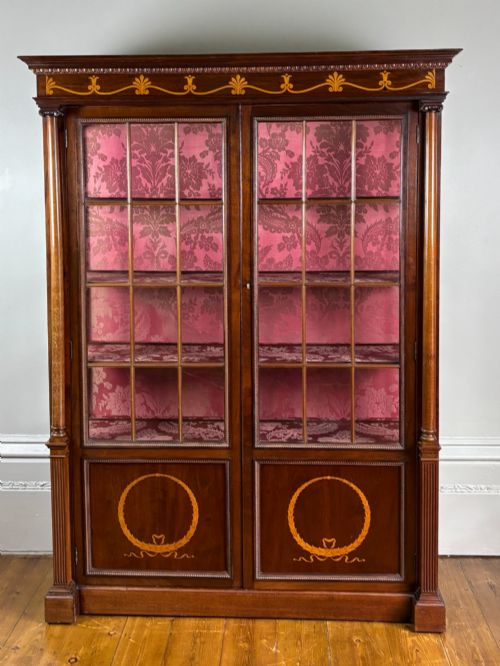
Cabinet makers constructed these pieces primarily using solid timbers like mahogany, oak, and yew wood, frequently applying satinwood inlay or parquetry for surface decoration. Glazing bars divide the glass panes within doors, while brass hardware secures closures and drawers.
Construction techniques involve precise joinery for carcases, often incorporating architectural cornices, bracket feet, or claw feet. Timber surfaces receive finishes that highlight natural grain patterns and rich colour variations.
Georgian Display Case Retail Price Guide 2026
Typical asking prices for georgian display case among the pieces listed under this phrase on Sellingantiques today, from the lower quarter to the upper quarter. They describe what is for sale here now, not the wider market.
Listings feature mahogany, oak, and yew wood timbers combined with glass and brass hardware across multiple centuries.
What varies in quality
Quality rests upon the selection of timber figures, the intricacy of inlay work, and the proportion of the cabinetry. Superior examples exhibit fine grain matching, delicate glazing bar arrangements, and well-executed stylistic details such as carved mouldings.
The integration of original brass fittings, locking mechanisms with keys, and untouched timber surfaces distinguishes finer pieces from later reproductions or heavily altered examples.
Maple and Co
The Georgian Display Case Glossary
- Breakfront
- A cabinet design where the central section projects forward from the flanking wings. This architectural arrangement creates depth and visual interest across larger bookcases.
- Bijouterie cabinet
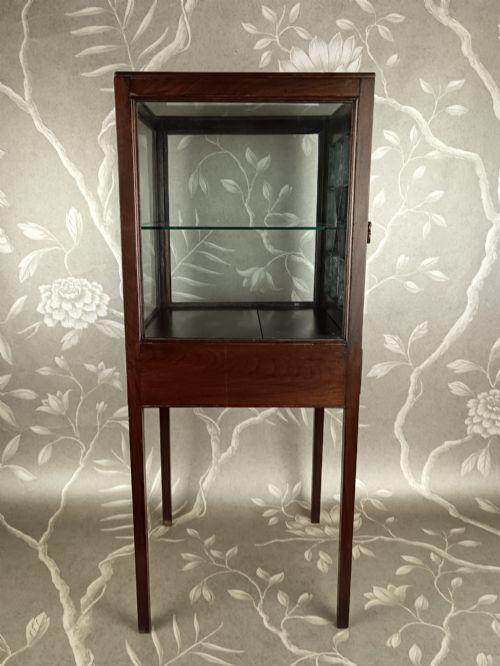
- A glazed display table or cabinet specifically created for small valuable items and curiosities. These pieces often feature fabric-lined interiors.
- Glazing bar
- A wooden strip that holds individual panes of glass within a sash door. Fine glazing bars create delicate geometric patterns across the cabinet front.
- Parquetry
- Geometric mosaic woodwork formed by small veneer tiles fitted together. This technique decorates cabinet doors and surfaces with contrasting timber tones.
- Corner cabinet
- A fitted or freestanding cupboard designed specifically to utilise room corners. These pieces feature angled or bow fronts to fit domestic layouts.
Georgian Display Case: Frequently Asked Questions
Where should I place a corner cabinet?
A corner cabinet fits directly into domestic room angles, making efficient use of space that standard rectangular furniture leaves empty. These pieces anchor room layouts while providing display height without occupying floor area.
Position them away from direct sunlight and heat sources to protect timber finishes and historical glass panels from environmental stress.
How do I secure items inside?
Many glazed cabinets feature original locking doors operated with matching keys. These mechanisms secure contents while allowing clear visibility through the glass panes.
Ensure the key turns smoothly within the brass lock plate without forcing historical hardware.
What is the difference between revival and period pieces?
Period pieces date from the original Georgian era, showcasing timber patination and construction methods of the eighteenth century. Revival pieces date from later centuries like the Edwardian period or the late eighteen hundreds, copying earlier aesthetic movements.
Examine timber age, interior construction, and secondary woods to determine the exact manufacturing era of each cabinet.
How do I care for polished mahogany surfaces?
Maintain timber finishes by dusting gently with a soft dry cloth and avoiding silicone-based polishes. Keep the indoor humidity stable to prevent wood movement and veneer separation.
Apply traditional wax sparingly when the timber appears dry to preserve the natural lustre.