
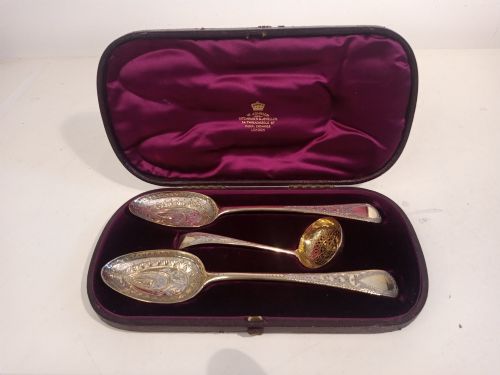


Georgian Dessert Spoons
Georgian dessert spoons are practical silver tableware of considerable heritage, offering tactile charm and genuine historical character to any traditional dining table.
Georgian Dessert Spoons
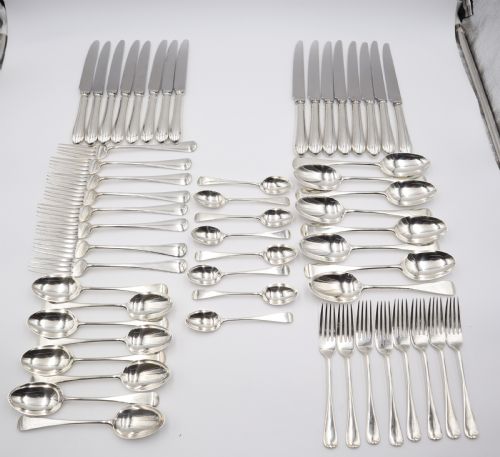
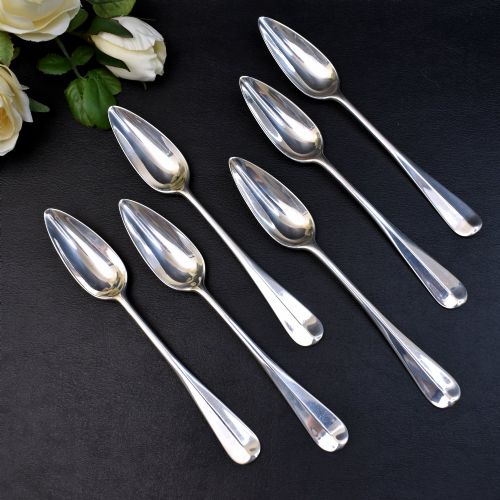
When you search for georgian dessert spoons, you encounter functional flatware designed for the second course of a formal meal, ranging from plain fiddle patterns to ornate berry spoons.
The pieces on this page span the broader Georgian era into the early nineteenth century, alongside occasional cased presentation sets and individual Scottish or Irish provincial examples.
Makers fashioned these utensils in sterling silver and silver-gilt, frequently supplying them in matched pairs or small sets intended for specific dining tasks.
Factors of distinction
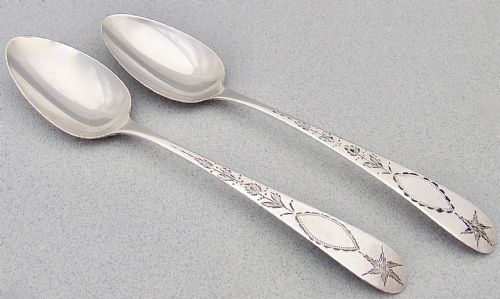
The clarity and crispness of the engraved family crests or decorative chasing on the bowl and stem distinguish superior examples from plain utility pieces.
Substantial gauge silver retains its original weight and bowl depth through centuries of use, whereas thinner metal shows excessive wear along the edge.
The reputation of the silversmith, alongside complete matching sets rather than assembled pairs, elevates the standing of individual items.
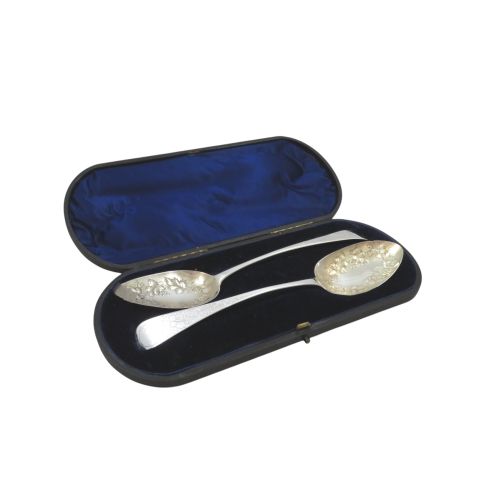
Listings for georgian dessert spoons feature sterling silver, silver-gilt, and steel components housed in silk, velvet, or leatherette presentation cases.
John Pittar·Hamilton and Inches·William Chawner II·Peter and Ann Bateman·E Tookey·Richard Jewesson
The Georgian Dessert Spoons Glossary
- Berry spoon
- A dessert spoon or serving spoon retrofitted with fruit and leaf repoussé decoration during a later Victorian fashion. This ornate chasing transformed plain earlier silver into decorative fruit spoons.
- Silver-gilt
- Sterling silver that has been coated with a thin layer of gold. This technique added a rich two-tone appearance to the dining table.
- Assay office
- The official body that tested precious metals and stamped items with hallmarks. Towns such as London, Dublin, Edinburgh, and Newcastle maintained their own distinct marks.
- Fiddle pattern
- A popular nineteenth-century flatware handle style featuring a broadened shoulder above the stem. It remained a staple of domestic silver production for generations.
- Maker's mark
- The punch impression registered by a silversmith to identify their workshop. These initials or symbols provide the primary clue to the origin of a piece.
Georgian Dessert Spoons: Frequently Asked Questions
How do I date these spoons?
You determine the age by reading the hallmarks stamped directly into the silver. Each assay office stamped a specific letter code for the year alongside the lion passant and maker's initials.
Matching these marks against standard historical tables reveals the exact year of manufacture.
Were they used only for dessert?
Silver spoons in this size served multiple functions during eighteenth and nineteenth-century dining routines. Households utilised them for fruit courses, puddings, or sweetmeats.
Over time, owners often repurposed plain or chased examples to serve berries or soft cheeses.
What is a berry spoon?
A berry spoon is an antique spoon, often dating from the Georgian period, that received embossed fruit and foliage decorations later in the Victorian era. Silversmiths chased these elaborate motifs onto the bowl to suit changing dining fashions.
Original Georgian spoons frequently underwent this decorative transformation decades after their initial manufacture.
How should I clean antique silver?
You maintain silver flatware by washing it gently in warm soapy water using a soft cloth. Avoid harsh abrasive pastes or modern dipping solutions that strip the natural surface patina.
Regular handling and soft polishing cloths preserve the historic character and clear hallmarks of the metal.