




Georgian Desk Accessory Box
A georgian desk accessory box brings tangible order to papers and ink, offering handsome hardwoods and precious metals to anchor a proper writing table.
Georgian Desk Accessory Box
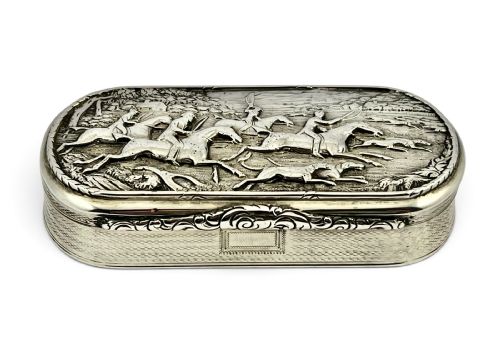
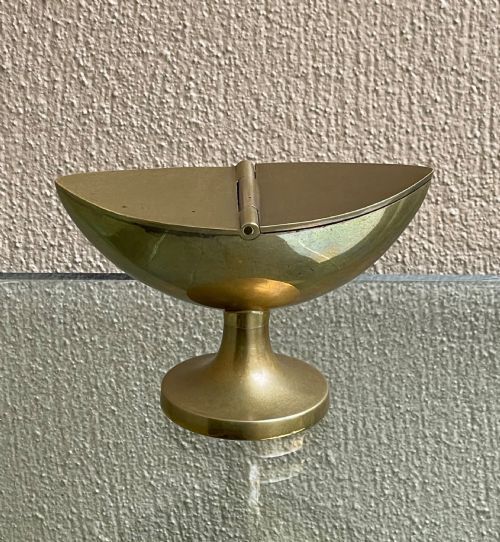
A georgian desk accessory box encompasses a variety of compact containers and receptacles designed for writing tables and correspondence, spanning periods from the eighteenth century through to the early twentieth century. The selection leans heavily towards mahogany and rosewood forms, alongside silver and brass pieces that served practical functions in households and offices.
Buyers encounter items ranging from inkstands and pounce pots to letter holders, stamp boxes, and bougie boxes. Many examples exhibit specific Georgian or Regency characteristics, while others reflect later Victorian and George V revivals utilising similar forms and materials.
How they were made
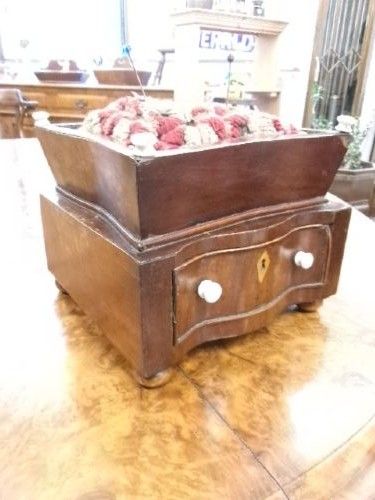
Cabinetmakers constructed the wooden boxes using dense timbers such as mahogany and rosewood, frequently incorporating intricate brass inlay or star motifs into the surfaces. Metal containers and fittings rely on sterling silver, silver gilt, and cast brass, often embellished with detailed engraving and crest work.
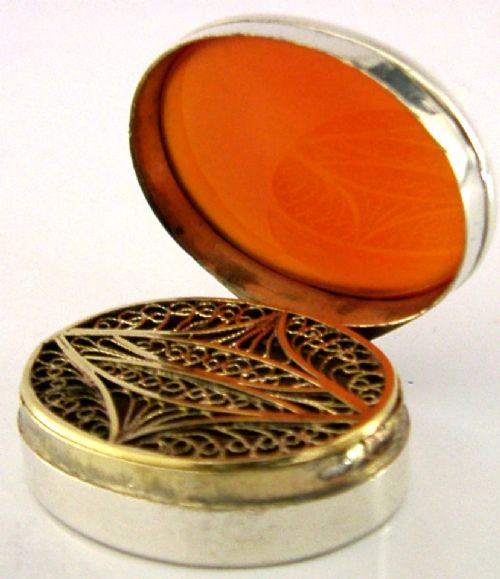
Specialised decorative elements introduce natural materials like orange agate, tortoiseshell, bone, and coloured glass into the designs. These elements require careful setting into wood or metal frames by skilled artisans.
Georgian Desk Accessory Box Retail Price Guide 2026
Typical asking prices for georgian desk accessory box among the pieces listed under this phrase on Sellingantiques today, from the lower quarter to the upper quarter. They describe what is for sale here now, not the wider market.
Listings feature periods spanning from the Georgian era through to the early twentieth century, utilising mahogany, rosewood, silver, brass, and agate.
What varies in quality
Quality rests upon the precision of the construction, the grade of the timber or metal, and the crispness of any engraved ornament. Finer pieces demonstrate careful attention to internal fittings and the secure integration of decorative stones or shell.
The sophistication of the design dictates distinction, moving from plain utilitarian receptacles to elaborate desk sets complete with original glass inkwells and intaglio seals.
Marson and Jones·Robert Hennell·James Phipps I
The Georgian Desk Accessory Box Glossary
- Navette
- A boat-shaped decorative form tapering to two sharp points at either end. This profile appears frequently on eighteenth-century table snuff boxes.
- Pounce pot
- A small perforated shaker used to sprinkle powdered gum sandarac over rough paper. This preparation created a smooth writing surface for quill pens.
- Bougie box
- A cylindrical container designed to hold a coiled wax taper. These pieces provided a flame for sealing correspondence.
- Intaglio
- A design carved into the surface of a hardstone or glass seal. When pressed into hot wax, it leaves a raised impression.
- Vinaigrette
- A small hinged metal box containing a pierced internal grille. It held a sponge soaked in aromatic vinegar to mask unpleasant odours.
Georgian Desk Accessory Box: Frequently Asked Questions
What is a pounce pot used for?
A pounce pot held fine powder made from resin or cuttlefish bone, which writers sprinkled onto handmade paper before putting pen to ink. This prevented the ink from bleeding across the porous surface.
After drying the excess powder, the writer obtained a clean, smooth sheet suitable for correspondence.
How do I distinguish a bougie box?
A bougie box is a small, upright container specifically designed to hold a coiled wax taper, known as a bougie. They typically feature a slotted lid that allowed the wick to pull through smoothly.
These pieces date predominantly to the Georgian era when portable flames were essential for melting sealing wax.
What materials appear on these boxes?
The pieces utilise a combination of dense hardwoods like mahogany and rosewood, often enhanced with brass inlay or tortoiseshell panels. Metals including sterling silver, silver gilt, and solid brass form the structural bodies or decorative mounts.
Accents of agate, bone, and coloured glass frequently complete the detailed ornamentation.
Where were these accessories placed?
These boxes and containers rested upon writing desks, Davenport tables, and bureau bookcases in private studies and libraries. They kept essential writing tools and sealing equipment organised and close at hand.
Larger desk sets and inkstands anchored the centre of the writing surface, while smaller boxes served specific singular functions.