

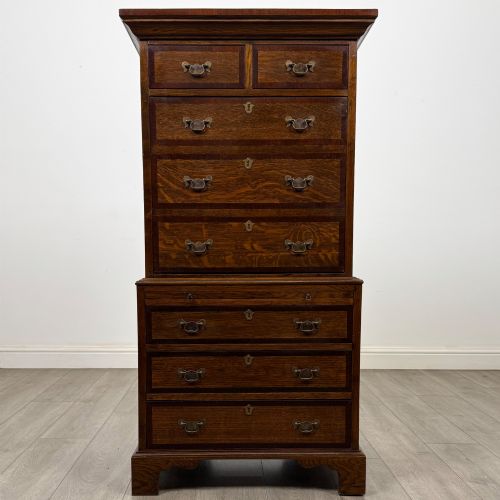
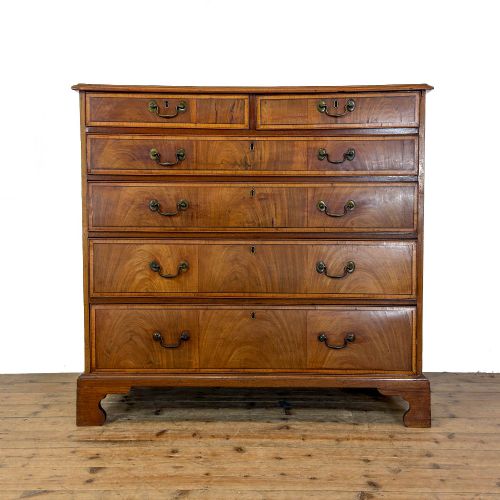
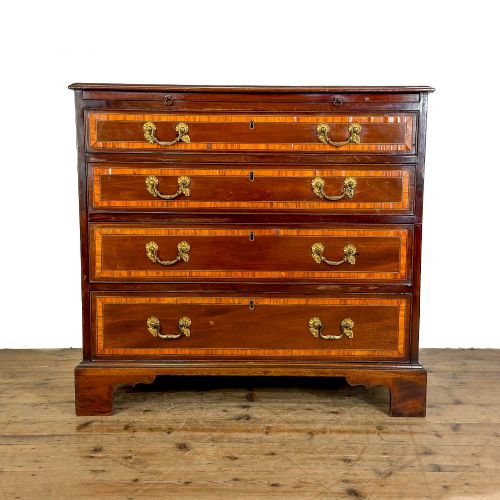
Georgian Crossbanded Chest Drawers
A georgian crossbanded chest drawers brings together figured timbers and precise bordering, offering enduring storage through centuries of craftsmanship.
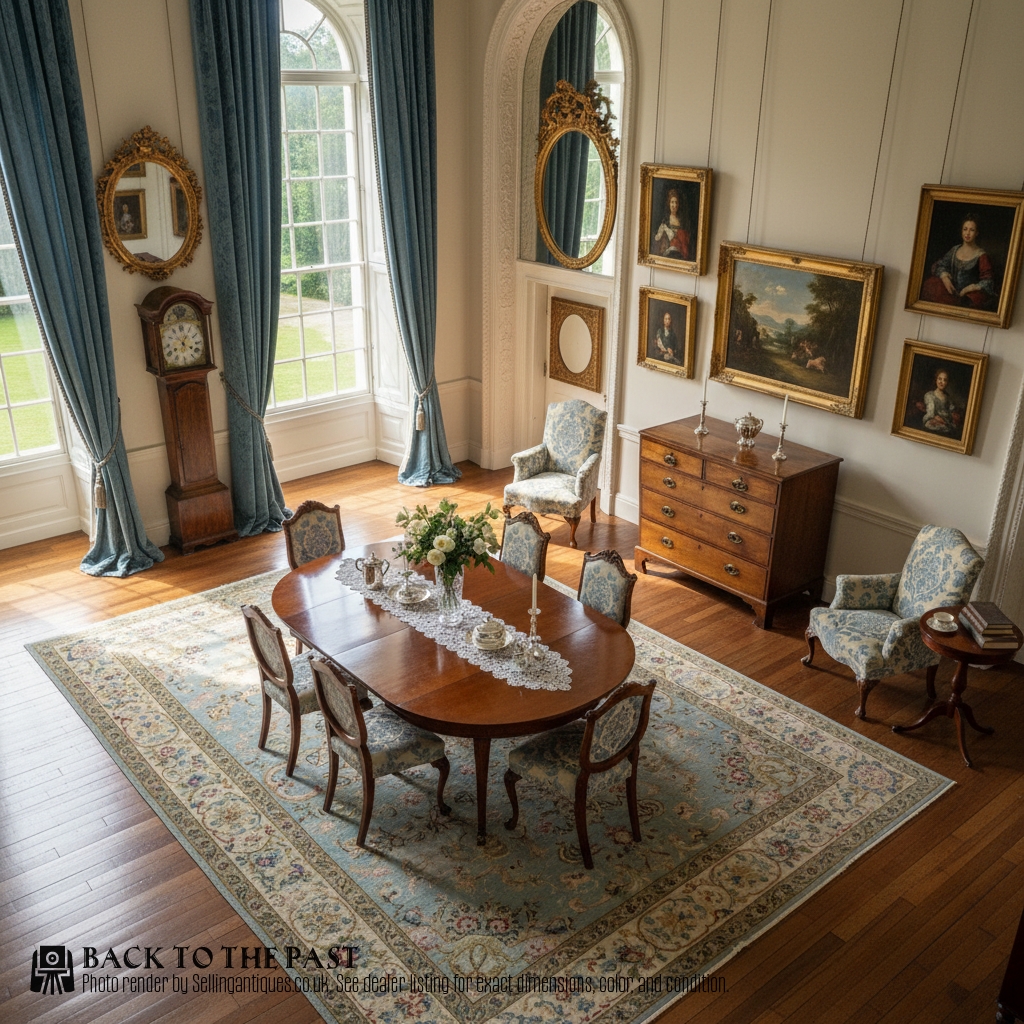
Georgian Crossbanded Chest Drawers
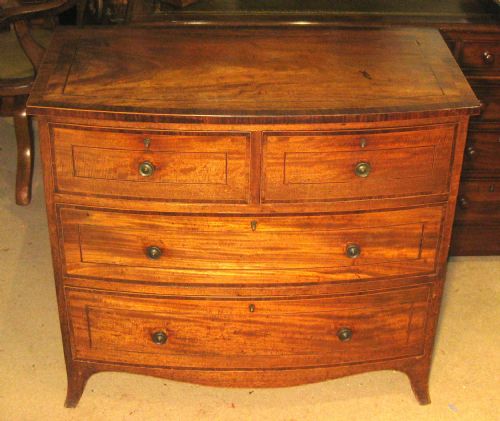
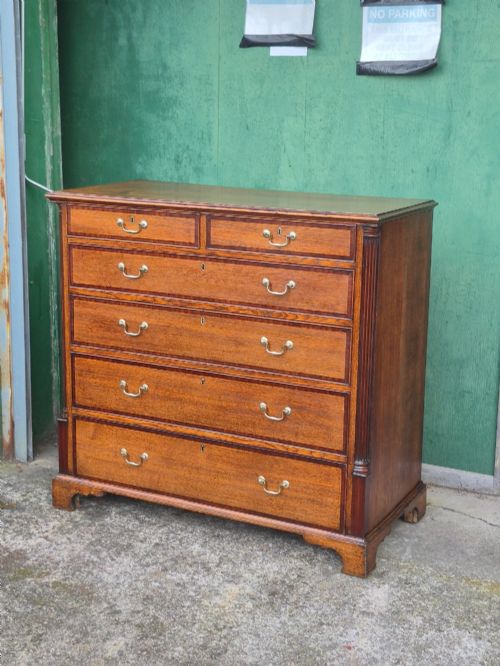
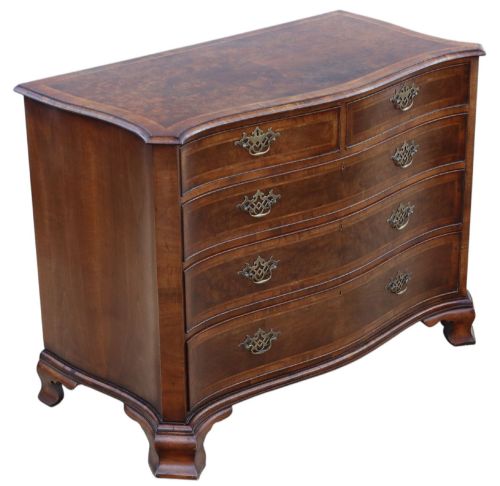
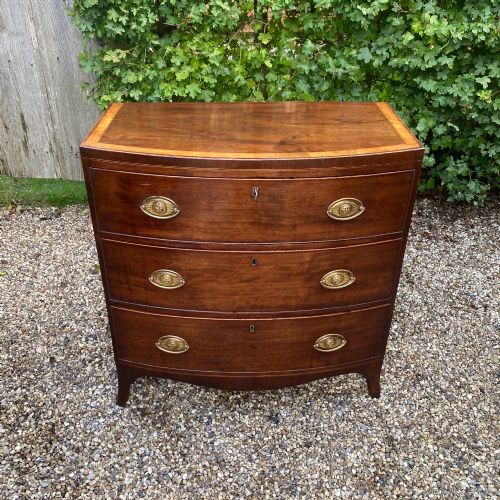
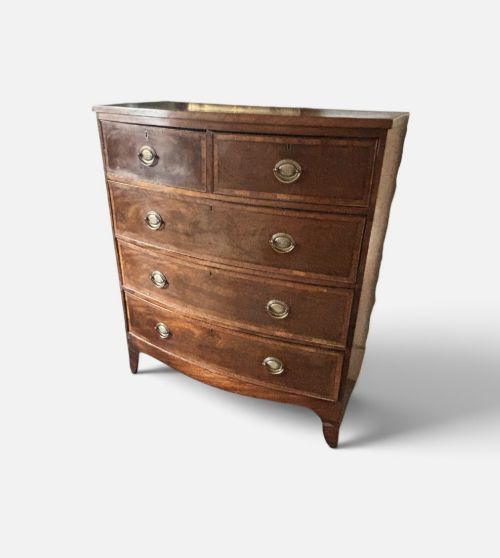
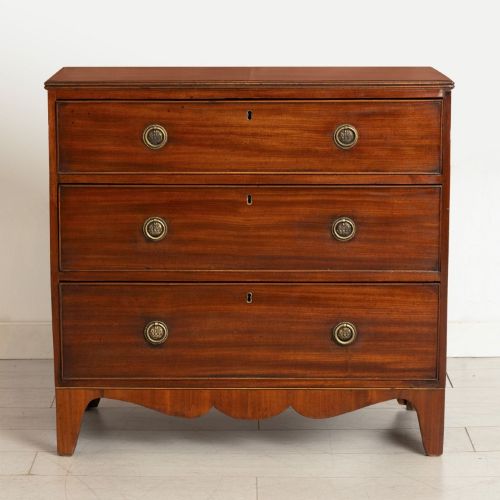
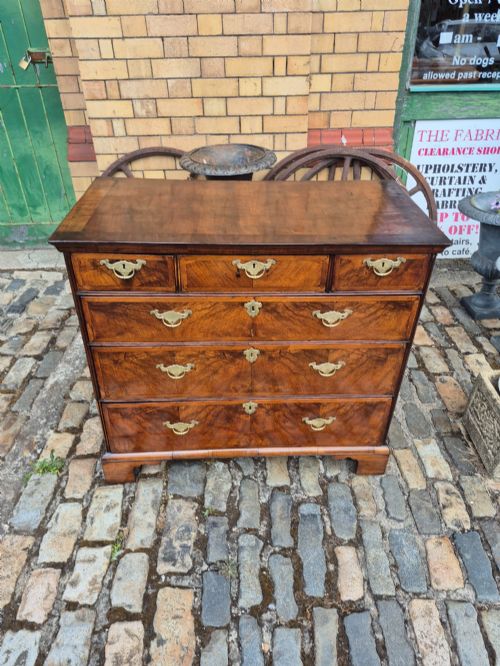
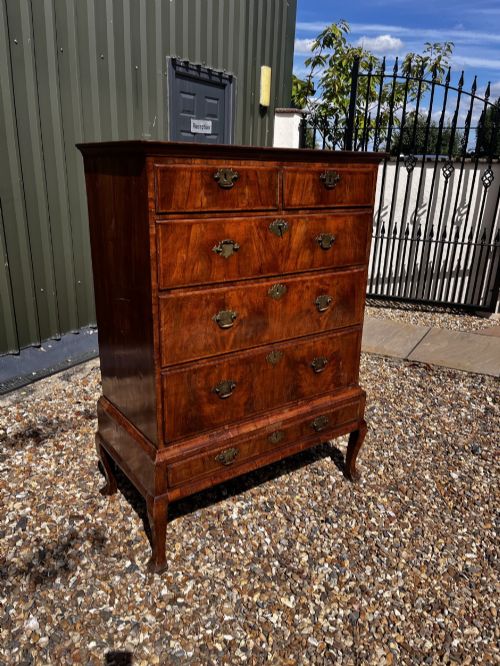
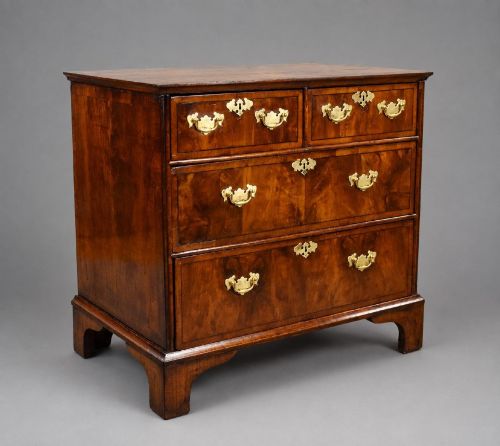
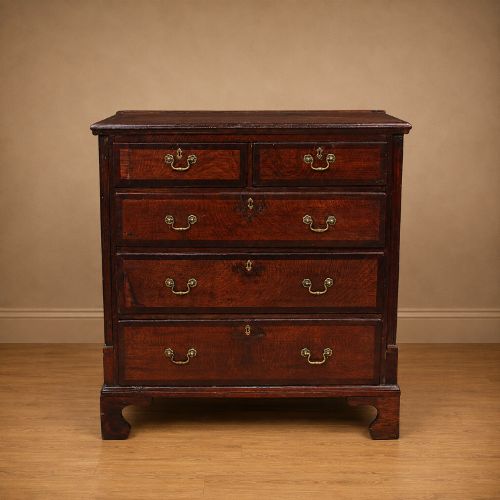
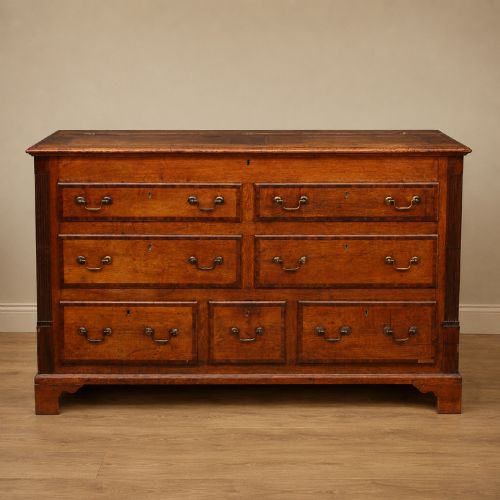
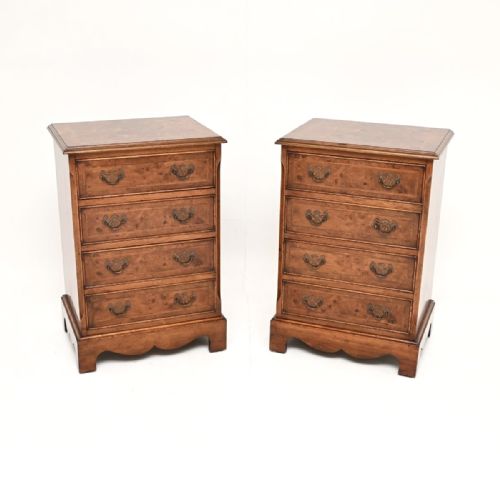
A georgian crossbanded chest drawers is a storage piece defined by a border of veneer applied to the perimeter of the top or drawer fronts, running with the grain at right angles to the central panel. Buyers seeking these items will find examples ranging from small bedside units and bow fronts to larger tallboys and mule chests.
The pieces appearing most frequently across these records combine structural timbers such as oak or mahogany with contrasting veneers like walnut, burr walnut, and satinwood. Makers arranged these woods to create geometric framing around the main drawer banks.
Origins span the eighteenth century into the regency period, alongside later twentieth-century interpretations built in historical styles. These variations in proportion and timber selection allow collectors to match specific room scales and aesthetic preferences.
Materials and construction
Cabinet makers utilised primary structural carcases of oak, pine, or mahogany, faced with finely figured veneers of walnut, burr walnut, and satinwood. The distinctive crossbanding required thin strips of timber laid across the grain to form a neat border around drawer edges and top surfaces.
Hardware such as brass handles and escutcheons were fitted to secure the drawers and complement the deep tones of the polished wood. Construction techniques relied on tight joinery and dovetailing within the drawer boxes to ensure long-term stability.
Some miniature chests offer diminutive storage for tiny treasures, proving that grand cabinet making traditions sometimes come in remarkably small packages.
Evaluating craftsmanship
Quality in a georgian crossbanded chest drawers rests on the selection of timber figure and the precision of the veneer work framing the top and drawers. Superior examples display tightly matched burr walnut or figured mahogany grains that align seamlessly at the corners.
The refinement of the internal construction, including hand-cut dovetails and well-fitted drawer runners, distinguishes finer workshops from more utilitarian country pieces. Original brass hardware and undisturbed patination on the timber surfaces further elevate the standing of a piece.
The Georgian Crossbanded Chest Drawers Glossary
- Crossbanding
- A border of veneer laid around the edges of a top or drawer front with the grain running perpendicular to the central panel. This technique creates a contrasting frame that highlights the main timber.
- Bow front
- A curved drawer configuration that swells outward at the centre. This shape appeared frequently on regency and later eighteenth-century designs.
- Caddy top
- A raised, moulded tabletop profile resembling the lid of a tea caddy. It adds architectural depth to the upper surface of smaller chests.
- Tallboy
- A chest on chest arrangement providing tall vertical storage by stacking one set of drawers above another. These configurations maximise capacity while occupying a compact floor footprint.
- Mule chest
- A storage form combining a blanket chest base with one or more working drawers beneath. They frequently incorporate crossbanded drawer fronts.
Georgian Crossbanded Chest Drawers: Frequently Asked Questions
What is crossbanding on old furniture?
Crossbanding involves applying a narrow band of veneer around the perimeter of a surface, such as a drawer front or table top, with the grain running across the width of the strip rather than along its length. This frames the central wood panel and creates a neat decorative border.
In period pieces, cabinet makers utilised contrasting timbers like walnut or satinwood against oak or mahogany carcases to achieve this framed effect. The technique requires precise cutting and fitting to maintain clean angles at the corners.
How do I spot a true period chest?
Identifying an authentic period piece involves examining the construction methods, timber ageing, and secondary woods used inside the carcase and drawer linings. Eighteenth-century examples typically display hand-cut dovetails and native woods appropriate to their stated era.
Looking closely at the drawer runners, backboards, and handles helps reveal whether the structure retains its original components. Subtle variations in the timber grain and hand-polished surfaces develop unique patination over generations.
Where should I place a chest in my home?
These chests function effectively in bedrooms, hallways, and living spaces where their surface and drawer capacity provide practical utility. Placing them away from direct heat sources and strong sunlight protects the polished wood and delicate veneers from drying out.
Smaller bow-front or bedside variants fit well into compact corners, while larger tallboys and mule chests require adequate wall space to sit comfortably without dominating the room.
How do I care for antique wood surfaces?
Maintaining antique wood requires regular dusting with a soft, dry cloth and occasional application of traditional beeswax to nourish the polish. Avoiding synthetic silicone sprays prevents a greasy buildup that attracts dust and dulls the natural grain.
Keeping room humidity stable prevents the timber and veneer from expanding or contracting too rapidly, which protects the structural integrity of the crossbanding and joints.