
Georgian Crest Mirror
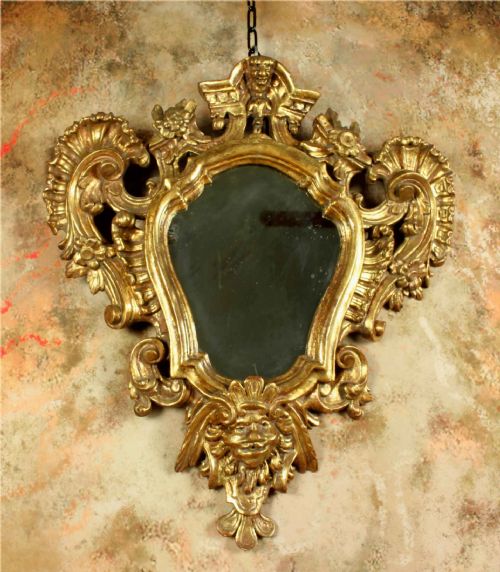
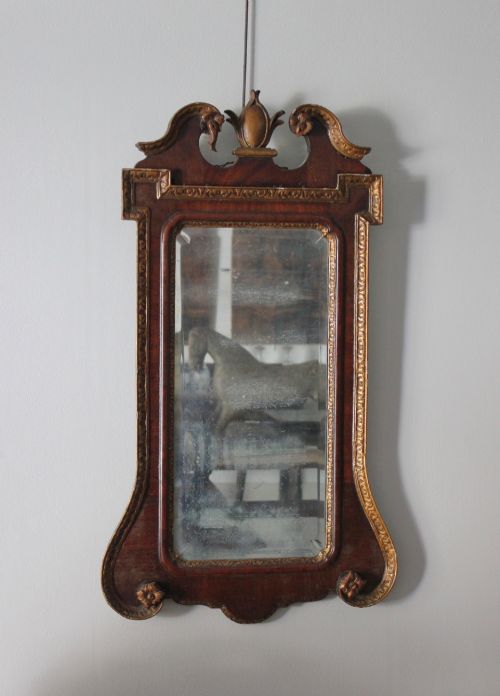
These pieces known as a georgian crest mirror bring focused light and carved authority to a room, led by mahogany and giltwood frames.
Georgian Crest Mirror
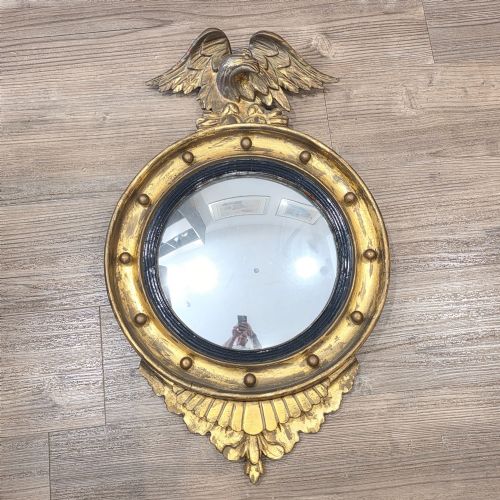
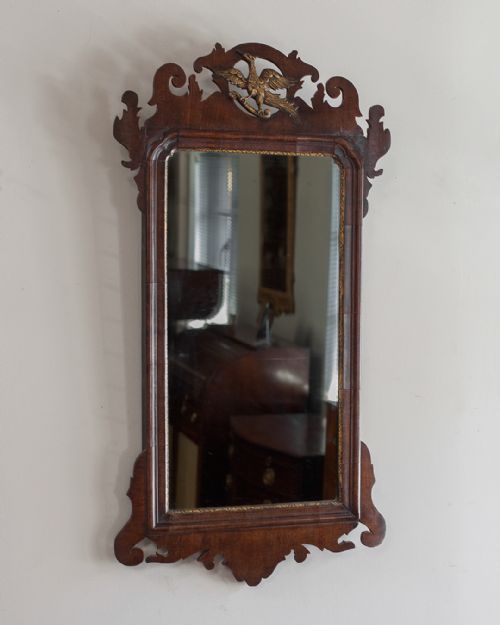
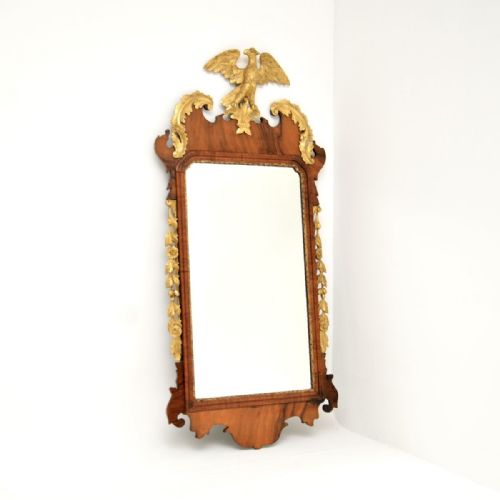
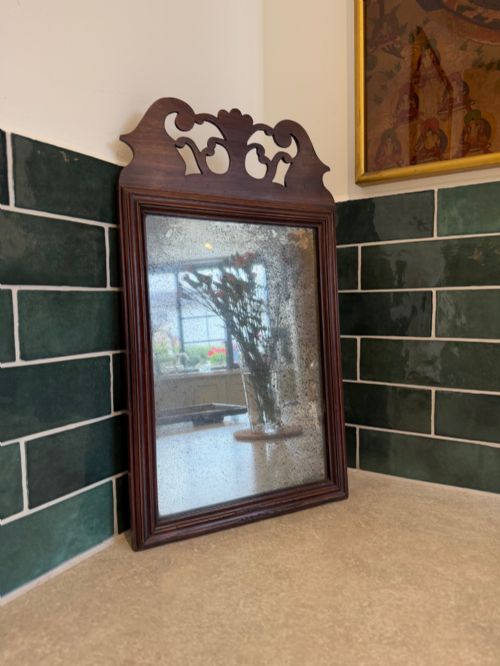
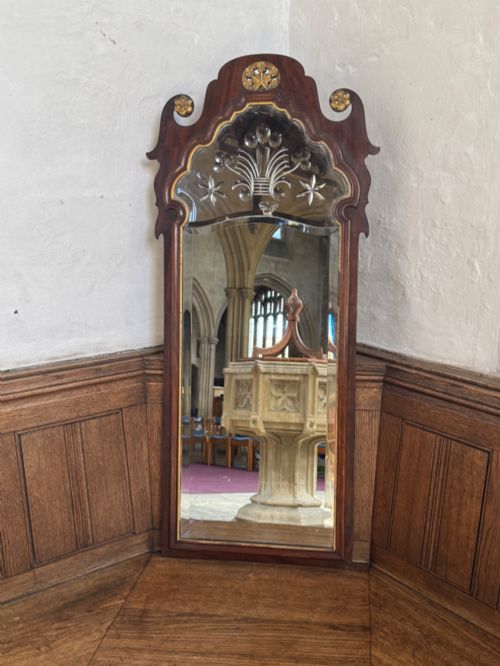
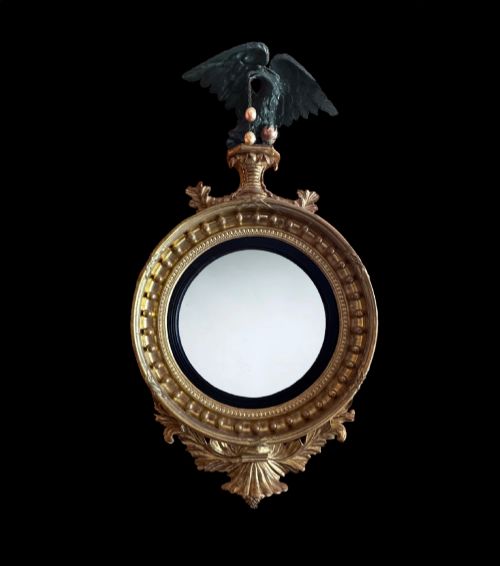
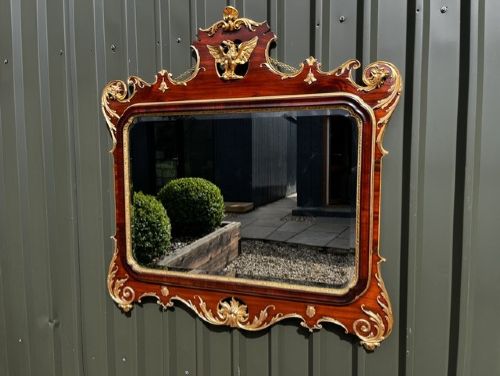
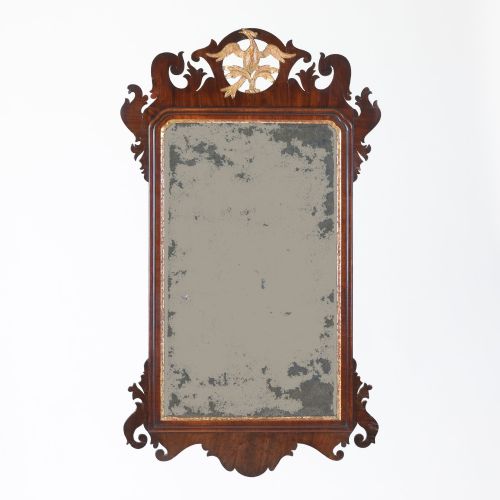
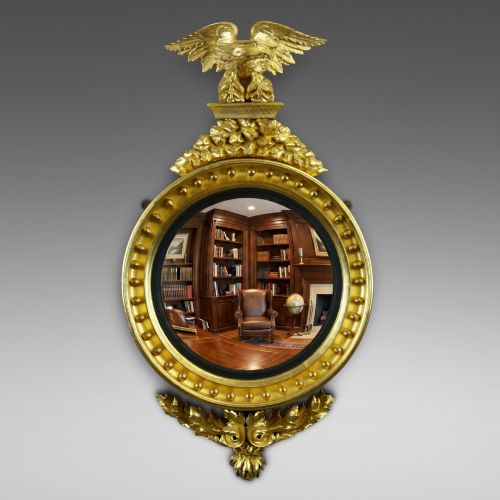
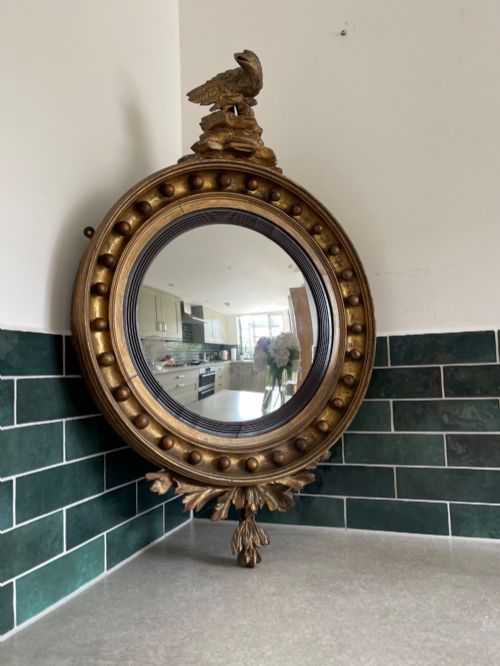
A georgian crest mirror typically presents a shaped wooden frame or a heavy gilded cresting featuring birds, eagles, or scrolling foliage. The examples found here span the eighteenth and nineteenth centuries, alongside later revivals from the Edwardian era and the twentieth century.
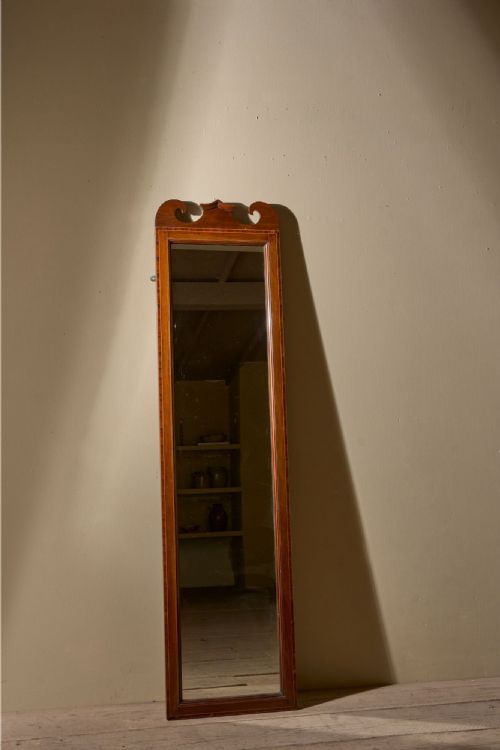
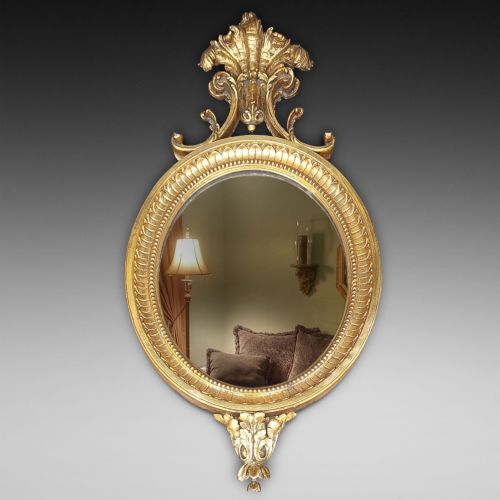
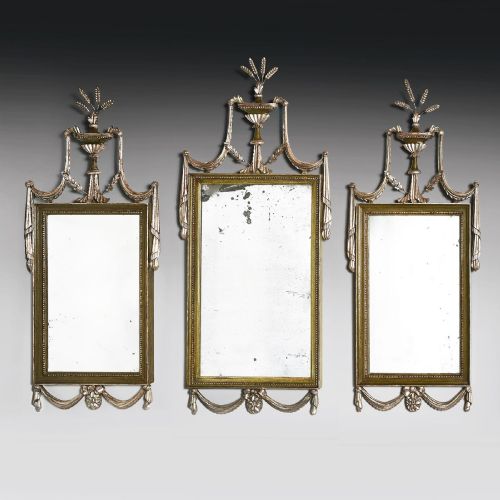
Mahogany fretwork plates and round convex glasses dominate the selection, often taking the form of wall mirrors or pier mirrors intended for placement between windows. Many pieces draw on George II, George III, and Regency design vocabulary.
Revival pieces sit alongside genuine period items, utilising walnut, gesso, and ebonised wood to recreate earlier decorative schemes.
Materials and Construction
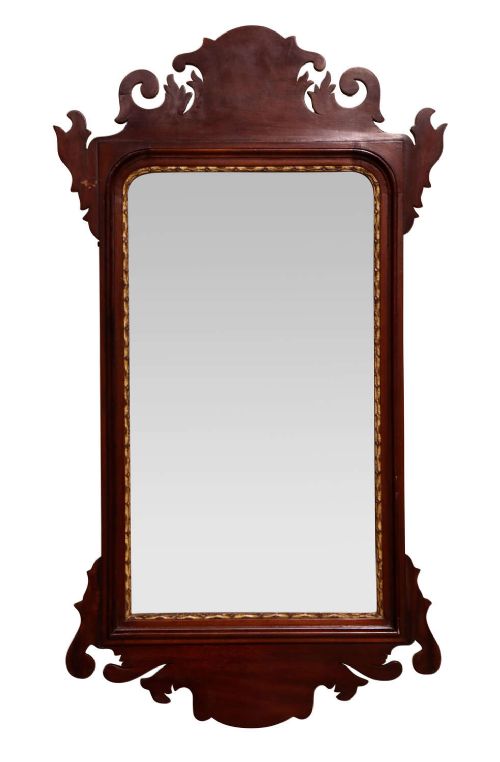
Carved mahogany and walnut form the structural core of the wooden fret-cut frames, frequently accented with parcel gilding or applied gesso detail. Convex and flat mirror plates are set within giltwood roundels or rectangular fretted surrounds.
Giltwood and gesso techniques allow for ornate crests, including spread eagles and Ho-ho birds, applied to the top of the frame. Reverse cut plates and bevel-edged glass appear across both original and revival pieces.
The listings on this page span the eighteenth, nineteenth, and twentieth centuries, featuring walnut, mahogany, and giltwood.
Assessing the Workmanship
The crispness of the fret-cut woodwork and the depth of the carving on the cresting determine the visual authority of the piece. Sharp hand-carved details on birds and foliage separate superior examples from softer revival castings.
The integrity of the original mirror glass and the depth of the gilt or gesso finish dictate the preservation state. Old mercury plates or clean silvered surfaces reflect the care taken by the maker.
Gillows Of Lancaster·William Kent·John Belchier
The Georgian Crest Mirror Glossary
- Cresting
- The decorative carved element mounted at the top of the mirror frame. This often takes the form of a bird or an eagle.
- Fretwork
- Wood cut into intricate patterns using a fretsaw. This technique defines the flat mahogany frames.
- Convex mirror
- A circular glass mirror with a curved surface that reflects a wide-angle view of the room. These often feature giltwood spheres around the frame.
- Parcel gilt
- A finishing method where only specific raised portions of the wooden frame receive a layer of gold leaf. It highlights carved details against a dark wood background.
- Pier mirror
- A tall mirror designed to hang on the wall space between two windows. They match the vertical proportions of the room.
Georgian Crest Mirror: Frequently Asked Questions
Where should I hang a convex mirror?
Convex mirrors project a wide view of an interior, making them well suited for smaller reception rooms or hallways where they capture natural light.
Position them at eye level opposite a window to draw daylight deeper into the space.
How do I identify a fretwork mirror?
Fretwork mirrors feature flat wooden frames cut into symmetrical scrollwork and geometric patterns using a fine saw. They are typically made from mahogany or walnut and date from the eighteenth century or later revival periods.
The crest at the top frequently incorporates a carved bird or gilded motif.
What is a pier mirror used for?
Pier mirrors were originally built to occupy the narrow wall between two windows above a pier table. Their tall proportions help reflect light across the room.
They function effectively above mantelpieces or in entrance halls.
How can I tell a genuine period piece from a revival?
Look closely at the construction joints, the timber grain, and the wear on the gesso or gilding. Revivals from the Edwardian period or the twentieth century often display machine cutting or uniform finishing.
Older frames show hand-working marks and natural ageing in the wood and glass.