




Georgian Copper Enamel Box
A georgian copper enamel box brings small 18th-century artistry to the palm of your hand, offering miniature painted scenes and polished metal mounts.
Georgian Copper Enamel Box
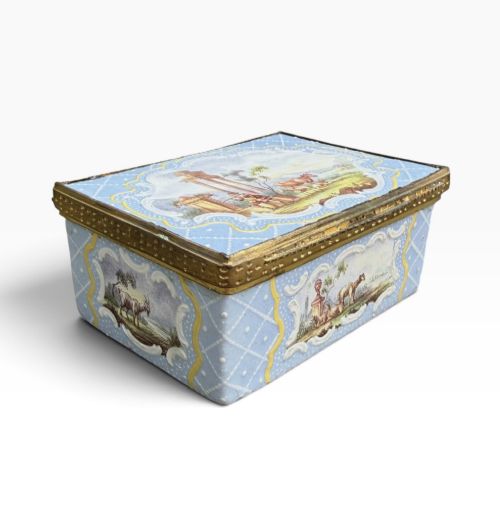
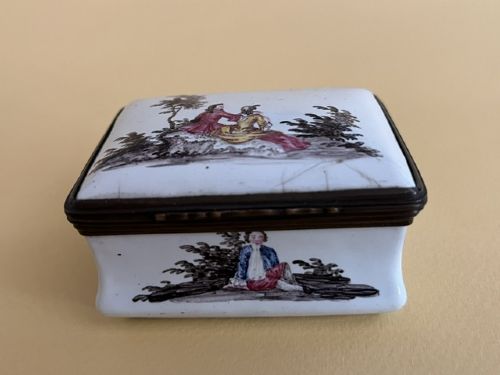
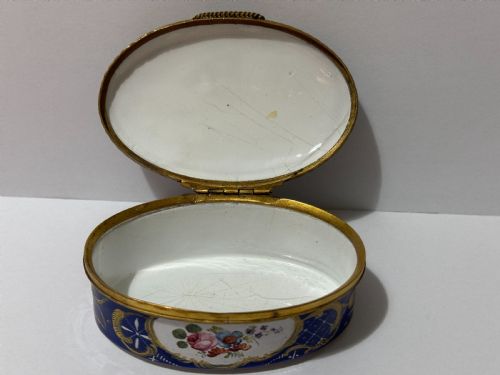
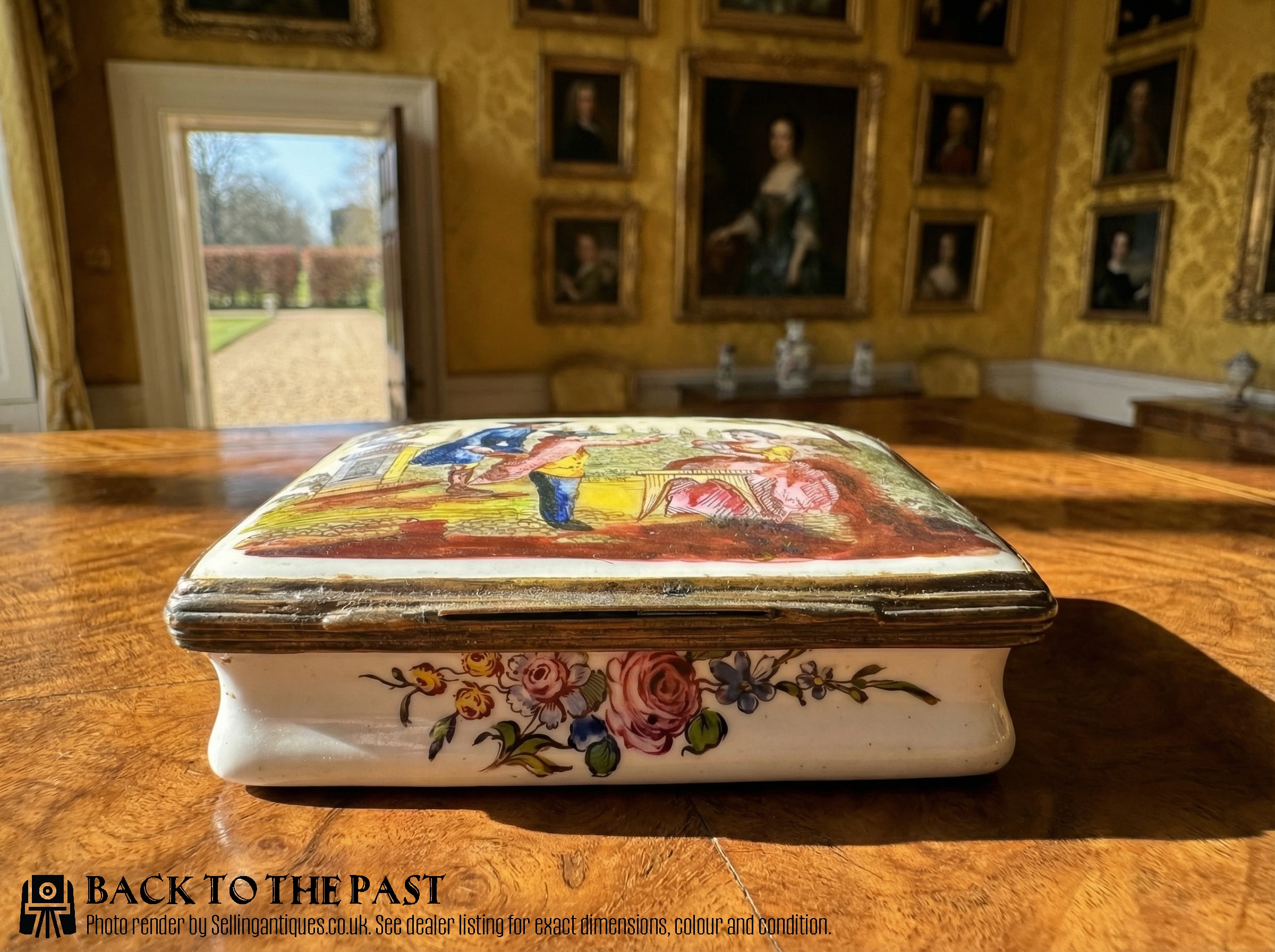
A georgian copper enamel box typically takes the form of a snuff box, patch box, or bonbonniere designed for personal use in the eighteenth century. These small receptacles appear in oval and rectangular shapes, frequently associated with centres of production such as Bilston and South Staffordshire. Surviving examples often feature hinged lids decorated with hand-painted landscapes, figures, or inscriptions.
The objects span periods from the eighteenth century into the early nineteenth century, including pieces dated around 1770, 1775, and 1780, alongside items marked to around 1800. Forms range from utilitarian snuff boxes to novelty trinket boxes and decorative plaques. Collectors frequently encounter pieces referencing specific locations or subjects, such as Cheltenham Wells or musicians in parkland.
Materials and construction
Construction relies on a base of copper shaped to form the body and lid of the box. Craftsmen applied a vitreous enamel coating to the metal surfaces, fusing the glass paste to the copper through firing in a kiln. This enamel layer served as the smooth white or coloured ground for subsequent miniature painting.
Mounts and hinges utilise brass, gilt metal, or copper gilt to frame the enamel panels and secure the lid. The integration of metal fittings provides structural stability to the delicate fused glass shell while adding decorative metallic contrast to the edges and closures.
Some boxes double as miniature portraits of beloved pets, including King Charles Cavalier Spaniels.
Distinctions in quality
Quality rests upon the fineness and preservation of the hand-painted enamel decoration on the lid and sides. Superior examples display detailed brushwork in miniature scenes, such as human figures or topographical views, with minimal crazing or loss to the vitreous surface. The crispness of moulded copper contours and the tightness of the brass or gilt metal hinge also define the standard of the piece.
The integrity of the enamel coating across both interior and exterior surfaces separates standard boxes from finer specimens. Well-preserved pieces maintain smooth, glossy finishes without extensive restoration to the fused glass or replacement mounts, ensuring the original character remains intact.
The Georgian Copper Enamel Box Glossary
- Patch box
- A small container used in the eighteenth century to hold cosmetic patches made of silk or velvet. These boxes typically featured a mirror fitted inside the lid.
- Snuff box
- A small pocket-sized receptacle intended for holding dry snuff tobacco. They are fitted with tightly closing hinged lids to preserve the contents.
- Bonbonniere
- A small ornamental container designed to hold sweets or confections. They often take playful or novelty shapes.
- Vitreous enamel
- A material made by fusing powdered glass to a substrate of copper through firing at high temperatures. It provides a glossy, durable coloured surface.
- Gilt metal
- A base metal treated with a thin layer of gold applied to the surface. It offers the appearance of solid gold for mounts and hinges.
Georgian Copper Enamel Box: Frequently Asked Questions
What were patch boxes used for?
Patch boxes held small fabric patches that eighteenth-century individuals applied to the face to conceal blemishes or display fashionable shapes.
These containers allowed owners to carry their cosmetics discreetly for touch-ups during social visits.
How do you date a georgian enamel box?
Dating relies on stylistic clues, mounting techniques, and painted subjects characteristic of the late eighteenth century.
Specific inscriptions, such as named places or contemporary political events, also help narrow down the period of production.
Where were these boxes made?
Production centred primarily in the English Midlands, particularly in Bilston and Staffordshire.
Workshop traditions in these regions specialised in combining copper fabrication with specialised enamelling and miniature painting.
How should enamel boxes be cleaned?
Cleaning requires only a gentle wipe with a soft, dry cloth to remove dust from the surface.
Water and chemical cleaning agents should be avoided to protect the delicate enamel and metal mounts from damage.