
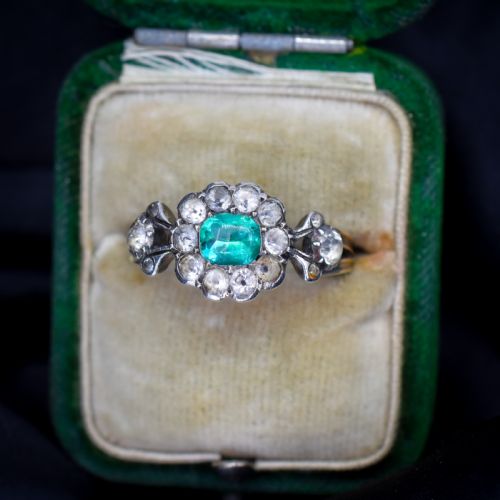
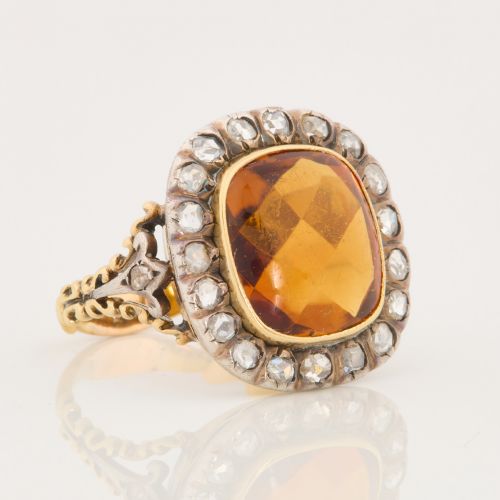


Georgian Cocktail Ring
These pieces known as georgian cocktail ring examples bring together rich stones and precious metals from across historical periods.
Georgian Cocktail Ring
A georgian cocktail ring brings together cluster formations and navette silhouettes set in combinations of gold and silver. Buyers seeking this style encounter pieces originating from the nineteenth century alongside later Victorian and Edwardian interpretations.
How they were made
Construction typically combines 18ct gold, 9ct gold, and silver settings designed to hold rose cut diamonds and coloured gems. Stones such as green paste, blue enamel, and citrine appear alongside traditional precious gems.
Craftsmanship relies on cluster arrangements where central stones or paste elements sit surrounded by smaller gems. Silver is frequently utilised for the topmost setting to brighten the appearance of diamonds.
Several pieces combine gold and silver layers, letting the silver tarnish just enough to frame the stones.
What varies in quality
Quality differences appear in the selection and depth of colour within emeralds, sapphires, and paste substitutes. Superior examples display careful stone matching and secure claw or collet settings.
The fineness of the metalwork, particularly the integration of gold and silver in multi-tone mounts, distinguishes finer pieces. Condition of the enamel work and the crispness of rose cut facets also influence overall character.
The Georgian Cocktail Ring Glossary
- Navette
- A boat-shaped ring design that tapers to points at either end. This elongated silhouette sits prominently across the finger.
- Rose cut
- A gemstone cutting style featuring a flat base and a domed crown composed of triangular facets. This cut produces a soft, glittering reflection.
- Cluster ring
- A ring featuring a central stone encircled by a border of smaller gems. This arrangement maximises visual impact.
Georgian Cocktail Ring: Frequently Asked Questions
What periods do these rings come from?
The pieces span multiple historical eras, with examples recorded from the Georgian, Victorian, and Edwardian periods. Additional items date from the nineteenth century through to the mid-twentieth century.
Dates reflect the stylistic traits and manufacturing methods characteristic of each epoch, from early cluster designs to later revival pieces.
How should I wear an antique ring?
Wearing antique jewellery requires mindful care due to the age of the settings and delicate nature of materials like glass paste or pearls. Consider reserving these pieces for occasions that limit heavy hand usage.
Storing each ring separately prevents friction against other items in your collection, preserving the metal and stone surfaces.
Are these rings made of solid gold?
Many listings feature combinations of 18ct gold, 9ct gold, and silver. It was common practice in earlier jewellery to use silver for the upper portion to enhance stone brilliance while supporting the structure in gold.
Each listing details the specific metal compositions recorded for that individual piece.