




Georgian Silver Gold Ring
These georgian silver gold ring examples combine precious metals with early cut stones, prized for their distinctive hand-forged settings and candlelit sparkle.
Georgian Silver Gold Ring
A georgian silver gold ring brings together precious metals in a dual-layer construction, pairing a silver face with a gold shank. This method placed a bright white surface against the skin while keeping the stronger gold structural support hidden underneath.
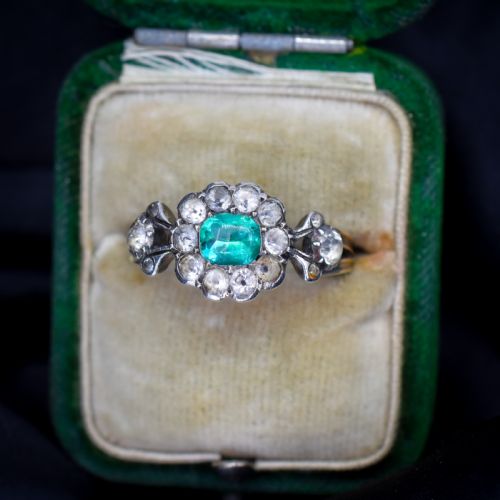
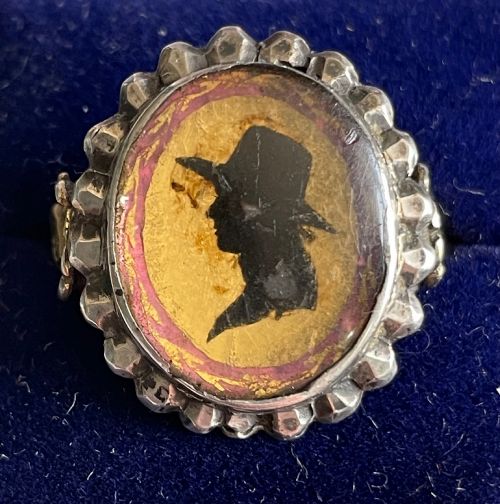
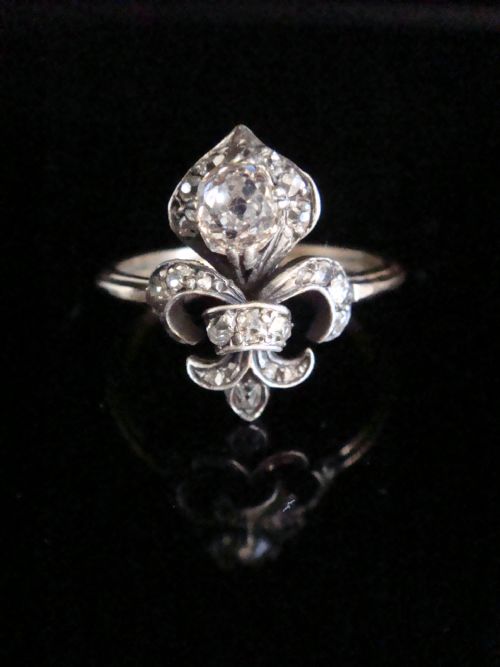
Most items appearing under a georgian silver gold ring search take the form of finger rings, featuring clustered stones, multi-stone settings, or silhouette motifs. Occasional variations span geometric navette shapes, heart and bow configurations, and flower arrangements.
Makers fashioned these pieces across the Georgian and Victorian eras, utilising periods marked by the 19th Century, 1800, and 1880. Surviving examples reflect designs ranging from early Georgian work through to early Victorian interpretations.
Materials and construction methods
Silversmiths and jewellers built each georgian silver gold ring by soldering a silver top plate onto an 18ct gold, 15ct gold, or 9ct gold backing. This technique maximised the visual brilliance of silver for stone settings while utilising gold for structural durability.
Makers set rose cut diamonds, table diamonds, emeralds, sapphires, garnets, aquamarines, and tigers eye into closed-back or open-backed settings. Foil backing frequently sat beneath gemstones to enhance colour, alongside green paste, clear paste, and blue enamel details.
Listings demonstrate materials spanning silver, gold, 18ct gold, diamonds, foil, emeralds, green paste, and clear paste across the 19th Century, Georgian, and Victorian periods.
Distinctions in construction and material standard
Quality in a georgian silver gold ring rests upon the crispness of the hand-cut metalwork and the proportional balance of the cluster or central stone. Superior examples display precise collet settings that hug the contours of irregular rose cut stones without excess solder.
The choice and treatment of internal foils or coloured pastes dictate depth of colour in stones like emeralds and pastes. Better preserved specimens retain their original foil linings intact beneath closed metal backs, avoiding moisture darkening.
The Georgian Silver Gold Ring Glossary
- Rose cut diamond
- A gemstone cut featuring a flat base and a domed crown faceted with triangular shapes, resembling an unopened rosebud. This cut produces broad flashes rather than modern brilliance.
- Closed-back setting
- A mounting style where the reverse of the gemstone is entirely enclosed in metal, often housing coloured foil to intensify the stone's hue. This technique was standard practice before open-backed mountings became common.
- Paste
- Hand-cut lead glass used to imitate gemstones such as diamonds, emeralds, and sapphires. High quality paste pieces received meticulous faceting and foil backing to rival mined stones.
- Navette
- A boat-shaped gemstone setting that tapers to sharp points at either end, popular in finger rings of the period. The elongated shape sits horizontally across the finger.
- Collet setting
- A band of metal that encircles the edge of a gemstone to hold it in place, common in early jewellery before prong settings took precedence.
Georgian Silver Gold Ring: Frequently Asked Questions
What is a georgian silver gold ring made from?
Makers constructed these items using a combination of silver on the front face and gold on the reverse and shank, typically measuring 18ct, 15ct, or 9ct purity.
Gemstones set into these metals include rose cut diamonds, emeralds, sapphires, garnets, aquamarines, and coloured glass pastes, occasionally backed with metallic foil.
How do I care for a antique ring?
Water damages the closed-back settings and metallic foils commonly found in these historic pieces, so immersion must be avoided entirely during cleaning.
Store each item in a dry, padded compartment away from other jewellery to prevent scratching the softer gold alloys and delicate silver surfaces.
Are all these rings from the Georgian period?
While the design vocabulary originates in the Georgian era, construction and hallmarks frequently extend into the early Victorian period and the wider 19th Century.
Makers continued utilising traditional foil-backed cluster methods and silver-over-gold techniques decades after the Georgian monarchical period ended.
Why use both silver and gold?
Silver offered a bright, reflective white surface that made diamonds and pastes appear whiter and more brilliant by candlelight.
Gold provided the necessary structural strength and prevented the tarnishing metal from soiling the wearer's skin or clothing.