


Georgian Cluster Dress Ring
A georgian cluster dress ring brings unmistakable period brilliance to the hand through fine gemstones arranged around a central stone.
Georgian Cluster Dress Ring
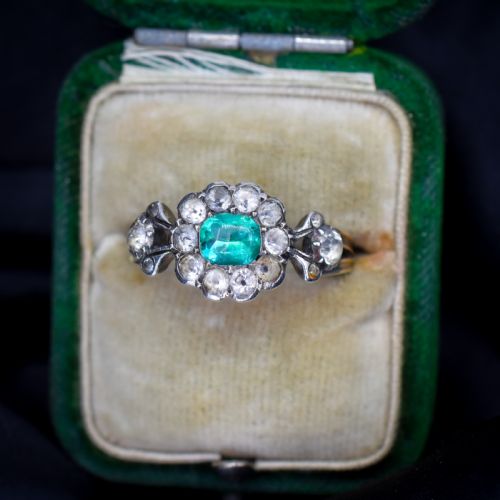
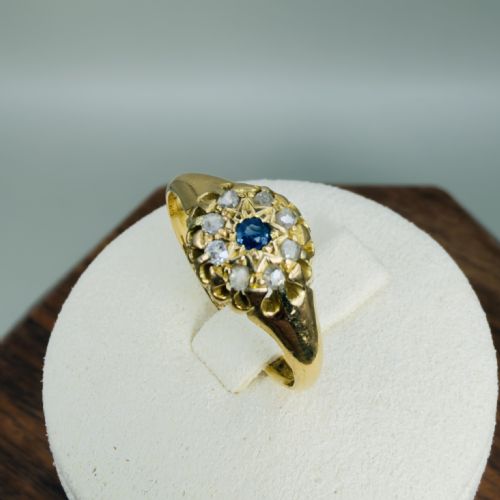
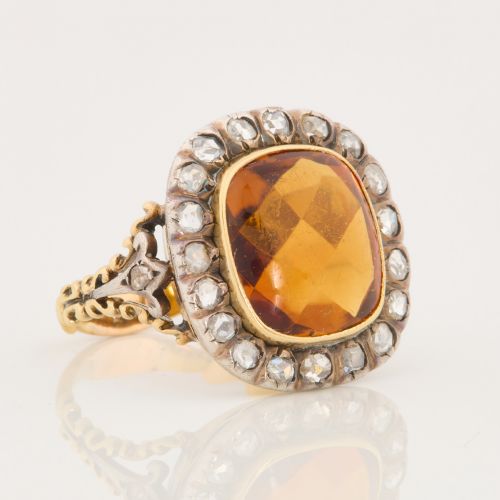
A georgian cluster dress ring gathers bright gemstones into a compact arrangement upon the finger, often pairing a striking central stone with a border of smaller gems. The examples seen here encompass genuine Georgian pieces alongside Victorian and Edwardian interpretations that continue the same clustered aesthetic.
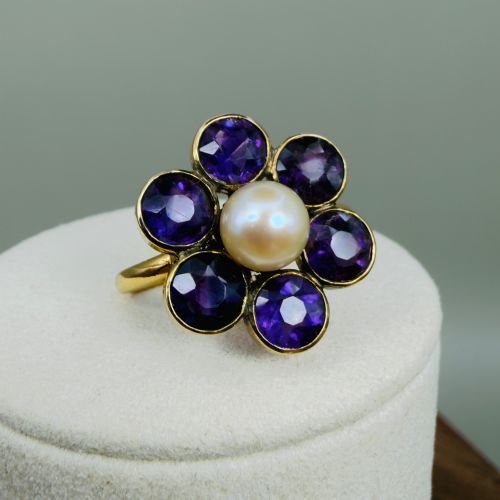
Most pieces on this page are formed from combinations of gold and silver, frequently mounting diamonds, emeralds, rubies, amethysts, pearls, or paste within closed-back or open settings. Forms range from traditional circular clusters to elongated navette outlines and halo designs.
While the search specifies a Georgian origin, surviving pieces frequently bridge multiple nineteenth-century eras, reflecting the enduring popularity of clustered gemstone designs across the Victorian and Edwardian periods.
How they were made
Goldsmiths constructed these rings using precious metals including silver, 9ct gold, 15ct gold, and 18ct gold, often combining silver over gold to mount stones effectively. Gemstones such as old mined cut diamonds, rose cut diamonds, emeralds, rubies, sapphires, amethysts, citrines, and pearls were individually set by hand.
Early techniques prioritised foil-backing and closed settings to enhance the fire and colour of paste and natural stones under candlelight. Metalwork often featured delicate hand-cut details, slender shanks, and secure collet mounts suited to the irregular shapes of early-cut stones.
Listings feature periods spanning the Georgian, Victorian, and Edwardian eras, utilising silver, 9ct gold, 15ct gold, and 18ct gold.
What varies in quality
Quality rests primarily in the harmony of the stones and the finesse of the metalwork, distinguishing exceptional hand-cut gems from simpler or later replacements. The crispness of the cluster proportions and the integration of gold and silver work reveal the maker's skill.
The preservation of original gemstones, secure settings, and minimal wear to the delicate structural mounts define the finer examples found across these periods.
The Georgian Cluster Dress Ring Glossary
- Cluster ring
- A ring featuring a central stone surrounded by a border of smaller gemstones. This layout maximises visual impact and light reflection.
- Navette
- An elongated, boat-shaped cluster design that sits lengthwise along the finger. It is frequently seen in diamond and emerald configurations.
- Rose cut
- A historic diamond cut featuring a flat base and a domed crown with triangular facets. This cut predates modern brilliant faceting.
- Old mined cut
- An early hand-cut diamond form characterised by a slightly rounded square girdle and high crown. Each stone is unique to the cutter's hand.
- Paste
- Hard lead glass hand-cut and polished to imitate gemstones in historic jewellery. Fine antique paste possesses deep optical refraction.
- Halo ring
- A piece featuring a primary gemstone encircled by a uniform ring of smaller accent stones. This arrangement frames the central colour or brilliance.
Georgian Cluster Dress Ring: Frequently Asked Questions
How do I wear a historic cluster ring?
These rings suit occasional wear on the hand, where their detailed metalwork and historic stones can be appreciated. Because many incorporate delicate settings and softer materials like pearls or paste, they require gentle handling during daily activities.
Pairing them with simple bands allows the cluster design to remain the focal point without risking physical contact from adjacent rings.
How can I tell a Georgian ring from a Victorian one?
Distinguishing periods involves examining the specific cut of the gemstones, the metal combinations, and the construction of the setting. Georgian pieces often utilise rose cut diamonds, closed-back foils, and silver-topped gold, reflecting eighteenth-century workshop practices.
Victorian interpretations frequently adapt these same motifs using slightly heavier gold standards and different claw or collet arrangements as manufacturing techniques evolved through the nineteenth century.
What stones are common in these rings?
Diamonds, particularly rose cut and old mined cut varieties, appear frequently alongside coloured gemstones such as emeralds, rubies, amethysts, sapphires, and citrines. Pearls and high-quality glass paste are also regularly integrated into the cluster patterns.
Combinations of emeralds and diamonds or amethysts and pearls reflect the varied palette favoured by jewellers during the Georgian and Victorian periods.