
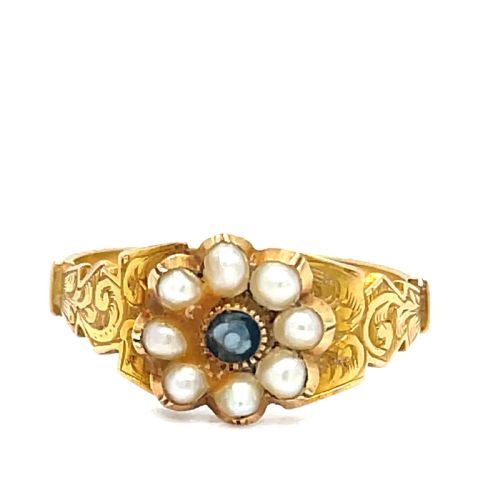


Georgian Cluster Ring
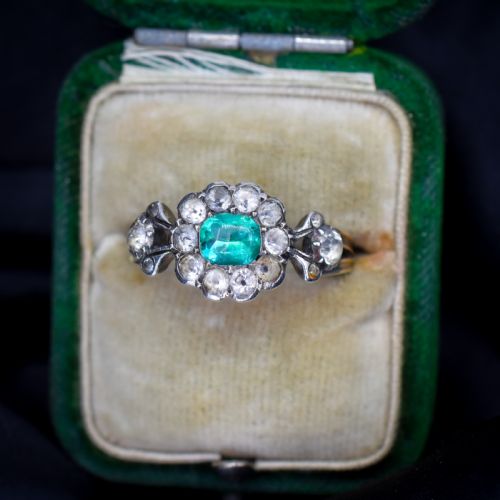
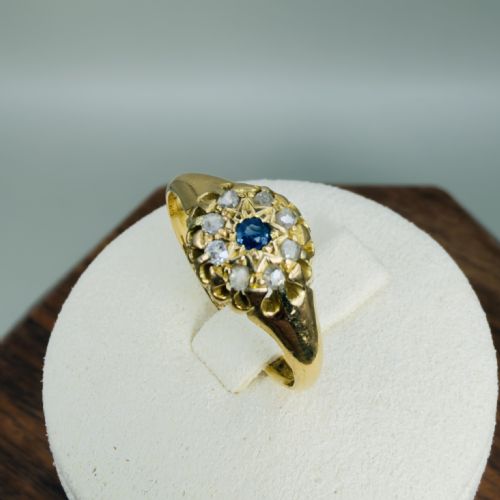
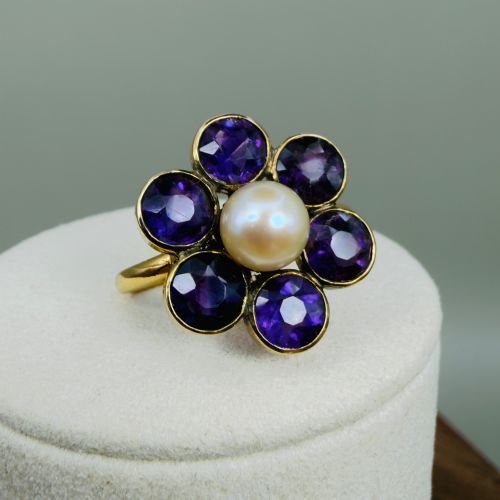
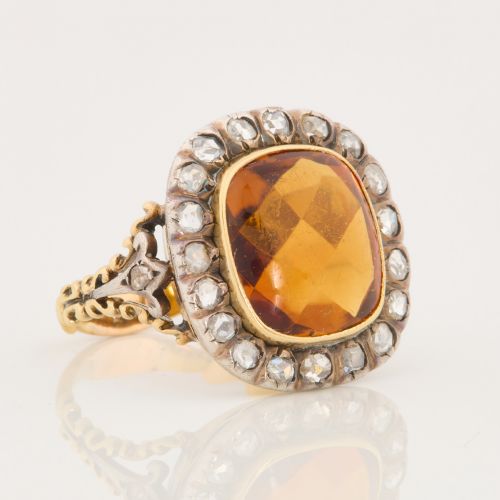
These pieces are georgian cluster ring finds, gathered for their central gemstones and layered stone arrangements that catch candlelight.
Georgian Cluster Ring
A georgian cluster ring centres upon a primary stone such as a diamond, sapphire, emerald, amethyst, citrine or garnet, encircled by smaller accent stones.
While true examples date from the Georgian era and the early nineteenth century, buyers often encounter pieces from subsequent Victorian and Edwardian periods utilising older design motifs.
The evidence shows forms ranging from simple round and oval clusters to navette shapes, rectangular designs and flower cluster arrangements.
Materials and construction
Maker's methods frequently combined gold and silver, mounting stones in silver settings placed atop gold shanks to reflect light through rose cut and old mined cut diamonds.
Metals span 9ct, 14ct, 15ct and 18ct gold alongside silver, providing varied hues from deep yellow gold to bright white silver settings.
Gemstones and organic materials like seed pearls, coral, agate and paste are secured in closed or open backed foils designed to enhance optical warmth.
Listings demonstrate materials spanning silver, 9ct gold, 15ct gold, 18ct gold, emeralds, sapphires, amethysts, pearls and diamonds.
Quality factors
Quality depends upon the depth of colour and saturation within coloured stones like emeralds, sapphires and garnets, alongside the brilliance of rose cut and old cut diamonds.
The precision of stone arrangement and the delicacy of surrounding metalwork, whether target designs or floral motifs, dictate the visual harmony of the piece.
Originality of the components, intact foil backs and the survival of delicate seed pearls or blue enamel details separate ordinary examples from exceptional specimens.
The Georgian Cluster Ring Glossary
- Rose cut
- A diamond cut featuring a flat base and a domed crown with triangular facets that resemble an opening rosebud. This style produces a soft, candlelit gleam rather than modern brilliance.
- Paste
- Hand-cut glass used historically to imitate diamonds or coloured gemstones. High quality paste exhibits deep refraction and careful faceting.
- Navette
- A boat-shaped ring setting featuring an elongated silhouette that tapers to points at either end. This profile flatters the finger.
- Foiling
- A thin sheet of coloured metal placed beneath a gemstone inside a closed setting to alter or enhance its colour and reflectivity. It requires careful preservation.
- Old mine cut
- An early diamond cut characterised by a roughly square girdle, high crown and deep pavilion. These stones were hand-faceted for oil lamps and candlelight.
Georgian Cluster Ring: Frequently Asked Questions
How do I care for a georgian cluster ring?
These antique rings require gentle handling because closed back settings and foil linings are vulnerable to moisture and harsh chemical cleaners.
Remove the ring before washing hands or engaging in manual tasks to protect delicate seed pearls, paste stones and old cut diamonds.
How can I tell the period?
Dating relies upon examining the hand-cut facets of diamonds, the construction of the shank and the presence of silver-on-gold techniques typical of early manufacturing.
While true Georgian pieces date around eighteen hundred to eighteen thirty, later Victorian revivals often emulate these exact floral and target cluster motifs.
What stones are used?
Common stones include rose cut diamonds, old mined diamonds, emeralds, sapphires, amethysts, citrines, garnets and turquoise.
Makers also incorporated seed pearls, coral, agate, blue glass and coloured paste to create vibrant floral and geometric patterns.