
Gold Gemstone Halo Ring
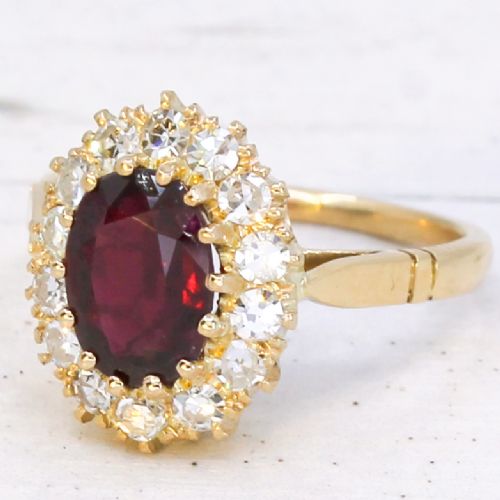
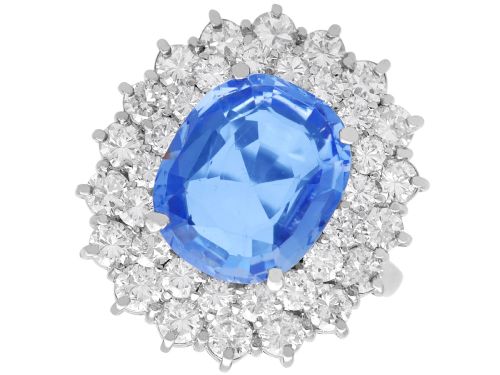
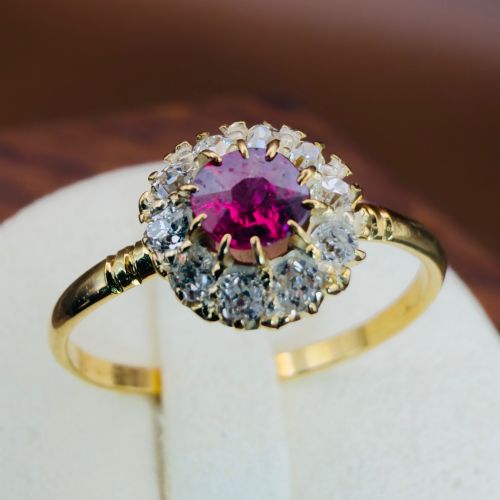
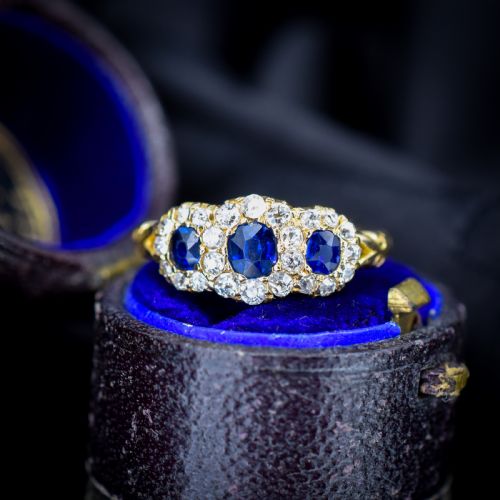
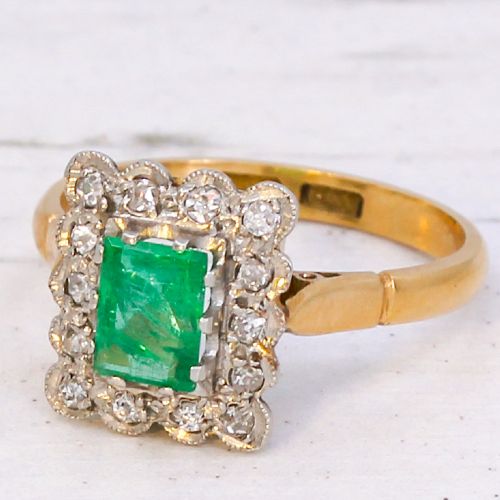
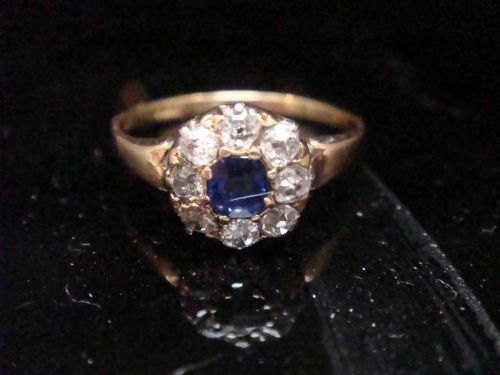
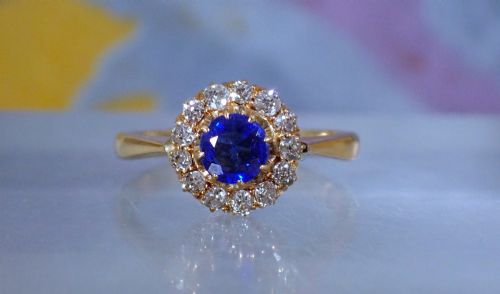
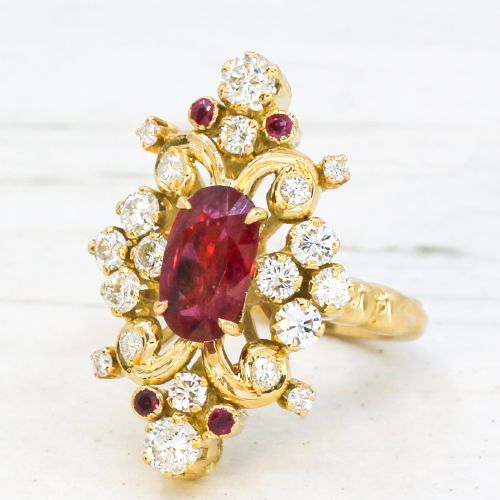
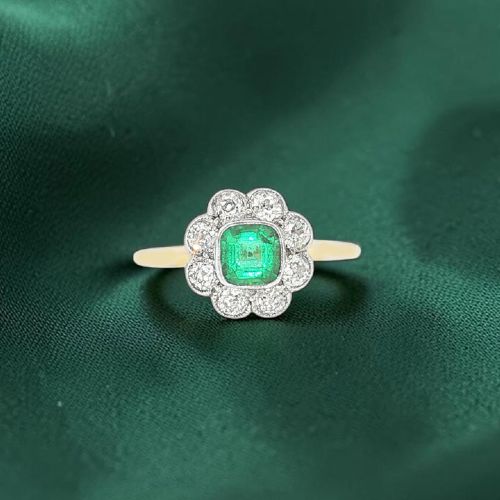
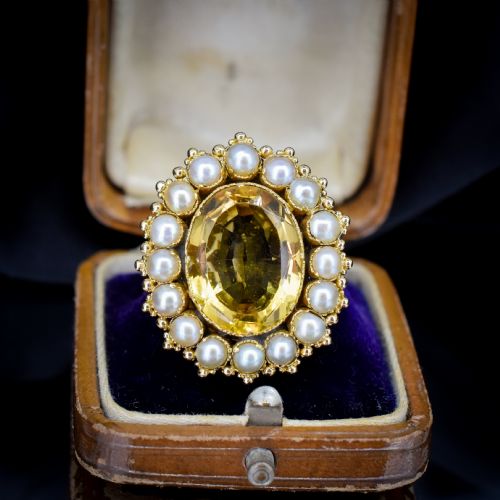
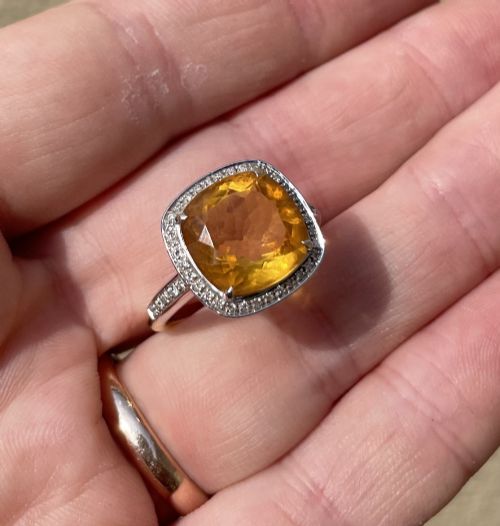
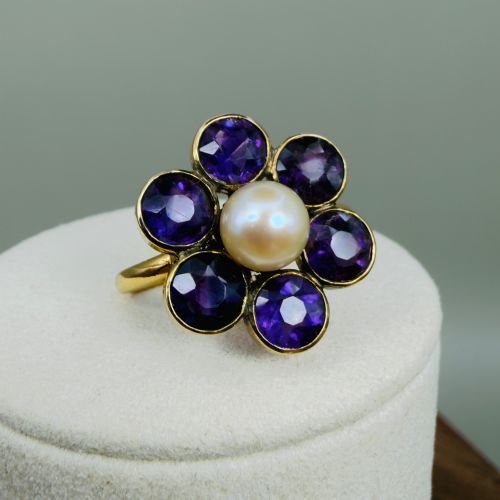
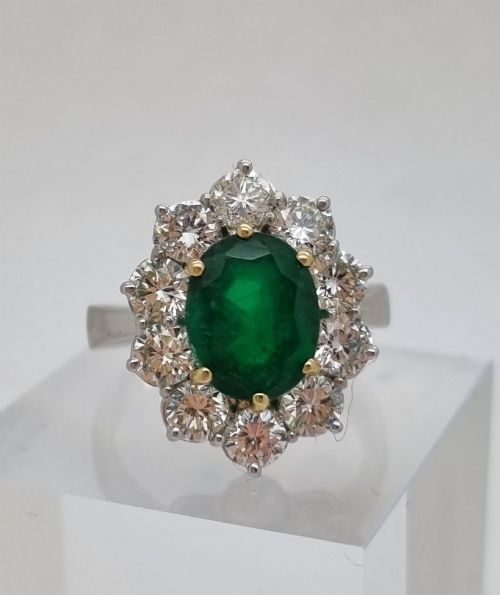
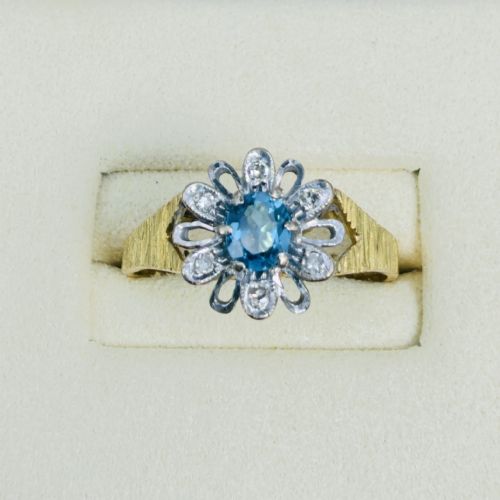
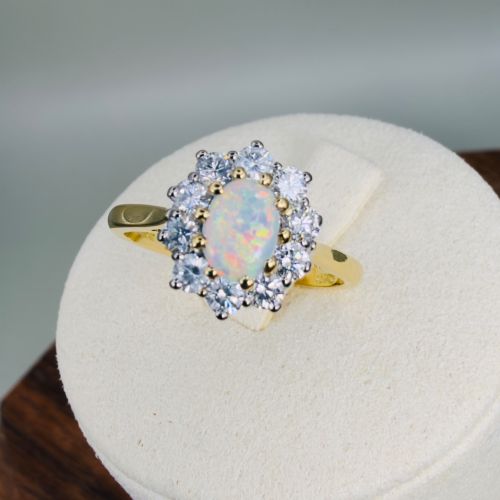
A gold gemstone halo ring centres a striking central stone surrounded by a border of smaller gems.
Gold Gemstone Halo Ring
A gold gemstone halo ring sets a prominent centre stone, such as a sapphire, ruby, emerald, or diamond, within an enclosing ring of smaller accent gems. This formation creates a distinct focal point that draws the eye directly to the heart of the jewel. The design appears frequently in Victorian, Edwardian, Art Deco, and mid-century iterations.
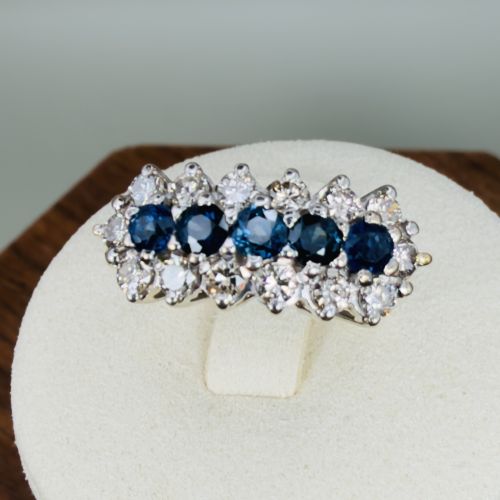
The version most commonly met on this page uses a central sapphire, ruby, or emerald paired with old cut diamonds set in 18ct yellow gold or white gold. These clusters often take floral, oval, or boat shapes, reflecting the aesthetic preferences of their respective periods from the nineteenth century through the mid-twentieth century. Buyers encounter both traditional fine jewellery configurations and cocktail rings designed for prominent wear.
How they were made
Goldsmiths utilised 18ct yellow gold, 18ct white gold, and platinum to fabricate the structural bands and settings that secure the stones. Platinum emerges in combination with gold particularly in Edwardian and Art Deco examples, providing a bright, durable metal capable of holding intricate claw work.
Gemstones including diamonds, sapphires, rubies, and emeralds are shaped into old cuts, cushion cuts, oval cuts, and princess cuts before being hand-set into cluster arrangements. Settings rely on closely positioned claws or bezel walls to hold the central gem and its surrounding halo securely in place.
The listings here encompass periods ranging from the Georgian era through to the mid-twentieth century.
What varies in quality
Quality rests upon the natural origin, clarity, and saturation of the central gemstone, alongside the cut and match of the surrounding diamonds. Stones possessing unheated origins or specific geographical provenances command distinct attention from collectors.
The precision of the metalwork also separates examples, visible in the symmetry of the halo setting and the delicate execution of shoulders and shanks. Heavier metal weight and robust structural integrity ensure the piece withstands regular wear while retaining its original proportions.
The Gold Gemstone Halo Ring Glossary
- Halo cluster ring
- A design featuring a prominent central gemstone encircled by a closely fitted border of smaller accent stones. This arrangement maximises the visual impact and perceived size of the primary gem.
- Old cut diamond
- A hand-faceted diamond cut popular before the standardisation of the modern brilliant cut in the early twentieth century. These stones typically exhibit smaller tables and deeper pavilions.
- Cluster ring
- jewellery piece composed of multiple stones grouped tightly together to form a single cohesive design. They frequently mimic floral motifs or geometric patterns.
- Boat ring
- A ring setting shaped like a small boat or navette, tapering towards both ends along the finger. This configuration allows a row of stones to sit horizontally across the hand.
- Cabochon
- A gemstone polished to a smooth, rounded convex top rather than faceted into flat planes. This style is frequently utilised for opals, sapphires, and emeralds.
Gold Gemstone Halo Ring: Frequently Asked Questions
How do I care for antique rings?
Antique rings require gentle handling due to their age and delicate setting techniques. Regular cleaning with mild soapy water and a soft brush helps maintain the metal and stones.
It is advisable to remove these rings during heavy manual work or swimming to protect fragile gems like opals and pearls.
How can I tell the period?
Dating relies on examining the cut of the diamonds, the choice of metals, and the overall structural style. Edwardian pieces often combine platinum and yellow gold with intricate openwork, while mid-century designs display bolder cocktail proportions.
Hallmarks stamped inside the band also provide specific clues regarding the assay office and year of manufacture.
What gems were used historically?
Traditional rings incorporated sapphires, rubies, emeralds, and diamonds as primary stones. Pearls, amethysts, citrines, opals, and aquamarines also appear frequently across nineteenth and twentieth-century examples.
These materials reflect the tastes and trade routes accessible to jewellers during the Victorian, Edwardian, and later decades.