
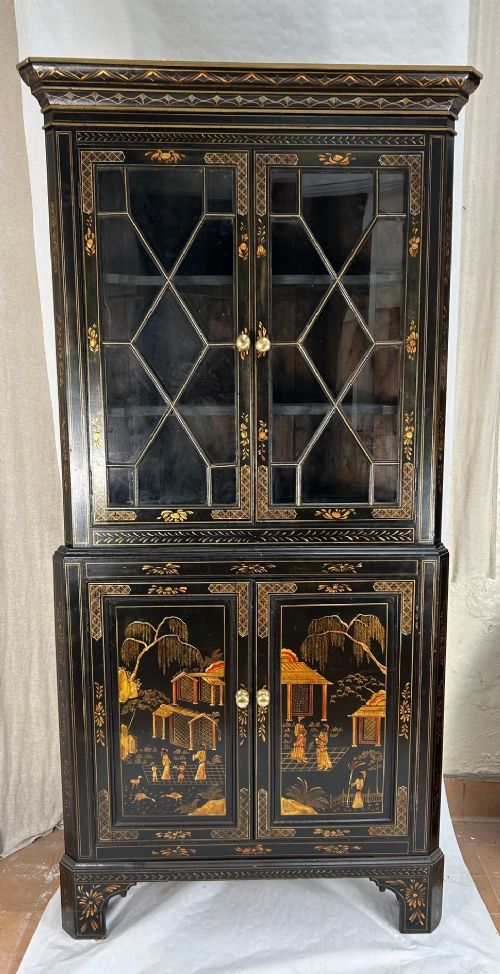
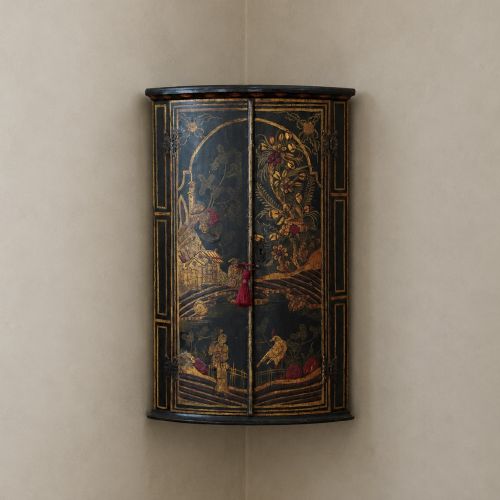
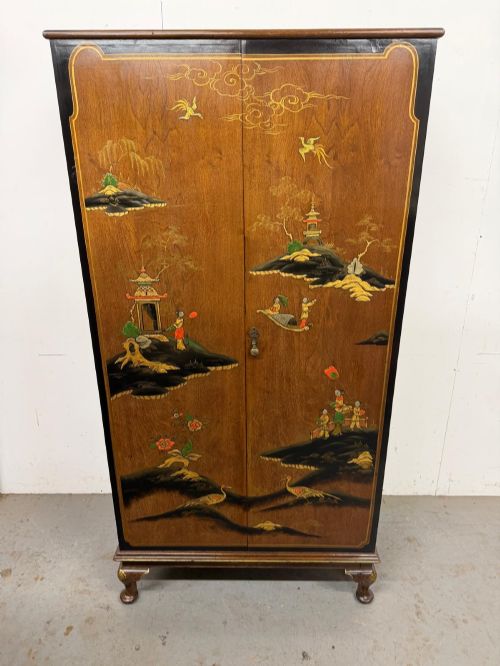
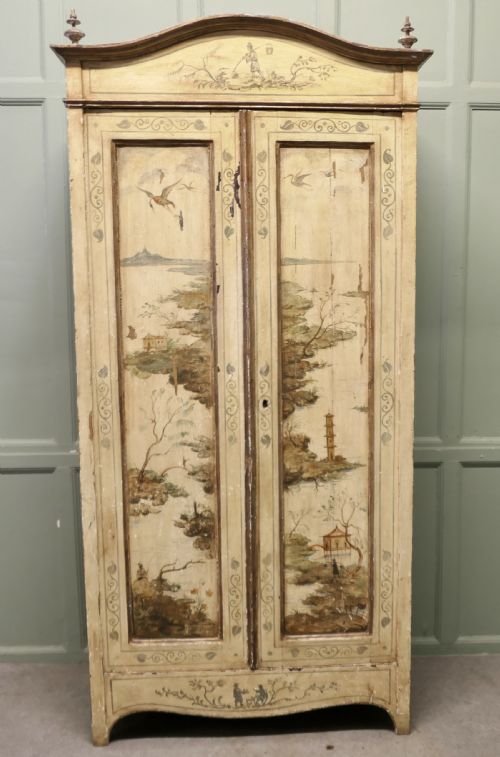


Georgian Chinoiserie Cupboard
A georgian chinoiserie cupboard brings imported fantasy into the room through lacquer, paint, and gold leaf on sturdy timber.
Georgian Chinoiserie Cupboard
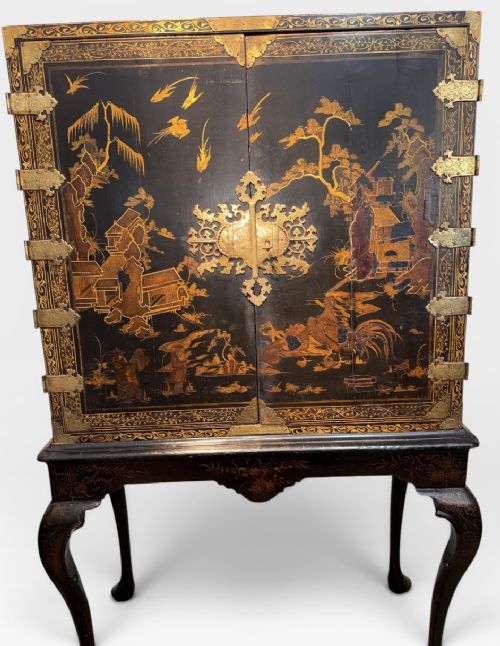
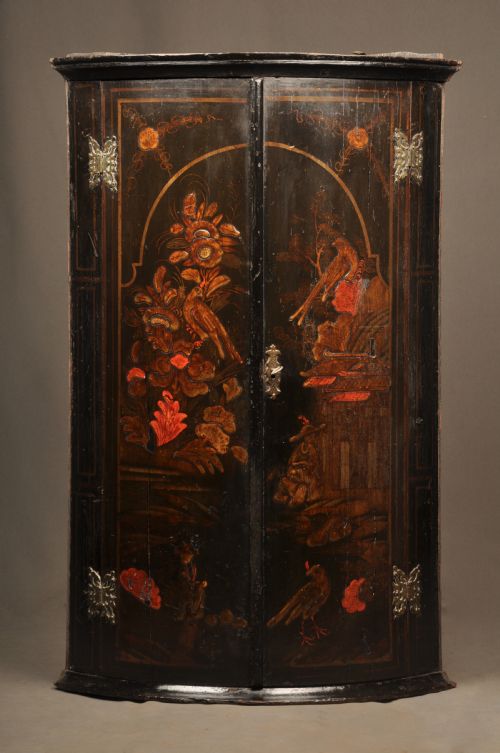
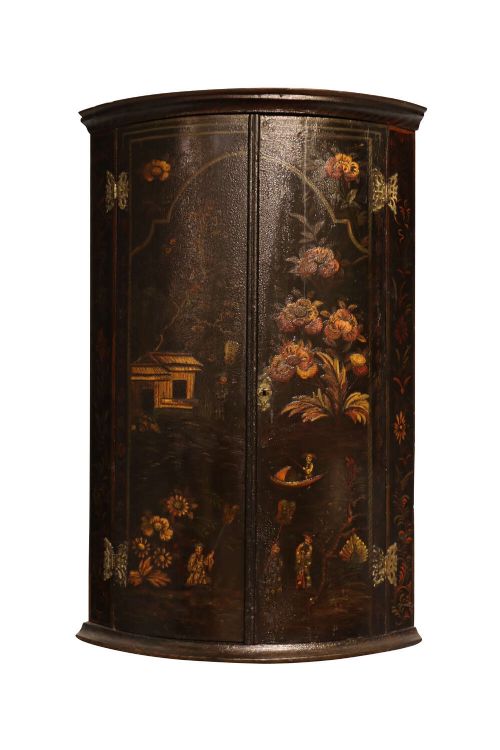
A georgian chinoiserie cupboard satisfies the collector seeking decorative storage with painted outdoor scenes and orientalist motifs. These items encompass a range of forms, from compact corner cabinets to larger wardrobes and cabinets on stands.
The pieces listed on this page span several eras alongside the core georgian chinoiserie cupboard examples, including the 18th century, regency, victorian, edwardian, and early 20th century periods. Buyers will frequently encounter corner cupboards fitted with bow fronts or flat doors, often finished in black, red, or japanned lacquer.
How they were made
Construction relies on wood carcasses prepared for painted finishes, lacquer, and gold leaf application. Artisans built these cabinets using timber, glass, and brass hardware to secure doors and internal shelving.
Decoration is achieved through japanning and paintwork depicting outdoor scenes, figures, and landscapes. Skilled hands layered lacquer and gilt to create the characteristic sheen and relief seen on the surface.
Object types vary from corner cupboards and wardrobes to cabinets on stands and side cabinets.
What varies in quality
Quality rests in the depth of the lacquer work and the fidelity of the painted outdoor scenes. Superior examples display intricate gold leaf detailing and well-preserved painted surfaces across the wood body.
The proportion of the cabinet and the retention of original brass fittings dictate the standing of a piece. Finer items maintain their original japanned finish without heavy modern intervention.
The Georgian Chinoiserie Cupboard Glossary
- Japanning
- European imitation of East Asian lacquerwork using resin varnishes and metallic dust. This technique creates a glossy, dark surface decorated with raised motifs.
- Lacquer
- A durable varnish made from tree sap or resin applied in multiple layers. It provides the smooth, protective background typical of orientalist cabinetwork.
- Chinoiserie
- European artistic style reflecting Chinese and East Asian motifs. It appears on furniture through whimsical landscapes, pavilions, and figures.
- Bow front
- A convex, curved front section on a cabinet or cupboard. This shape softens the corners of rooms when placed in a corner unit.
- Cabinet on stand
- A freestanding storage compartment elevated on a separate support frame or legs. This form lifts the decorated body to eye level.
Georgian Chinoiserie Cupboard: Frequently Asked Questions
Where should I place a corner cupboard?
These cabinets fit neatly into room junctions, making efficient use of overlooked spaces while displaying decorative painted surfaces.
Ensure the room humidity remains stable to protect the timber carcass and delicate lacquer finish from cracking.
How do I clean lacquer surfaces?
Dust the exterior gently with a dry, soft microfiber cloth to prevent scratching the gold leaf and painted details.
Avoid chemical polishes and water, which can damage the historic varnish and underlying paintwork.
What is the difference between japanning and lacquer?
Japanning is a European technique developed to mimic true Asian lacquer using shellac, varnishes, and heat-cured layers.
Both finishes produce a glossy, decorated ground, but genuine oriental lacquer uses specific tree resins not found in western workshops.
How do I identify a period piece?
Examine the construction methods, timber types, and the style of the brass hinges and escutcheons used on the doors.
Period items show age-appropriate wear in the lacquer and hand-cut joinery behind the painted scenes.