


Georgian Ceramic Figure Group
A georgian ceramic figure group brings pastoral narratives, mythological scenes and lively satirical characters directly into your interior.
Georgian Ceramic Figure Group
A georgian ceramic figure group captures domestic scenes, classical mythologies and pastoral subjects through modelled clay and porcelain. The pieces on this page span the eighteenth and nineteenth centuries, including works from Derby, Staffordshire and continental factories.
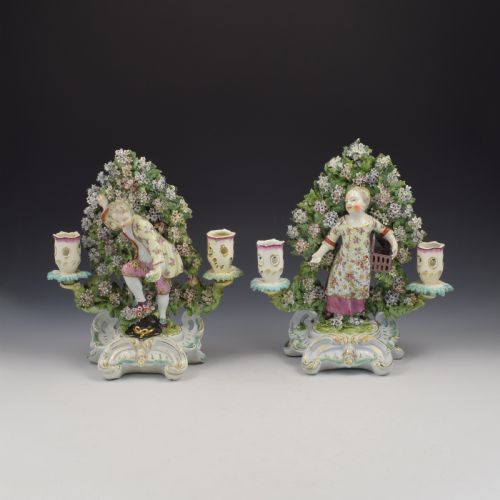
You will encounter multifaceted table ornaments alongside functional candlestick figures featuring bocage foliage backgrounds. Subjects range from literary pairings like the Vicar and Moses to allegorical representations of the seasons and elements.
The objects cross several distinct manufacturing traditions, moving from soft-paste porcelain bodies to pearlware and biscuit porcelain. Each form reflects the changing tastes of collectors during the Georgian period and slightly beyond.
Materials and production methods
Potters shaped these figures using press moulds for earthenware and pearlware, or slip casting for finer porcelain bodies. Soft-paste porcelain and biscuit porcelain required precise kiln temperatures to achieve their characteristic texture and density.
Craftsmen applied enamel colours by hand over or under the glaze, sometimes incorporating gold leaf and gilding to highlight drapery and details. Bocage backgrounds involved individually hand-formed leaves and flowers applied around the main figures before firing.
Father Time pauses his relentless schedule just long enough to clip Cupid's wings in a dramatic porcelain sculpture group.
Factors influencing quality
The crispness of the modelling sets superior examples apart, showing distinct facial expressions and intricate drapery folds rather than softened details. Superior gilding and finely painted enamel work indicate skilled workshop execution.
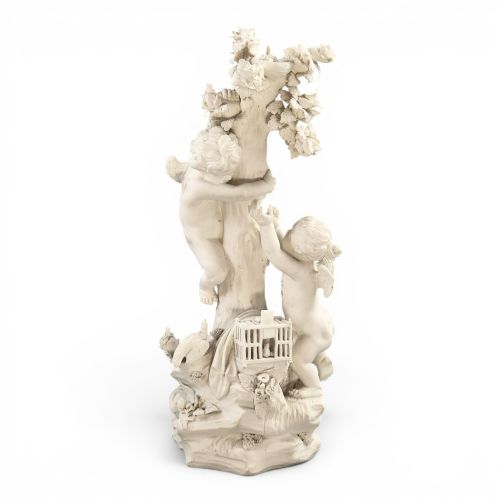
The preservation of delicate elements like applied bocage foliage and protruding limbs dictates desirability. Earlier biscuit porcelain groups from Derby demonstrate exceptional refinement in unglazed sculptural detail.
Derby·Ralph Wood·Ludwigsburg·Staffordshire·Walton
The Georgian Ceramic Figure Group Glossary
- Bocage
- Applied background foliage made of ceramic leaves and flowers. This technique frames porcelain figures to simulate natural woodland settings.
- Biscuit porcelain
- Unglazed fired porcelain with a matte, marble-like surface. It was favoured by factories like Derby for classical figure groups.
- Soft-paste porcelain
- An artificial porcelain composition fired at lower temperatures than hard-paste. It possesses a warm glaze and slightly softer body.
Georgian Ceramic Figure Group: Frequently Asked Questions
How were candlestick figures used?
Candlestick figures combined functional metal or ceramic candle sockets with decorative modelled figures framed by bocage foliage.
They stood on mantelpieces or dining tables to provide illumination alongside decorative storytelling scenes.
How do I date a ceramic figure?
Dating relies on identifying the ceramic body, glaze characteristics, factory marks and stylistic clothing details. Eighteenth-century pieces often feature soft-paste porcelain or early biscuit, while pearlware groups frequently date to the nineteenth century.
Comparing modelling styles with known factory output helps narrow the period of production.
Where should I display these figures?
Display these sculptures in secure cabinets or on stable mantelpieces away from heavy traffic areas. Their delicate applied elements, such as leaves and fingers, require careful placement to prevent accidental damage.
Proper lighting helps highlight the hand-painted enamels and fine modelling details.