



Polychrome Earthenware Figure Group
A polychrome earthenware figure group brings Victorian parlour life and Georgian pottery traditions directly onto the mantelpiece.
Polychrome Earthenware Figure Group
A polychrome earthenware figure group represents multi-figural ceramic compositions modelled in clay, typically depicting literary characters, historical events, or allegorical scenes. These pieces span from the late eighteenth century through the Victorian era, capturing subjects such as the Crimean War, royal portraits, and traditional folk groups.
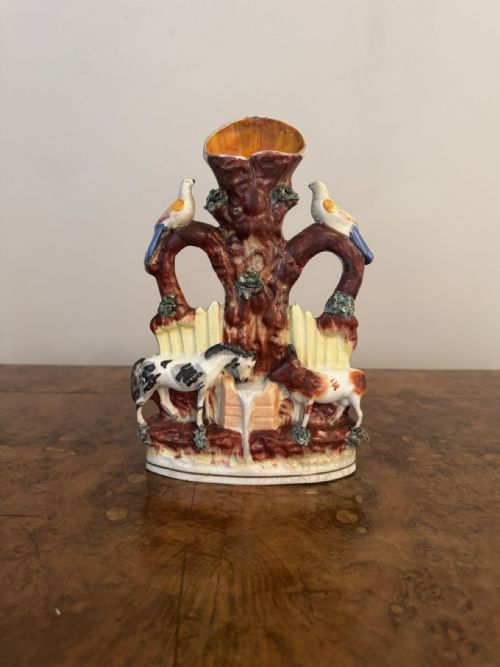
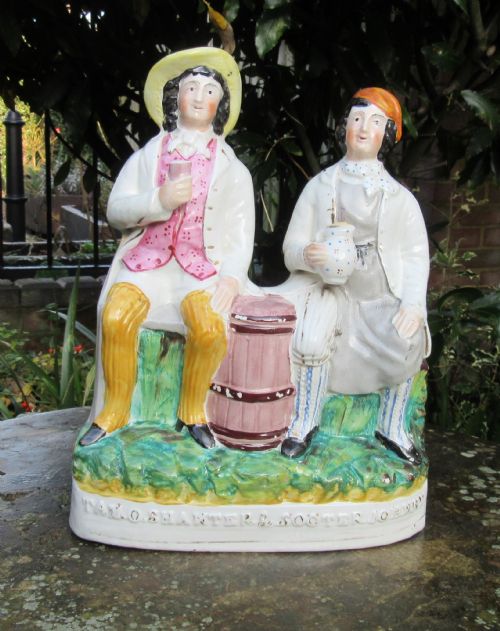
The version most commonly met on this page is the nineteenth-century Staffordshire flatback or spill vase, often portraying named subjects like Peace and Plenty or Tam O'Shanter. These ceramic works were made to stand against a wall, leaving the unglazed or minimally glazed reverse flat, while the front displays a detailed narrative scene.
Earlier examples bridge the gap towards eighteenth-century Pearlware traditions, such as the Ralph Wood Vicar and Moses group from around seventeen eighty-five. Such pieces employ finer glaze surfaces and distinct modelling compared to the later mass-produced Victorian flatbacks.
Materials and construction methods
Potters constructed these figures using earthenware clay bodies, sometimes refined as pearlware for a smoother, whiter surface that took enamels particularly well. The moist clay was pressed into moulds, joined, and smoothed before receiving an initial firing to create the ceramic biscuit body.
Makers applied hand-painted enamel colours over or under the lead glaze to bring the characters and clothing to life in bright hues. A final high-temperature kiln firing fixed the pigments and produced the characteristic glossy sheen across the ceramic surface.
Nineteenth-century potters occasionally borrowed portraits of French emperors and Scottish literary tipplers to share the exact same mantelpiece shelf.
Factors distinguishing standard pieces from finer examples
Painting precision sets apart superior items, where enamel colours stay neatly within raised clay boundaries and flesh tones or facial expressions show individual brushwork. Simpler pieces rely on hasty colour splashes that miss the modelled edges.
Ralph Wood
The Polychrome Earthenware Figure Group Glossary
- Earthenware
- A porous ceramic body fired at lower temperatures than stoneware or porcelain, requiring a glaze to achieve waterproof qualities. It forms the base material for nearly all Staffordshire figure groups.
- Pearlware
- A refined type of earthenware developed in the late eighteenth century, featuring a thin glaze with a slight bluish tinge that pooled in recesses. It creates a paler ground for painted enamels than standard creamware.
- Spill Vase
- A hollow ceramic tube incorporated into a figure group, designed to hold taper candles or wooden spills for lighting pipes and fires. The vase opening sits naturally among the modelled characters.
- Flatback
- A Staffordshire figure style moulded with a fully decorated front and a plain, flattened reverse intended to sit flush against a wall. This technique saved time and materials during production.
- Enamel Paint
- Vitreous pigments applied over the fired glaze and fixed in a muffle kiln at a lower temperature. It provides the bright reds, blues, and yellows characteristic of polychrome decoration.
Polychrome Earthenware Figure Group: Frequently Asked Questions
What subjects do these figure groups show?
These ceramic groups portray a wide range of subjects drawn from literature, current affairs, religion, and temperance movements. Common themes include named historical figures, literary characters, and moral scenes like the Band of Hope.
Potters adapted popular prints, theatrical performances, and newspaper illustrations of the day into sculptural form to appeal to middle-class Victorian homes.
How do I tell an 18th century piece from a Victorian one?
Earlier eighteenth-century figures, such as those associated with the pearlware tradition, often feature finer modelling, hollow rounded backs, and subtle underglaze or early enamel colouring. They tend to have a lighter, more refined feel in the hand.
Victorian pieces from the mid to late nineteenth century typically adopt the flatback format, brighter and heavier enamel palettes, and bolder, less refined facial expressions designed for visual impact from a distance.
Where were these figures displayed in the home?
Owners typically placed these ceramic groups on mantelpieces, chiffoniers, or sideboard tops in the principal reception rooms of Victorian and Georgian houses. Their bright enamel colours provided a cheerful focal point against dark wood furniture and patterned wallpapers.
Because most flatbacks are unglazed at the back, they were designed specifically to stand on narrow shelves or against cottage walls rather than in the round.
How do I care for antique earthenware pottery?
Keep these glazed ceramic figures out of direct sunlight to prevent the hand-painted enamel colours from fading over time. Dust them gently with a soft, dry brush rather than using water or chemical cleaners.
Earthenware can absorb moisture through unglazed areas at the base, so avoid placing them in damp environments or washing them under taps.