



Georgian Ceramic Basket
A georgian ceramic basket brings the refined craft of eighteenth and nineteenth century table service directly into a modern interior.
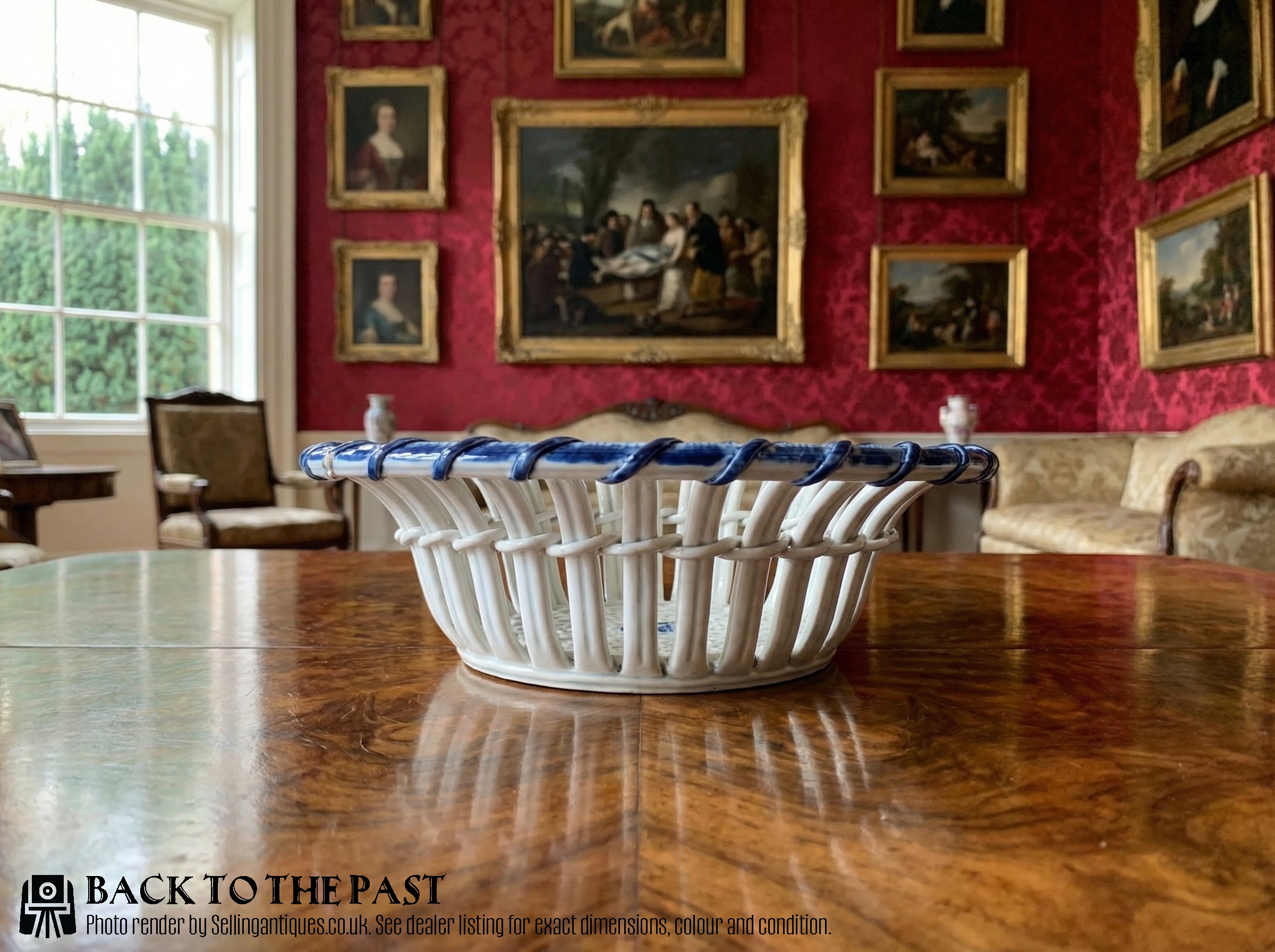
Georgian Ceramic Basket
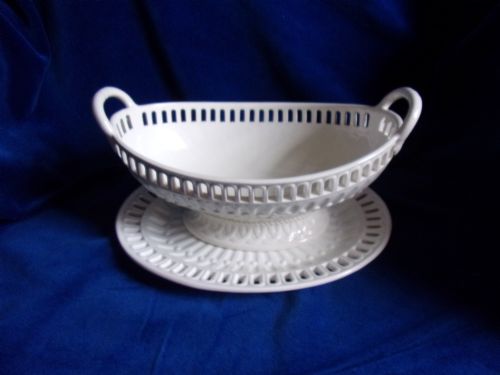
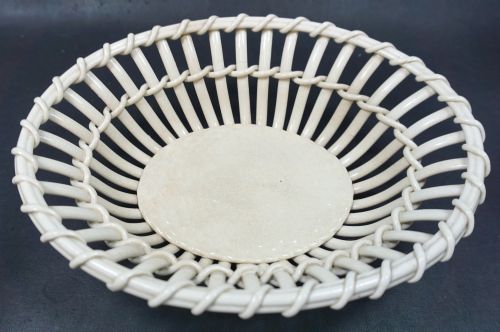
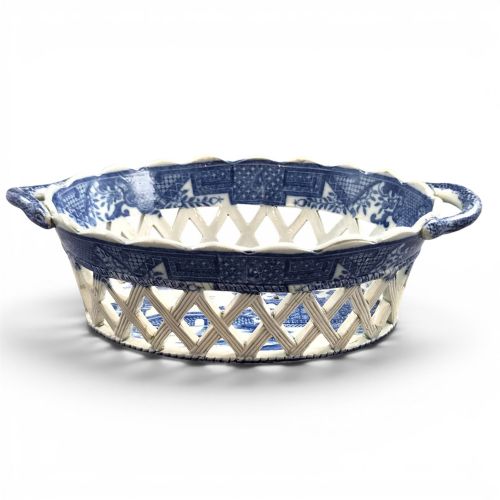
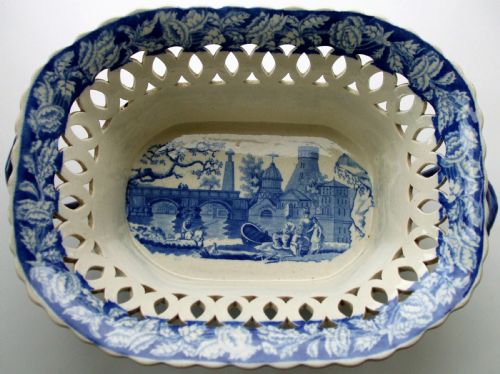
A georgian ceramic basket search brings together pierced and reticulated vessels designed for serving chestnuts, fruit or small desserts during formal dining. These pieces span the eighteenth and nineteenth centuries, crossing periods from the Georgian era through the Regency and William IV years.
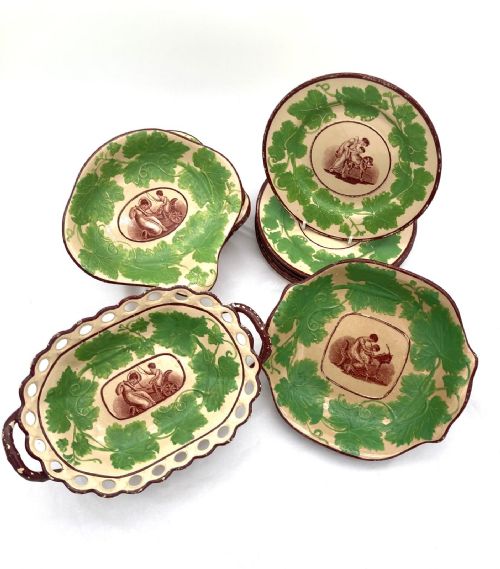
The objects take several forms, appearing as standalone chestnut baskets with covers and matching stands, alongside wider dessert service components. Most pieces meet the eye as intricate white or blue and white earthenware, creamware, pearlware or porcelain items.
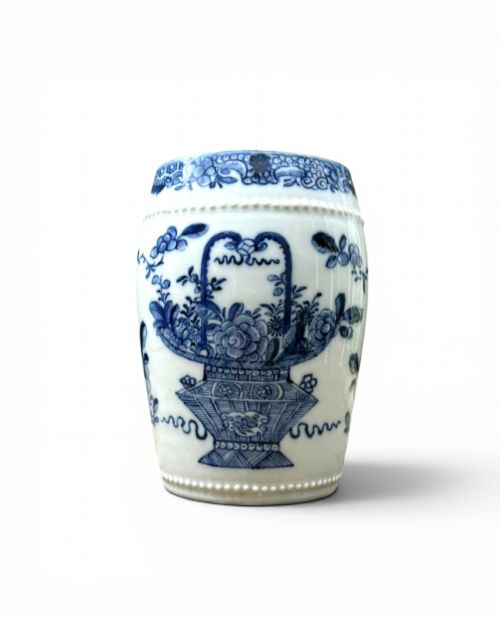
Originating largely from English factories like Worcester, Spode, Derby and Mason's, alongside select Chinese Export productions, these items reflect the high dining fashions of their time. The selection leans heavily towards pierced porcelain and transfer-printed pottery baskets.
Materials and methods of manufacture
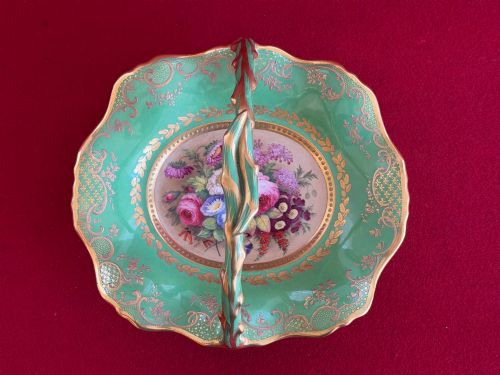
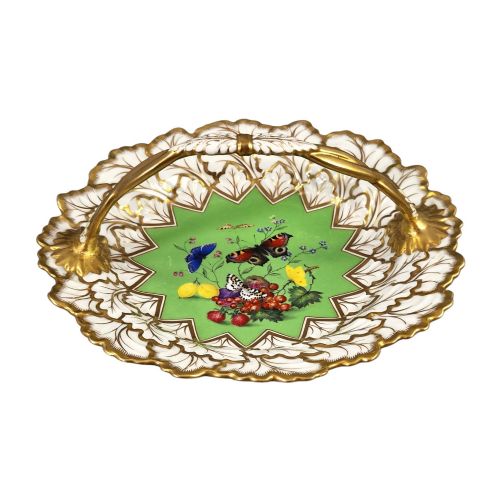
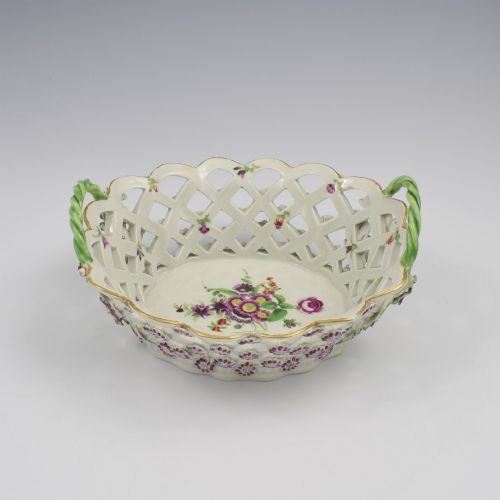
Potters built these baskets using soft-paste porcelain, earthenware, creamware and pearlware, often finishing the surfaces with intricate glaze and enamel work. Some high-status pieces received delicate additions of gold leaf to accentuate their moulded forms.
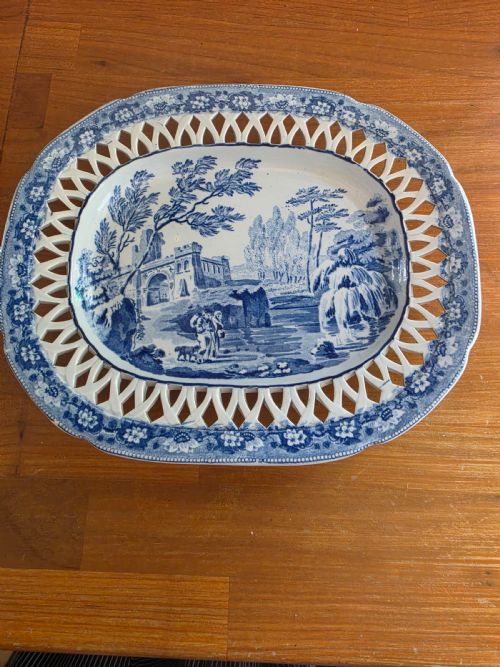
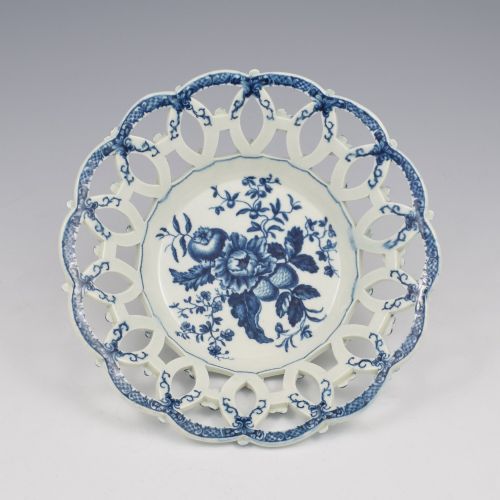
Makers achieved the characteristic openwork designs by cutting or piercing the wet clay before firing, creating fretted and reticulated lattices. Transfer printing applied complex blue and white scenes, such as willow patterns or river views, onto the earthenware bodies.
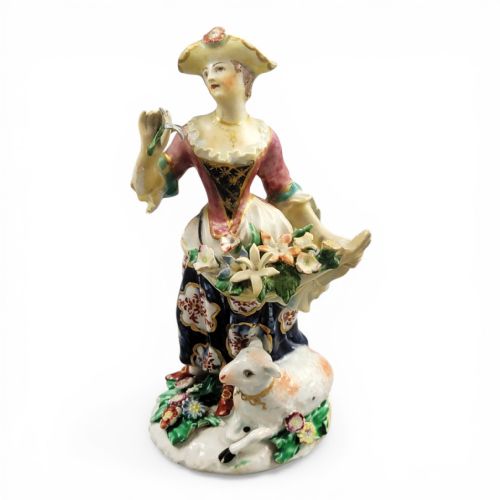
Many items incorporate applied ceramic flowers and foliage, modeled by hand and attached to the woven or pierced basket sides prior to glazing and kiln firing.
Look closely for tiny ceramic ladybugs hiding among the applied flowers on the porcelain foliage.
Distinctions in quality
Quality rests heavily on the crispness of the pierced or reticulated lattice work and the precision of the moulded elements. Finer baskets maintain sharp, clean apertures without distortion from the kiln firing process.
The sophistication of the surface decoration sets the finest examples apart, whether through hand-painted polychrome enamels, meticulous gold leaf application or crisp transfer printing. Superior porcelain bodies display a finer translucency and smoother glaze than standard utilitarian earthenware.
Derby Porcelain·Flight, Barr and Barr·Davenport·Wedgwood·Spode·Dr Wall Worcester·Bow Porcelain·Limbach Porcelain·Rockingham Porcelain·J. and R. Clews
The Georgian Ceramic Basket Glossary
- Chestnut basket
- A specialised serving vessel with a lid and often a matching tray, designed specifically to hold roasted chestnuts at the end of a formal meal. These pieces frequently feature pierced walls to allow ventilation.
- Reticulated
- Describes ceramic work featuring an open, net-like or laced pattern formed by cutting through the clay before firing. This technique requires considerable skill to avoid sagging in the kiln.
- Creamware
- A refined earthenware body with a pale yellowish straw-coloured glaze, developed in England during the eighteenth century. It offered a lighter, more delicate alternative to heavier utilitarian pottery.
- Pearlware
- An improved earthenware developed by Josiah Wedgwood in the late eighteenth century, featuring a slightly bluish glaze that pooled in recesses to mimic the whiteness of Chinese porcelain.
- Transfer printing
- A decoration technique where an engraved copper plate transfers a design onto tissue paper, which is then stamped onto the ceramic surface before glazing. This allowed complex pictorial scenes like river views to be produced consistently.
Georgian Ceramic Basket: Frequently Asked Questions
What were georgian ceramic baskets used for?
These baskets served a practical and decorative role on upper-class dining tables, primarily holding roasted chestnuts or fresh fruit during the dessert course. They added a layer of visual texture to elaborate dining table arrangements.
Over time, their use shifted as dining habits changed, turning them into purely decorative display pieces within the home.
How do I date a ceramic basket?
Dating relies on identifying the paste type, factory marks, and stylistic clues such as Rococo curves or Regency neoclassical lines. Soft-paste porcelain and creamware typically point to the eighteenth century, while pearlware and specific ironstone bodies often indicate the early nineteenth century.
Comparing the painting style or transfer-printed motifs to documented factory production dates narrows the timeline further.
How should I display a basket at home?
These pieces look best placed in well-lit cabinets or on sturdy side tables where the pierced lattice work can catch the light. Because many include matching stands or covers, displaying them as a complete set creates a stronger visual impact.
Keep them away from direct edges and high-traffic areas to protect the delicate applied flowers and handles.
What is the difference between porcelain and earthenware baskets?
Porcelain baskets utilise a finer, vitrified body that often shows translucency when held to the light, typically associated with higher-status makers like Worcester or Spode. Earthenware and creamware baskets have an opaque, porous clay body covered in glaze, offering a different weight and texture.
Both materials received intricate pierced decoration, but porcelain allowed for thinner, sharper lattice work.