
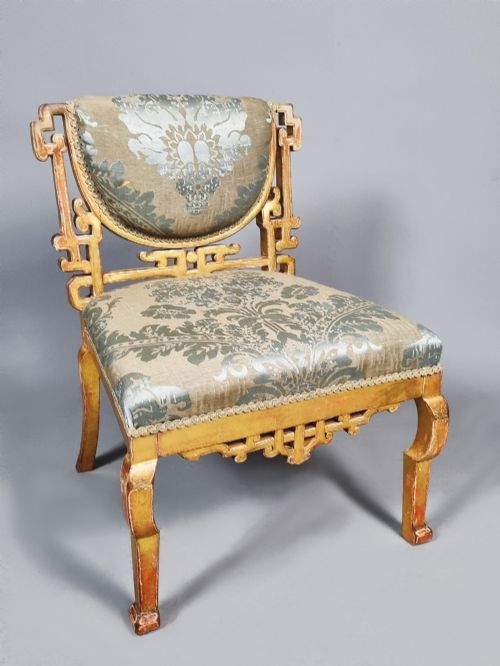
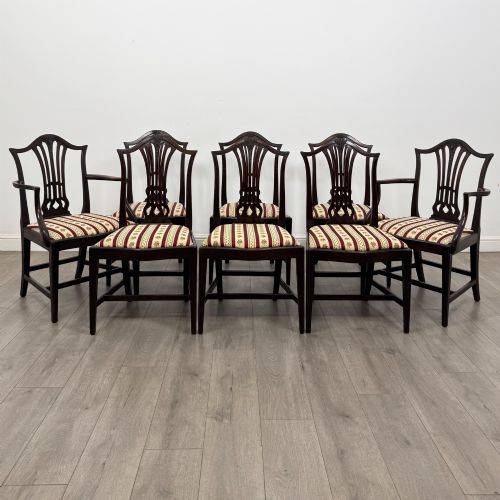
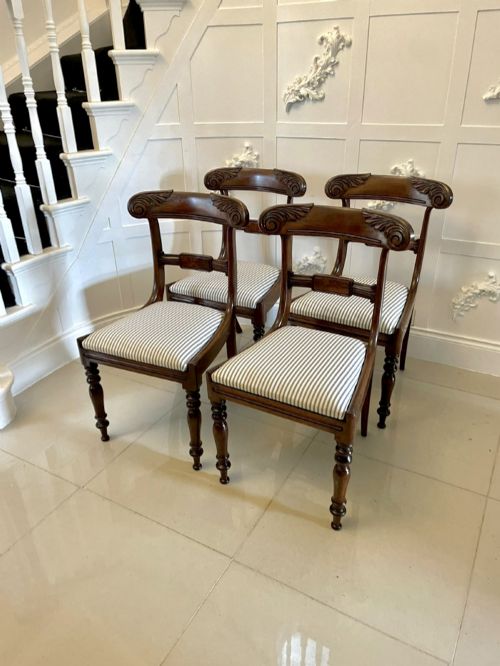
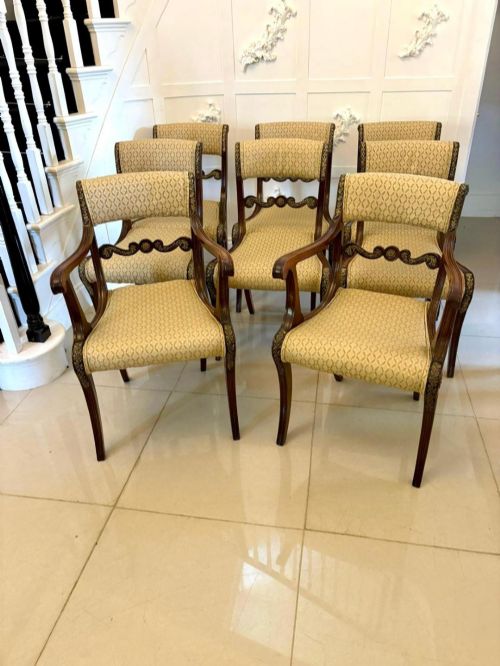


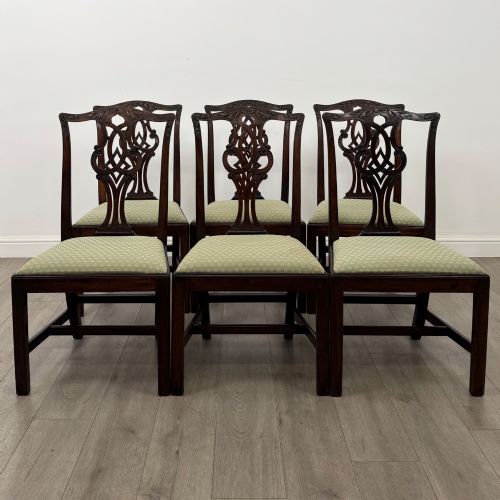
Georgian Carved Side Chair
A georgian carved side chair brings architectural precision and timber warmth directly into a room, offering both practical seating and sculptural form.
Georgian Carved Side Chair
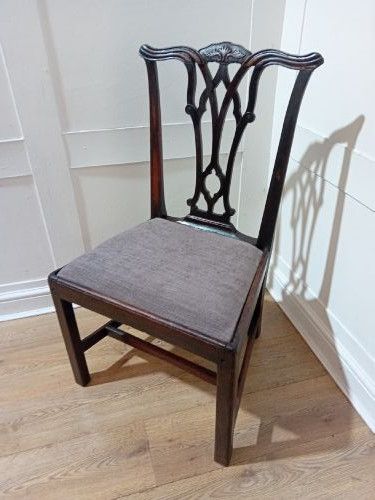
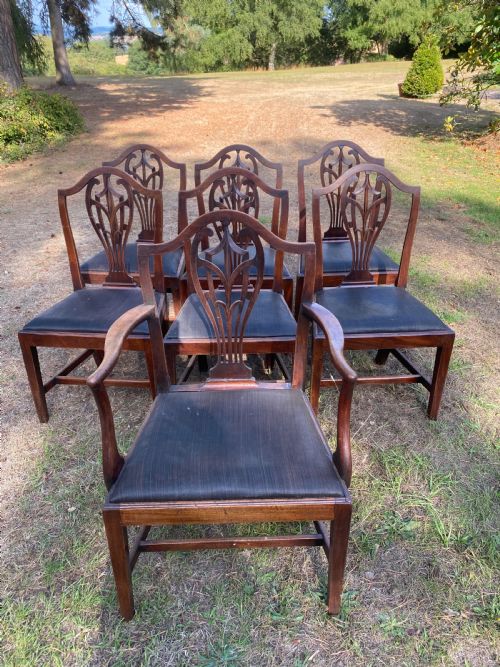
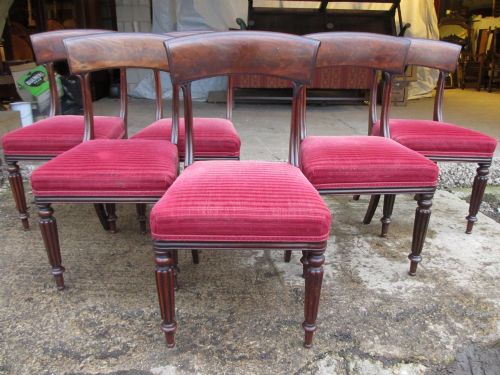
When searching for a georgian carved side chair, buyers encounter solid timber seating dating from the eighteenth century into the nineteenth century, encompassing styles from George II and George III through to Regency and William IV iterations. These pieces typically function as dining, hall or library seating, constructed primarily in mahogany and walnut with occasional oak or rosewood examples appearing.
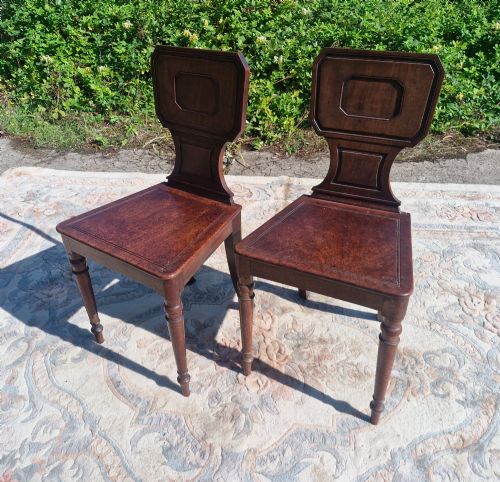
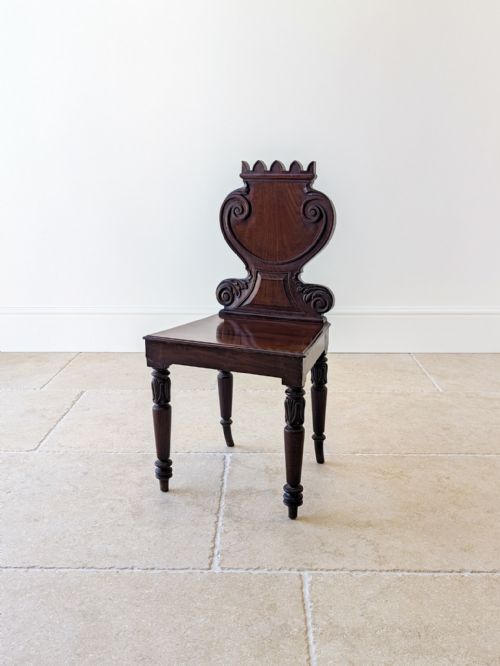
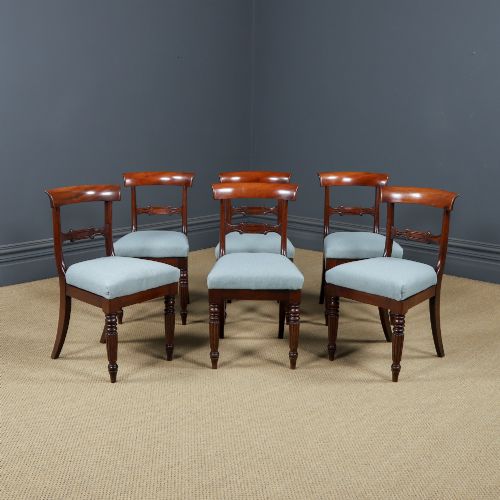
The most common formats on this page range from single pieces and pairs to large matched sets intended for dining tables. Alongside standard side chairs, the inventory includes hall chairs with solid wooden seats and shield back or bar back designs originating from various British and regional workshops.
How they were made
Cabinetmakers constructed these chairs using dense hardwoods like mahogany and walnut, often employing mortise and tenon joinery to ensure structural rigidity across the frame. Carved details such as cabriole legs, scrollwork or shield backs were worked directly into the solid timber by hand.
Upholstered variants incorporate traditional stuffing materials secured beneath textiles including velvet, damask and plain fabrics, while other versions rely on turned wooden elements or cane inserts for the seat panels.
Listings feature mahogany, walnut, oak and rosewood timber stocks combined with upholstery fabrics, velvet, brass accents and cane seating materials.
What varies in quality
The distinction between standard examples and exhibition quality pieces lies in the crispness and depth of the timber carving, alongside the selection of finely figured veneers or solid grain stocks. Superior workshop output demonstrates harmonious proportions and meticulous attention to structural joinery that survives centuries of daily use.
Gradations in quality also appear in the originality of components, where preserved surface patination and untouched timber frames command greater appreciation among collectors than heavily restored or later altered examples.
Gillows
The Georgian Carved Side Chair Glossary
- Cabriole leg
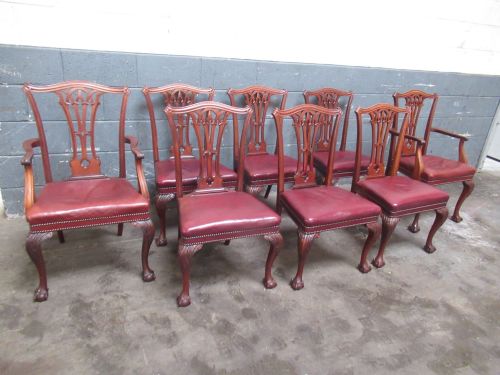
- A furniture leg that curves out and then tapers inward, mimicking an animal limb. This form typically terminates in a pad, claw and ball, or hoof foot.
- Shield back
- A chair back design shaped like a heraldic shield, popularised by designers in the late eighteenth century. It frequently incorporates carved splats and openwork tracery.
- Bar back
- A horizontal wooden rail integrated into the upper section of a chair back, often curved for comfort. It appears frequently on dining chairs from the Regency and William IV periods.
- Bobbin turned
- A style of furniture turning where cylindrical wooden sections are shaped with repeating spherical or spool-like ornaments. This technique is common on seventeenth and early eighteenth century oak and walnut frames.
- Sabre leg
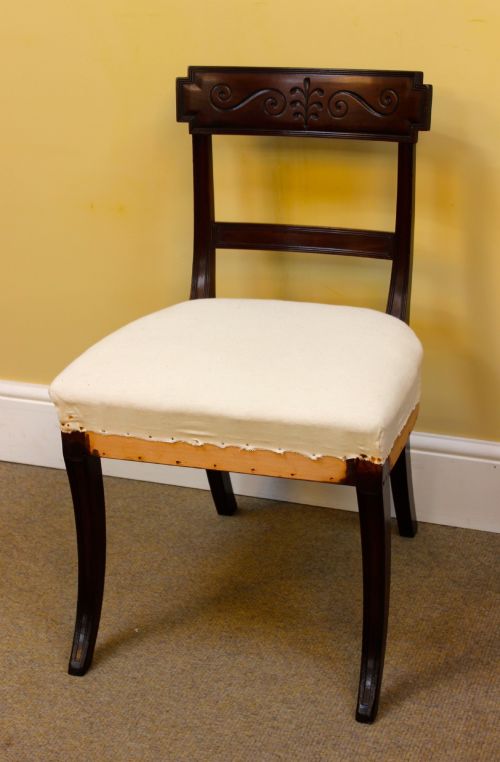
- A concave-curved furniture leg that tapers toward the foot, resembling a cavalry sabre. This form is characteristic of Regency seating design.
Georgian Carved Side Chair: Frequently Asked Questions
How do I identify a true period piece?
Examine the timber construction, joinery methods and surface wear to determine age. Period pieces exhibit traditional hand-cut joints and appropriate material shrinkage rather than modern machine tooling.
Review the stylistic vocabulary, such as cabriole legs or shield backs, against documented examples from specific decades like the eighteenth or early nineteenth century.
Were these chairs used for dining?
Many examples served primarily around dining tables, though distinct variants functioned as hall chairs, library seating or decorative side pieces in reception rooms. Dining sets often survive in groups ranging from pairs up to twelve or more matching chairs.
Hall chairs generally feature solid wooden seats without upholstery, designed for transit and formal entryways rather than prolonged sitting.
How should I care for antique mahogany and walnut?
Maintain stable indoor humidity levels and keep wooden furniture away from direct sunlight and heat sources to prevent timber splitting or veneer lifting. Regular dusting with a soft, dry cloth preserves the polished surface.
Avoid silicone-based polishes, applying traditional beeswax sparingly to nourish the grain and maintain the natural patina over time.
What is the difference between George II and Regency styles?
George II designs frequently display robust proportions, heavy carved cabriole legs, and dark walnut or early mahogany timbers reflecting baroque influences. The decorative vocabulary emphasises shell motifs and claw and ball feet.
Regency pieces lean toward classical revivalism inspired by ancient Greece and Rome, featuring ebonised details, brass inlays, sabre legs, and lighter rosewood or Cuban mahogany stocks.