
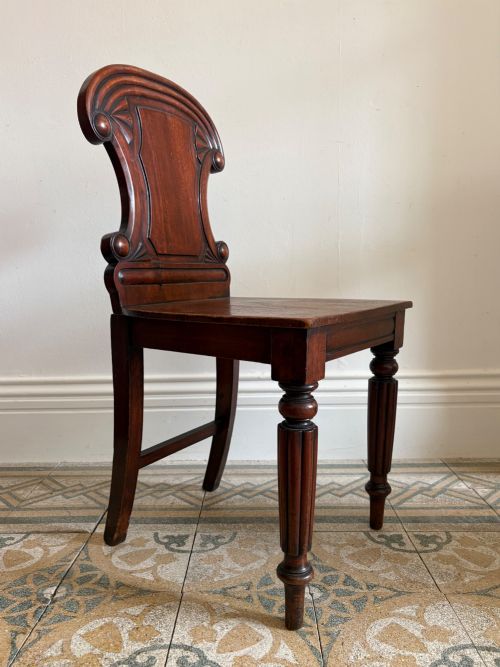
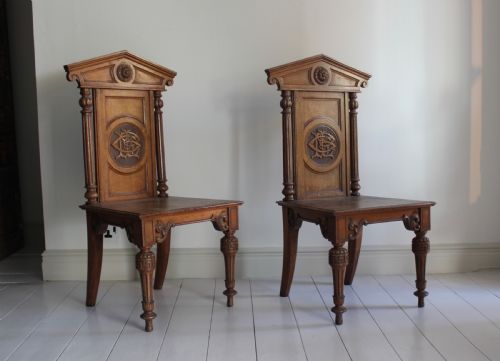
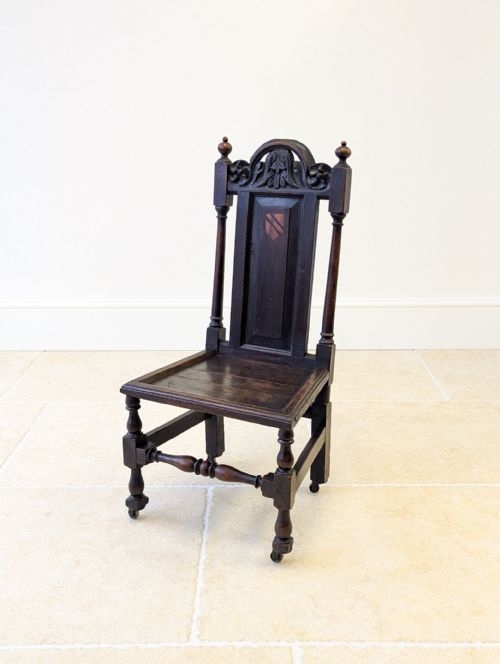
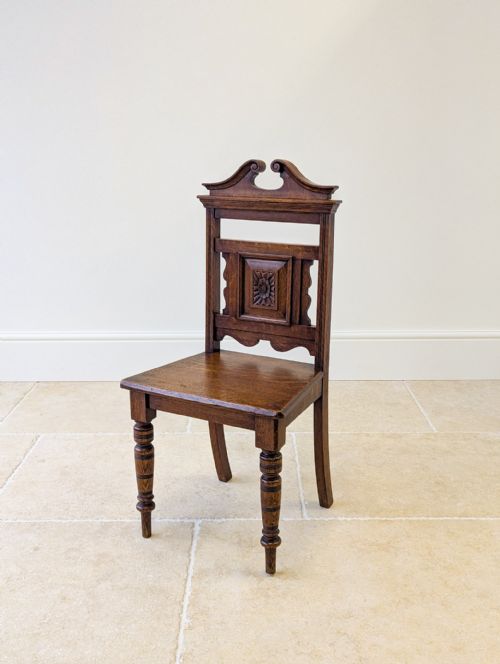



Vintage Entry Hall Chair
A vintage entry hall chair is a striking seat designed for passage spaces, offering both rigid posture and architectural presence.
Vintage Entry Hall Chair
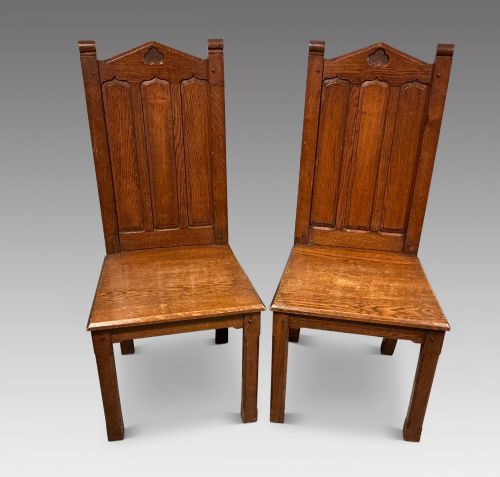
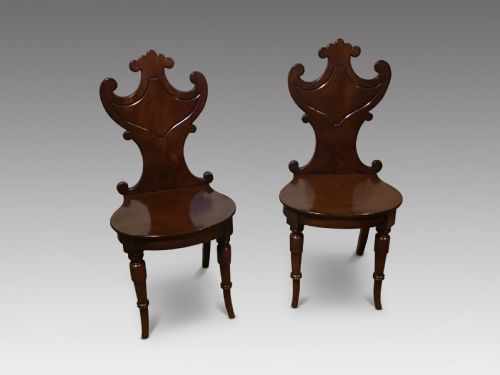
A vintage entry hall chair serves as a functional and sculptural statement within a corridor or vestibule. These pieces appear across several distinct historical periods, spanning from the 18th century through to Art Deco designs of 1930. The selections available encompass oak hall chairs, monks benches, and timber settles.
Most examples found on this page date from the Victorian era and the 19th century, frequently constructed from oak or mahogany. Buyers often encounter sturdy wooden seats featuring carved backs and occasionally paired configurations. Variants include Jacobean Revival styles alongside singular George II fruitwood sgabello forms.
The typology extends to convertible furniture such as monks benches that double as coffee tables or hall seats. Each piece reflects the architectural tastes of its origin, ranging from Gothic Revival influences to clean 1920s lines.
Materials and construction methods
Makers utilised solid hardwoods including oak, mahogany, walnut, fruitwood, and general timber to build these structural seats. Timber selection determined the weight and longevity of the frame, with dense woods supporting deep carved details.
Construction techniques frequently involved intricate wood carving on the backs and panels. Artisans also incorporated secondary elements such as brass fixtures and upholstered fabric or leather inserts to enhance comfort and visual contrast.
Listings feature periods spanning from the 18th century through the Victorian era to 1930, built from oak, mahogany, walnut, and fruitwood.
Judging the quality of a vintage entry hall chair
Depth and precision of the woodwork dictate the upper tier of these pieces, particularly on carved walnut or oak backs. Crisp execution in revival styles separates standard utilitarian furniture from exceptional craftsmanship.
The choice of primary timber influences the overall integrity and finish, with select fruitwood and figured mahogany commanding attention. Consistency in the grain and the integration of secondary materials like leather or brass reflect the standard of original manufacture.
The Vintage Entry Hall Chair Glossary
- Sgabello
- A light wooden chair originating from the Italian Renaissance, featuring a high carved back and trestle supports rather than four legs. This form appears in early European seating traditions.
- Monks Bench
- A convertible piece of furniture with a pivoting back that folds down to form a table top above a storage box. It functioned as dual-purpose seating in hallways.
- Jacobean Revival
- A 19th-century stylistic movement copying 17th-century English furniture, characterised by heavy proportions and geometric carvings. Pieces in this style often use dark oak.
- Settle
- A wooden bench with a high solid back, armrests, and enclosed storage beneath the seat. It provided shelter from drafts in entrance halls.
- Gothic Revival
- An architectural and decorative style drawing on medieval pointed arches and tracery. This aesthetic influences the carved details on Victorian hall chairs.
Vintage Entry Hall Chair: Frequently Asked Questions
What is an entry hall chair?
An entry hall chair is a rigid wooden seat designed for brief seating in a hallway or vestibule. These pieces typically feature high carved backs and solid timber construction rather than plush cushioning.
Historically, they were placed in entrance spaces to await guests or servants while making a distinct decorative statement.
How do I date a wooden hall chair?
Dating relies on examining the timber species, construction joints, and stylistic revival markers present in the design. Victorian interpretations often use dark oak with Jacobean or Gothic carved motifs.
Earlier 18th-century examples like fruitwood sgabellos display simpler, more archaic joinery and distinct regional turning patterns.
Were hall chairs meant to be comfortable?
These seats were generally built for upright posture and durability rather than extended lounging. Most examples feature flat wooden seats, though some incorporate leather or fabric pads.
Their primary function was architectural presence and quick utility in entrance areas rather than relaxation.
What is a monks bench used for?
A monks bench serves as a dual-purpose item that functions as both a hall seat and a table. The back panel tilts forward to rest on the armrests, creating a flat surface.
Inside the base, a hidden compartment provides storage for accessories or textiles in compact entry spaces.