
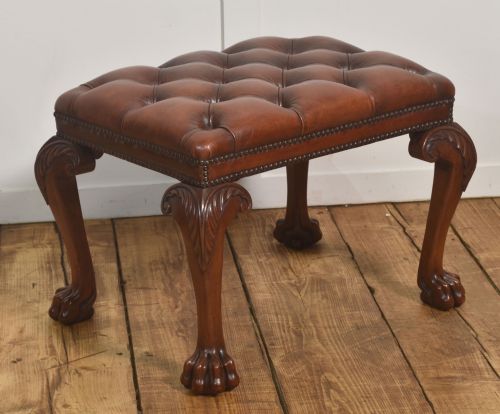
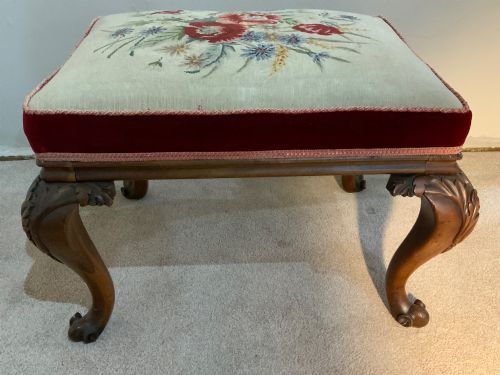

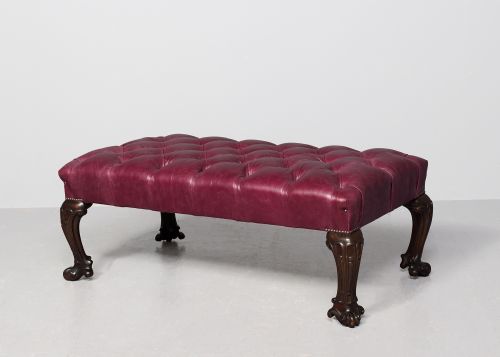
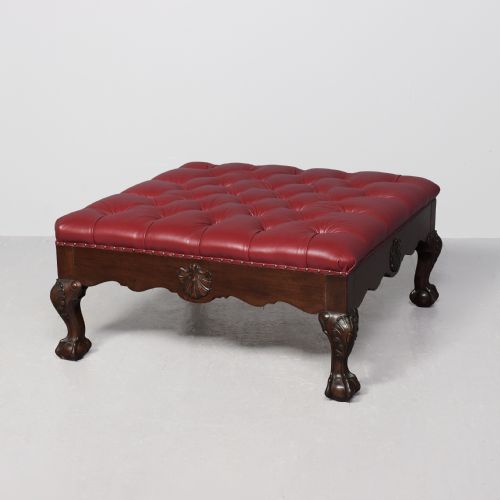



Georgian Carved Mahogany Stool
A georgian carved mahogany stool brings robust timber and classical carving together for flexible seating.
Georgian Carved Mahogany Stool
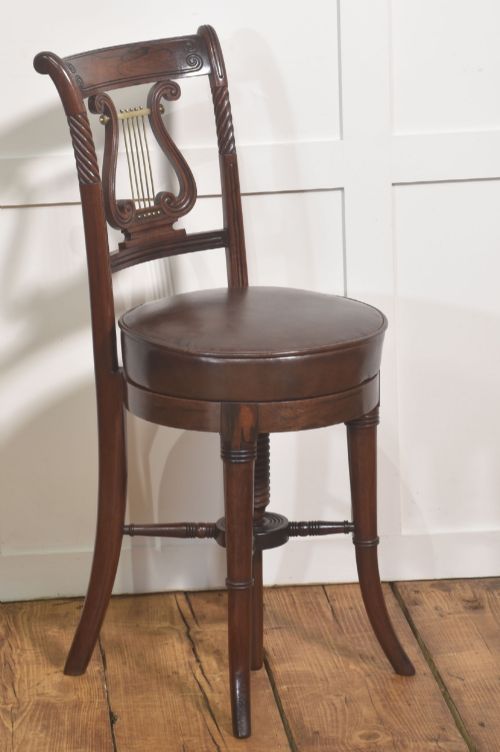
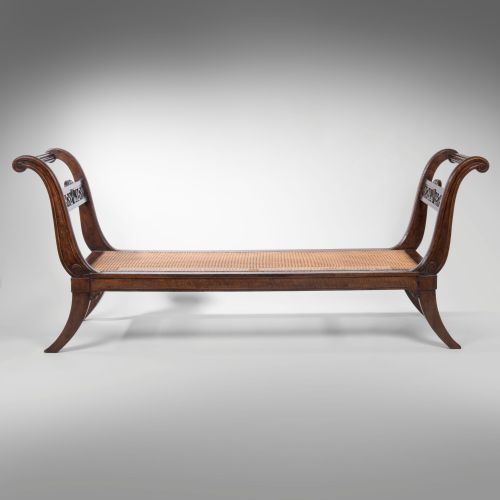
A georgian carved mahogany stool spans compact footstools, dressing seats, window benches, and larger X-framed ottomans designed for domestic comfort.
Original eighteenth-century examples sit alongside later nineteenth-century revivals and early twentieth-century interpretations built in similar proportions.
Makers utilised resilient timber frameworks, often pairing them with upholstered tops in leather, hide, fabric, velvet, or needlepoint.
How they were made
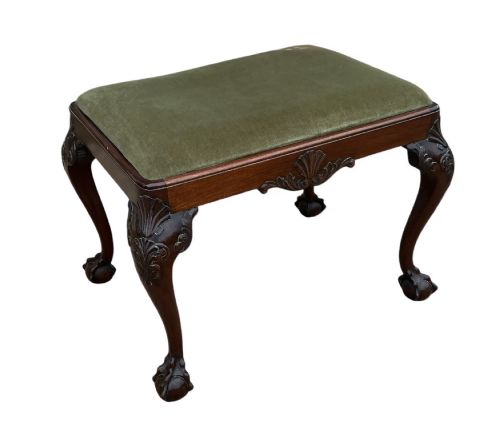
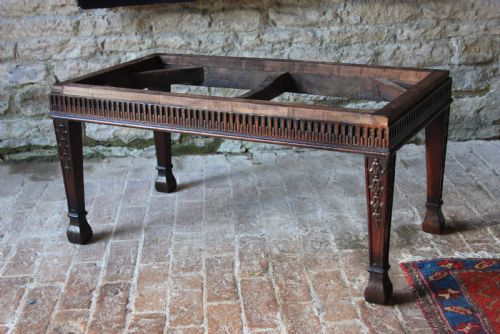
Carpenters constructed the primary frames using solid mahogany, shaping supports into cabriole legs, straight rails, or crossing stretchers.
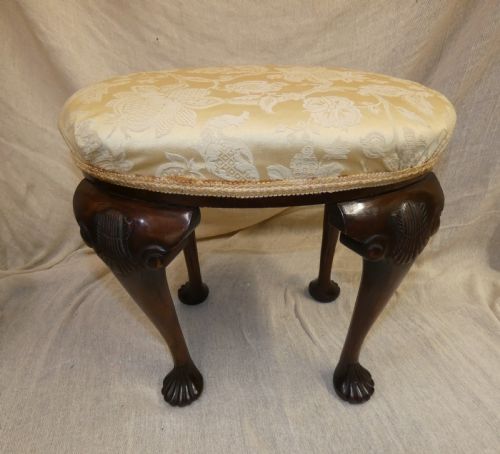
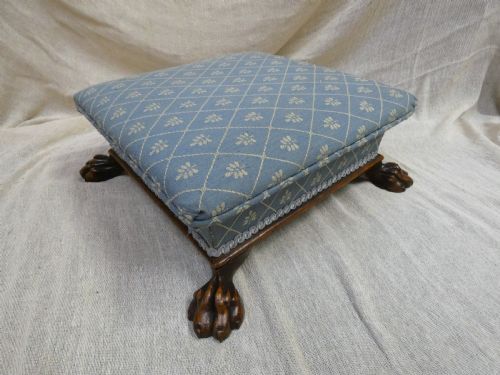
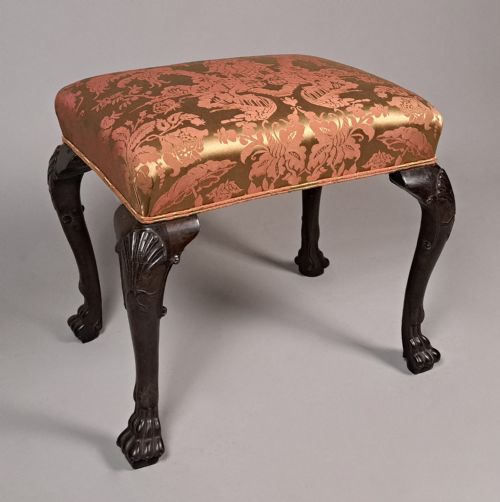
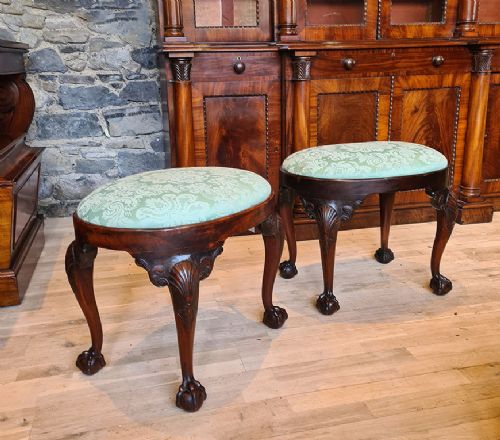
Carvers applied ornamental detail directly to the timber, including foliage, scrollwork, and claw feet.
Upholsterers finished the seats using traditional fillings secured beneath textiles such as damask, wool, tapestry, and buttoned red or burgundy hide.
Listings feature mahogany frames paired with brass, leather, wool, velvet, and tapestry across eighteenth, nineteenth, and early twentieth-century periods.
What varies in quality
Depth of carving and sharpness of detail distinguish pieces produced by skilled hands from simpler workshop output.
Proportion dictates visual balance, separating well-drawn frames with elegant stances from heavier or less harmonious builds.
Survival of original upholstery materials and unaltered timber frames adds considerable weight to a piece's historical integrity.
The Georgian Carved Mahogany Stool Glossary
- Cabriole leg
- A furniture leg curving outward at the knee and tapering inward to an ankle, often ending in a claw or pad foot. This form appeared frequently on eighteenth-century seating.
- X frame
- A structural base formed by intersecting curved or straight members shaped like the letter X. It provided robust support for window seats and stools.
- Cross stretcher
- Wooden rails connecting the legs near the floor to reinforce the lower frame. They frequently incorporated central finials or geometric intersections.
- Needlepoint
- Hand-stitched yarn embroidery applied over canvas mesh. It formed durable and colourful decorative covers for historic footstools.
- Hide
- Untanned or heavily dressed cattle skin used for upholstery. It provided a hard-wearing surface on dressing and library stools.
Georgian Carved Mahogany Stool: Frequently Asked Questions
Where did these stools sit in a home?
These pieces served multiple domestic functions across bedrooms, libraries, and drawing rooms.
Smaller examples supported dressing tables, while long benches and window seats occupied halls and perimeter spaces.
How do I distinguish eighteenth-century pieces from later revivals?
Examination of timber patination, tool marks, and construction joints reveals the age of the frame.
Revival pieces from the nineteenth and twentieth centuries often employ machine tooling and show different wear patterns compared to period originals.
What textiles cover the seats?
Original and replacement surfaces utilise a diverse range of durable materials.
Common coverings include leather, hide, velvet, wool, tapestry, damask, and stitched needlepoint.
Are these frames structurally sturdy?
Solid mahogany construction provides inherent strength to the structural rails and legs.
Cross stretchers and X frames further reinforce the base to handle regular weight during daily use.