
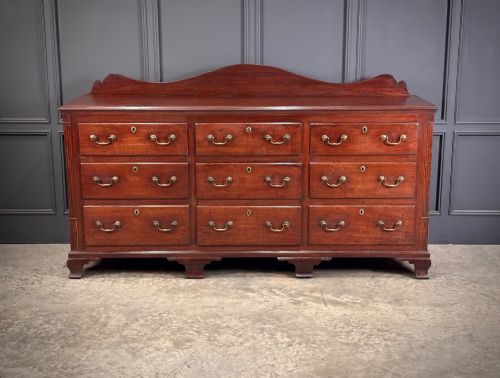
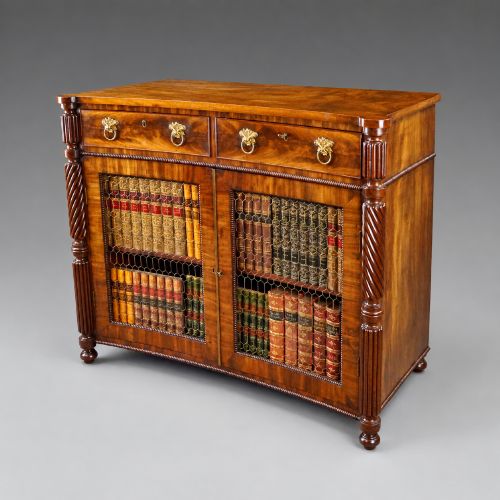
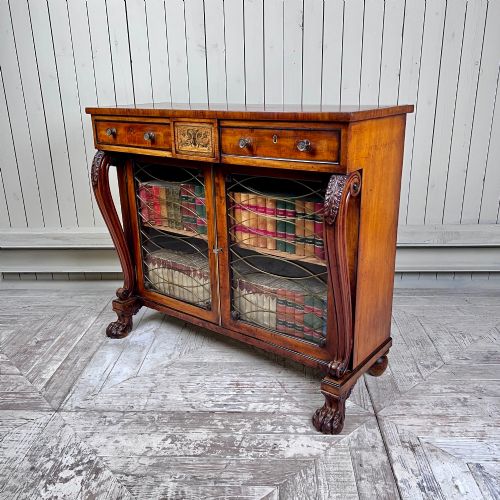
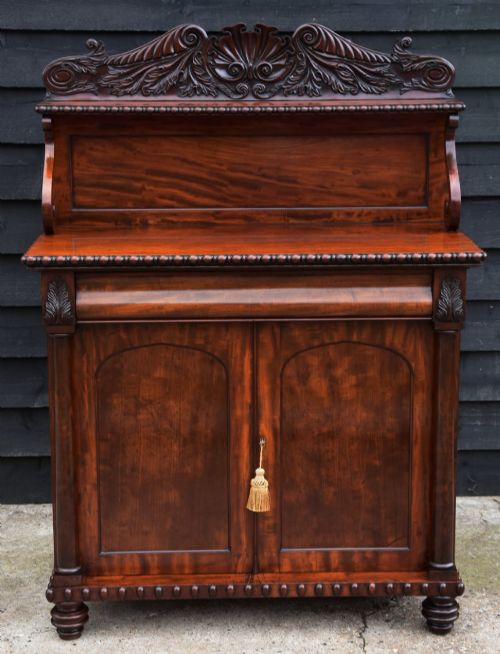
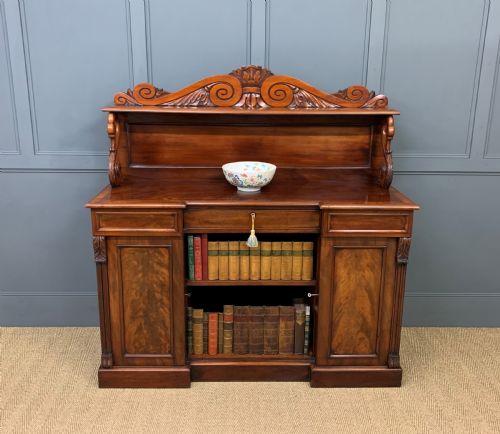
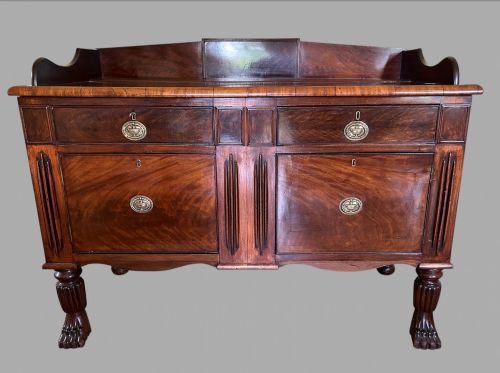
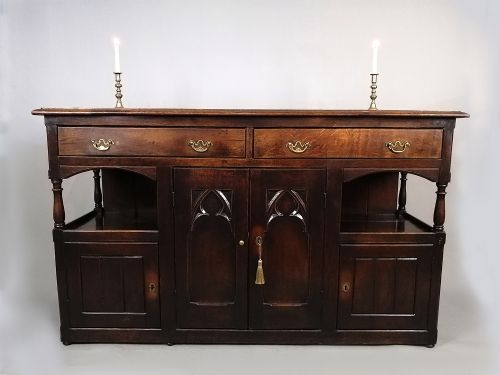
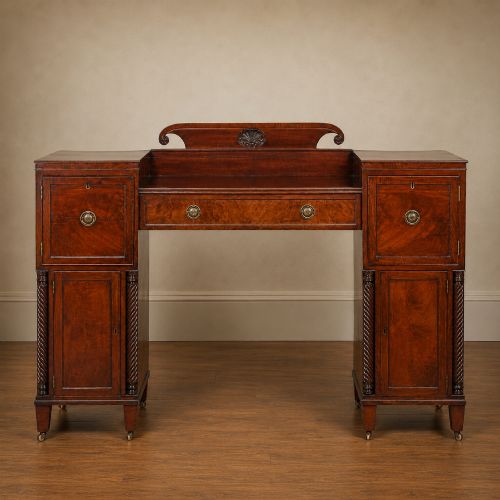
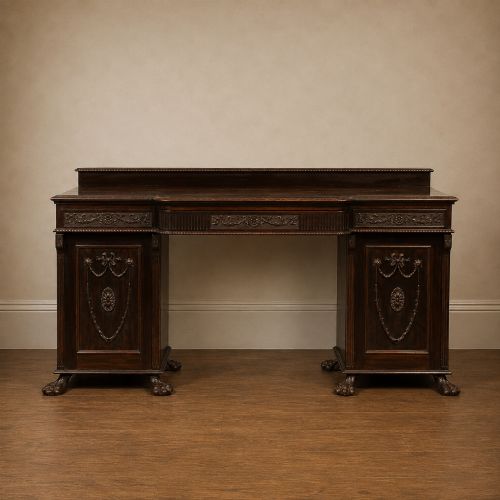
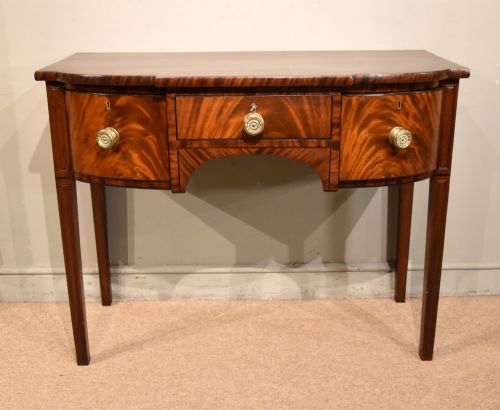
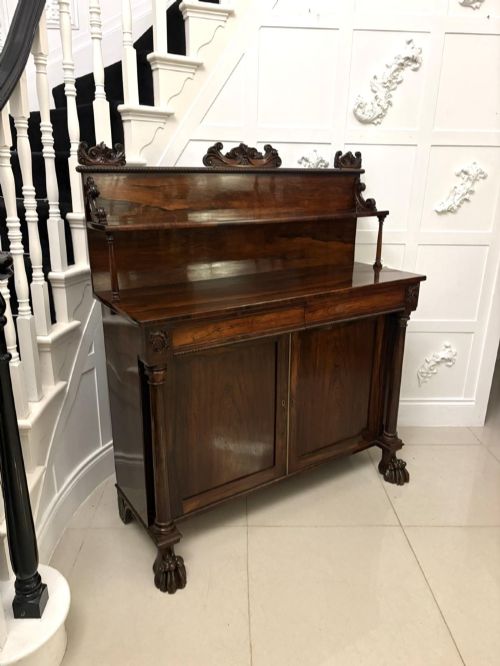
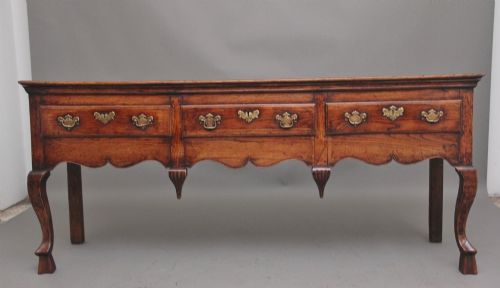
Georgian Carved Credenza
A georgian carved credenza brings substantial timber presence to a room, offering practical storage through period craftsmanship.
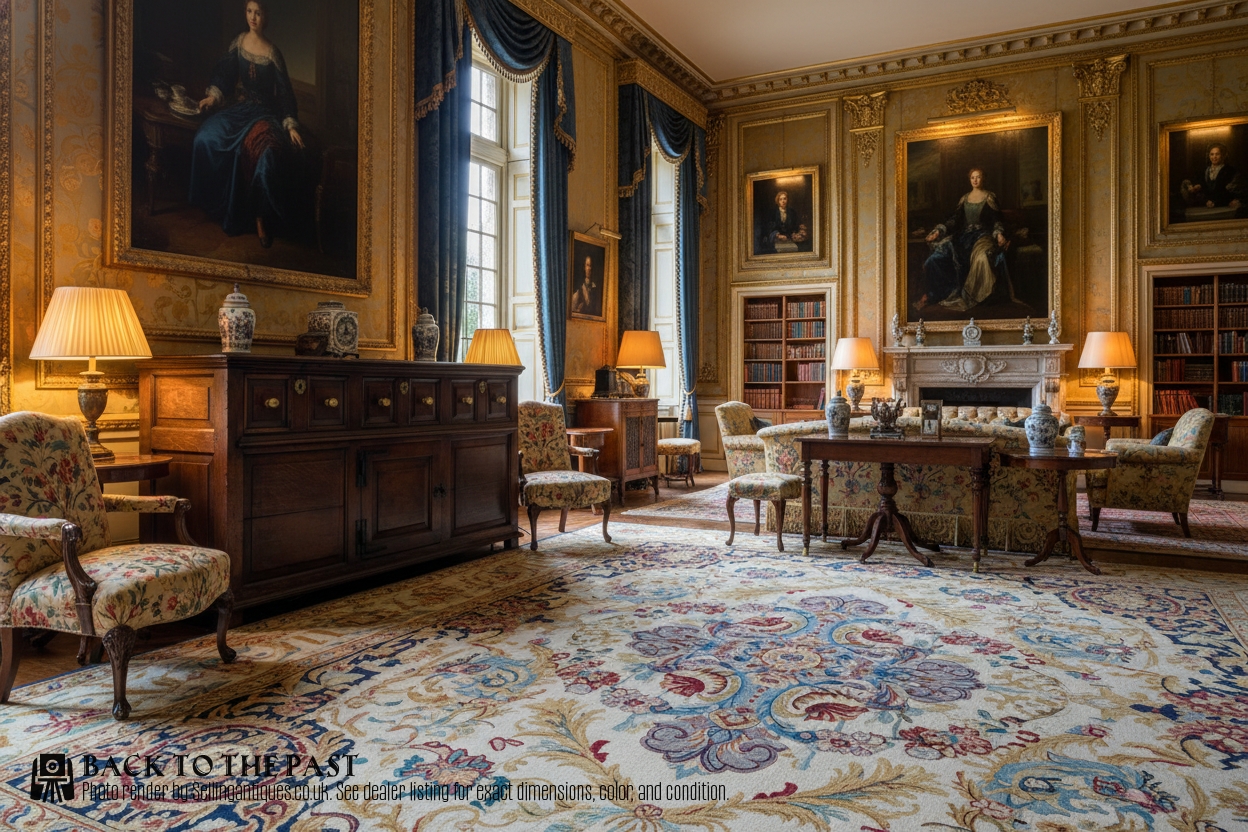
Georgian Carved Credenza
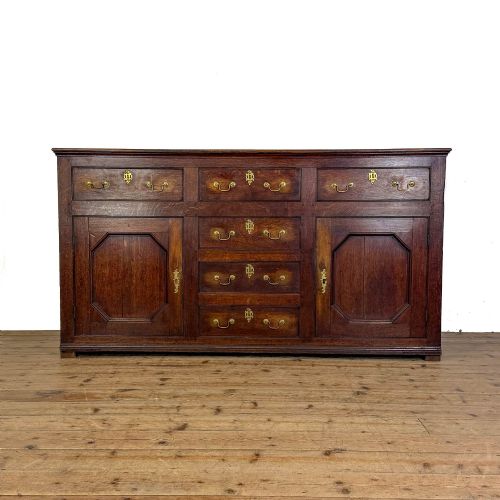
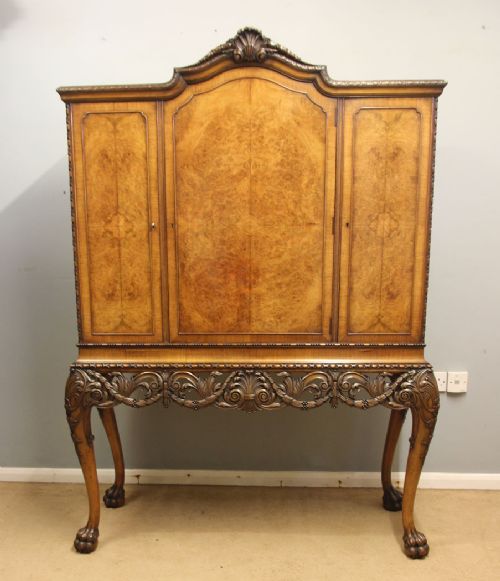
When searching for a georgian carved credenza, buyers encounter related low storage forms spanning sideboards, side cabinets, chiffoniers and dresser bases. The selections span the eighteenth century, Regency era, and later revivals, reflecting how dining and serving furniture evolved over generations.
The pieces most frequently met on this page include mahogany and oak sideboards alongside walnut cabinets and chiffoniers. These items serve similar domestic functions for display and storage, often featuring pedestals, breakfront designs or concave façades.
Materials and construction
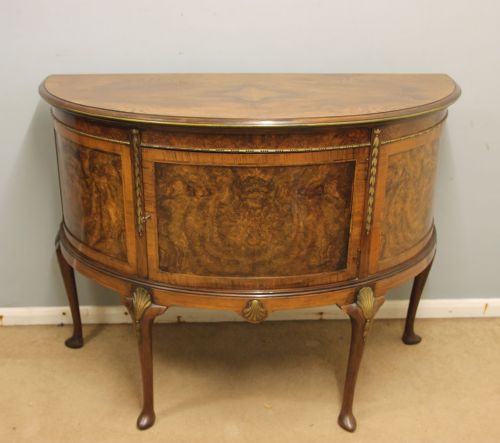
Makers relied primarily on solid mahogany, flame mahogany veneer, and oak, complemented by walnut, amboyna, and burr walnut for decorative surfaces. These timbers were selected for their grain patterns and structural stability in large case pieces.
Detailing often incorporates brass inlays, ebony stringing, and iron hardware, uniting structural timber with refined metal accents. Carving and proportion define the execution across both formal Regency pieces and country oak examples.
Some sideboards hide their secrets behind dummy drawers while others reveal hidden cellaret drawers designed for wine storage.
Assessing quality
The standard of execution depends on the precision of timber selection, particularly in matched flame mahogany veneers and figured walnut grains. Superior examples exhibit harmonious proportions and crisp carving that complements the underlying architecture of the cabinet.
Secondary woods, drawer linings, and internal construction reveal the underlying integrity of the piece. Refined brass details and well-integrated inlay work separate standard utilitarian furniture from exceptional cabinet work.
M. D. Miller & Sons·Maple & Co.
The Georgian Carved Credenza Glossary
- Chiffonier
- A low cabinet or sideboard featuring shelves or a superstructure, popular during the Regency period.
- Breakfront
- A piece of furniture where the central section projects forward from the flanking outer sections.
- Pedestal sideboard
- A form with distinct cupboards or pedestals flanking a central serving table, typical of the late eighteenth and early nineteenth centuries.
- Flame mahogany
- Timber cut to display a distinctive wavy, flame-like grain pattern used extensively in veneered surfaces.
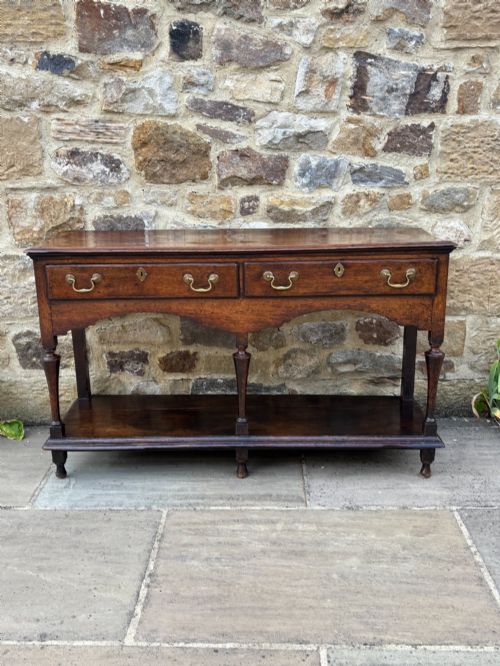
- Dresser base
- A low utilitarian table with drawers and open lower shelving, traditionally used in country houses for food preparation and storage.
Georgian Carved Credenza: Frequently Asked Questions
Where were these cabinets used?
These storage pieces typically stood in dining rooms, halls, or parlours to hold serving ware, silver, and linens.
They functioned as both practical storage surfaces and focal points for displaying domestic wealth.
How do I date a sideboard?
Dating relies on timber choice, construction methods, and stylistic details like brass inlay or bracket feet.
Earlier pieces favour solid oak and simple lines, while Regency and later examples introduce flame veneers and neoclassical motifs.
Are these pieces made of solid wood?
Most case pieces combine solid structural framing with decorative veneers applied to secondary woods.
Flame mahogany and burr walnut are typically utilised as veneers to showcase striking grain patterns.
How do I care for antique timber?
Maintain stable room humidity and keep wooden furniture away from direct heat sources and sunlight.
Regular dusting with a dry cloth preserves the finish without requiring heavy polishing.