
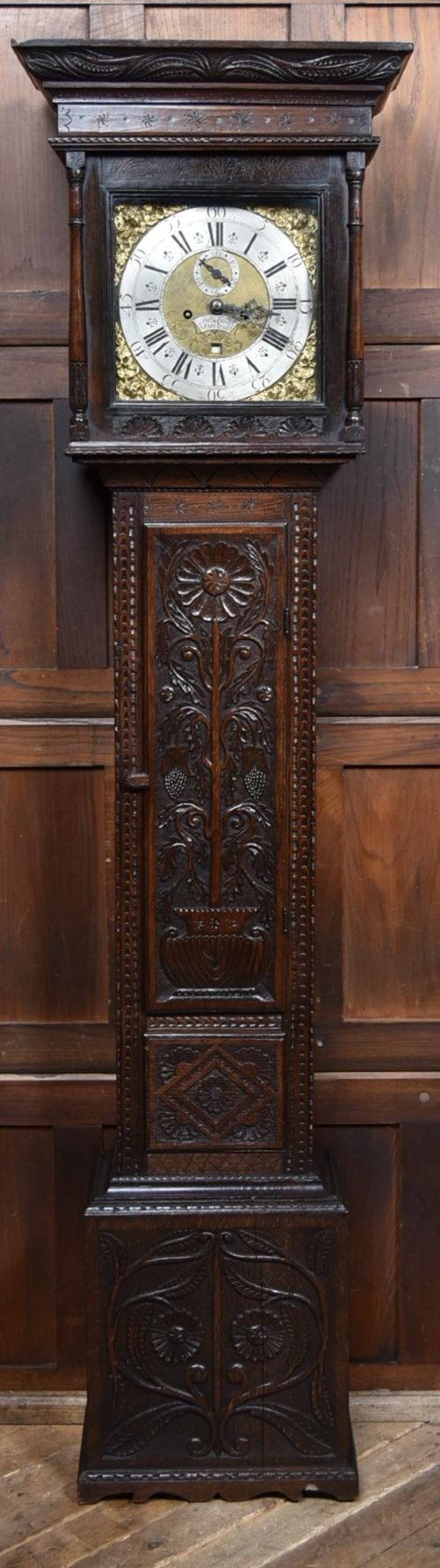
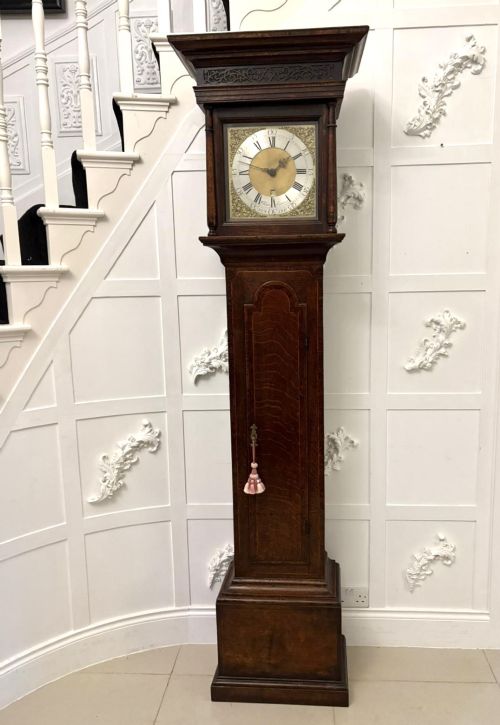
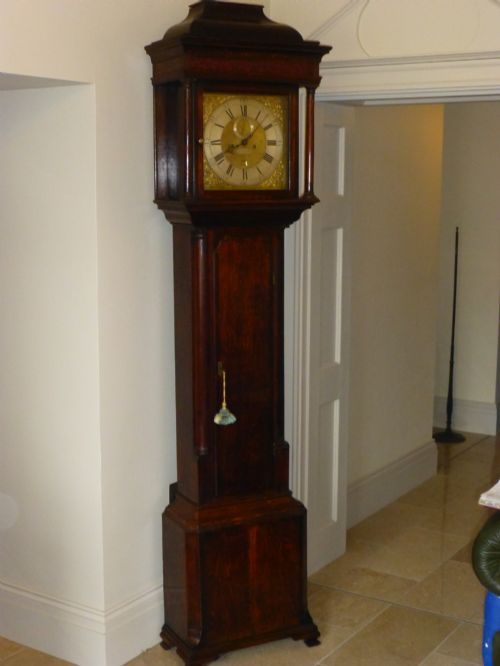
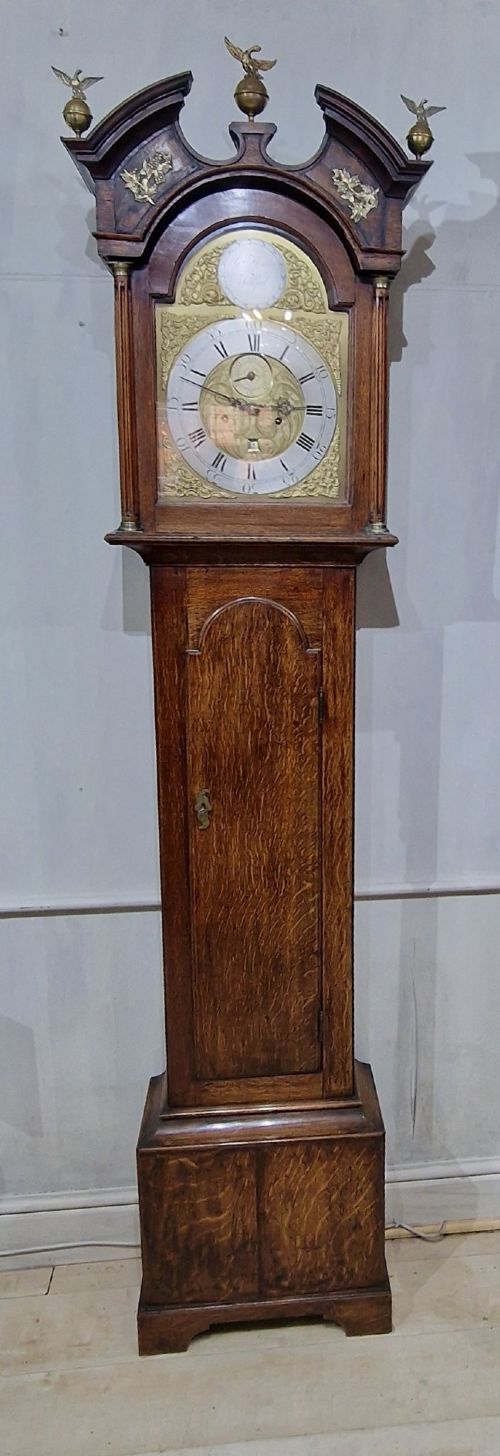




Georgian Carved Clock
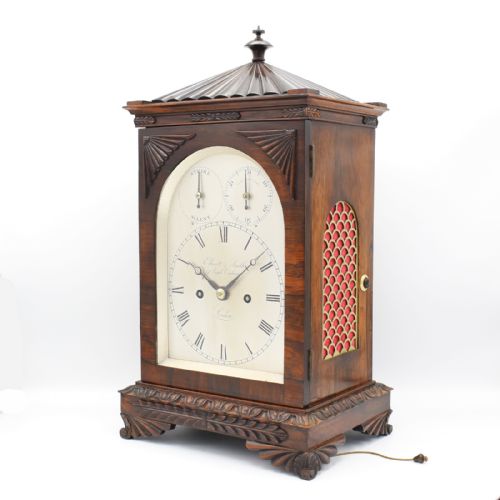
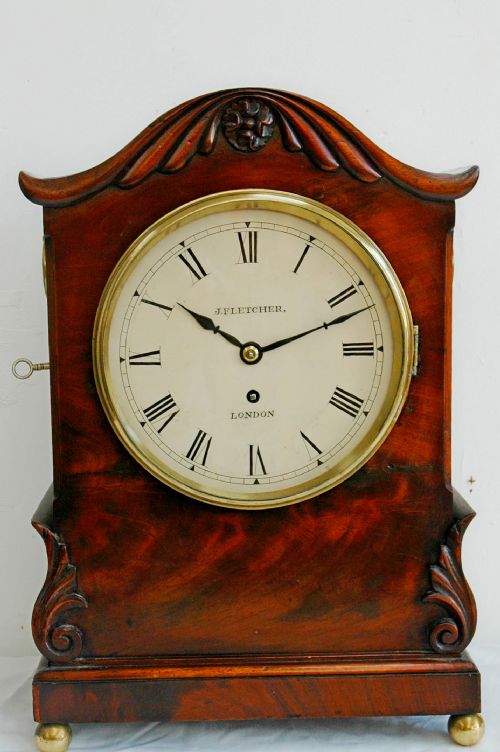
A georgian carved clock brings reliable mechanics and architectural timber into a room, spanning grand longcases and compact bracket pieces.
Georgian Carved Clock
A georgian carved clock most frequently appears on this page as a tall longcase or grandfather clock, alongside smaller mantel, bracket, and wall timepieces.
The pieces originate across the eighteenth and nineteenth centuries, taking forms defined by George III, Regency, and early Georgian periods.
Makers housed these movements in oak, mahogany, and walnut cases, often incorporating brass or painted dials and moonphase mechanisms.
Materials and Construction
Cabinetmakers utilised solid timbers such as oak, mahogany, and walnut to build robust cases, sometimes adding burr oak veneers and giltwood accents.
Clockmakers fitted brass dials, steel hands, and glass panels to house eight-day and single-handed movements powered by weights and fusee mechanisms.
Listings feature oak, mahogany, and walnut timbers alongside brass, steel, and glass components across the Georgian and Regency periods.
Design and Execution
Quality rests in the crispness of the carved detail on the timber case and the proportion between the hood, trunk, and base.
Signed dials by recorded makers and complex movements like moonphase indicators or automaton displays elevate the standing of the piece.
Jn° Smith, Macclesfd·Richard Corless of Stockport·James Hendrie, Falkirk·Ellicott & Smith·Bush of London·Webster Cornhill London·Hampson & Son·Barrett London·Samuel Young Nantwich & Bunbury·John Harrington London
The Georgian Carved Clock Glossary
- Longcase clock
- A tall weight-driven pendulum clock enclosed in a wooden case, commonly called a grandfather clock. These standing timepieces form the majority of tall floor models.
- Bracket clock
- A portable table or shelf clock driven by a spring and fusee mechanism. These smaller timepieces often feature carrying handles.
- Fusee
- A conical pulley used in spring-driven clocks to maintain even power as the mainspring unwinds. This device helps the movement keep consistent time.
- Moonphase
- A dial mechanism showing the lunar cycle through rotating painted discs. It tracks the phases of the moon alongside the standard hours.
- Drop-dial wall clock
- A circular dial mounted above an extended wooden case used to house the pendulum. These wall-hung pieces appear frequently in the Regency selections.
Georgian Carved Clock: Frequently Asked Questions
How do I wind a longcase clock?
You raise the lead weights using the winding key provided with the movement, turning it slowly until the weight reaches the top.
Take care not to overwind the mechanism, as this can strain the cord or chain.
What is a fusee bracket clock?
A fusee bracket clock uses a spring-driven movement regulated by a fusee cone to deliver steady power to the gear train.
These portable timepieces sit easily on desks, brackets, or mantelpieces.
How do I identify a George III clock?
You look for cabinet work in oak or mahogany featuring architectural hood designs, arched brass dials, and carved details typical of the late eighteenth century.
Signatures on the dial often provide a direct link to the maker and working period.
Where should I place a longcase clock?
You position the tall case against a sturdy interior wall away from direct sunlight, central heating vents, and damp exterior walls.
Ensure the floor is level so the pendulum swings with an even beat.