



Georgian Carved Centre Table
A georgian carved centre table anchors a room with timber grain, substantial weight, and period presence.
Georgian Carved Centre Table
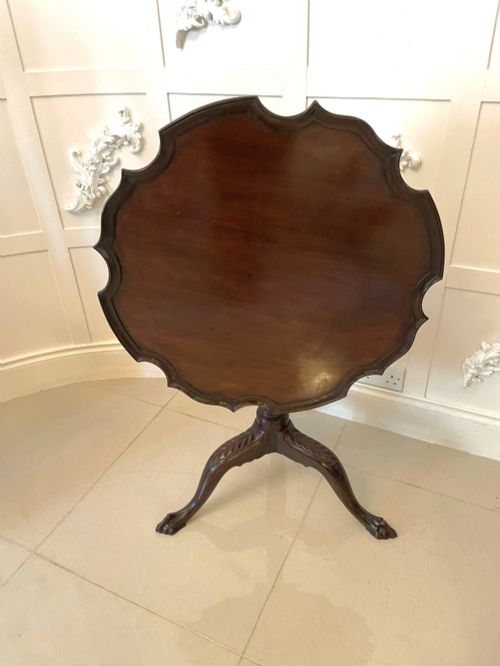
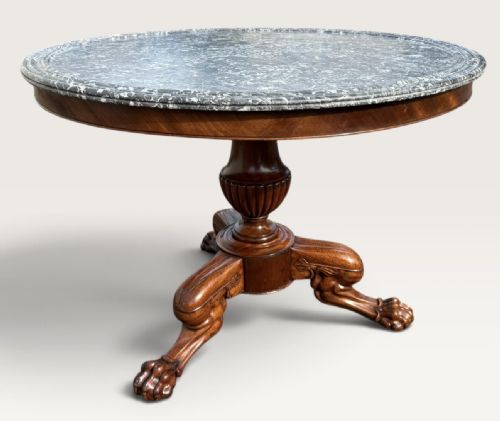
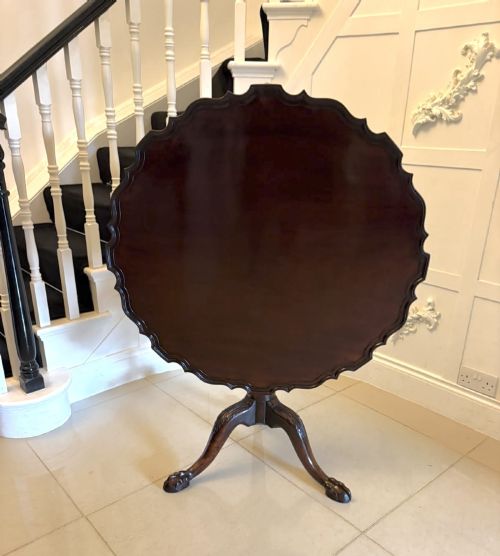
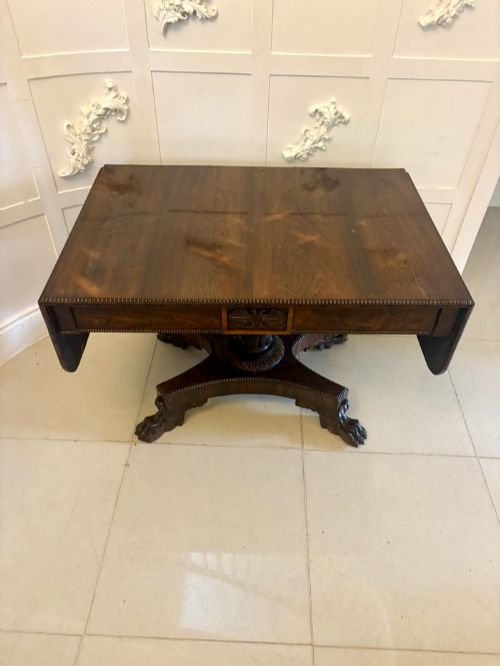
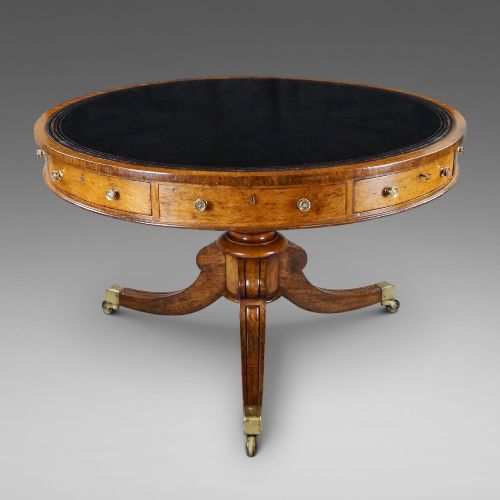
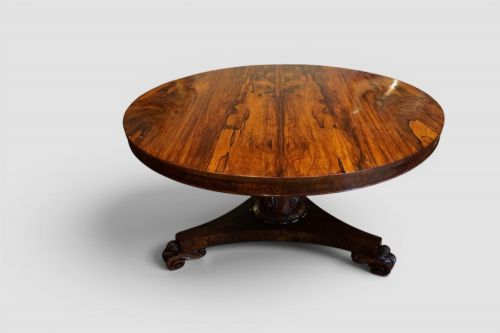
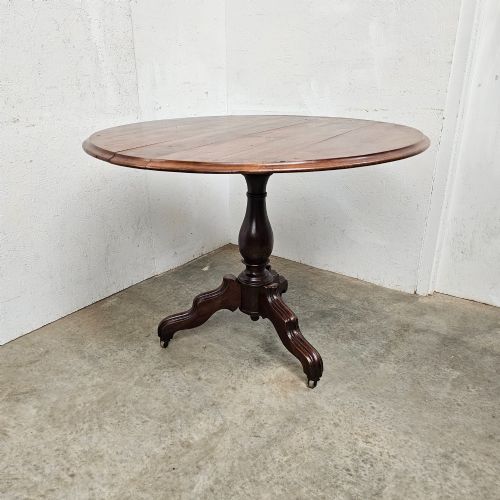
A georgian carved centre table stands freestanding in a room, designed to be viewed from every angle rather than pushed against a wall. These surfaces take many forms, including circular breakfast tables, library drum tables, and tilt-top tripod designs.
The pieces span periods from the eighteenth century into the nineteenth century, encompassing Georgian, Regency, and William IV eras. Revival styles and later adaptations also appear, bridging historical forms with domestic utility.
Materials and construction
Cabinet makers utilised dense hardwoods such as mahogany, rosewood, and walnut, frequently selecting figured veneers and burr timbers for tabletops. Giltwood, parcel gilt accents, and occasional leather inserts provide contrast and texture.
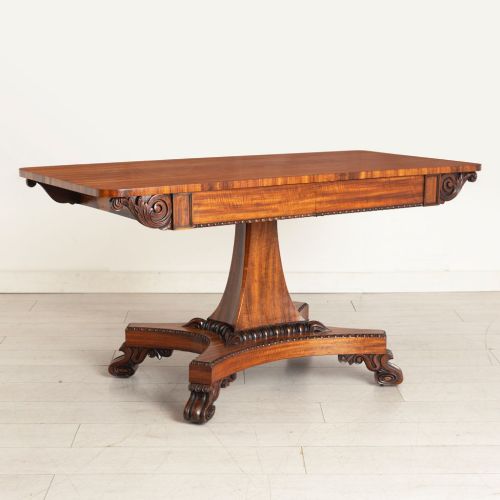
Supports range from turned pedestals and triform bases to carved tripod legs and twin-pedestal columns. Tilt mechanisms, birdcage actions, and specimen marble tops demonstrate specialised joinery and stonework.
Listings feature woods such as mahogany, walnut, rosewood, and burr yew across Georgian, Regency, and William IV periods.
Variations in quality
Quality rests upon the choice of timber and the precision of the carving, from crisp acanthus leaves on pedestal bases to simple turned mouldings. Grain matching across large tabletops separates workshop standards.
Structural integrity of the base, smooth movement in tilt-top mechanisms, and the retention of original brass fittings define the standing of individual tables.
Gillows of Lancaster
The Georgian Carved Centre Table Glossary
- Centre table
- A freestanding table finished on all sides, intended to occupy the middle of a room. These pieces function as desks, display surfaces, or dining tables.
- Drum table
- A circular library table with a deep skirt containing drawers, typically resting on a central pillar and tripod base. The name derives from its cylindrical silhouette.
- Tilt-top table
- A table with a hinged top that pivots vertically for storage when not in use. This mechanism often locks into position with a brass catch.
- Tripod base
- A support structure comprising three legs radiating from a central column. This design provides stability on uneven floorboards.
- Piecrust edge
- A raised, carved moulding along the perimeter of a circular tabletop resembling pastry work. This detail appears frequently on eighteenth-century tripod tables.
Georgian Carved Centre Table: Frequently Asked Questions
Where do you place a centre table?
These pieces stand in the middle of a room, serving as a focal point for lamps, books, or decorative objects. Because they are finished on every side, they do not require placement against a wall.
In larger spaces, a circular breakfast table or library drum table organises the floor plan and encourages movement around the perimeter.
How do I identify a Georgian table?
Georgian and Regency pieces display specific timber choices like flame mahogany, rosewood, and walnut, combined with hand-cut joinery. Proportions tend to be robust, supported by turned pillars or carved tripod legs.
Stylistic cues include brass castors, parcel gilt details, and edge carvings such as piecrust mouldings that reflect eighteenth and nineteenth-century cabinet-making traditions.
Can I use a historic table daily?
Solid mahogany and rosewood surfaces withstand regular domestic use when treated with care against moisture and heat. Coasters and placemats protect the polish and timber grain from everyday marks.
Moving tilt-top tables requires releasing the mechanism carefully to protect the pivot block and catch from unnecessary strain.
What is a tilt-top mechanism?
A tilt-top mechanism uses a hinged block beneath the surface allowing the tabletop to pivot from horizontal to vertical. This design enabled tables to be stored flat against a wall when floor space was needed.
Many examples incorporate a birdcage catch that lets the top rotate independently of the base.