

Georgian Canterbury Rack
A georgian canterbury rack is a compartmentalised stand designed to hold sheet music, newspapers and periodicals, combining elegance with practical utility.
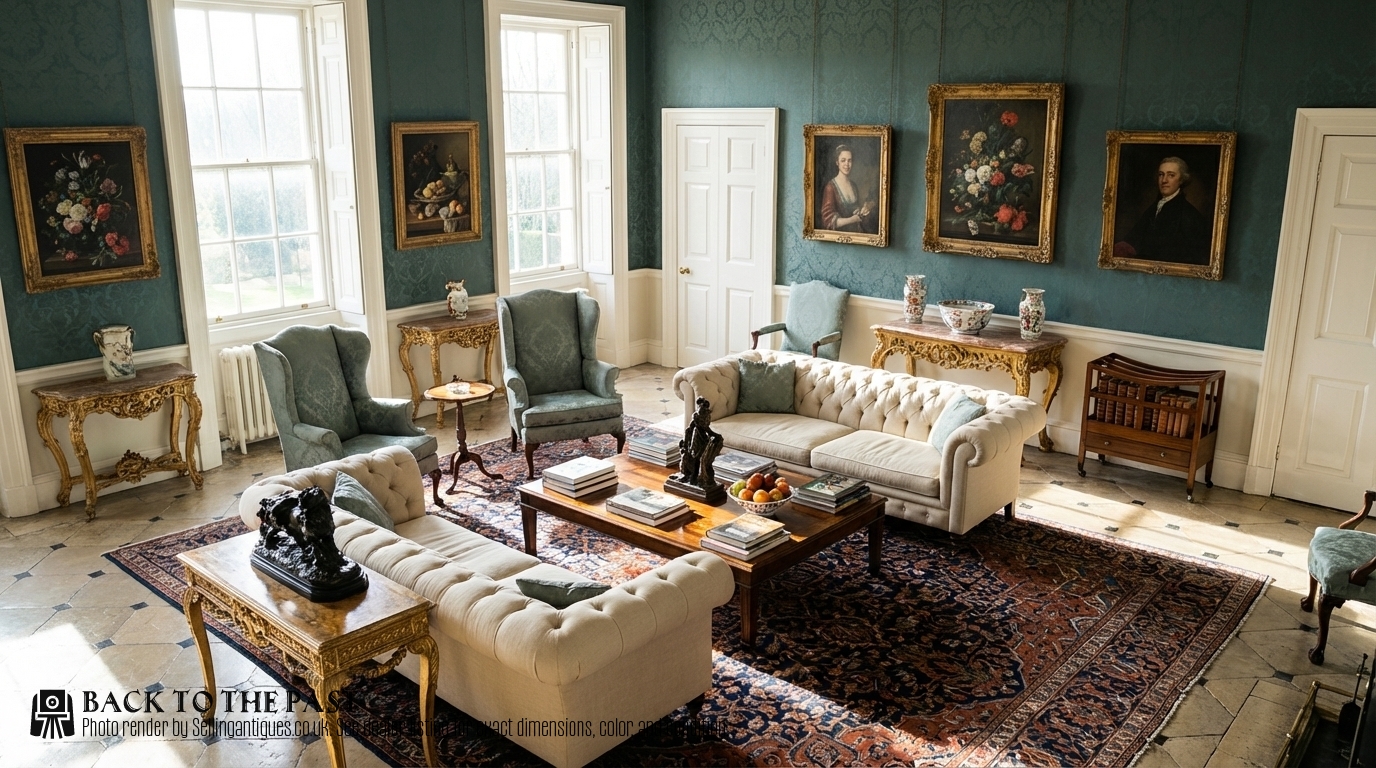
Georgian Canterbury Rack
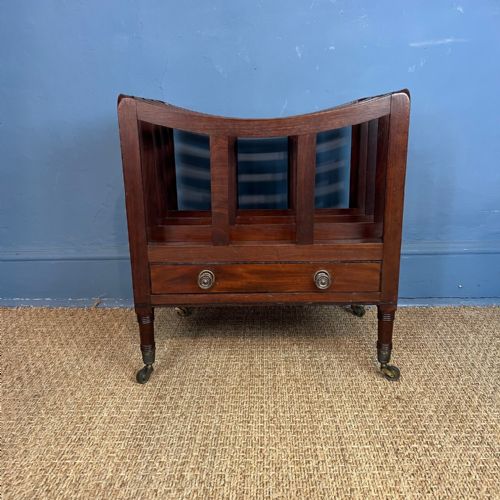
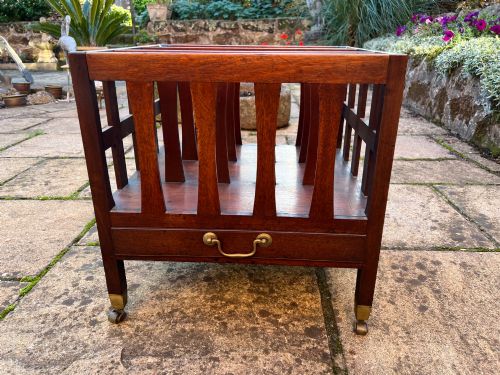
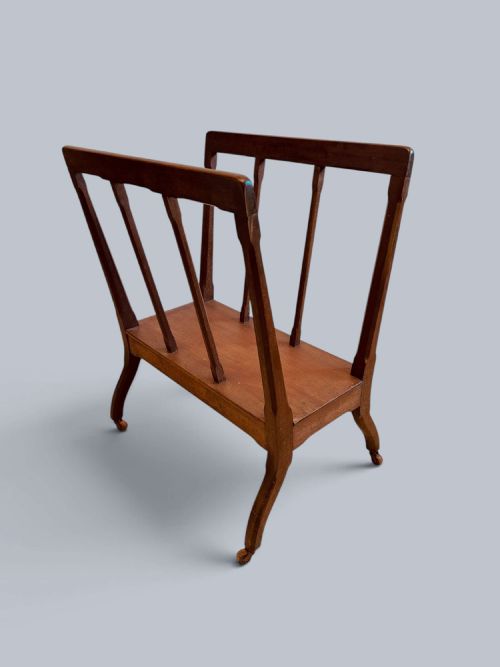
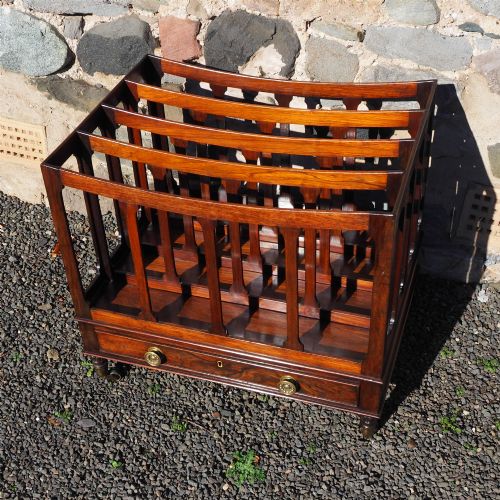
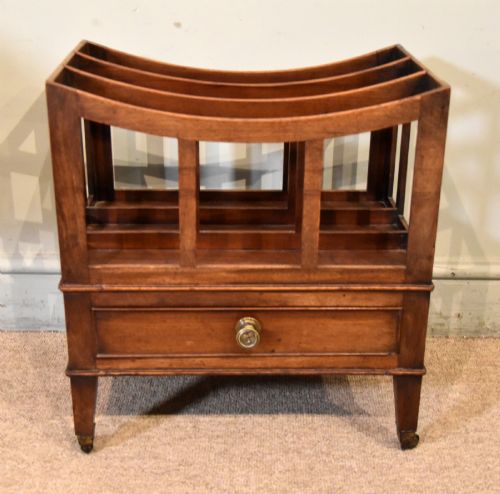
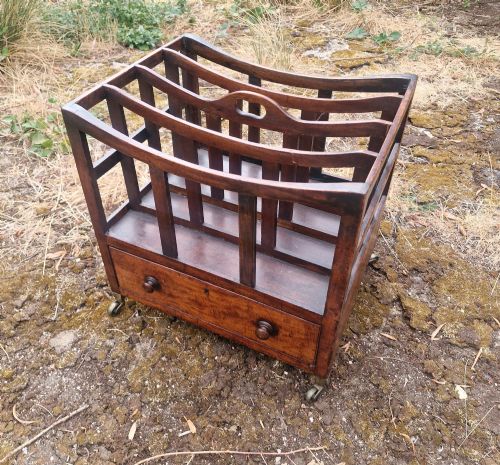
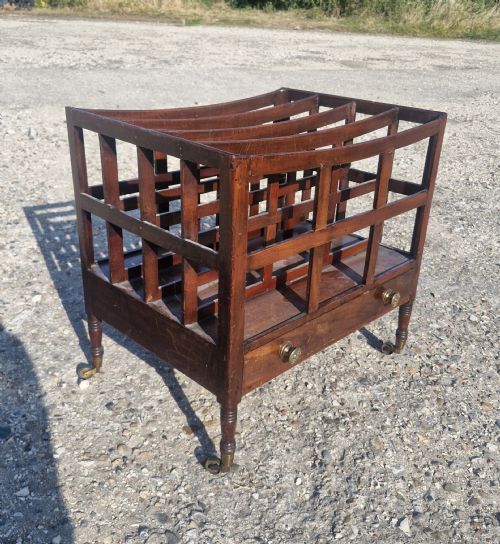
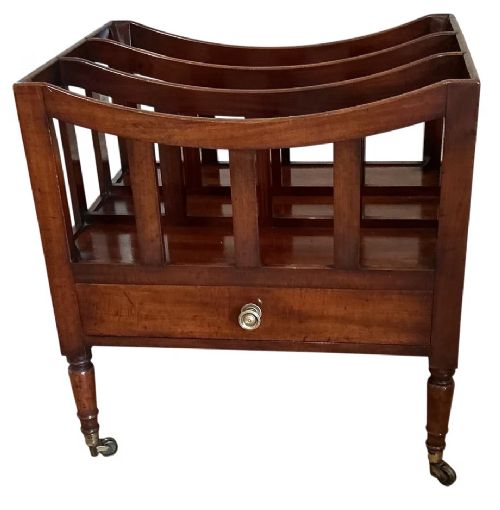
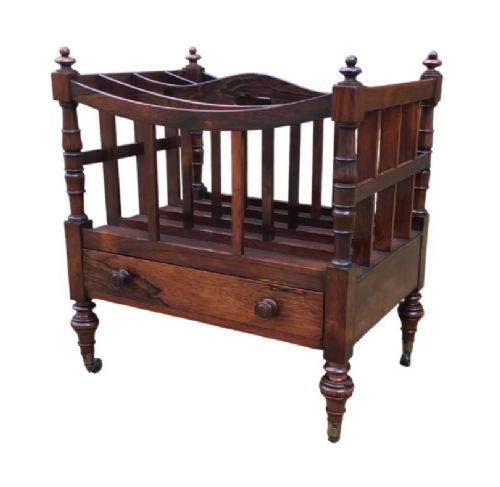
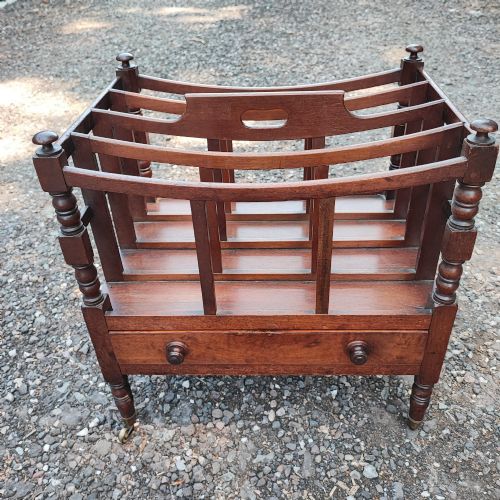
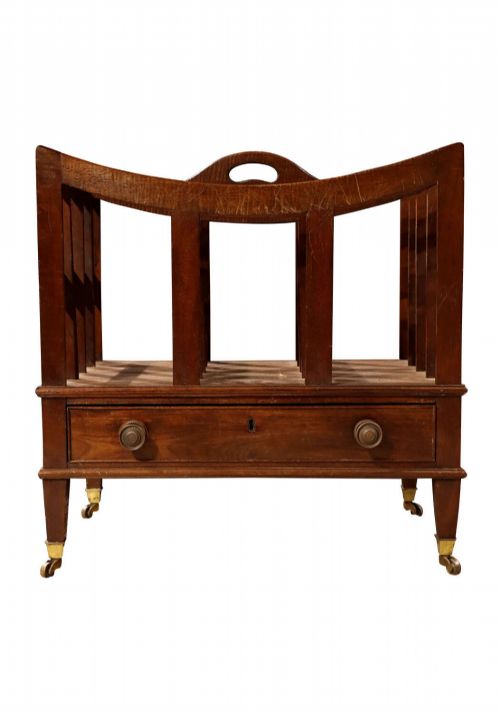
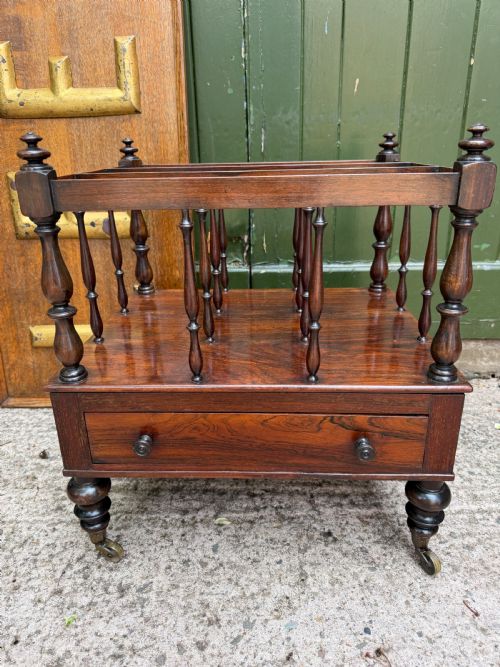
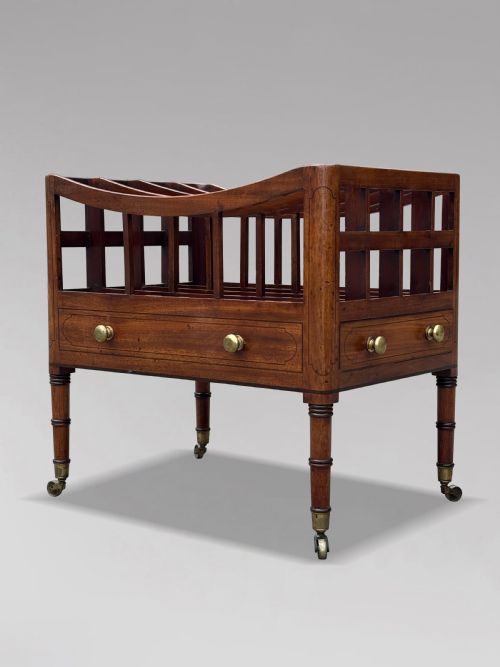
A georgian canterbury rack is typically encountered as a freestanding piece with slatted dividers designed for organising unbound papers and folios. The majority of pieces on this page originate from the Georgian and Regency periods, spanning the late eighteenth and early nineteenth centuries.
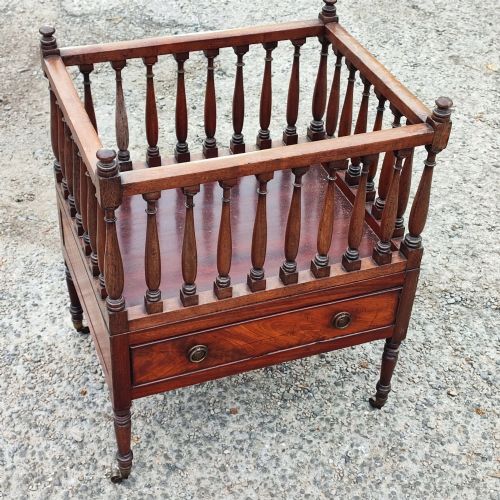
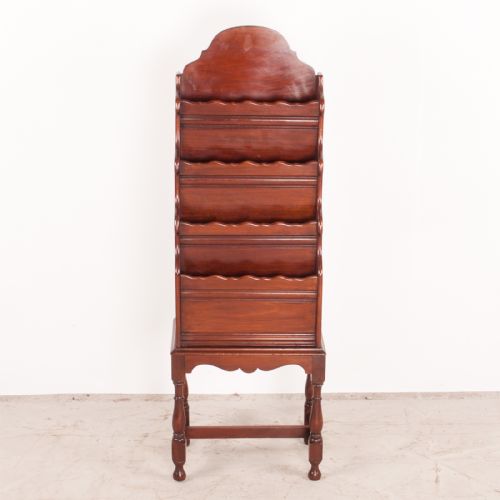
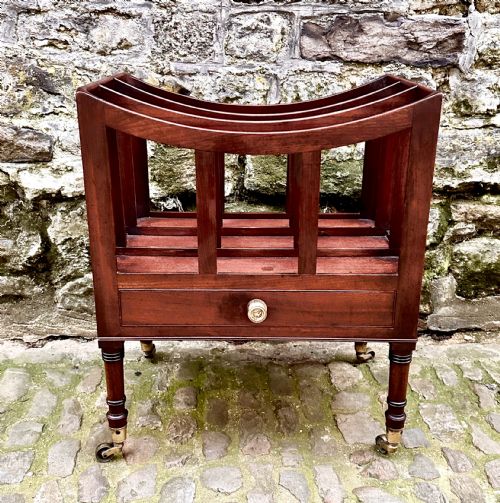
Most examples take the form of open racks with distinct partitions, and many incorporate a single low drawer beneath the main tier. Forms range from straight-sided divisions to boat-shaped designs and variations adapted for music stands or sheet music cabinets.
Materials and construction
Makers constructed these pieces primarily in timber, with solid mahogany, Cuban mahogany and rosewood forming the structural framework. Cabinet makers utilised flame mahogany veneer to achieve rich grain patterns on drawer fronts and panels.
Detailing often included contrasting inlay and ebony banding to accentuate the edges of the tiers. Many examples feature turned legs fitted with brass castors to allow the stand to move easily across a floor.
Georgian Canterbury Rack Retail Price Guide 2026
Typical asking prices for georgian canterbury rack among the pieces listed under this phrase on Sellingantiques today, from the lower quarter to the upper quarter. They describe what is for sale here now, not the wider market.
Some makers added delicate brass castors so the stand could follow you around the drawing room.
Distinctions in quality
Quality rests upon the selection of timber and the crispness of the joinery within the slatted divisions and frame. Dense Cuban mahogany and finely figured rosewood indicate superior material choice by the cabinet maker.
Refinement appears in secondary details such as carved ornament, including motifs like Prince of Wales feathers, and the integration of well-proportioned drawers with dovetail construction.
The Georgian Canterbury Rack Glossary
- Canterbury
- A low stand with partitions used for holding music sheets, newspapers and magazines. The form dates back to the late eighteenth century.
- Boat Shaped
- A curved outline given to the sides of certain Canterbury racks, typically associated with Regency design. This contour creates a distinctive sweeping profile along the top tier.
- Cuban Mahogany
- A dense, dark timber harvested in the Caribbean, prized for its rich grain and weight. Makers utilised this material for high-status furniture during the Georgian era.
- Flame Mahogany Veneer
- A thin slice of timber cut from the fork of a mahogany tree to produce a flickering, flame-like pattern. Cabinet makers applied this to prominent surfaces for visual impact.
Georgian Canterbury Rack: Frequently Asked Questions
What was a canterbury rack originally used for?
These stands were created to hold sheet music, scores and daily newspapers close to a piano or seating area in a drawing room. They kept folio-sized papers tidy and accessible in domestic interiors.
Over time, owners also utilised them for magazines and general reading material. The compartmentalised design kept unbound sheets upright and organised.
How do I tell a Georgian canterbury from a Victorian one?
Georgian and Regency examples tend to display lighter timber framing, elegant turned legs, and restrained inlay or brass details. Proportions are often finer, reflecting the neoclassical tastes of the late eighteenth and early nineteenth centuries.
Later Victorian interpretations often incorporate heavier carving, darker finishes or broader proportions. Materials also shift, though mahogany and rosewood remain consistent across both eras.
Are all canterburys fitted with drawers?
Many examples feature a single shallow drawer positioned beneath the slatted divisions, designed for smaller items such as manuscript paper or writing accessories. These drawers typically utilise hand-cut dovetail joints.
However, a significant number of pieces consist solely of the open compartmentalised rack without any enclosed storage underneath.
Where should I place a canterbury in a modern room?
A freestanding Canterbury works well beside a sofa, armchair or piano where it can function as a magazine or book holder. Its open structure keeps periodicals visible and within reach.
The compact footprint allows it to fit into narrow spaces, while the timber finish adds warmth to a room.