





Georgian Butler Stand
A georgian butler stand brings portable wooden service and folding practicality directly into a room.
Georgian Butler Stand
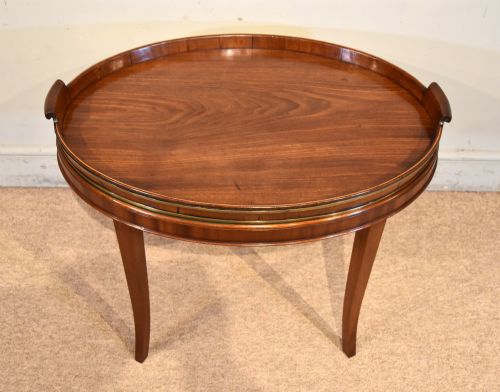
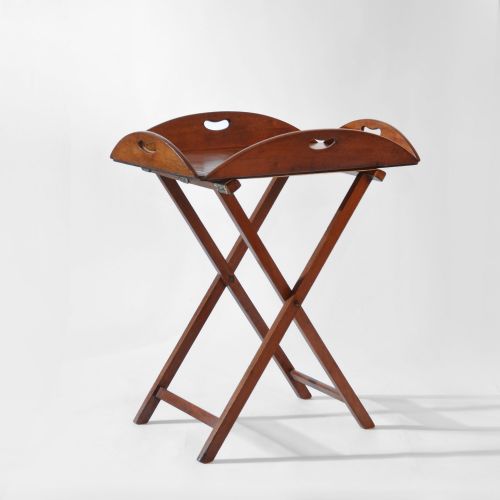
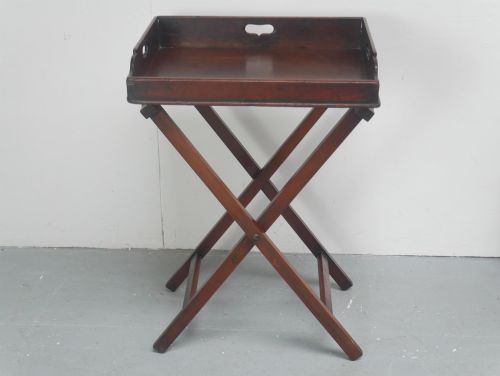
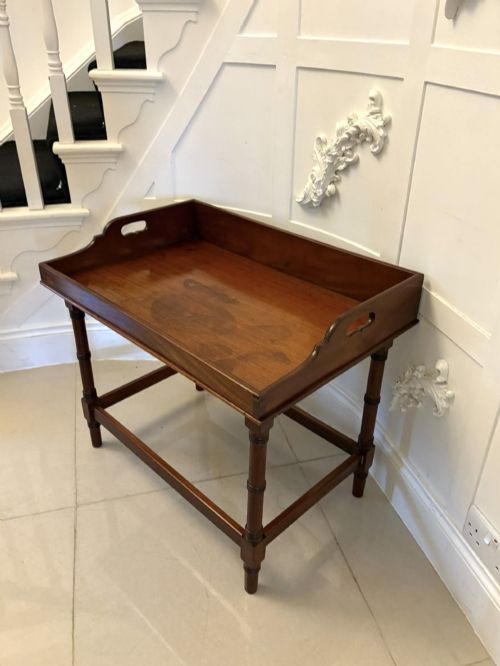
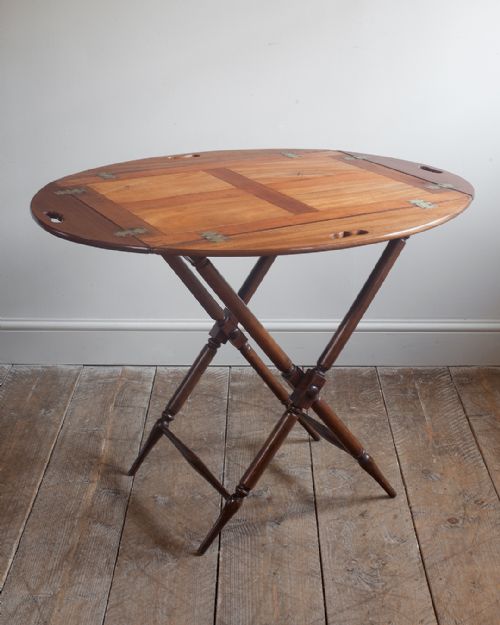
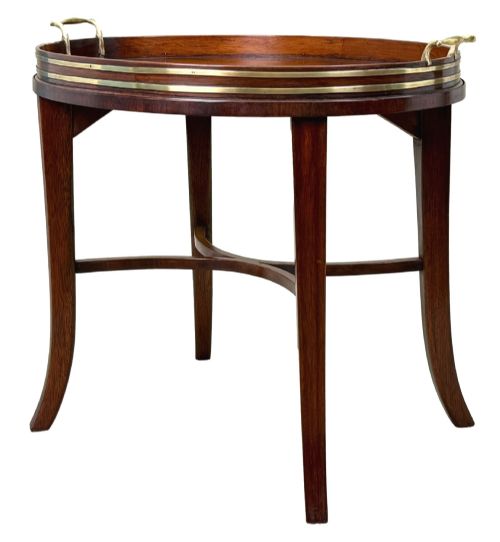
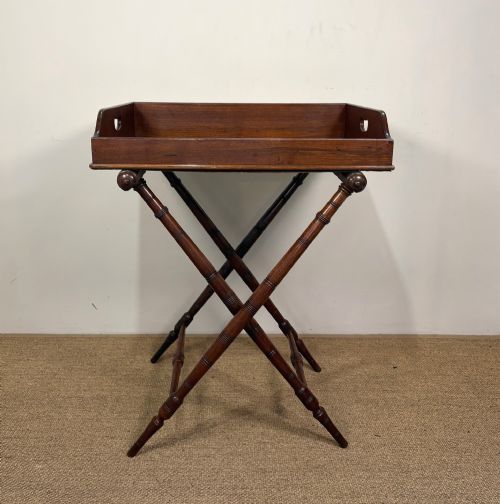
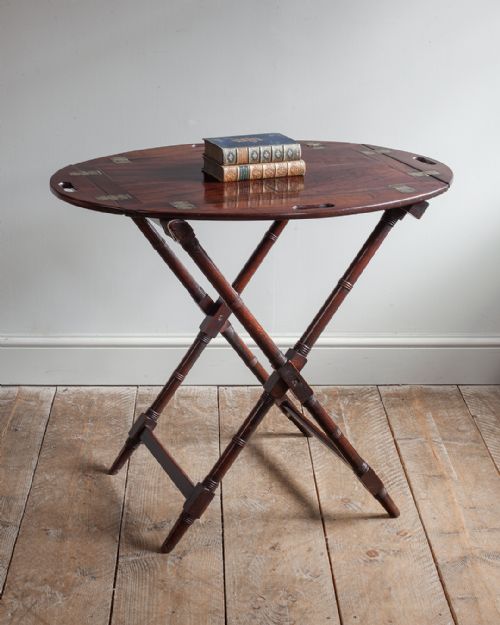
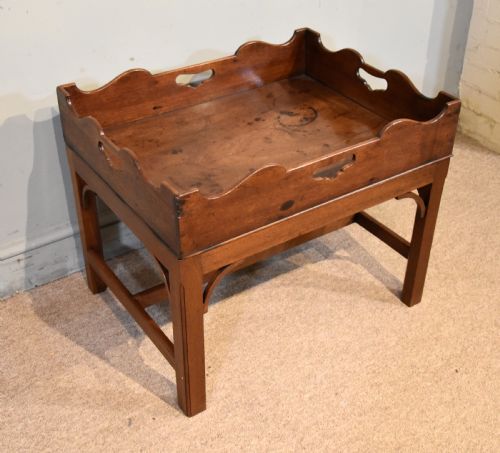
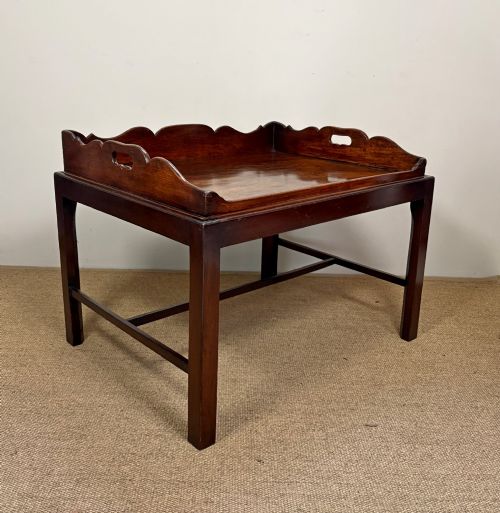
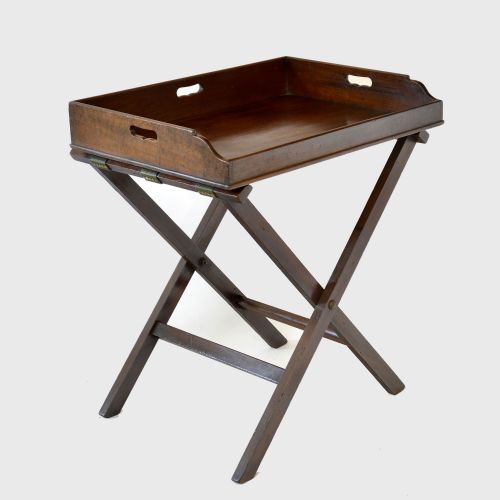
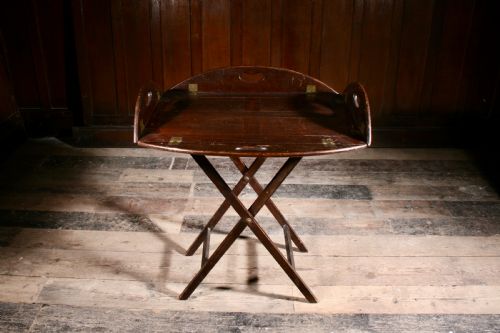
A georgian butler stand comprises a portable wooden tray paired with a folding or fixed support base, designed originally for carrying and serving refreshments. The pieces seen here span the eighteenth century, the regency period, and the nineteenth century, often appearing as oval or rectangular trays paired with stands.
The most common survival on this page is the mahogany tray on a folding X-frame or four-legged stand, though variations include lamp tables, coffee tables, and drop-front stands. Surviving examples frequently retain their original stands, while others are married to later bases.
Beyond traditional serving pieces, related items such as cheese truckles, stilton stands, and side tables appear within the broader category of tray tables and tableware.
Assessing quality and finish
The refinement of the timber and the crispness of the joinery distinguish superior examples from simpler utilitarian pieces. Finely figured mahogany grain, hand-cut dovetails, and substantial brass bound mounts indicate workshop execution of a higher order.
The relationship between the tray and its base matters greatly. Trays resting upon their original stands hold greater integrity than those matched with later replacement bases, while crisp edge mouldings and well-preserved folding mechanisms separate exceptional specimens from routine service items.
Georgian Butler Stand Retail Price Guide 2026
Typical asking prices for georgian butler stand among the pieces listed under this phrase on Sellingantiques today, from the lower quarter to the upper quarter. They describe what is for sale here now, not the wider market.
Some trays hide cut-out handholds designed for hurried servants navigating busy corridors without spilling the afternoon port.
The Georgian Butler Stand Glossary
- Gallery
- A raised wooden border fitted around the edge of a tray to prevent items from sliding off. This feature is often shaped with hand-cut handholds for easy lifting.
- Stand
- The folding or rigid support frame designed to hold the serving tray at a convenient height. Many examples utilise an X-frame construction that collapses when not in use.
- Cheese Truckle
- A specialised circular serving stand or rotating dish used for presenting cheese at the table. These pieces often feature crescent shapes or dedicated compartments for tableware.
- Webbing
- Strong fabric strips woven across a stand to create a supportive platform for the tray. Canvas, cotton, and fabric webbing are commonly found on folding bases.
Georgian Butler Stand: Frequently Asked Questions
What is a georgian butler stand used for?
These pieces were originally utilised for carrying glassware, decanters, and afternoon tea from the kitchens to the main reception rooms. Servants would mount the detachable tray onto the folding base once they reached the dining or drawing room.
Today, they function well as portable side tables, coffee tables, or drinks trays in modern living spaces. Their folding nature allows for flexible placement and straightforward storage.
Are the trays detachable from the stands?
Traditional examples feature a loose tray that lifts entirely off the support base. This allowed the working surface to travel independently while the stand remained stored away until needed.
Some later or alternative configurations secure the tray more permanently to the base, forming a conventional side table or lamp table. Checking the underside reveals whether the components were designed to separate.
How do I distinguish an original stand from a later one?
Matching timber patination, wear patterns, and period-appropriate construction methods help identify an original pairing. A stand that shares the exact age, fading, and wear characteristics of the tray indicates a unified history.
Replacements or later marriages often display different wood species, cleaner joinery, or mismatched wear between the upper tray and the lower support legs.
What woods are typical for these pieces?
Solid mahogany is the predominant timber found across eighteenth-century and nineteenth-century examples, with dense Cuban mahogany appearing on select pieces. The rich, dark grain was prized for its resilience and formal appearance.
Occasional pieces incorporate exotic veneers such as satinwood, particularly among later nineteenth-century and edwardian interpretations decorated with marquetry.