


Georgian Burr Walnut Box
These georgian burr walnut box pieces are richly figured wooden containers shaped by eighteenth and nineteenth century joiners.
Georgian Burr Walnut Box
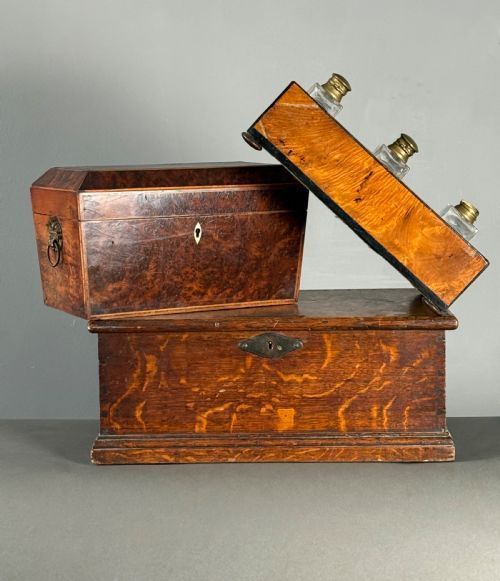
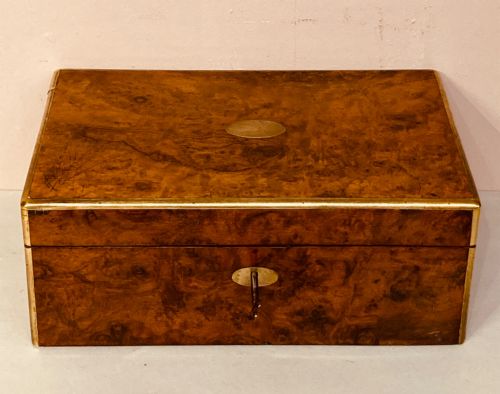
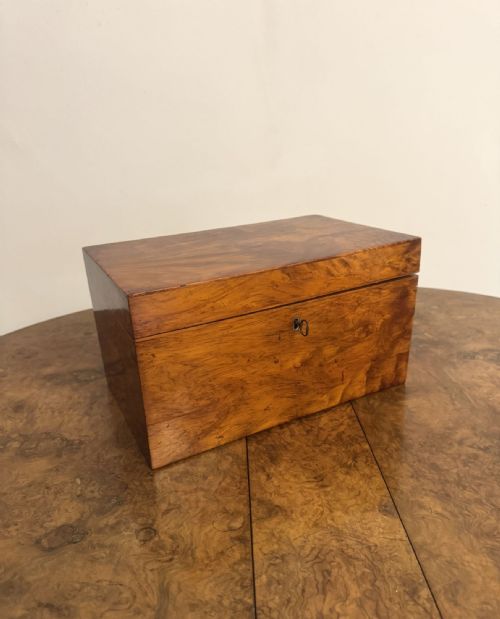
When searching for a georgian burr walnut box, a collector encounters tea caddies, writing slopes, and dressing table mirrors fashioned from timber with distinctive swirling grain. The examples appearing here span the eighteenth century and the Regency period, alongside occasional later Victorian and twentieth century interpretations.
Tea caddies and smaller decorative boxes dominate the selection, often taking rectangular or oval forms. Makers from these periods utilised the complex growth patterns of walnut to create striking veneered surfaces on everyday domestic objects.
How they were made
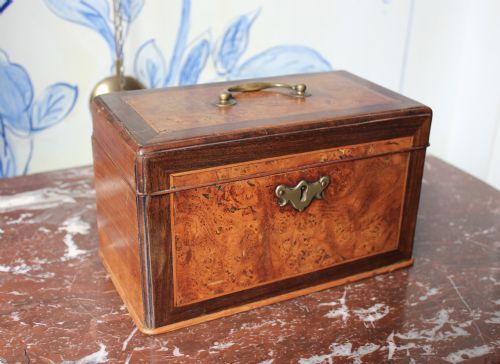
Joiners applied thin slices of burr walnut veneer over solid timber foundations such as oak or pine, arranging the grain patterns symmetrically for visual effect. Boxwood stringing, mother-of-pearl, and bone details frequently accentuate the rich brown tones of the walnut surface.
Brass hinges, escutcheons, and locks provide structural function and secure closure, fixed with small hand-cut screws or pins. Internal partitions and compartments inside tea caddies and writing slopes required precise woodworking and careful fitting.
Some nineteenth century boxes utilised walnut root timber so densely swirled it resembles marbled parchment under candlelight.
What varies in quality
The density and movement of the burr walnut veneer dictate much of the visual merit, with tighter and more even swirling patterns commanding greater attention. The precision of the mitred joints and the survival of original boxwood inlay also separate standard containers from finer productions.
Originality of internal fittings, such as mixing bowls in tea caddies or velvet lining in writing slopes, influences the integrity of the piece. Hardware components like brass escutcheons that remain undisturbed from the period of manufacture add significant weight to the item.
Whytock & Reid
The Georgian Burr Walnut Box Glossary
- Burr walnut
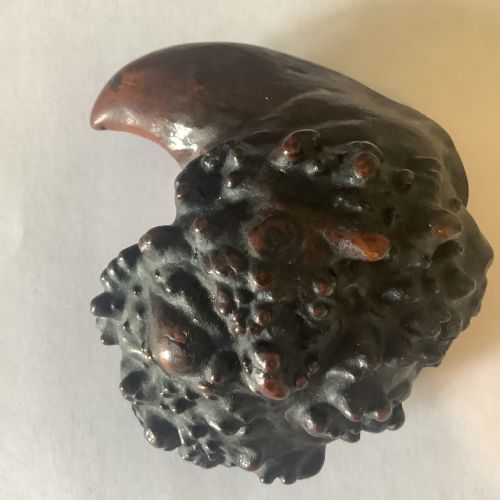
- A prized timber harvested from the abnormal growths on walnut trees, yielding intricate, swirling grain patterns. Cabinet makers sliced this wood into thin veneers for decorative furniture and boxes.
- Tea caddy
- A small container designed to store dry tea leaves securely away from moisture and air. These vessels often featured internal compartments and locking lids during the Georgian period.
- Writing slope
- A portable desk featuring a slanted writing surface that typically folds open to reveal compartments for stationery and inkwells. They were constructed in timber and sometimes inlaid with contrasting woods.
- Boxwood stringing
- A thin inlay line of pale boxwood set flush into the darker walnut surface of a box. This decorative technique outlines panels and edges to frame the wood grain.
- Escutcheon
- A flat plate of brass surrounding a keyhole to protect the surrounding timber from wear. On these boxes, they serve both a functional and a decorative purpose.
Georgian Burr Walnut Box: Frequently Asked Questions
How are these boxes dated?
Cabinet makers built these containers using construction methods, wood choices, and decorative motifs characteristic of their decade. Structural shifts from the eighteenth century into the Regency period reveal themselves in changing hardware and joinery.
Examining the secondary timbers inside the box often confirms the era of production. Older pieces display hand-cut elements and distinct timber preparation marks beneath the decorative veneers.
What held inside a tea caddy?
These lidded containers stored valuable dry tea leaves imported from abroad when tea was an expensive commodity. Interior sections separated different varieties of tea within the same box.
Some caddies included glass or ceramic mixing bowls alongside compartments for leaves. A small lock and key kept the precious contents secure from household staff.
Where did these boxes sit?
Tea caddies rested on side tables or tea tables in the principal rooms of a Georgian home. Writing slopes sat on desks or lap surfaces while owners composed letters or managed accounts.
Smaller decorative boxes and dressing table mirrors occupied bedroom furniture and dressing chests. Their portability allowed owners to move them between rooms as daily routines required.
Why is the grain swirled?
The distinct patterns originate from burrs, which are tree growths caused by stress or injury that force the wood fibres to grow in chaotic directions. Slicing through these formations exposes complex, swirling patterns impossible to find in straight timber.
Cabinet makers valued this figuring for its decorative impact on small objects like tea caddies and snuff boxes. Skilled workshops arranged these veneers symmetrically to maximise the visual depth.