



Vintage Walnut Slope Box
When you select vintage walnut slope box, you are looking at portable writing desks shaped by centuries of craftsmanship and daily correspondence.
Vintage Walnut Slope Box
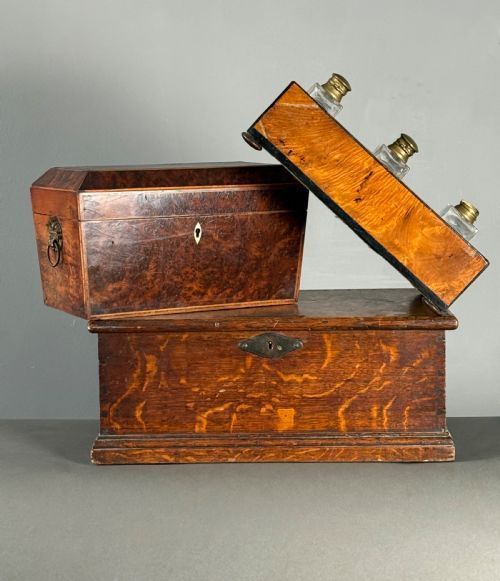
A vintage walnut slope box provides a portable writing surface designed to fold shut for travel or storage. These pieces appear in forms ranging from plain timber shells to brass-bound campaign desks.
The selections span Georgian, Regency, and Victorian periods, with mid-19th-century examples appearing frequently. Makers utilised burr walnut, figured walnut, and standard walnut timber to build these practical containers.
Beyond standard writing slopes, the category encompasses correspondence boxes, stationery cabinets, and miniature desks. Many incorporate secret drawers or specialised compartments for inkwells and pens.
Materials and construction methods
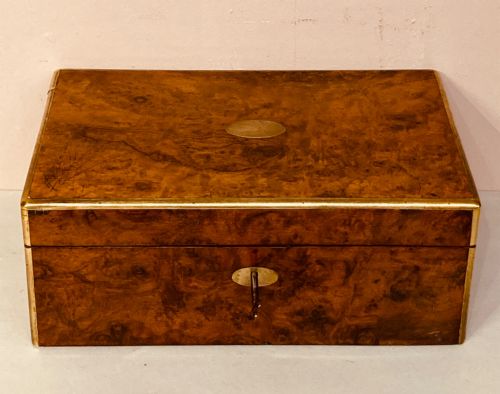
Makers constructed these boxes using solid walnut or overlaid timber with decorative burr walnut veneers. Timber frames were frequently reinforced with brass corners, straps, and bound edges to withstand travel.
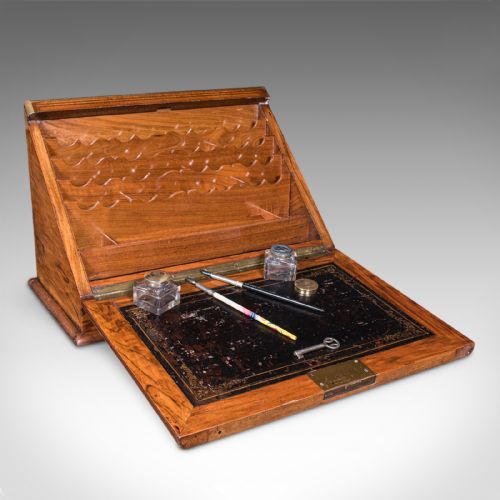
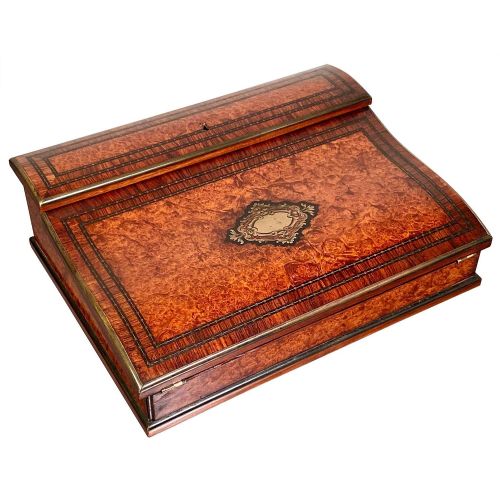
Surface decoration relies on contrasting elements such as brass inlay, parquetry, marquetry, and Tunbridge wear details. Interiors often feature fitted velvet or leather writing surfaces alongside internal divisions in fruitwood and oak.
Materials appearing across the inventory include solid walnut, burr walnut veneers, brass hardware, glass inkwells, and leather inserts.
Assessing quality and craftsmanship
Superior examples display careful book-matched burr walnut veneer across the exterior surfaces, ensuring natural grain patterns align symmetrically. Lesser pieces rely on plain timber or show simpler veneer application.
Finer boxes incorporate heavy brass hardware, flush-fitting campaign handles, and sophisticated secret mechanisms operated by hidden spring releases. The precision of the internal stationery fittings and the quality of the original leather or velvet also distinguish finer items.
Austin
The Vintage Walnut Slope Box Glossary
- Burr walnut
- A distinctive wood veneer taken from the wart-like growths on walnut trees, prized for its swirling, knotted grain patterns. This material defines the most decorative surfaces of nineteenth-century boxes.
- Campaign slope
- A portable desk built for travel with recessed brass handles and reinforced corners designed to endure military transport. These sturdy pieces fold compactly for field use.
- Secret drawers
- Concealed compartments hidden behind false partitions or triggered by internal spring mechanisms. Victorian makers used these spaces to secure valuable documents.
- Tunbridge wear
- A style of woodworking characterised by intricate mosaics made from tiny blocks of naturally coloured woods to form geometric or pictorial designs. This technique decorates the lids of select nineteenth-century boxes.
- Parquetry
- Geometric mosaic woodwork formed by small veneer tiles arranged in repeating patterns. It frequently enhances the exterior surfaces of miniature desks and stationery cabinets.
Vintage Walnut Slope Box: Frequently Asked Questions
What is a walnut slope box?
A walnut slope box is a portable desk featuring an angled writing surface that lifts to reveal storage compartments for paper and ink. These boxes served travellers and gentlemen for writing correspondence away from home.
Most examples open to display a leather or velvet writing pad alongside small drawers and pen rests. The exterior lid folds flat when closed to protect the interior contents during transport.
How do I date a slope box?
Dating relies on construction styles, hardware types, and timber choice. Georgian and Regency boxes often feature simpler brass inlay, while heavy brass bound campaign styles and elaborate burr walnut veneers are typical of the Victorian era.
Examining the secondary woods inside the hidden drawers, such as oak or fruitwood, also helps confirm the period. Tunbridge wear and specific marquetry motifs point directly toward mid-to-late nineteenth-century production.
Were these boxes used for travel?
Many of these pieces were specifically designed for travel, particularly campaign models equipped with flush brass handles and protective corner braces. Officers and diplomats utilised them as mobile offices.
Stationery cabinets and larger correspondence boxes remained static on home desks, whereas lap desks were built lightweight enough to carry between rooms or on long journeys.
How do I care for walnut wood?
Walnut requires stable humidity and protection from direct sunlight to prevent the timber and delicate veneers from drying or splitting. Regular dusting with a soft, dry cloth preserves the polished finish.
Avoid using silicone-based polishes or excess moisture on antique timber and leather interiors. Occasional light applications of traditional wax help maintain the natural lustre of the burr grain.