




Georgian Bureau Cupboard
A georgian bureau cupboard brings architectural timber and fitted drawers into the study, offering a working surface concealed behind fine cabinet doors.
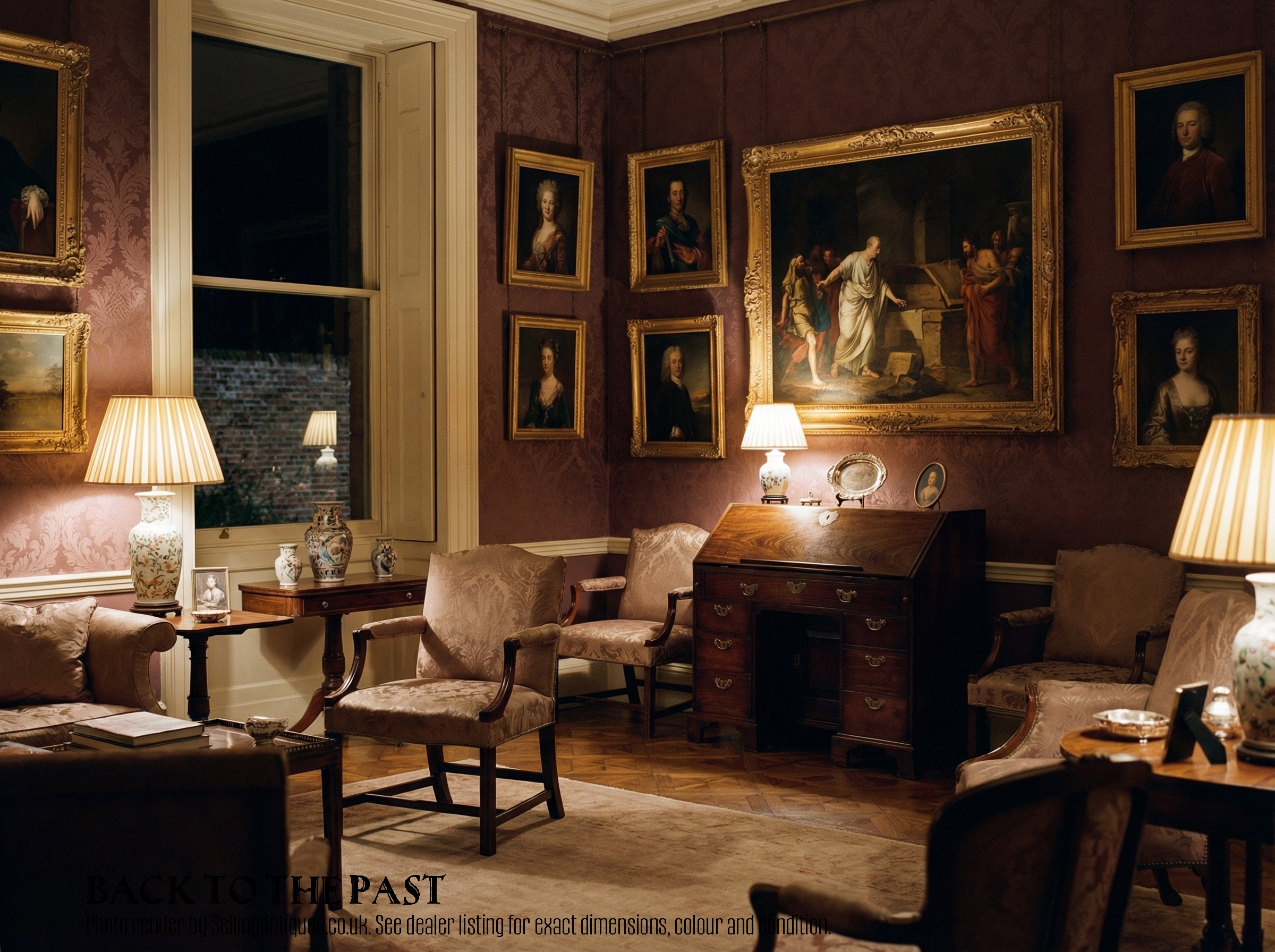
Georgian Bureau Cupboard
A georgian bureau cupboard encompasses compact writing furniture designed during the eighteenth century and subsequent revival periods, spanning kneehole desks, secretaire cabinets, and bureau bookcases. These pieces originate from distinct design movements including Queen Anne, George I, George II, and George III eras, alongside later nineteenth and twentieth-century interpretations built in the same manner.
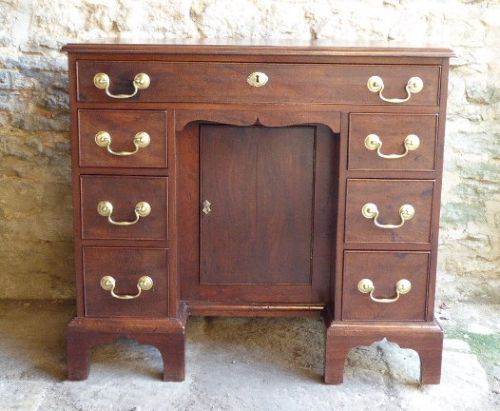
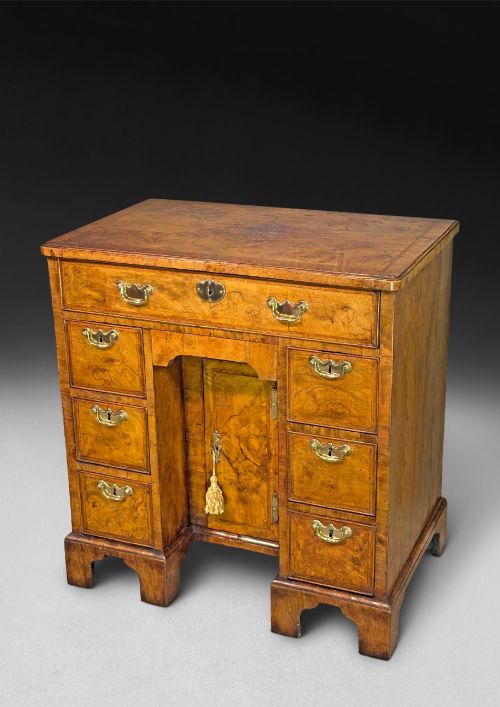
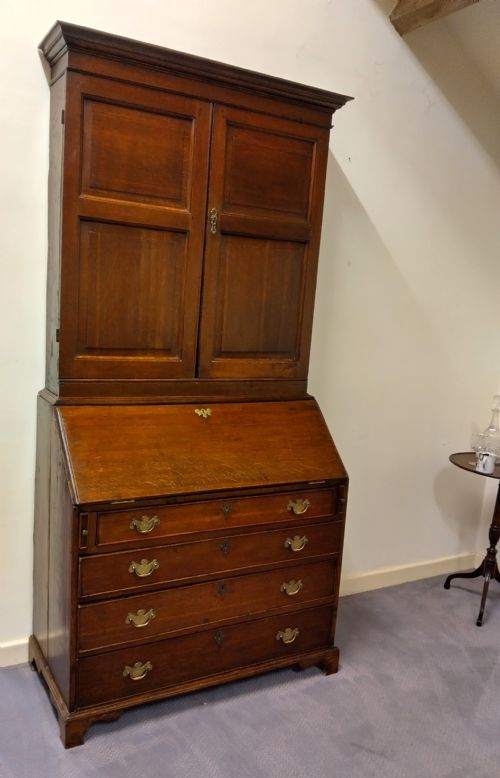
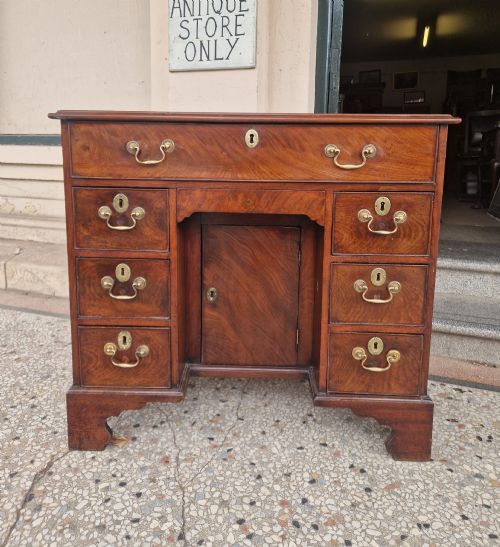
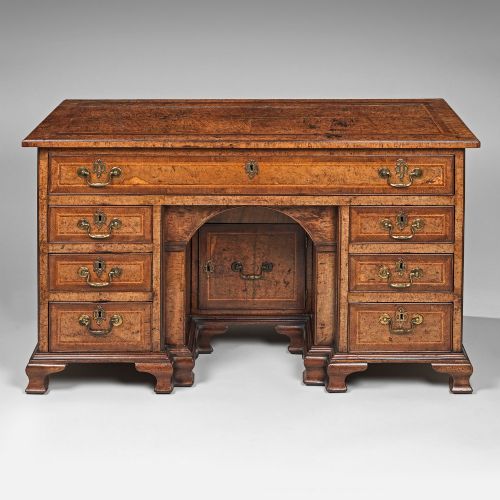
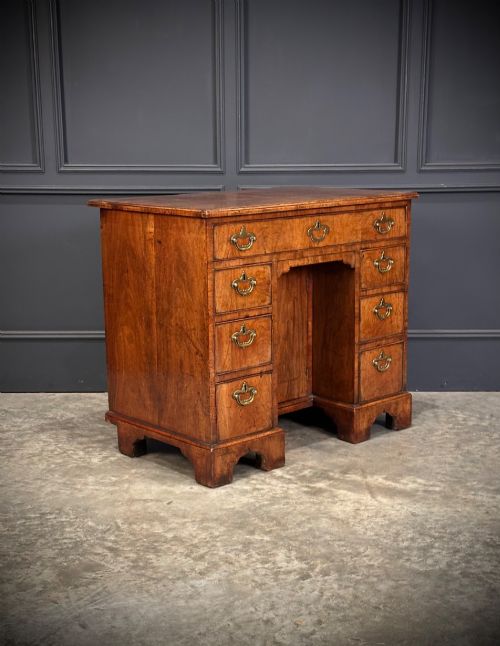
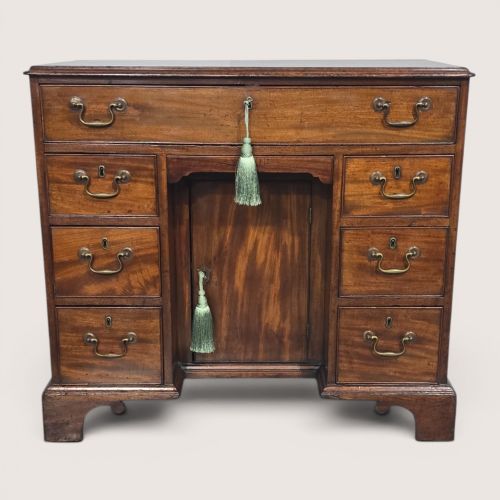
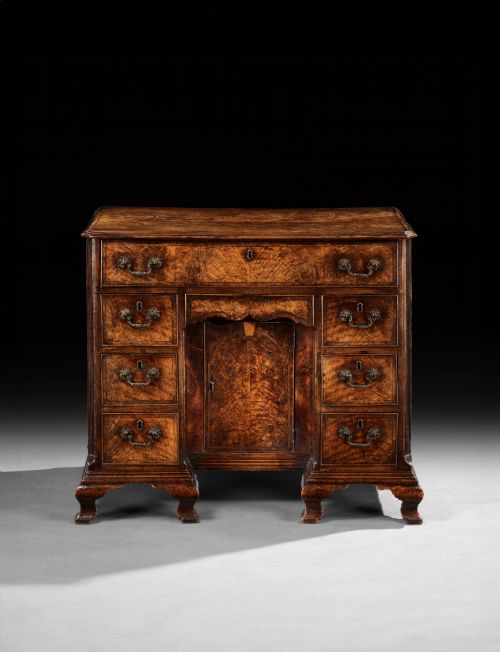
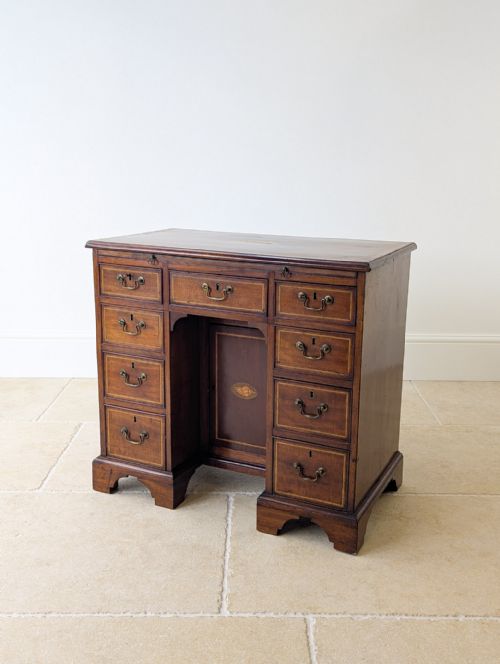
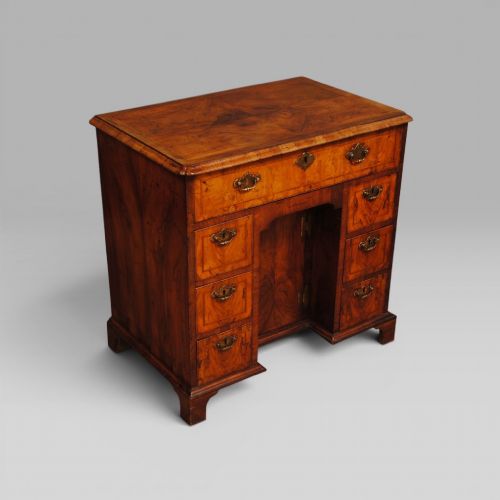
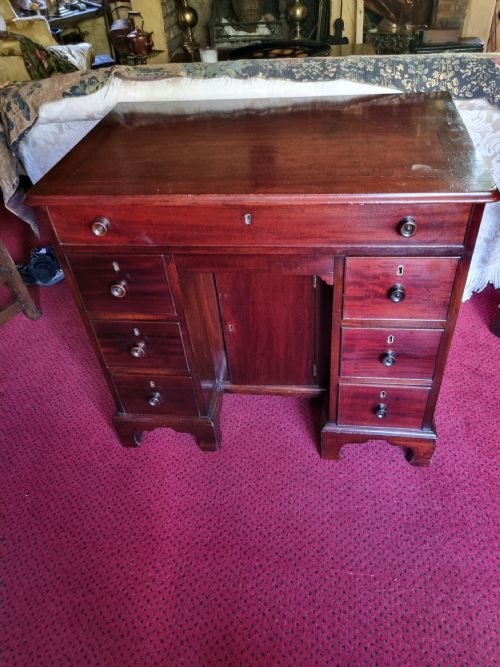
The version most commonly encountered on this page is the mahogany kneehole desk, often fitted with a recessed cupboard door behind a central knee space flanked by small drawers. Alongside these sit taller secretaire bookcases and bureau cabinets featuring upper glass or panelled doors atop a fitted writing compartment.
Makers and cabinetmakers worked within strict proportions, utilising durable hardwoods to create items intended for writing, record keeping, and private correspondence in panelled libraries and parlours.
Materials and Construction
Constructed predominantly from timber such as mahogany, walnut, oak, and burr elm, these pieces rely on dense grain and natural figure for their primary visual appeal. Cabinetmakers utilised solid planks for structural carcasses alongside careful veneer work, applying burr walnut, satinwood, and fiddleback walnut to drawer fronts and panel surfaces.
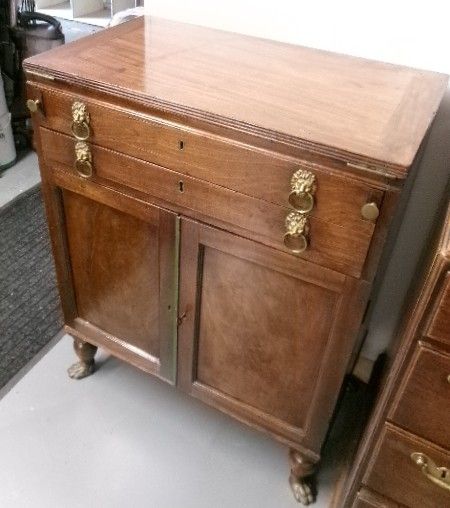
Joinery techniques include hand-cut dovetails on drawer construction and mortise and tenon joints for the main housing. Metalwork hardware such as brass handles, escutcheons, and occasional brass paw feet provide functional closure and decorative contrast against the dark timber.
Listings span multiple centuries, ranging from early eighteenth-century walnut examples to twentieth-century revival pieces built in the georgian style.
Judging Quality
Quality rests upon the selection of timber figure, the crispness of secondary mouldings, and the integrity of the internal fittings. Finer examples display symmetrical grain matching across drawer banks and timber thickness that remains consistent throughout the internal secondary woods.
The standard of execution in the writing drawer, the depth of the carving on bracket feet or knees, and the original state of the brass hardware distinguish high workshop output from simpler provincial carpentry.
The Georgian Bureau Cupboard Glossary
- Kneehole desk
- A small writing table featuring a central recessed cupboard flanked by columns of small drawers. This form allows the user to sit comfortably with their legs positioned beneath the writing surface.
- Secretaire bookcase
- A tall cabinet combining an upper section of shelves enclosed by glass or timber doors with a lower section containing a drop-front writing drawer. The drop-front conceals an arrangement of pigeonholes and small private drawers.
- Fiddleback walnut
- A figured timber grain displaying a rippled pattern that resembles the maple used for the back of a violin. Cabinetmakers selected this cut for prominent drawer fronts to catch the light.
- Dovetail
- A joint formed by interlocking wedge-shaped fingers used to secure drawer corners together. Hand-cut dovetails indicate traditional period construction methods.
- Escutcheon
- A small protective plate surrounding a keyhole, usually fashioned from brass. It prevents the timber around the lock from sustaining damage during daily use.
Georgian Bureau Cupboard: Frequently Asked Questions
What is a bureau cupboard?
A bureau cupboard is a piece of furniture that combines a writing compartment with enclosed shelf or cupboard storage. These items served as private desks and organisational centres in historical homes.
They allow owners to write letters and store documents securely behind panelled or glazed doors. The enclosed design keeps paperwork out of sight when not in use.
How do I date a georgian bureau cupboard?
Dating relies on examining the secondary timbers, the style of the brass hardware, and the construction methods used in the drawers. Earlier pieces often utilise oak or walnut, whilst later eighteenth-century items frequently employ mahogany.
Secondary wood inside the drawers provides a reliable clue to origin and period. Changes in foot design from bracket feet to later bracket or paw variations also help narrow down the decade of manufacture.
Where should I place it?
These pieces suit studies, living rooms, and hallways where their compact footprint and timber tones add warmth to a room. Their flat writing surfaces function well for daily correspondence or laptop use.
Keep wooden furniture away from direct heat sources and strong sunlight to prevent the timber and veneers from drying out or fading over time.
Are all these pieces from the eighteenth century?
While many items date from the eighteenth century, the selection includes later nineteenth-century revival pieces and twentieth-century reproductions built in the same traditional manner. Each listing specifies the period or estimated date of manufacture.
Revival pieces often reflect the stylistic traits of earlier George II or George III designs whilst incorporating the manufacturing techniques of their own era.