
Georgian Buffet Cabinet
A georgian buffet cabinet is a substantial timber server designed for dining rooms, offering generous storage and surface space for entertaining.
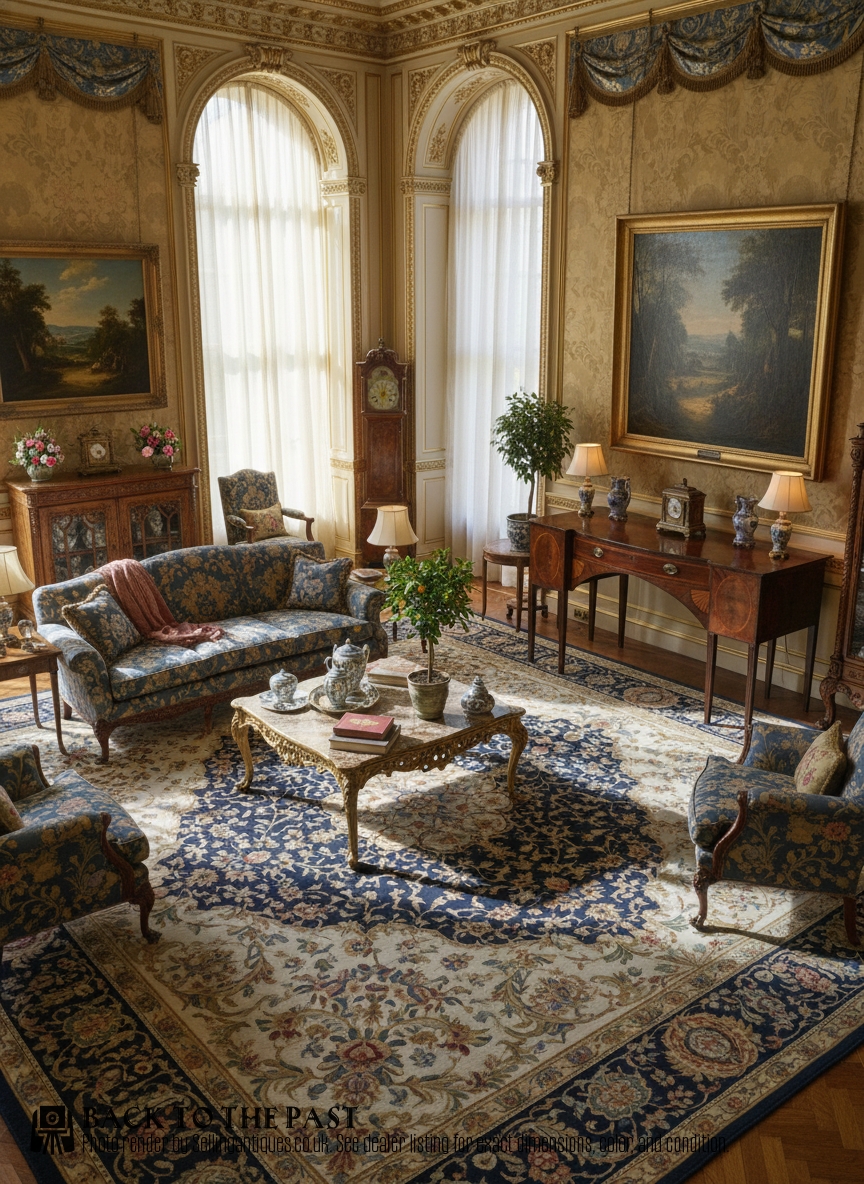
Georgian Buffet Cabinet
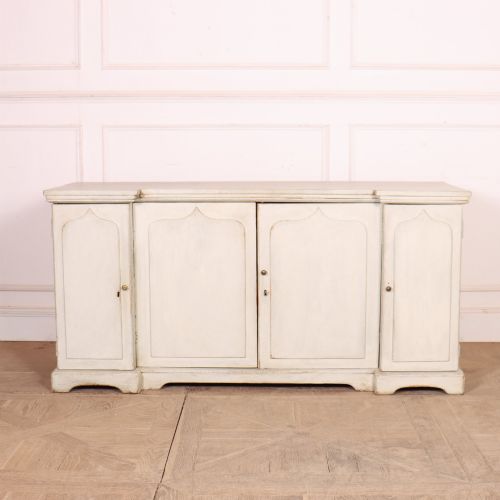
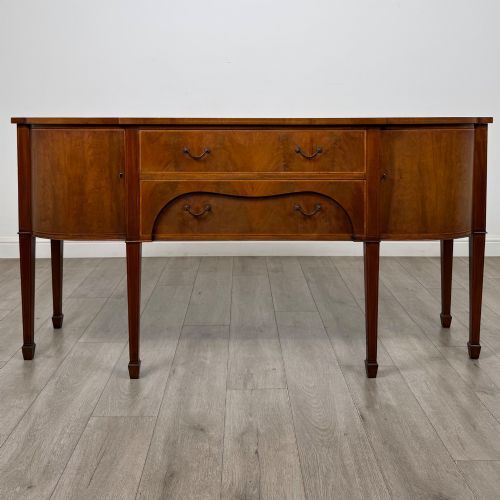
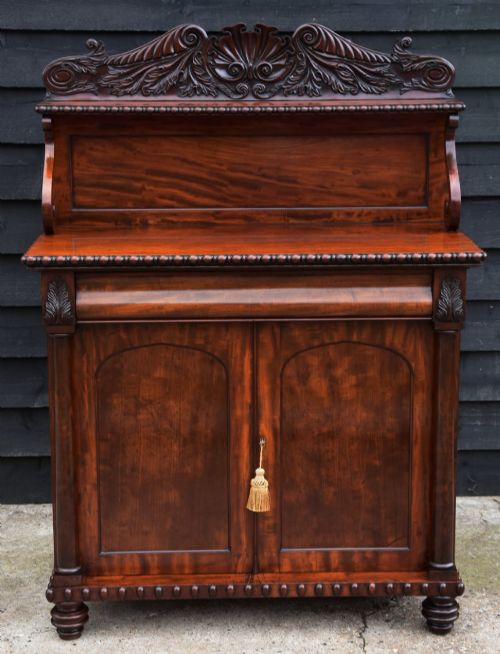
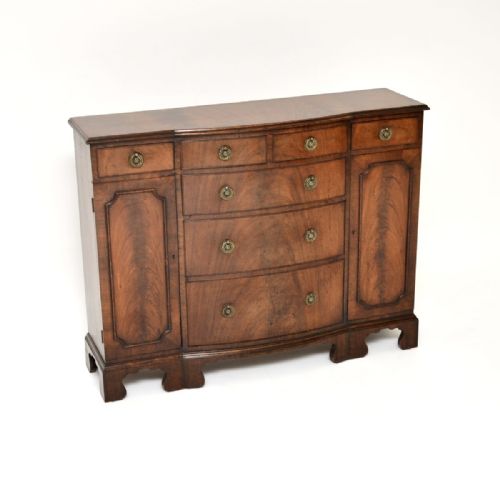
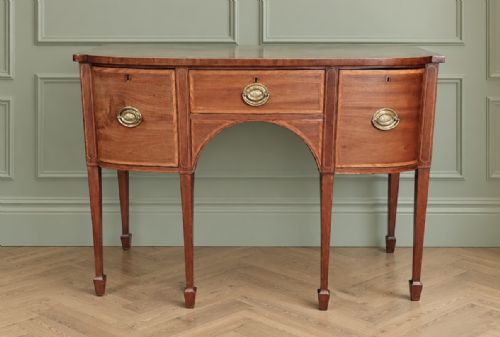
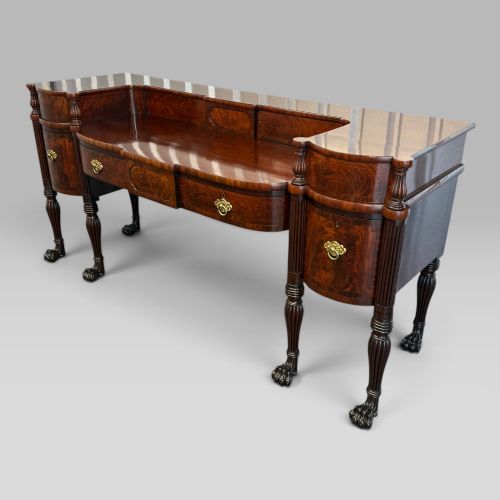
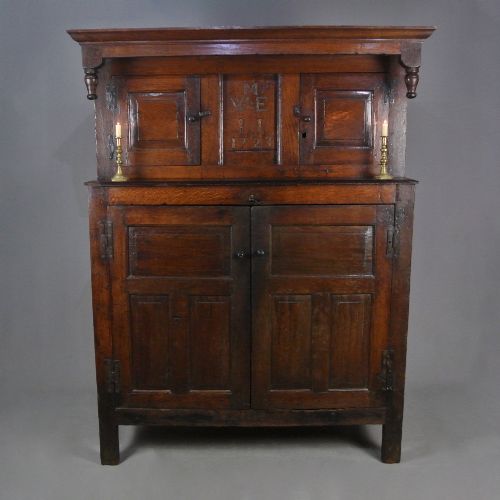
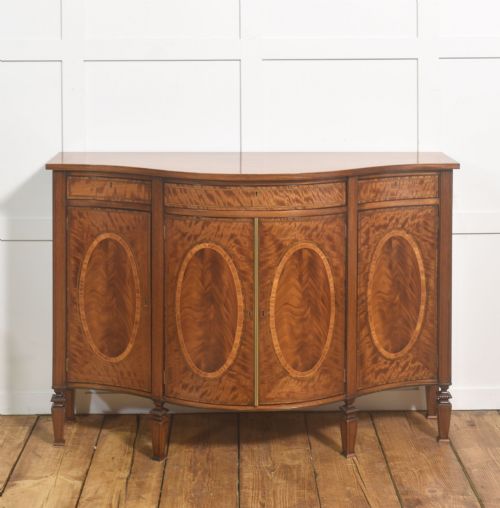
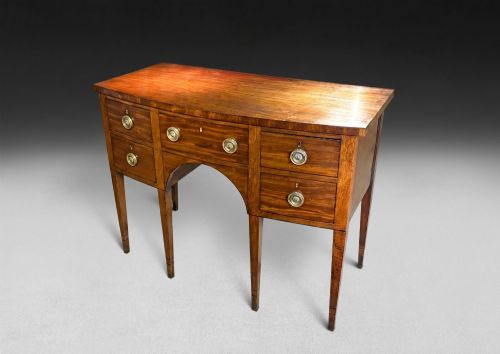
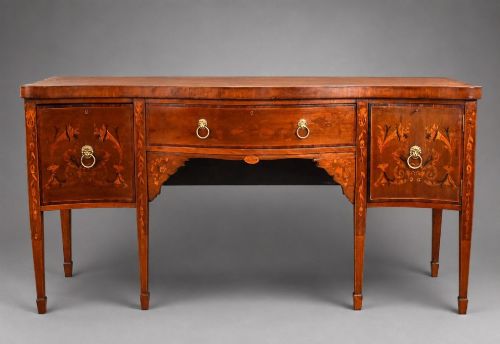
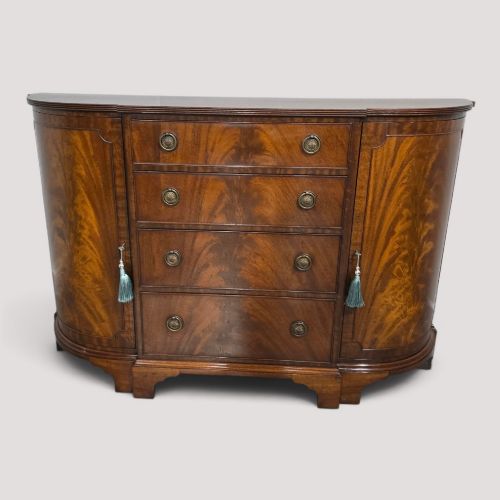
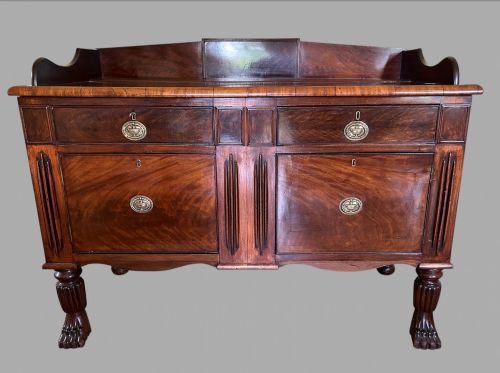
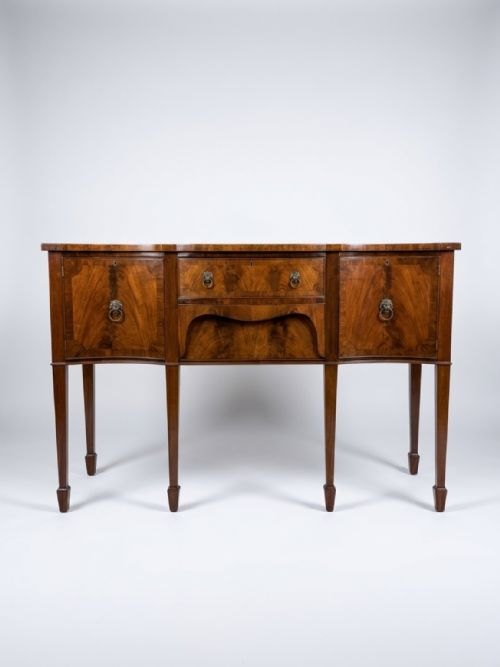
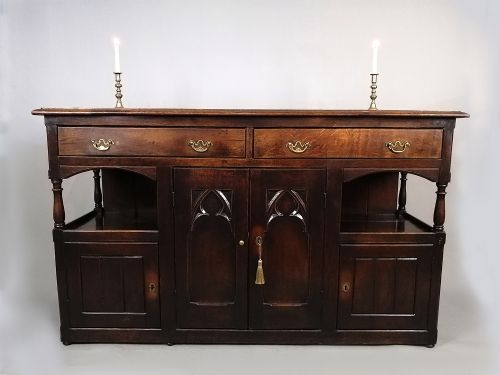
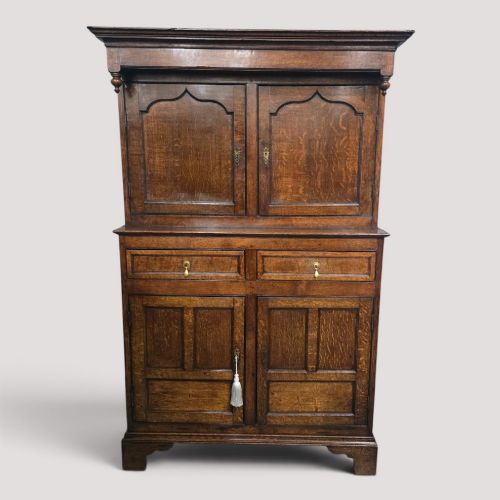
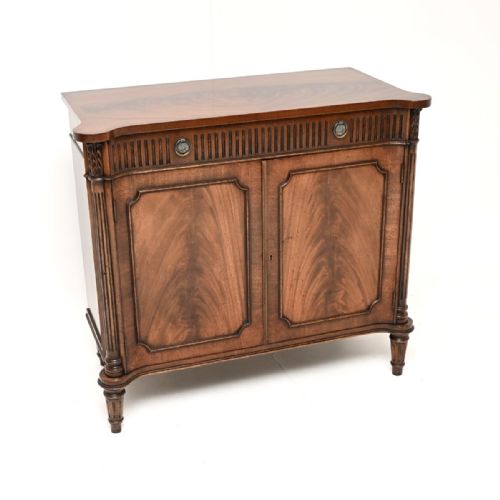
When searching for a georgian buffet cabinet, buyers encounter a variety of substantial timber dining room servers, sideboards, and dresser bases. The items on this page span the eighteenth, nineteenth, and early twentieth centuries, reflecting enduring forms used for storing and serving food.
Mahogany and oak dominate the selection, appearing alongside satinwood, walnut, and pine. Many examples incorporate stylistic elements such as bow fronts, serpentine shapes, breakfronts, and inlay work.
The objects take several forms, including sideboards, chiffoniers, court cupboards, and dresser bases. While some pieces date directly to the Georgian period and the subsequent Regency era, others stem from later revivals such as Edwardian and Sheraton Revival interpretations.
What varies in quality
The selection of timber sets finer pieces apart, particularly the figure of the mahogany, the choice of contrasting inlay woods, and the depth of the grain. Superior execution shows in the precision of the joinery, the movement of drawers, and the retention of original brass hardware.
Proportion and silhouette dictate visual success, distinguishing well-balanced serpentine or bow-front forms from plainer constructions. Pieces retaining crisp line inlay and harmonious proportions reflect superior workshop standards.
The page includes items spanning the eighteenth, nineteenth, and early twentieth centuries.
M. D. Miller & Sons
The Georgian Buffet Cabinet Glossary
- Bow front
- A convex curved cabinet front that projects outward in the centre. This shape became particularly popular during the Georgian and Regency periods for sideboards and servers.
- Breakfront
- A piece of furniture whose central section projects forward from the flanking outer sections. This arrangement creates depth and breaks up the linear profile of large cabinets.
- Chiffonier
- A low cabinet or sideboard featuring shelving or a small superstructure on top. The form developed during the early nineteenth century for dining and drawing rooms.
- Dresser base
- A low wooden storage unit featuring drawers and cupboards beneath a flat top surface. These utilitarian pieces originate from country houses and domestic kitchens.
- Serpentine
- A front profile characterised by a concave central section flanked by two convex ends, resembling a winding snake line. This configuration demands advanced cabinetmaking skill to construct.
Georgian Buffet Cabinet: Frequently Asked Questions
What is a georgian buffet cabinet used for?
These pieces serve primarily as dining room storage units for crockery, cutlery, and glassware. The top surface provides space for serving food and displaying decorative objects during meals.
Historically, they functioned as central stations for preparing courses and managing service within formal dining spaces. Today, they adapt easily to modern living areas as sideboards or media consoles while retaining their traditional utility.
How do I distinguish original Georgian pieces from later revivals?
Original pieces display construction methods, timber ageing, and wear consistent with the eighteenth or early nineteenth century. Examining the secondary woods inside drawers and the backboards offers vital clues to age.
Later revival items from the Edwardian era or the early twentieth century often exhibit machine-cut elements and cleaner, uniform timber surfaces. Comparing hardware styles and construction techniques helps clarify the exact period of manufacture.
What woods were used to make these cabinets?
Mahogany is the predominant timber found across these listings, often selected for its rich colour and stability. Oak appears frequently in earlier dresser bases and court cupboards, prized for its durability and prominent grain.
Finer examples incorporate exotic veneers like flame mahogany, satinwood, and walnut, complemented by contrasting boxwood inlay. Pine and fruitwood also appear in regional pieces and internal carcase construction.
Where should I place a buffet cabinet in my home?
Dining rooms remain the traditional location, where these cabinets can store table linen and serve food during gatherings. Their long, low profiles also suit hallways and spacious living areas as focal storage points.
Placement should avoid direct sunlight and intense heat sources to protect timber veneers and polished finishes. Ensuring adequate clearance allows doors and drawers to open fully without obstruction.