


Georgian Breakfront Wardrobe
A georgian breakfront wardrobe offers monumental storage in timber, built to command a grand bedroom with architectural presence and generous proportions.
Georgian Breakfront Wardrobe
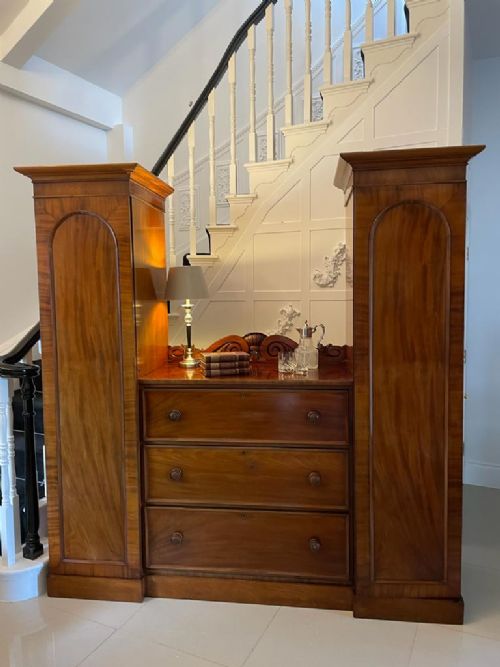
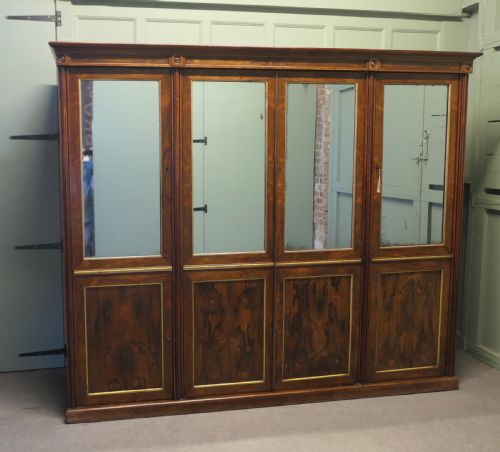
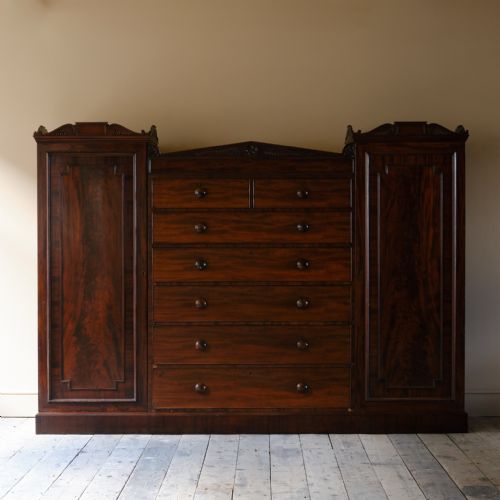
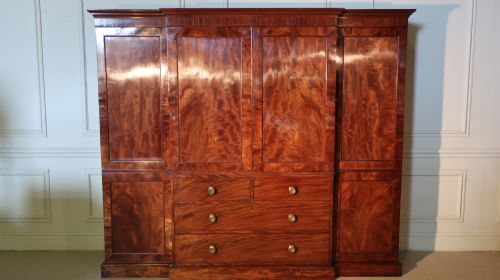
When you search for a georgian breakfront wardrobe, you look at large storage furniture characterised by a central section that projects forward from flanking wings. These pieces span the eighteenth and nineteenth centuries, including items from the Georgian, Regency, and William IV periods, alongside forms such as linen presses, compactums, and housekeepers cupboards.
The version most commonly met on this page is a substantial mahogany construction featuring multiple doors, often configured as a four-door breakfront piece. Alongside standard mahogany, examples appear in flame mahogany veneer, curl mahogany, rosewood, oak, pine, and painted finishes, reflecting both formal urban cabinetmaking and English country traditions.
How They Were Made
Makers built these wardrobes primarily using solid mahogany and oak, applying flame mahogany and curl mahogany veneers to the prominent surfaces of the doors and central sections. Secondary timbers like pine appear in internal construction and drawer linings, bound together with traditional joinery.
Surface embellishments rely on natural grain patterns rather than heavy carving, occasionally enhanced with inlaid details and fitted with brass hardware to secure the large doors.
The archive includes works attributed to Gillows of Lancaster alongside unbranded country house examples.
What Varies in Quality
The distinction between standard examples and the finest pieces rests upon timber selection and architectural ambition, with superior items displaying carefully matched flame or curl mahogany veneers across every door. Finer workshops demonstrated greater control over proportions and detailing, ensuring the projecting central breakfront harmonises with the flanking wings.
Internal configuration and secondary woods also indicate distinction, as better examples retain original linen press trays, sliding shelves, and substantial oak drawer carcasses rather than later alterations.
Gillows of Lancaster
The Georgian Breakfront Wardrobe Glossary
- Breakfront
- A cabinet facade where the central section projects forward from the recessed left and right wings. This architectural arrangement creates depth and visual rhythm on large bedroom furniture.
- Compactum
- A multifunctional wardrobe designed with a combination of hanging space, linen slides, and drawers within a single carcass. It offers comprehensive storage for various garments.
- Linen Press
- A tall piece of furniture featuring upper doors enclosing sliding trays for folded textiles, placed above a base of wider drawers. They often share the form of a breakfront wardrobe.
- Flame Mahogany
- A veneer cut from the fork of a mahogany tree where the branches join the trunk, producing a distinctive flickering flame pattern. Cabinetmakers reserved this timber for the most prominent door panels.
- Housekeepers Cupboard
- A utilitarian storage piece traditionally used in large country houses for domestic linens and stores, constructed in oak or painted timber.
Georgian Breakfront Wardrobe: Frequently Asked Questions
How do I spot a genuine georgian breakfront wardrobe?
Examine the construction methods visible inside the carcase and drawer linings, looking for period-appropriate joinery such as hand-cut dovetails in oak or pine. The timber should display natural ageing and the distinctive weight of solid mahogany or dense secondary woods.
Check the configuration of the doors and internal slides to ensure they match traditional workshop practices of the eighteenth and nineteenth centuries. Altered interiors or mismatched veneers often indicate later modifications to the piece.
Will a large breakfront wardrobe fit in my bedroom?
These pieces were designed for expansive country houses and grand chambers, possessing significant height, width, and depth. Most breakfront wardrobes are modular to some degree, separating into multiple carcases and a cornice for transport, but they still require substantial wall space.
Measure your ceiling height and access routes carefully before acquiring one of these wardrobes, as their monumental scale dominates standard modern rooms. Ensure doorways and stairwells can accommodate the deep central sections and flanking wings.
What is the difference between a wardrobe and a compactum?
A standard wardrobe primarily provides vertical hanging space behind tall doors for coats and dresses. A compactum integrates multiple storage formats within one piece, combining hanging sections with banks of internal drawers and sliding trays.
This multi-purpose layout allowed owners to store folded garments, linen, and hanging attire in a single architectural unit. Many breakfront pieces share this hybrid format despite being listed under various traditional names.
How should I care for flame mahogany veneers?
Keep mahogany furniture away from direct sunlight and heat sources to prevent the delicate veneers from drying out, lifting, or fading. Maintain a stable indoor climate to protect the timber and historic glue joints from humidity shifts.
Apply traditional bees-wax sparingly and buff with a soft cloth to nourish the wood and preserve its natural sheen. Avoid modern silicone-based polishes that can penetrate the grain and damage the historic finish.