


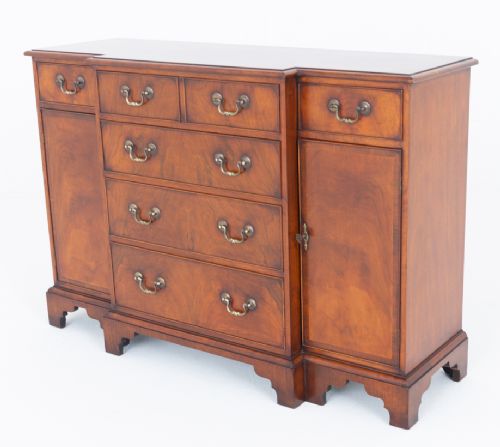


Georgian Breakfront Credenza
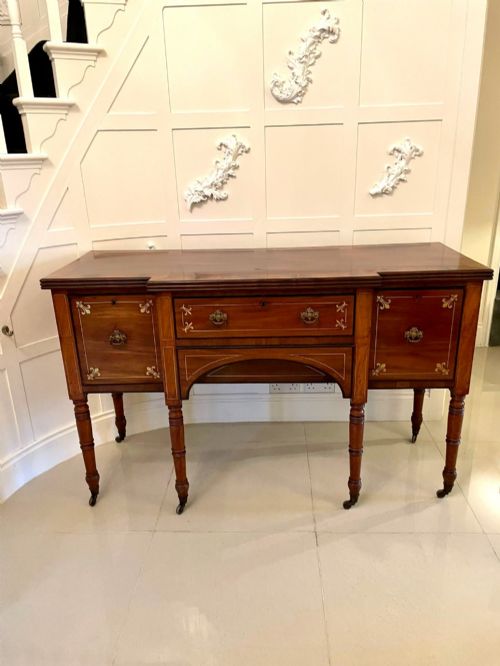
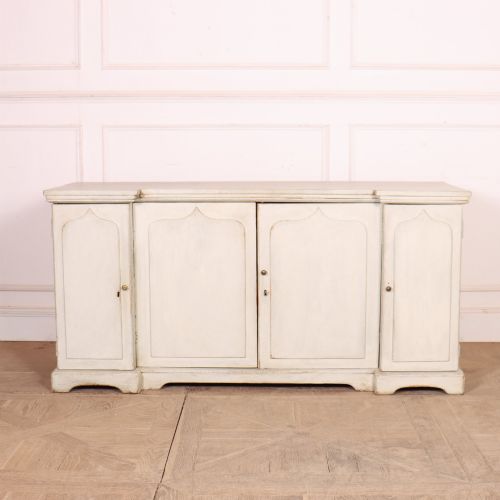
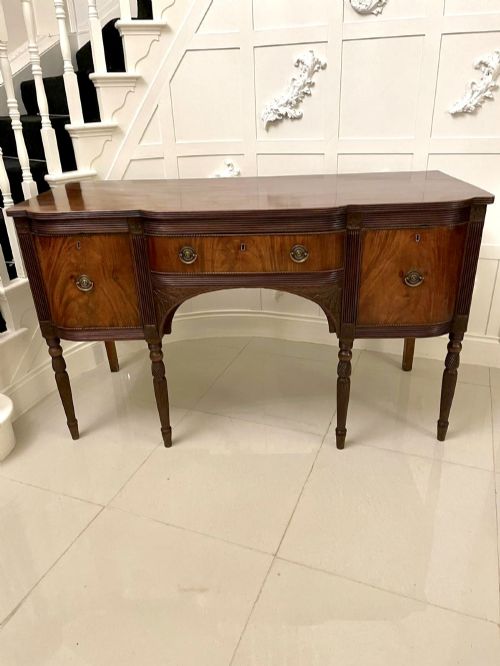
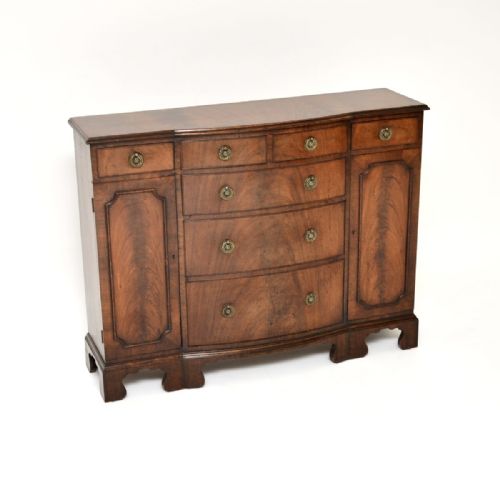
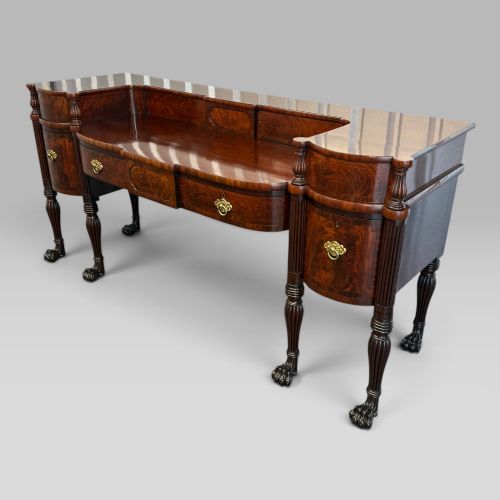
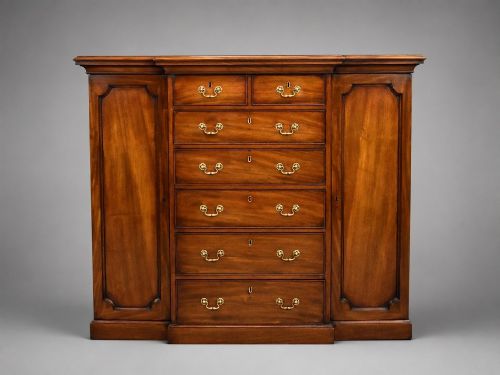
A georgian breakfront credenza is a statement storage piece defined by its stepped facade, bringing classic proportions and rich timber grain to a room.
Georgian Breakfront Credenza
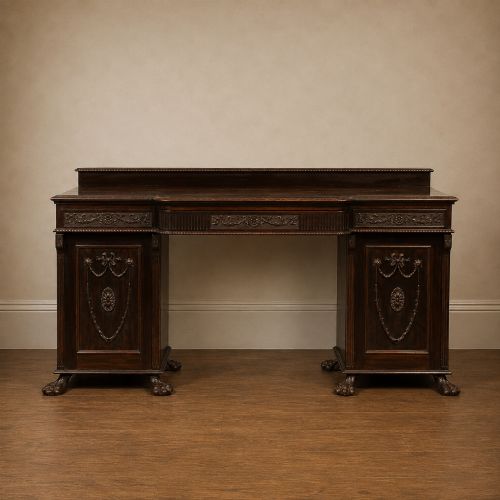
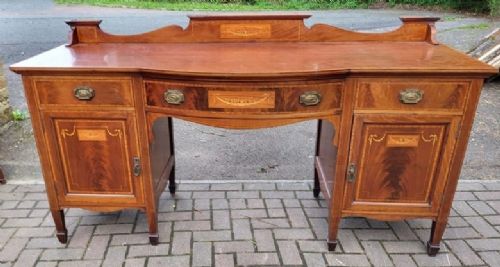
When you search for a georgian breakfront credenza, you encounter substantial storage furniture designed with a central section that projects forward from the flanking wings. The pieces appearing here span eras from the eighteenth century through to later revivals, taking forms such as sideboards, side cabinets, bookcases, and dresser bases.
Mahogany and flame mahogany veneer dominate the selection, often enriched with satinwood, rosewood, walnut, and oak. You will find styles ranging from strict George III and Regency periods to later Edwardian and Victorian revivals.
The layout typically incorporates multiple doors and drawers, sometimes featuring open shelving or glazed sections depending on whether the piece functions as a sideboard, bookcase, or low cabinet.
Materials and construction
Cabinetmakers constructed these pieces using solid timbers alongside carefully applied veneers like flame mahogany, satinwood, and walnut to create striking grain patterns across the front facade. Brass inlay, ebony stringing, and parcel gilding frequently highlight the structural lines and door panels.
Carved details such as lion paw feet appear alongside painted decorations and leather accents, demonstrating varied craftsmanship across different periods. Structural integrity relies on traditional joinery within carcases of oak, mahogany, and pine.
Materials recorded across the inventory include solid mahogany, flame mahogany veneer, rosewood, satinwood, walnut, oak, brass, and fabric.
Markers of quality
Quality rests upon the selection and matching of timber veneers, particularly the symmetry of flame mahogany and figured walnut across the projecting breakfront sections. Finer examples display meticulous brass inlay, crisp carving on paw feet, and well-executed secondary woods within the drawer linings.
Proportion and the handling of Revival details also separate standard production from superior cabinet work. The integration of doors, drawers, and internal fittings shows the level of care invested by the maker.
Maple & Co.
The Georgian Breakfront Credenza Glossary
- Breakfront
- A piece of furniture where the central section projects forward from the side sections. This architectural arrangement creates depth and visual rhythm across the facade.
- Flame mahogany
- Timber cut from the fork of the mahogany tree to produce a flickering, flame-like grain pattern. It was widely utilised on prominent surfaces during the Regency period.
- Credenza
- A low cabinet or sideboard used for storage and display. The term covers various low formats appearing in nineteenth-century and revival pieces.
- Dresser base
- A lower storage unit featuring drawers and cupboards, often rooted in eighteenth-century vernacular design. These pieces provide heavy surface space and robust interior capacity.
- Stringing
- Thin inlaid lines of contrasting wood or brass used to outline panels and drawers. It adds linear definition to mahogany and satinwood surfaces.
Georgian Breakfront Credenza: Frequently Asked Questions
What is a breakfront credenza?
A breakfront credenza is a low storage cabinet featuring a stepped-forward central section. These pieces combine display and utility within classical proportions.
They serve as focal points in dining rooms, libraries, or hallways, offering surface space alongside concealed shelving.
How do I date a piece?
Dating relies on timber choices, construction methods, and stylistic markers such as brass inlay or paw feet. Georgian and Regency pieces show specific handling of veneer and hardware compared to later revivals.
Examining secondary woods inside drawers and the style of joinery provides further clues to the exact period of manufacture.
Where should I place it?
These pieces suit principal rooms where their length and stepped facade can be fully appreciated. They function well against long walls in living spaces or dining rooms.
Ensure adequate floor space is available so the projecting central section and opening doors remain unobstructed.
What woods were used?
Mahogany is the primary timber, often enhanced by flame mahogany veneers, satinwood, rosewood, walnut, and oak. Brass and ebony frequently appear as contrasting inlay.
Different periods favoured specific combinations, from eighteenth-century mahogany to Edwardian satinwood and walnut revivals.