
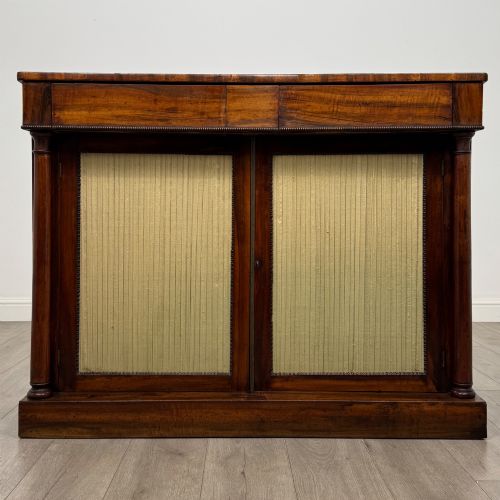
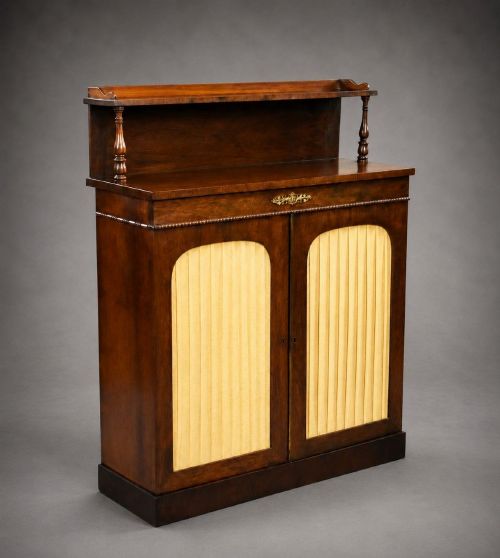
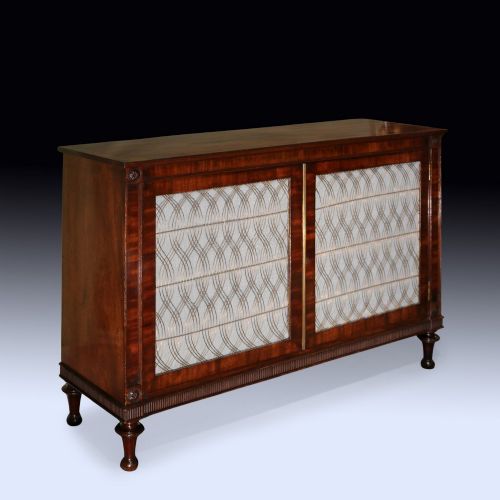


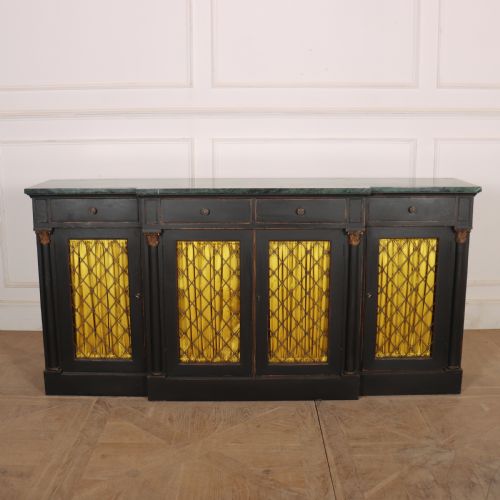


Antique Silk Door Cabinet
These antique silk door cabinets and associated side pieces unite polished timbers with textile panels for functional storage.
Antique Silk Door Cabinet
Buyers seeking an antique silk door cabinet typically encounter timber side cabinets, chiffoniers, and breakfront bookcases originating from the nineteenth century. These forms draw on Regency, George IV, and Victorian design traditions, often presenting as low credenzas or sideboards designed for drawing rooms.
The pieces listed on this page predominantly utilise rosewood, mahogany, and walnut as structural timbers. Cabinet makers integrated fabric panels, notably silk, alongside brass grilles or wooden doors to house collections and domestic items.
Dating ranges primarily across the nineteenth century, including specific references to the Regency period and the year eighteen ninety. Construction forms vary from breakfront side cabinets to paired rosewood cupboards.
Materials and construction methods
Cabinet makers utilised dense hardwoods such as rosewood, mahogany, and walnut to build the primary carcass and framing. These timbers were selected for grain pattern and strength, frequently enhanced by simulated finishes or polished surfaces.
Some nineteenth-century cabinet makers tucked silk behind brass wire so secrets could breathe without gathering dust.
Distinctions in craftsmanship
Quality separates pieces through the selection of timber and the precision of auxiliary decoration. The finest examples employ figured rosewood or mahogany combined with exact brass inlay and well-preserved fabric panels.
Proportion and architectural arrangement dictate the standing of a side cabinet. Breakfront configurations and matched pairs demonstrate higher ambition in design than simpler single-door cupboards.
The Antique Silk Door Cabinet Glossary
- Breakfront
- A cabinet design where the central section projects forward from the flanking outer sections. This arrangement creates depth and visual rhythm across the piece.
- Chiffonier
- A low sideboard or cabinet developed during the nineteenth century, typically featuring shelves or enclosed cupboards below. They served practical storage functions in dining and drawing rooms.
- Ormolu
- Gilt bronze mounted onto furniture as decorative enrichment. The technique involves applying a gold amalgam to bronze before heating.
- Palisander
- A dense, dark timber resembling rosewood, prized for rich grain patterns. It frequently appears in nineteenth-century cabinet work.
- Grille
- A latticework panel of brass or wire fitted into cabinet doors. This allows ventilation or visibility whilst protecting the contents.
Antique Silk Door Cabinet: Frequently Asked Questions
What rooms suit these cabinets?
These low cabinets suit drawing rooms, dining spaces, and hallways where surface display and enclosed storage are both required.
Their compact height allows placement beneath windows or pictures without dominating the wall space.
How do I identify Regency style?
Regency pieces often display classical architectural restraint, clean lines, and dark timbers enhanced by brass inlay.
Proportions remain balanced, drawing inspiration from Greco-Roman forms adapted for nineteenth-century interiors.
Are pairs common?
Matched pairs do appear among nineteenth-century side cabinets, though single pieces are more frequently encountered.
Pairs provide symmetrical balance for larger reception rooms or flanking a fireplace.
What woods were used?
Nineteenth-century makers relied primarily on rosewood, mahogany, and walnut for these cabinet carcass structures.
Secondary woods and applied brass or silk completed the construction details.