



Georgian Brass Vessel
These georgian brass vessel selections bring heavyweight metalwork and solid hearth utility directly into modern rooms.
Georgian Brass Vessel
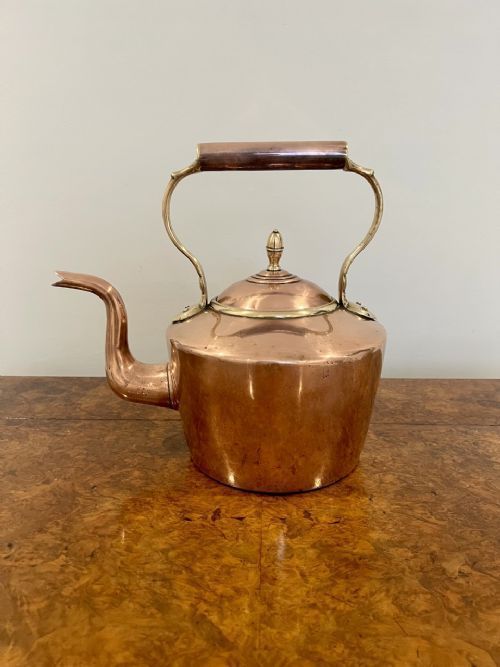
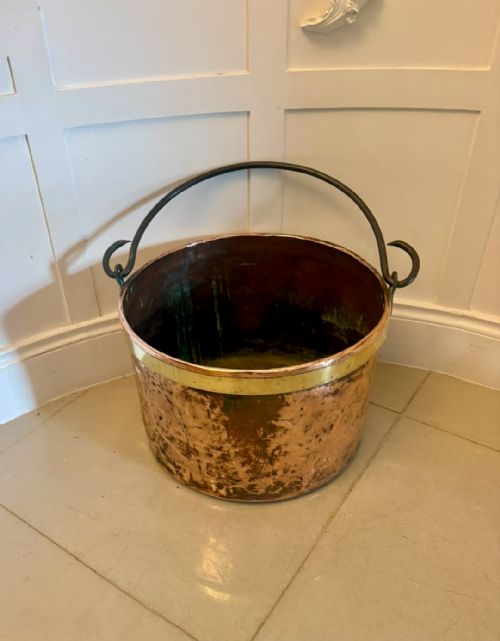
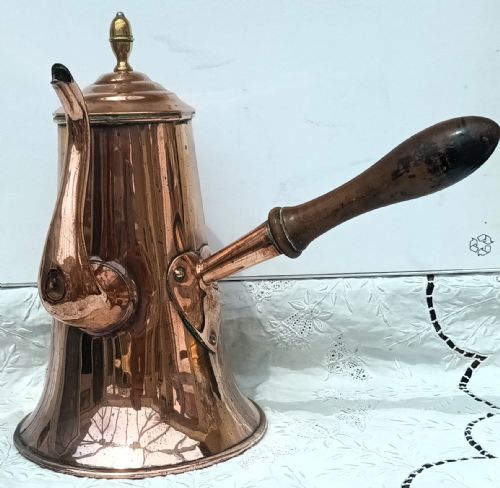
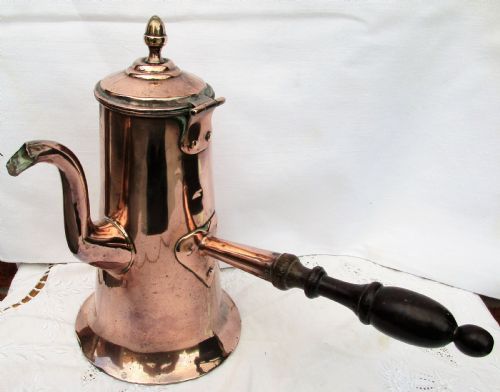
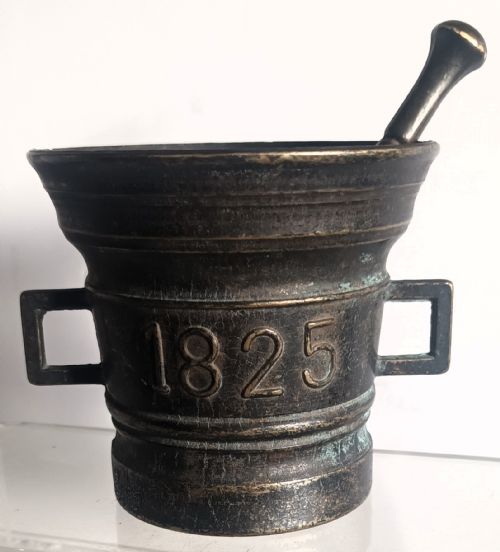
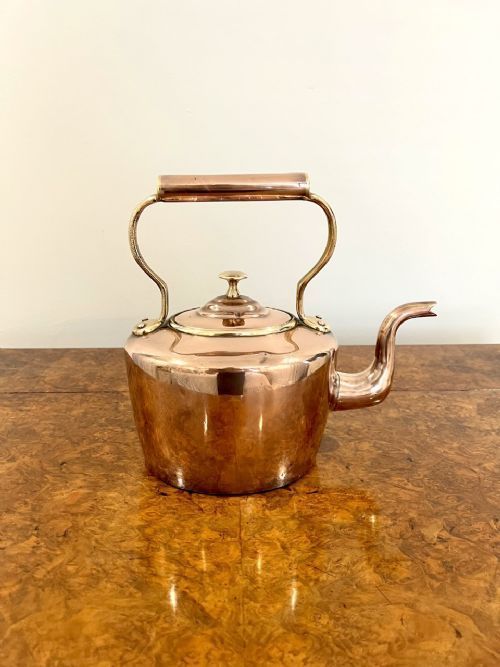
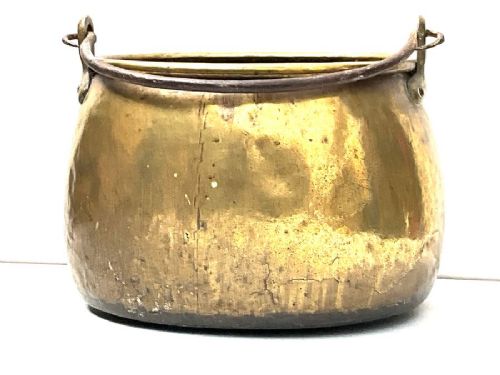
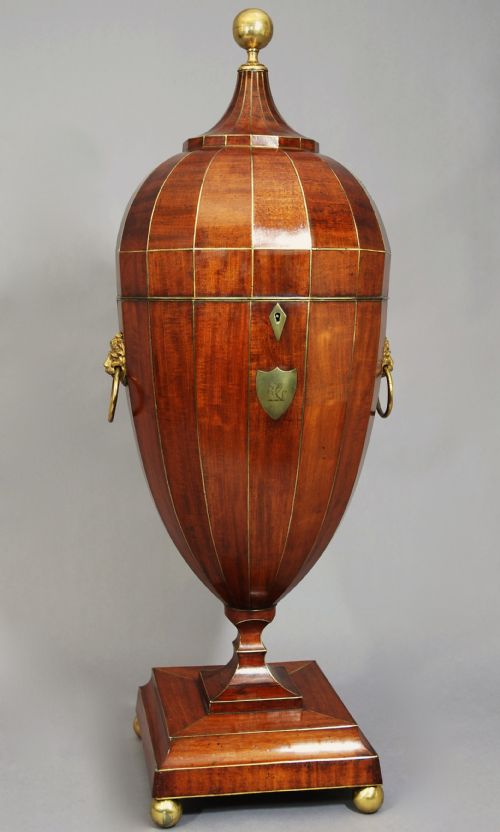
Buyers encounter substantial copper and brass kettles alongside heavy bronze mortars and coopered mahogany buckets fitted with brass bands. These pieces reflect domestic life and kitchen preparation across the Georgian, Regency, and early Victorian periods.
How they were made
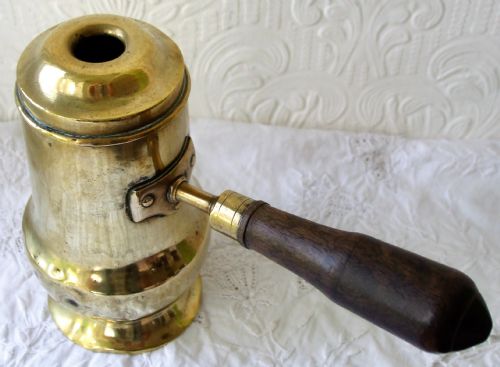
Metalworkers formed these items primarily from sheet brass and copper, joining seams with rivets or hard soldering to withstand daily heat and liquid. Bronze mortars relied on sand casting, leaving tactile surfaces finished by turning on a lathe.
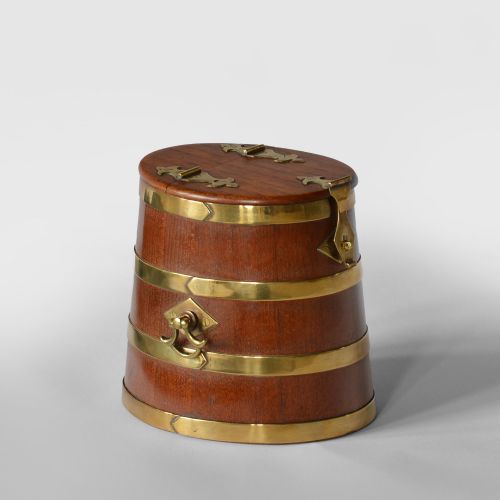
Wooden elements such as mahogany buckets utilised cooperage techniques, securing staves with heavy brass hoops. Handles incorporated iron or wrought iron supports, often featuring turned wooden grips for insulation.
A miniature naval rum barrel proves that Georgian sailors took their daily rations with proper coopered dignity.
What varies in quality
Substance and wall thickness dictate the integrity of a piece, separating heavy utility items from thinner decorative alternatives. Original fixtures, including taps on samovars and authentic swing handles, preserve historical weight.
Refining marks like hand-hammered texturing and clean casting details distinguish workshop production from routine output. Surface preservation matters greatly, with undisturbed patination holding more character than over-polished metal.
William Soutter And Sons·Bate of London
The Georgian Brass Vessel Glossary
- Samovar
- A heated metal container traditionally used to boil water for tea. These large vessels often feature an internal central tube and an operational spigot.
- Mortar and pestle
- A heavy bowl and club-like tool used for crushing and grinding substances. Apothecary examples appear frequently in durable bronze.
- Coopered
- Constructed from wooden staves bound together by metal hoops. This technique created watertight barrels, buckets, and log bins.
- Monteith
- A scalloped bowl used in the period for chilling wine glasses. The notched rim held the stems securely while the bowl chilled in ice.
- Helmet coal scuttle
- A fireside bucket shaped with a high back and tapered spout resembling a classical helmet. These held coal for hearth fires.
Georgian Brass Vessel: Frequently Asked Questions
How were tea urns used?
Tea urns and samovars held boiling water at the dining or tea table to replenish teapots throughout long meals and social gatherings. Hot coals placed in an internal cylinder kept the water heated.
Servants managed the heavy vessels, operating the brass spigots to pour water into smaller pots as guests required refills during the course of the evening.
What is an apothecary mortar?
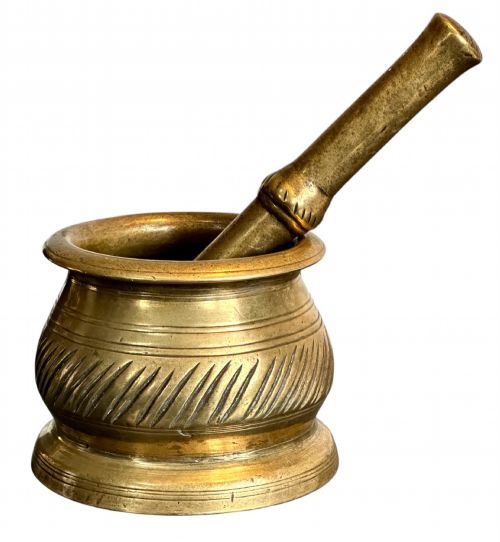
Apothecary mortars served doctors and chemists for crushing dried herbs, minerals, and medical ingredients into fine powders. Their thick bronze walls absorbed the heavy impacts of the pestle.
These compact vessels typically display flared rims and decorative ribbing, reflecting the utilitarian yet considered design of Georgian laboratory equipment.
How do I clean antique brass?
Antique brass requires minimal intervention to preserve the dark oxidation and patination accumulated over centuries of use. Harsh chemical cleaners strip away the historical surface character.
A gentle dusting or wiping with a dry cloth keeps the metal stable without removing the warm tones valued by collectors.
Where were coopered buckets used?
Coopered mahogany buckets with brass bands functioned primarily as wine coolers, rum barrels, or refined log bins beside the fireplace. Their watertight stave construction held melting ice.
Smaller miniature versions served specialised storage roles aboard ships, while larger domestic examples sat on dining room floors during heavy banquets.