




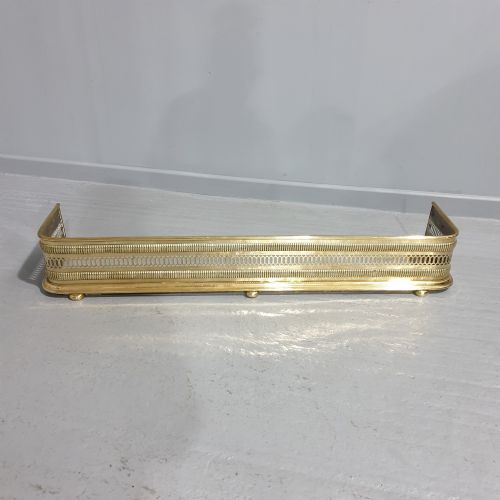


Georgian Brass Hearth Fender
A georgian brass hearth fender brings structure and warmth to a fireplace, protecting the floor while anchoring the room with period metalwork.
Georgian Brass Hearth Fender
A georgian brass hearth fender sits at the base of a fireplace to contain embers and frame the hearth area. The examples gathered here span the Georgian, Regency, William IV, and Victorian periods, alongside later nineteenth century interpretations.
Most pieces combine brass with iron or steel, appearing in forms such as curb fenders, wirework fire guards, and curved kerb designs. You will encounter straightforward polished brass alongside ornate pierced patterns and cut steel details.
How They Were Made
Craftsmen shaped solid brass, polished brass, and cast brass into linear and curved frames, often pairing the yellow metal with contrasting cast iron or steel components. Cut steel elements were meticulously applied to catch the flickering light of the hearth fire.
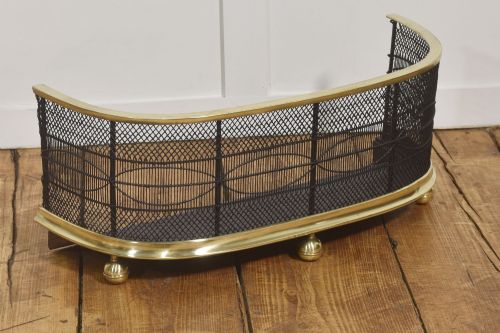
Some pieces incorporate woven iron wire to form protective guards, requiring careful tensioning and framing within a rigid metal perimeter. Pierced brass work involved delicate cutting and perforating of sheet metal to create intricate decorative friezes.
Materials across these listings include brass, iron, steel, cast brass, woven iron wire, cut steel, polished brass, and cast iron.
What Varies in Quality
The distinction between standard and superior pieces rests on the weight of the metal and the crispness of the decorative casting. Heavier gauge brass and deeply struck piercing demonstrate a higher grade of workshop production.
Integration of secondary materials also dictates the tier of the piece, where fine cut steel embellishments or robust woven iron wire indicate superior craftsmanship compared to plain folded sheet metal.
The Georgian Brass Hearth Fender Glossary
- Curb fender
- A low metal barrier placed directly on the hearth to contain ash and rolling logs. It forms the primary perimeter of the fireplace enclosure.
- Cut steel
- Small faceted steel studs riveted individually to a backing plate to sparkle in firelight. This technique demands immense patience and precision from the metalworker.
- Pierced brass
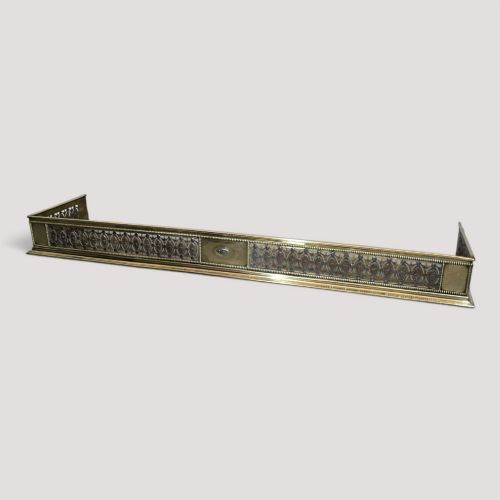
- Sheet brass punched or filed with decorative repeating patterns. It allows light to pass through while lightening the overall visual weight of the guard.
- Club fender
- A low-seat fender with upholstered corners designed for sitting close to the hearth. These combine brass framing with padded leather or textile surfaces.
- Neoclassical
- A decorative style drawing on classical Greek and Roman motifs. It appears in the strict symmetry and crisp architectural detailing of many period fenders.
Georgian Brass Hearth Fender: Frequently Asked Questions
What is a georgian brass hearth fender used for?
These metal barriers were placed directly onto the floor in front of a fireplace to catch stray embers and protect floorboards from heat damage. They also provided a neat visual boundary that unified the hearth within the room.
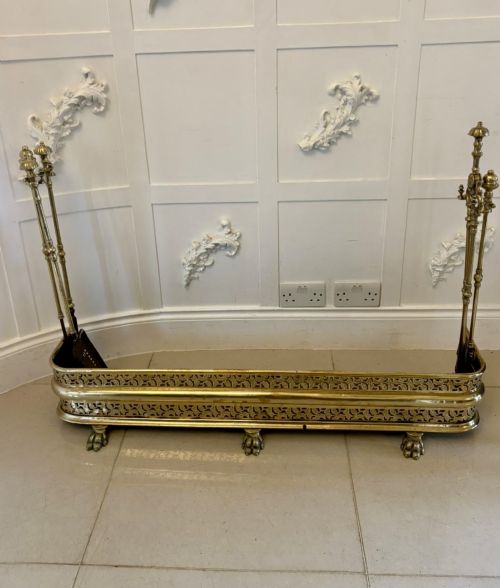
Over time, homeowners used them simply to frame the fireplace opening and hold matching fire irons or companion sets in place.
How do I tell a Regency fender from a Victorian one?
Regency pieces often display strict Neoclassical restraint, featuring clean lines, cut steel details, and influences from designers like George Bullock. They date from the early nineteenth century and rely on architectural symmetry.
Victorian examples tend toward heavier casting, pierced brass friezes, and more exuberant forms such as claw and ball feet. The metal gauge and decorative motifs generally shift from linear refinement to heavier ornamentation as the century progresses.
Are these fenders made entirely of brass?
Many examples combine brass with other metals rather than using solid brass throughout. It is common to find polished brass frames paired with iron or steel internal structures and cut steel embellishments.
Some lighter guards also incorporate woven iron wire within a rigid brass or iron perimeter to contain sparks effectively.
How should I clean polished brass?
Polished brass requires gentle dusting and occasional cleaning with a mild, non-abrasive metal cleaner suited to antique surfaces. Scrubbing should be avoided to preserve the subtle patination built up over centuries.
Harsh chemical dips will strip away the historic character of the metal and leave an overly bright finish that looks out of place on period pieces.