
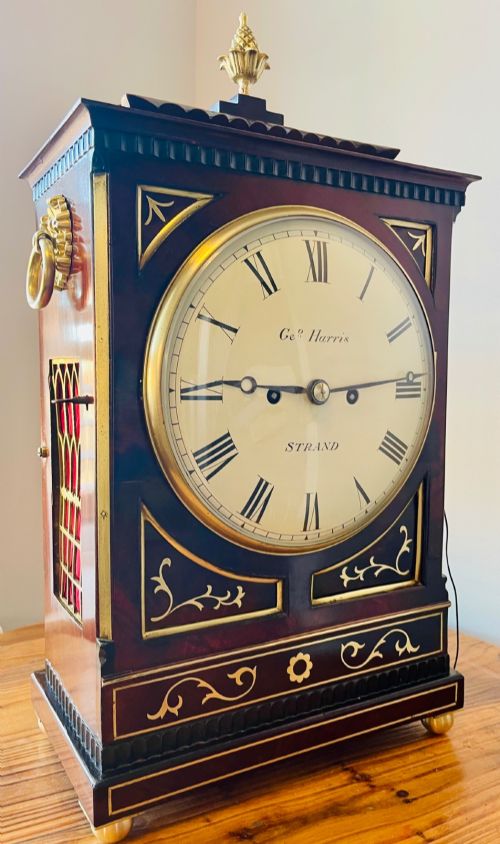
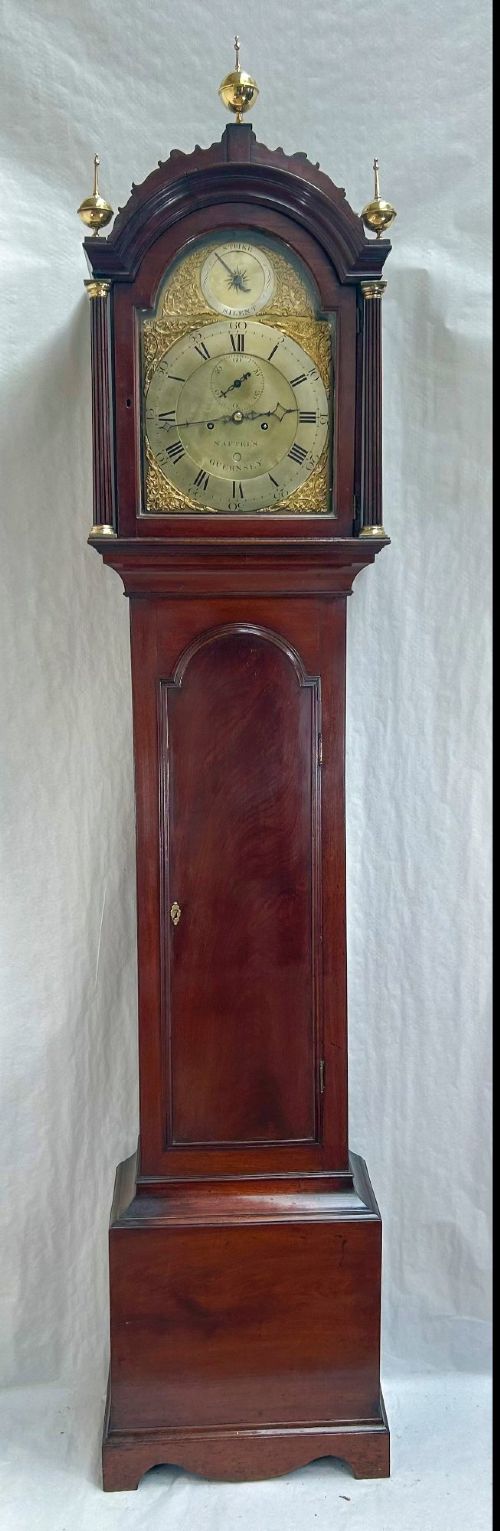
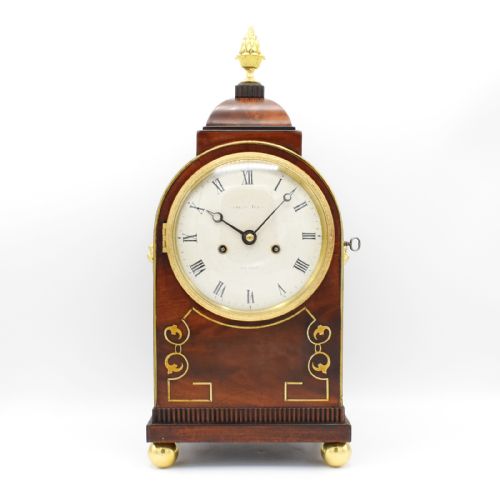
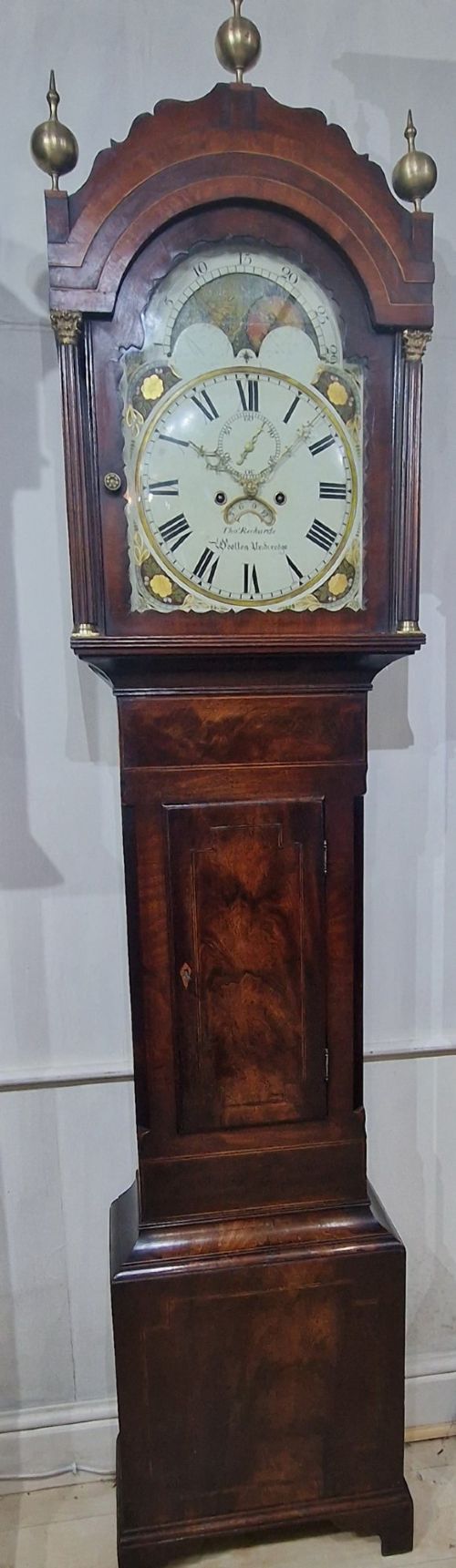
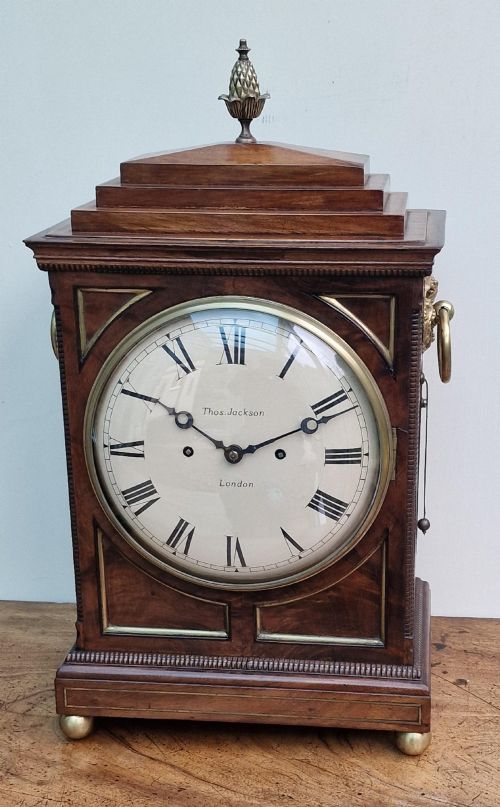


Georgian Brass Finial Clock
A georgian brass finial clock is a tall timekeeper or shelf piece defined by bright metal mounts, built to mark hours with traditional weight or spring drives.
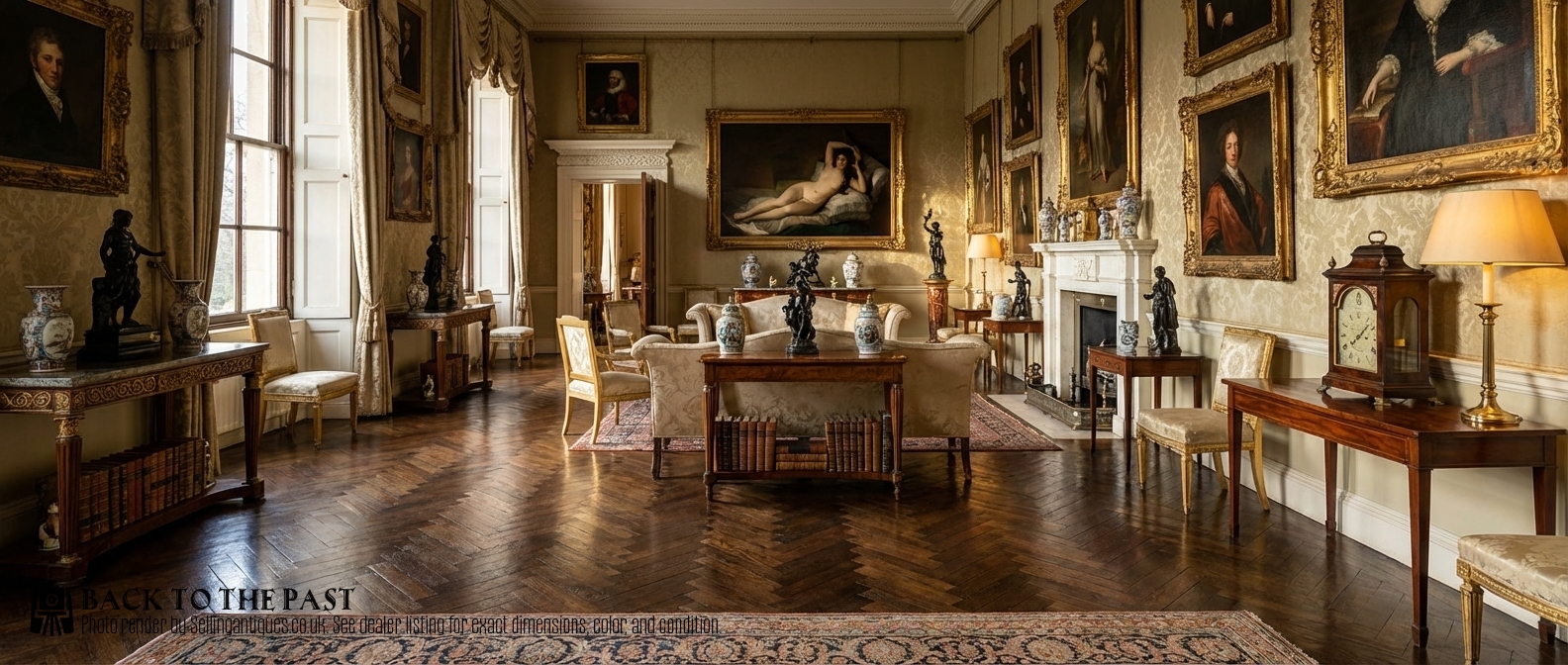
Georgian Brass Finial Clock
A buyer seeking a georgian brass finial clock encounters tall grandfather timekeepers alongside compact bracket and table models spanning the Georgian, Regency, and Victorian eras. These pieces take the form of longcase and mantel clocks housed principally in mahogany, oak, or flame mahogany cabinetry.
The version most commonly met on this page is the tall mahogany longcase clock from the eighteenth or early nineteenth century, frequently featuring brass dial details and fitted movements by London or regional makers. Oak examples also appear regularly, offering simpler country lines alongside the more formal London pieces.
Bracket clocks form the other major group, presenting compact proportions suitable for table use during the Regency period. These smaller formats utilise mahogany cases, sometimes with ebonised finishes, topped by the characteristic metal ornaments that complete the silhouette.
Distinctions in Quality
The refinement of the cabinetry and the reputation of the dial maker separate standard examples from finer works. Timber selection plays a major role, where figured flame mahogany or well-figured oak displays greater depth than plain boards.
Movement sophistication also distinguishes the range, particularly the presence of eight-day durations, moon phases, or specialised striking mechanisms by recorded makers. The crispness of the brass casting on the finials and dial mounts indicates the level of artisan skill invested in the piece.
Listings feature longcase and bracket formats across Georgian, Regency, and Victorian periods, constructed primarily in mahogany and oak.
Charles Pratt London·Thomas Jackson London·Webster Cornhill London·Thwaites London·Francis Perigal of Bond Street·Leplastrier of London·John Salmon Nantwich·Packer Of Reading·Richard Northen·Berguer of the Strand·James Rayner of Hull·Williams·Ganthony Of London
The Georgian Brass Finial Clock Glossary
- Fusee
- A conical pulley used in spring-driven clocks to equalize the driving force as the mainspring unwinds. This mechanism ensures more consistent timekeeping throughout the duration of the wind.
- Bracket clock
- A portable clock originally designed to sit on a bracket on the wall, though later placed on tables or mantelpieces. These pieces typically feature wooden cases with carrying handles and fine brass work.
- Longcase clock
- A tall pendulum clock enclosed in a wooden case designed to stand upright on the floor. Also known as a grandfather clock, it uses hanging weights housed within the trunk.
- Spandrel
- The ornamental corner piece fitted between the dial circle and the square edge of the clock face. These cast brass decorations evolved through different styles across the eighteenth century.
- Count wheel
- An external locking-plate mechanism used in older clock movements to control the number of strikes on the hour. It represents an earlier method of strike regulation before rack striking became standard.
Georgian Brass Finial Clock: Frequently Asked Questions
What is a bracket clock?
A bracket clock is a portable timekeeper housed in a wooden case, designed to be placed on a shelf or table rather than standing on the floor.
These pieces use spring-driven fusee movements and often feature brass carrying handles on top for movement between rooms.
How do I wind a longcase clock?
Winding a longcase clock involves using a key to pull up the hanging weights inside the trunk via the winding holes on the dial face.
Care must be taken not to overwind the movement, ensuring the weights reach the correct height without straining the cord or chain.
Where should I place a longcase clock?
A longcase clock requires a stable, level floor against an interior wall to maintain a steady beat and prevent pendulum interference.
Placing the tall wooden case away from direct sunlight and heat sources protects the mahogany or oak polish from drying out.
How can I tell the period of a clock?
The period of a clock is identified by examining the style of the wooden case, the shape of the dial, and the signature of the maker.
Georgian and Regency examples show distinct proportions and bracket feet, while Victorian pieces often feature heavier mouldings and different dial treatments.