

Georgian Bow Front Drawers
Georgian bow front drawers bring a graceful curve and substantial presence to a room, offering practical storage through classical proportions.
Georgian Bow Front Drawers
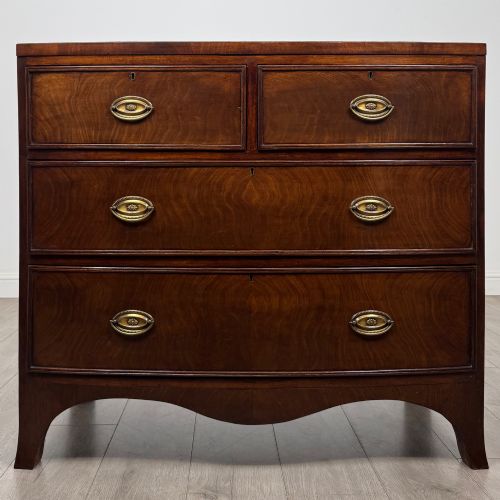
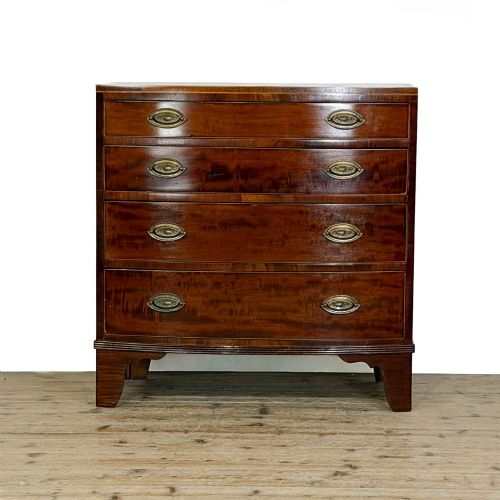
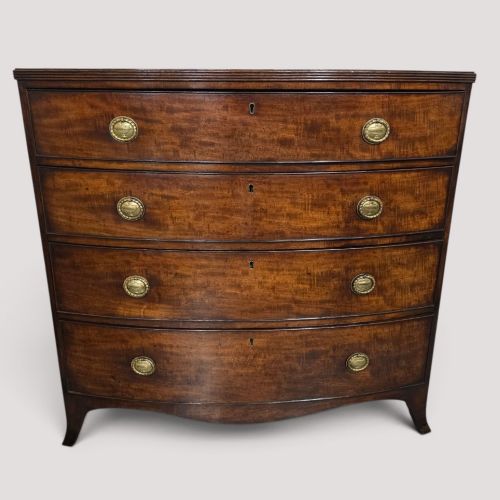
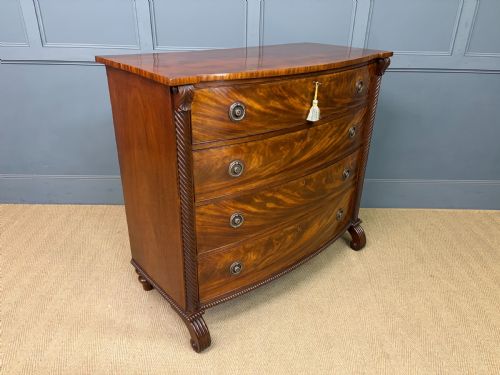
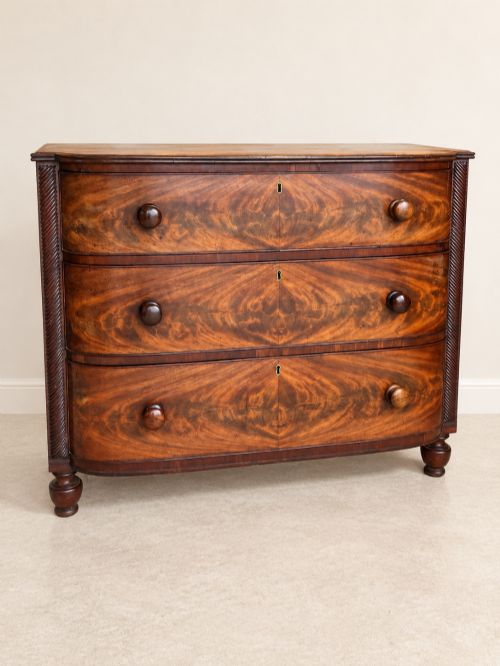
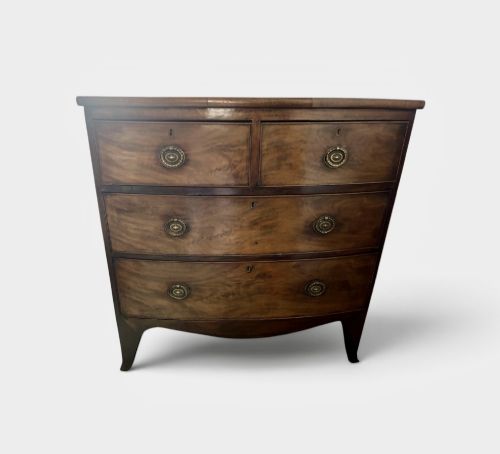
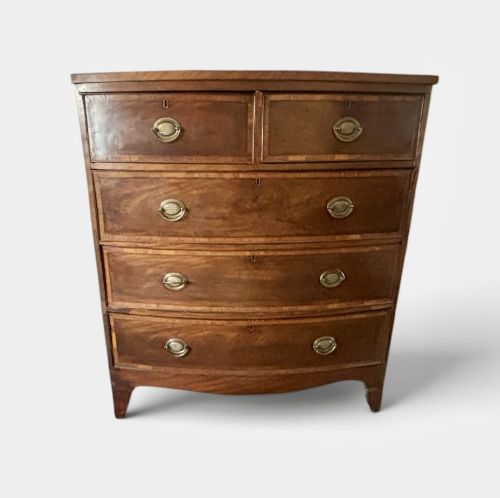
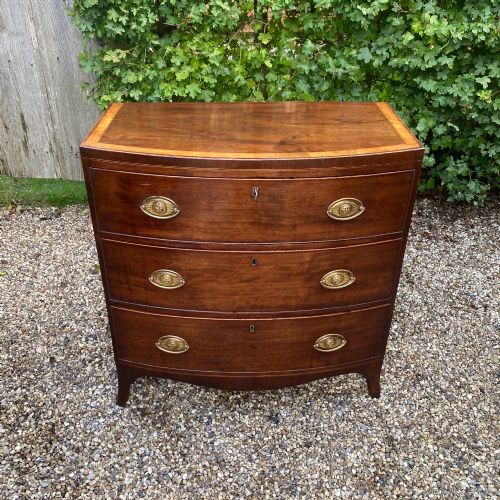
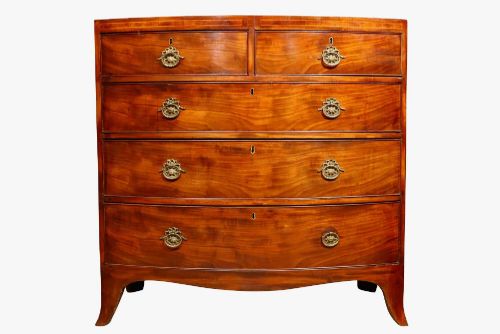
When searching for georgian bow front drawers, a buyer encounters case furniture defined by a convex curved front that softens the rigid angles typically found in standard chests. These pieces originate primarily across the 18th and 19th centuries, spanning the Georgian and Regency periods, alongside later revivals from the 1920s and 1930s.
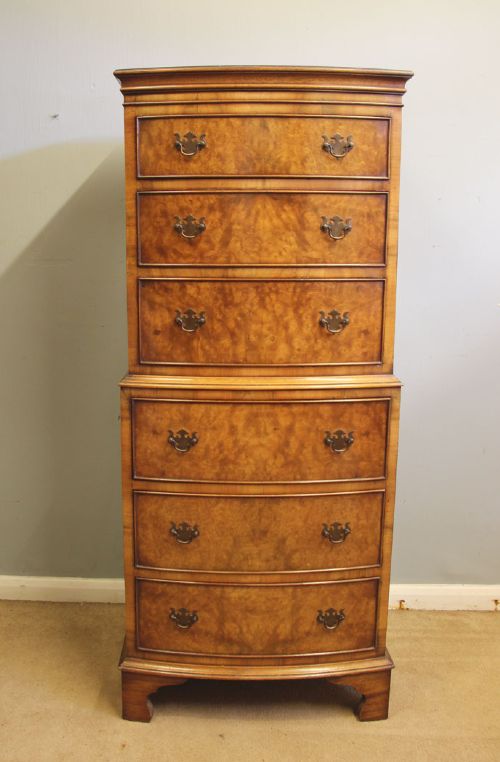
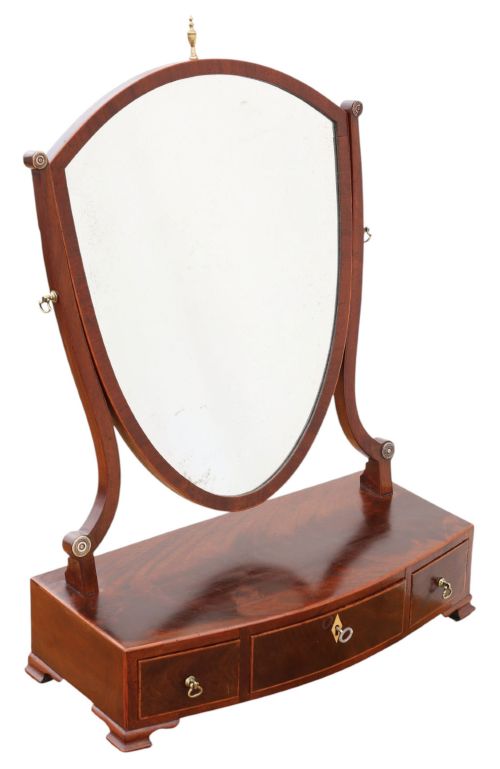
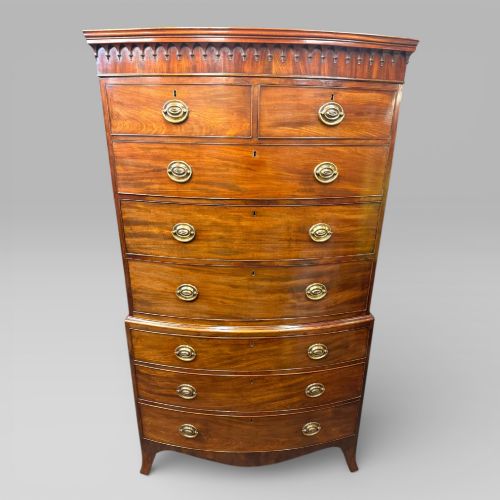
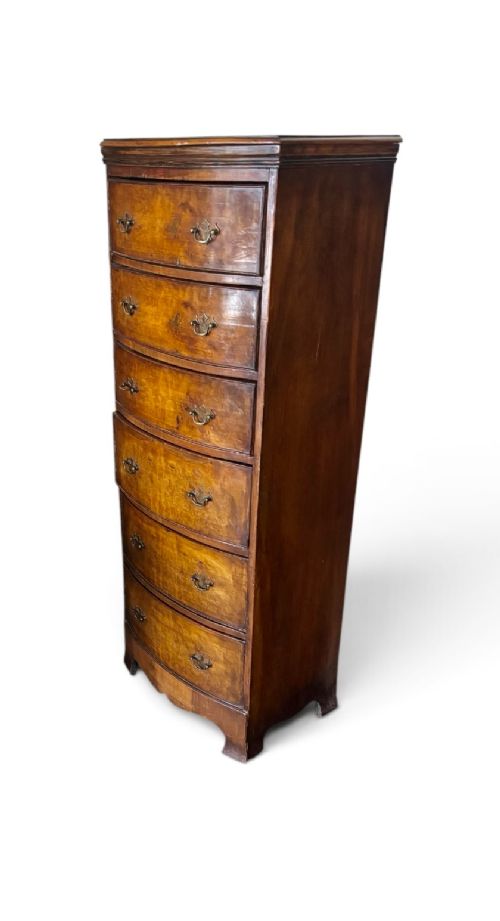
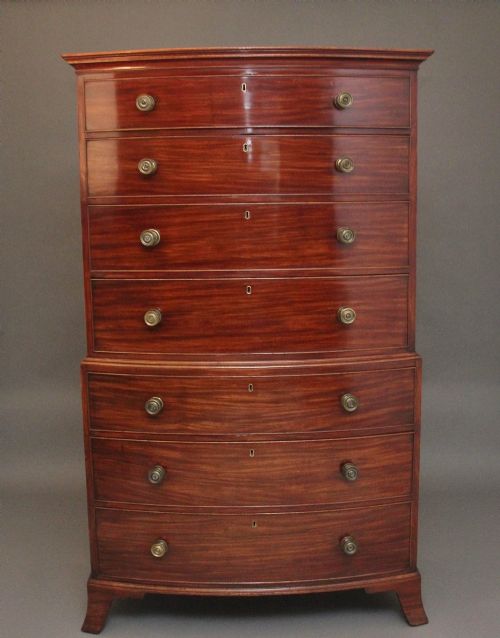
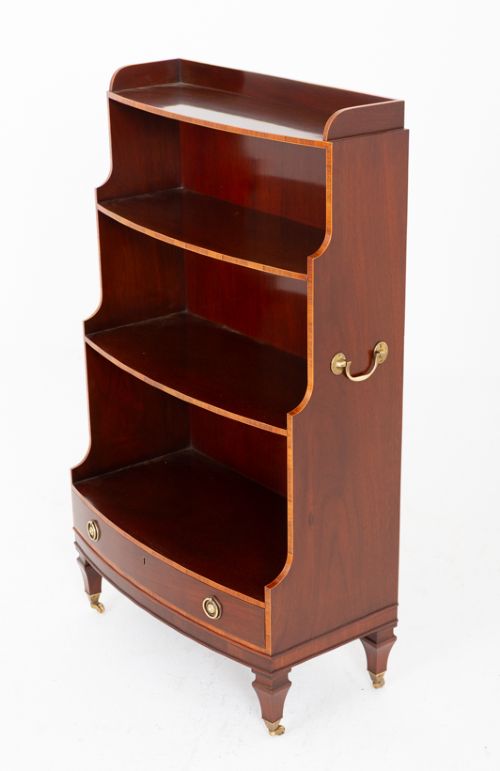
The most common form on this page is the chest of drawers, ranging from compact small chests to taller chest on chest and tallboy configurations. Occasional variations include sideboards, side tables, and dressing pieces incorporating the same characteristic curved silhouette.
Construction materials vary from solid timbers to veneered surfaces, reflecting the shift in cabinet-making practices across different eras. Walnut, burr walnut, and flame mahogany veneer appear alongside foundational woods like oak, frequently detailed with satinwood banding or brass hardware.
Materials and construction methods
Cabinet-makers relied heavily on mahogany as the primary structural and visual timber, often selecting figured grains or flame mahogany veneers for the drawer fronts to create rich visual depth. Satinwood banding and stringing provided sharp linear contrast against the darker body of the wood.
Secondary timbers such as oak lined the internal drawer boxes, while brass was utilised for drop handles, escutcheons, and occasionally bracket feet mounts. The curved front required specialist bending or laminated construction techniques to maintain structural integrity across the drawer spans.
Listings feature pieces spanning the 18th century, Georgian, Regency, and Edwardian periods, constructed in mahogany, walnut, and satinwood.
Distinguishing quality in construction and design
The grade of a piece rests on the selection of timber veneers and the precision of the joinery where the curved drawers meet the carcass frame. Superior examples display continuous grain matching across drawer fronts and tight, hand-cut dovetailing on the drawer boxes.
Gillows
The Georgian Bow Front Drawers Glossary
- Bow front
- A convex curved cabinet front that projects outward from the centre. This shape softens the profile of case furniture and demands advanced woodworking skill.
- Caddy top
- A tabletop style featuring a raised, moulded edge that sits above the primary carcass. It is frequently seen on pieces dating from the late 18th and early 19th centuries.
- Tallboy
- A tall chest of drawers consisting of two stacked sections, often combining a chest on chest arrangement. These pieces maximise vertical storage space in domestic interiors.
- Flame mahogany
- A veneer cut from the branch junctions of the mahogany tree, producing a distinctive flickering flame pattern. Cabinet-makers reserved this timber for prominent display surfaces.
- Crossbanding
- A narrow strip of veneer laid around the border of a drawer front or tabletop with the grain running perpendicular to the main panel. This technique frames the primary wood.
Georgian Bow Front Drawers: Frequently Asked Questions
How do I date a bow front chest?
Dating relies on examining the construction methods of the drawer linings, the timber species, and the style of the feet or handles. Earlier pieces often feature oak linings and hand-cut dovetails, while later revivals from the 20th century show different internal secondary woods.
Hardware placement and veneer choices also shift between the Georgian period and later Edwardian or 1930s interpretations. Comparing these structural clues against known period characteristics clarifies the age of the piece.
What is a tallboy chest?
A tallboy is a two-piece storage unit where a smaller chest sits atop a larger base chest, creating an elevated vertical profile. This form appeared during the 18th century to provide substantial drawer capacity without occupying excessive floor space.
In later decades, cabinet-makers adapted the tallboy format into single-carcass tall chests of drawers. These pieces served primarily in bedrooms for linen and clothing storage.
Where should I place these in a room?
These chests suit living rooms, hallways, or bedrooms where the curved profile breaks up the straight lines of modern architecture. Their finished backs and compact footprints allow them to anchor wall spaces or function as side storage.
Pairing a chest with a dressing mirror creates a traditional vanity arrangement. Placing them away from direct heat sources protects the vulnerable mahogany and walnut veneers.
How do I maintain mahogany furniture?
Maintain the timber by applying a microcrystalline wax polish periodically to nourish the surface and protect the grain. Avoid chemical cleaners that strip the original patina built up over decades of handling.
Keep pieces away from direct sunlight and radiators to prevent the wood from drying out and the veneers from lifting. Consistent indoor humidity levels preserve both the solid timbers and the delicate decorative inlays.