

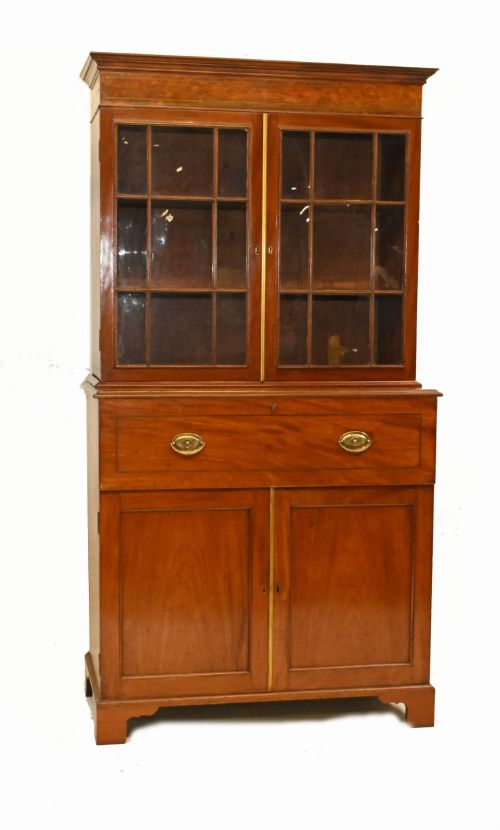
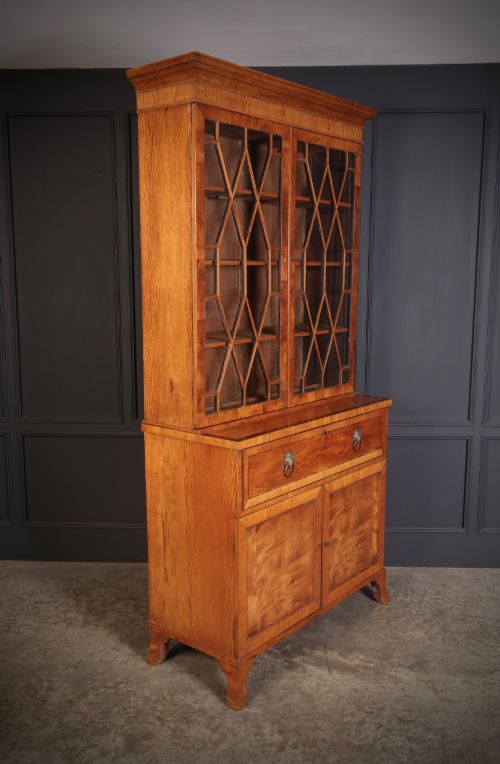
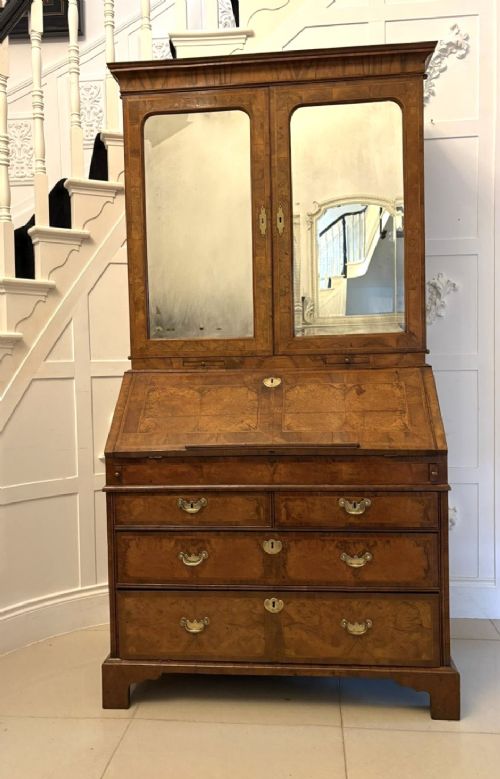
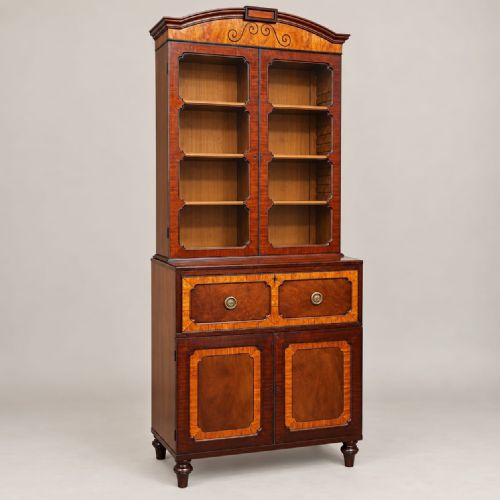
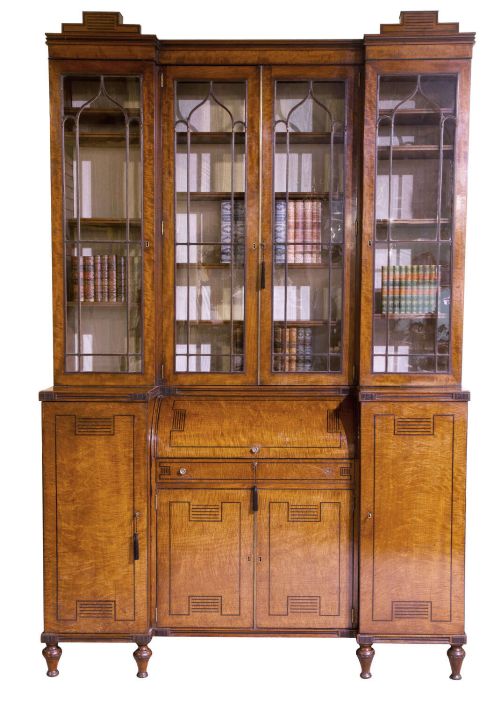
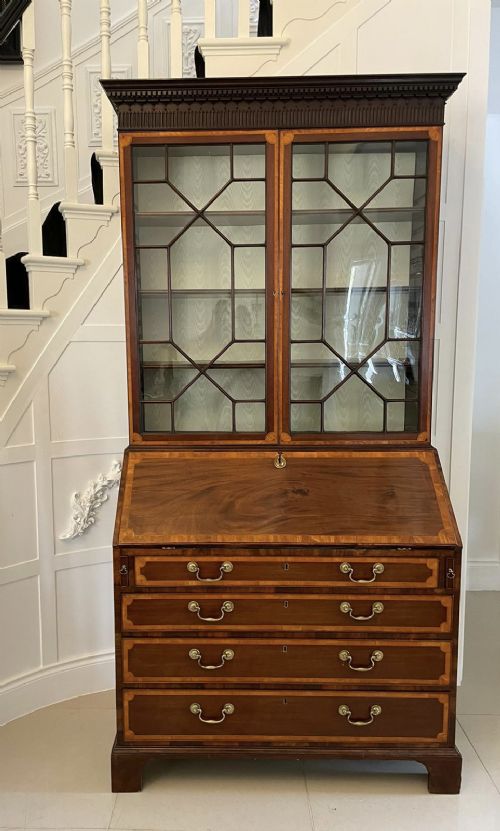
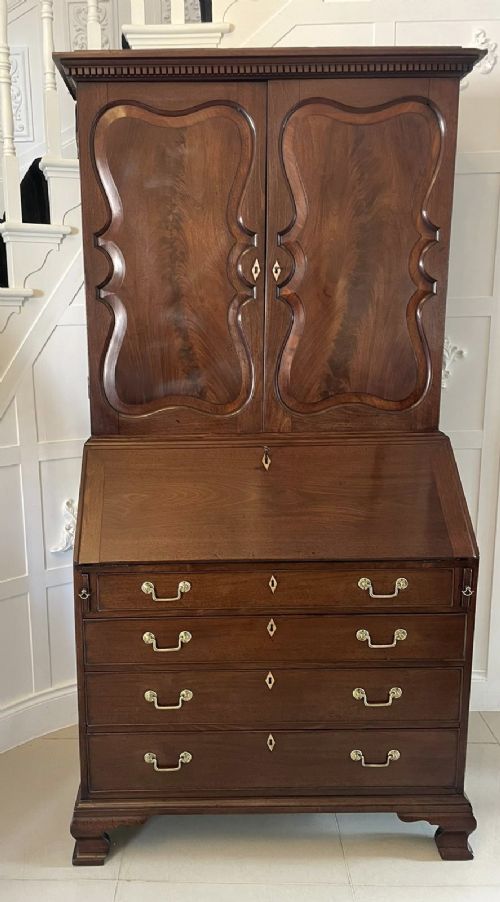
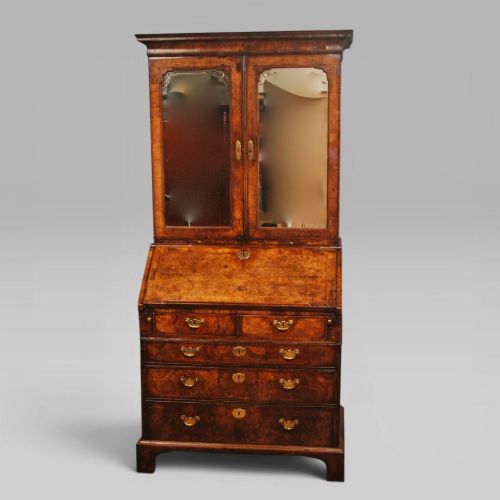
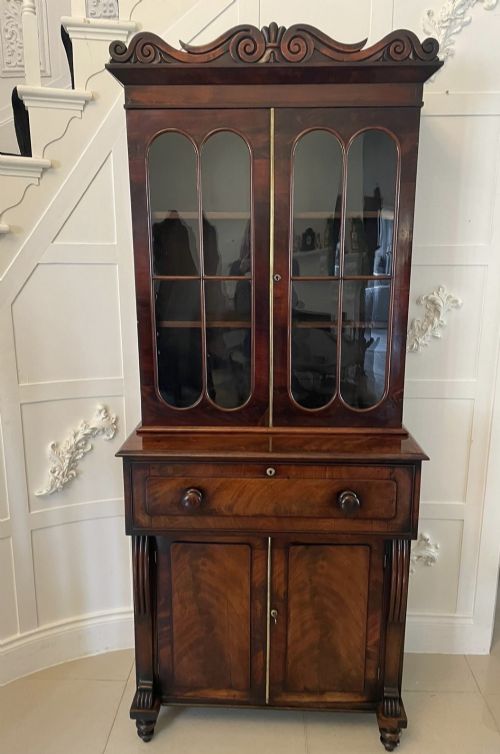
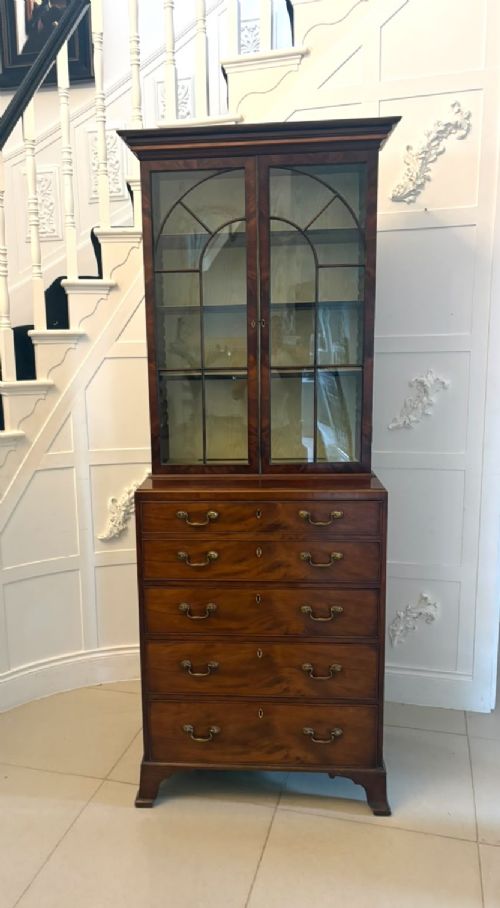
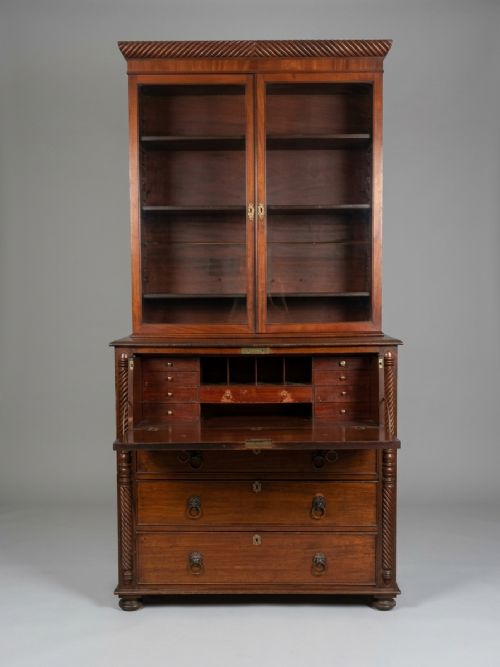
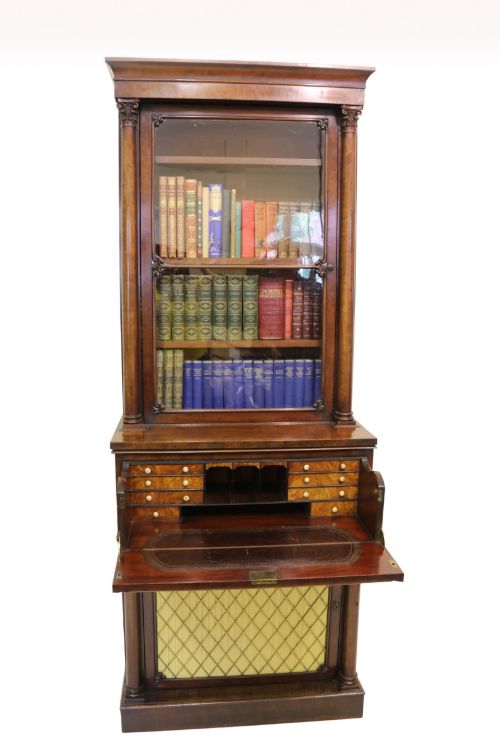

Georgian Bookcase with Desk
A georgian bookcase with desk combines a shelved cabinet for books with a fitted writing fall, offering a stately workspace and storage in one piece.
Georgian Bookcase with Desk
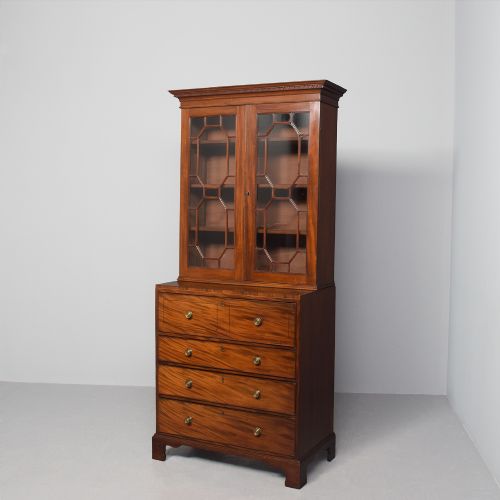
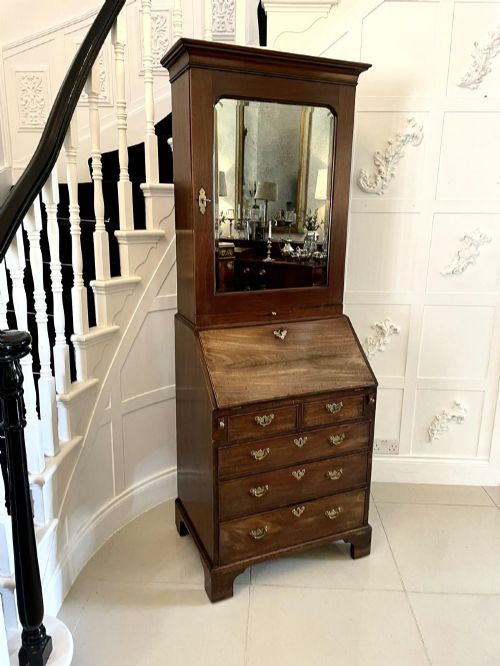
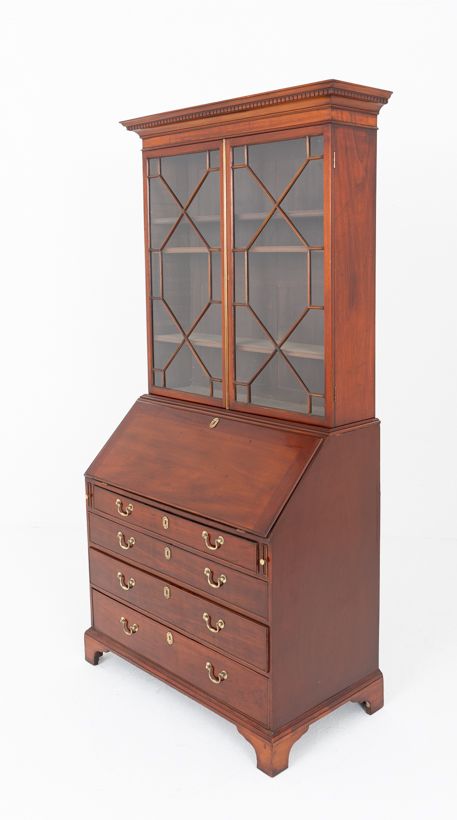
A georgian bookcase with desk combines a glazed upper section for books with a lower bureau or secretaire component containing a fitted writing interior.
The pieces appearing here span from early eighteenth century walnut examples through George III mahogany designs to later Regency and nineteenth century interpretations.
Most variations encountered utilise either classic bureau forms with sloping fall fronts or secretaire configurations with pull-out desk drawers.
Materials and Construction
Cabinet makers constructed these pieces primarily using solid timbers and veneers of mahogany, walnut, and oak, frequently embellished with burr walnut or satinwood figure.
Upper doors utilise glass panes held by wooden glazing bars, whilst internal compartments incorporate small drawers, pigeonholes, and occasionally stepped secret compartments.
Hardware relies on brass for handles and escutcheons, and mirrors occasionally feature within the upper door panels.
Georgian Bookcase with Desk Retail Price Guide 2026
Typical asking prices for georgian bookcase with desk among the pieces listed under this phrase on Sellingantiques today, from the lower quarter to the upper quarter. They describe what is for sale here now, not the wider market.
Listings for a georgian bookcase with desk incorporate pieces dated across the eighteenth and nineteenth centuries, spanning George I, George II, and George III reigns.
Quality and Construction
The refinement of the timber figure and the selection of veneers dictate visual merit, with burr walnut and figured mahogany representing the upper tier.
Cabinetmaking skill shows in the complexity of the interior fittings, the precision of the pigeonholes, and the retention of original brass hardware and glass.
Structural integrity depends upon the preservation of the original fall-front mechanisms and the stability of the tall upright frames.
Gillows·Tudor & Burrey
The Georgian Bookcase with Desk Glossary
- Secretaire
- A piece of furniture containing a drawer or compartment that drops down to form a writing surface. This mechanism conceals small pigeonholes and letter drawers.
- Astragal Glazed
- Glass doors divided into smaller panes by narrow wooden mouldings. These strips form geometric patterns across the bookcase front.
- Fall-Front
- A hinged writing flap that drops from a vertical position to horizontal for writing. It closes to conceal the internal desk compartments.
- Burr Walnut
- Timber taken from walnut tree growths that produces intricate swirling grain patterns. Cabinet makers prized this wood for high-status eighteenth century fronts.
- Fitted Interior
- The arrangement of small drawers, pigeonholes, and central compartments revealed when opening a desk section. These elements organise writing materials and documents.
Georgian Bookcase with Desk: Frequently Asked Questions
Where should I place a georgian bookcase with desk?
These tall pieces require a room with adequate ceiling height and steady environmental conditions away from direct heat sources. Position them against a solid wall to support their substantial weight.
Ensure sufficient floor space in front of the piece so the fall-front or secretaire drawer can open fully for writing use.
How do I maintain the wood surface?
Dust regularly with a soft, dry cloth and apply quality beeswax periodically to nourish the timber. Avoid synthetic silicone sprays that damage historic polish over time.
Keep the piece away from direct sunlight to prevent fading of mahogany and walnut veneers.
How do I distinguish George I from George III pieces?
George I examples frequently utilise walnut timber with herringbone banding and simpler, architectural lines. George III pieces lean towards figured mahogany, satinwood stringing, and more intricate astragal glazing patterns.
Construction methods also shift over the decades, with dovetails and internal secondary woods changing from early oak to later pine and mahogany.